

Orthodox Christian ☦️ Blessed husband & father of five. Repenting lawyer. Lover of humanity, nature, history & religious studies.
Christendom
Joined September 2025
- Tweets5.4K
- Following296
- Followers622
- Likes19.2K





Pinned Tweet
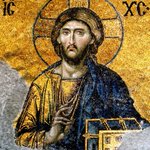
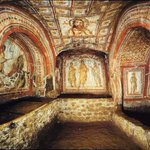
The original Christians had to worship in caves and catacombs, but they beautified them like this.
Does your church look like this inside?

I love the brutal honesty of Orthodox Christianity.
Our parish priest warned us before we decided to be baptized:
“Don’t become an Orthodox Christian because you think it will make your life more comfortable or prosperous, because two millennia of Orthodox Christian history tell us to expect exactly the opposite. Become an Orthodox Christian only if you believe it’s the Truth, and only if you’re willing to suffer the consequences of embracing the Truth.”
Orthodox Christians do not advertise Orthodox Christianity as a product that will provide certain promised benefits—a closer family, a better salary, a less difficult life, or whatever. There is no “Prosperity Gospel” in Orthodox Christianity.
Orthodox Christianity honestly acknowledges that life inevitably involves pain and suffering, but shows us how Jesus Christ can transform our pain and suffering into personal transformation and sanctification.


“For when we were still without strength, in due time Christ died for the ungodly. For scarcely for a righteous man will one die; yet perhaps for a good man someone would even dare to die. But God demonstrates His own love toward us, in that while we were still sinners, Christ died for us.” Romans 5:6-8

7
121
☦️ John Stone retweeted

In the Egyptian Paterikon two elders lived together for years and never quarreled. One day one of them said:
“Brother, let us quarrel just once, the way all people do.”
The other answered: “I don’t know how a quarrel is made.”
“Look: we put a brick between us. I say, ‘It’s mine.’ You say, ‘No, it’s mine.’ That’s how a quarrel begins.”
They put the brick down.
The first said: “It’s mine.”
The second: “No, it’s mine.”
The first said: “If it’s yours, take it and go.”
And they could no longer quarrel.
This is the secret of peace: the one who yields.
The strongest does not win.
The one who no longer needs to be right wins.
Christ did not say, “Win the argument.”
He said: “Blessed are the peacemakers, for they shall be called sons of God.” (Matthew 5:9)
The Apostle Paul is even clearer:
“Avoid foolish and ignorant disputes, knowing that they generate strife. And a servant of the Lord must not quarrel but be gentle to all.” (2 Timothy 2:23–24)
And St. Seraphim of Sarov left the word that should be taped to the mirror:
“Acquire the Spirit of peace, and a thousand souls around you will be saved.”
Not “win the argument.”
Not “teach him a lesson.”
Not “make sure he sees that you were right.”
Acquire peace.
St. John Climacus says something that stings and heals:
“If a bitter word arises between you and another and he denies it, do not provoke him. Let the word go, and great peace is made. For peace is four times greater than justice.”
Four times greater.
Not twice. Four.
Better to lose an argument than to lose your heart.
St. Isaac the Syrian adds:
“If you cannot be a peacemaker, at least be one who does not love disturbance.”
And: “Let yourself be wronged and do not wrong. Let yourself be slandered and do not slander.”
Peace does not mean you are weak.
Peace means you are so strong in Christ that you no longer need to defend yourself at every provocation.
In daily life the “brick” looks like this:
— the sharp message in the group chat
— the cutting remark at the table
— “just let me explain why you’re wrong”
— the need to have the last word
— the comment that “has to” be posted so injustice doesn’t hang in the air
Every time you feel that fire in the chest - “I have to answer” - remember the two elders.
One said: “If it’s yours, take it.”
Not because he had no right.
But because he had something more precious: peace.
“A soft answer turns away wrath, but a harsh word stirs up anger.” (Proverbs 15:1)
“If it is possible, as much as depends on you, live peaceably with all men.” (Romans 12:18)
As much as depends on you.
Not as much as depends on the other.
Peace is not made by two people who are right.
It is made by one who is silent out of love.
Today, before you answer:
1. Ask yourself: do I want the truth, or do I want to win?
2. Remember that the devil loves a quarrel more than a mistake.
3. Say in secret: “Lord Jesus Christ, give me Your peace, not my being right.”
4. If you can, yield the brick.
5. If you cannot yet, be silent. Silence is also a form of victory.
The strongest person in the room is not the one who shouts.
It is the one who can say: “Take it. It isn’t worth losing my peace over a brick.”
The brick passes.
The quarrel stays in the heart.
Peace, once lost, is hard to regain.
Acquire peace.
Not because the world deserves it.
But because Christ deserves a clean place in you.
And perhaps, without your knowing, someone around you will be saved simply because you did not answer.
Lord, teach us to yield the brick - and keep heaven.
If this spoke to your heart, pass it on. Someone may be about to enter a quarrel they do not need.

☦️ John Stone retweeted

“I love you Fr Seraphim”
Before he was "Father Seraphim," Eugene was a brilliant, tormented young intellectual fluent in Chinese philosophy, steeped in Nietzsche, and utterly without God. He later called that period a descent into "the abyss of nihilism," a despair so total he said he came to know personally what it means to live in hell. But it was in that darkness that he began circling something he couldn't name — until he encountered an old Orthodox priest and, through him, the person of Christ. He wept before an icon of the Mother of God for the first time as a grown man, undone not by argument but by love breaking through years of intellectual defense. That moment — a man who had reasoned his way into despair, finally reasoned his way to his knees — is the hinge of his whole life. Everything after (Platina, the monastery, the samizdat texts smuggled into the USSR) grew out of that one collapse into grace.
A message to all seeking the light ☦️:
You do not have to solve every doubt before God will meet you. Fr. Seraphim spent years reading, arguing, and despairing before he ever prayed — and it was not the reading that saved him, it was finally being still enough to be found. If you're in the dark right now, searching hard and finding nothing, know this: the search itself is not wasted. Keep it honest, keep it humble, and don't mistake the absence of an answer for the absence of God. Light doesn't always arrive as certainty — sometimes it arrives as a tear you didn't expect, in front of an icon, when you've finally stopped defending yourself long enough to let it in.


☦️ John Stone retweeted

"Keep your eyes on the one evil person for whom you must give an account to God at judgement - yourself." - St Ignatius Brianchaninov


☦️ John Stone retweeted

“Why is the truth, it would seem, revealed to some and not to others? Is there a special organ for receiving revelation from God? Yes, though usually we close it and do not let it open up: God’s revelation is given to something called a loving heart.”
- Fr. Seraphim Rose


