







Jonto retweeted

There's this story from the CIA's own archives I've been looking at. It is about a man who made himself useful to superpowers. From China, the Portuguese colonial army, South Africa, Mobutu, and above all the United States, until Washington made him its favourite warlord.

Jonto retweeted

This is the best breakdown I’ve seen of how America 🇺🇸 has been destabilizing the Caribbean then be mad when Caribbean people go to America
Jonto retweeted

Land dispossession didn't just transfer ownership. It changed how Black South Africans are recognised in the systems that decide who owns land.
A white farmer can say "this is my father's farm" and be believed. When a Black South African makes the same claim about ancestral land, it faces far more scrutiny.
Mthethwa's point: returning land isn't generosity. It's correcting a historical dispossession.
Jonto retweeted

They passed a law that said corporations are "people."
Then they passed a ruling that said spending money is "speech."
Then they said you cannot limit speech.
Therefore, a corporation spending $300 million to influence an election is a person exercising their constitutional rights.
This is not a metaphor.
This is Citizens United v. FEC, decided by the Supreme Court of the United States in 2010, the law of the land, the operating architecture of American democracy.
Follow the logic and it’s airtight.
Question the premises and the entire thing collapses into what it plainly is:
A legal framework constructed, over decades, by people whose interests were served by constructing it, to convert unlimited money into unlimited political influence while calling it "freedom."
The vocabulary did more work than any lobbyist.
The vocabulary was the lobbying.
Jonto retweeted

Why we say land expropriation without compensation and call settler colonialists land thieves??? Brilliant explanation!


Jonto retweeted

Dear Black Women/African Women, there’s no escaping this conversation. It must be had, no matter how hard push back.
Thank you for your attention to this matter.
Jonto retweeted

Whenever I see Africans say "the solution to censorship is to just build our own platforms", I inwardly cry at the babyfaced naivety. It's as if they think that the reason nearly all major social media platforms are American is that Americans are better at coding or something.
For those who aren't aware, social media is not profitable. Building a social media app is not particularly difficult. You can literally use AI to reverse engineer existing ones and put one together in a few minutes. There is nothing technically difficult about building or operating a social media platform. Any random Andela intern can do it.
The real problem which NOBODY is close to solving is that even if you can get everybody to sign up and use your platform, the cost of keeping its server and personnel infrastructure running is prohibitively expensive, and the cost of gaining and retaining users through platform monetisation is also extremely expensive. Twitter for example, has literally never made money. Since genesis in 2006.
That's 20 years of this site running 24/7, 365 days a year with outages happening only a few times a year for a few minutes at a time. That's 20 unbroken years of spending huge sums of money on Data centers. High latency servers. Backups and redundancy. Security. Development. Moderation. Government relations. Marketing. Who do you think pays for all this? Jack Dorsey? Elon Musk? Generous VC investors who throw money into a pit for 20 straight years with no route to profitability and keep pouring money in?
The only entity in the capitalist world that spends vast amounts of money that way is the government. Only the government invests huge sums of money in things that have immense social or political power without having any direct way to meaningfully generate profit. From the perspective of the US government, it is a super deal because instead of spending hundreds of billions annually to monitor, surveil, and collect intelligence on the rest of the world, it can instead spend tens of billions annually to be the silent backer keeping these social media platforms running, and have the rest of the world voluntarily submit vast amounts of their personal data and political intelligence that it uses for its ends.
You're not on a social media site. You're on a US government intelligence gathering and data surveillance platform. That is what Twitter is. That is what Instagram is. That is what Facebook is. That is what YouTube, Snapchat, Threads etc are. And TikTok by the way, is the Chinese version of the exact same thing, which is why it was forced to sell its US branch to Larry Ellison, a CIA contractor.
So unless you have a government behind you that is willing to spend serious money and receive no profit as you vibe-code your latest attempt at an "African social media platform", allow me to inform you that you are generously wasting your bloody time. "Social media" is not a playground and "viral user signup" or "user network effect" is not a real thing. There are thousands, maybe millions of social media apps on various app stores. The reason why you have only heard of the American and Chinese ones is that those are the 2 countries whose governments have inexhaustible sums of money to funnel into digital surveillance disguised as "social media".
So before inviting me or The Spearhead to join your umpteenth attempt at an "African social media platform", please find a government that is willing to back you first.
If you don't have a government behind you like Jack Dorsey, Elon Musk, Mark Zuckerberg, Larry Page and Sergei Brin do, please don't waste my time.

Jonto retweeted

At 6,000 RPM, the illustrated four-cylinder, four-stroke engine has 200 total firing events per second. Slow-motion sections reveal the mechanism; the 1-3-4-2 firing order is the example shown.
Needs more cats perhaps?

India 🇮🇳 is not for the weak!
Readers added context they thought people might want to know
The video depicts a snake rescue operation in Bangladesh (matching rural settings, attire, and style of local rescuers like Nur Hasan Nahid), not India.
youtube.com/watch?v=LvEmSv…
x.com/RealWBTruth/st…
50
Jonto retweeted

We neglected the skill of thatching, then started talking down on thatch. "That's a village house." "Build with zinc, be serious."
Now look at Tswalu, a lodge in the Kalahari Desert, South Africa. Guests land at an airstrip under a thatched roof terminal, and they pay R46,400 per person, per night to stay.
What's inside is simple: minimalist furniture, African baskets and art, outdoor showers, big open fireplaces. Only twenty guests at a time. It's the same kind of things we already have, done with care.
The roof isn't the only reason for the price. But foreigners are paying a fortune for what we were taught to be ashamed of.
Thatch was never the problem. Losing the skill was.
Kalahari Desert, South Africa · Lodge: Tswalu Kalahari (The Motse) · Photography: courtesy of Tswalu Kalahari · Article: Christina Ohly, Fathom, 2017


Jonto retweeted
You keep trying to explain empire to Americans like they are being tricked.
Like if you just show them enough evidence, they will finally break.
But what if the truth is simpler.
What if they saw enough already and decided they prefer being on the side that gets to drop the bombs.
What if all the "not in my name" signs are the minority and the silent majority is perfectly fine with the trade.
Jonto retweeted

Your tattoo isn’t just decorative ink: it’s a permanent trigger that keeps your immune system locked in a lifelong cycle of chronic inflammation.
As soon as the ink is injected into your skin, your body recognizes the pigment particles as foreign invaders. Immune cells called macrophages immediately swarm the area and attempt to swallow them up. But because they can’t actually break down the ink, the macrophages eventually die, releasing the pigment back into the surrounding tissue, only for a new wave of macrophages to arrive and repeat the process.
This endless cycle is what keeps the tattoo permanently visible, while also maintaining a state of ongoing, low-level inflammation in the skin.
Over time, some of these ink particles migrate through the lymphatic system and accumulate in the lymph nodes, placing constant stress on the body’s defense mechanisms. Emerging research suggests this internal ink buildup may interfere with normal immune function, potentially reducing the effectiveness of certain vaccines, including mRNA types. Additionally, many tattoo inks contain heavy metals like nickel and cobalt. Combined with the chronic inflammation, this has been linked to a modestly elevated risk of lymphoma and skin cancer.
While tattoos remain a powerful form of self-expression, they represent a complex, decades-long biological conflict between your immune system and foreign substances embedded in your skin.
[Nielsen, C., Jerkeman, M., & Jöud, A. S. (2024). Tattoos as a risk factor for systemic lymphoma: A population-based case-control study. eClinicalMedicine]

Jonto retweeted
TikTok has disappeared your favourite account.
But they can’t stop us.
Here’s what I want you to do. 👇

Jonto retweeted

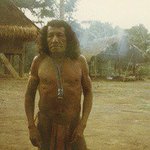
MILLIONS IN CONSERVATION, BUT WHO GETS THE MONEY?
Millions in funds are raised around the world in the name of protecting the Amazon and its Indigenous communities. But who actually controls that money and how much reaches the actual people whose ancestral territories are allegedly being conserved?
In an interview with Sovereign Media's Ahmed Kaballo, Paz Panjobiteri, a representative of the Kichwa nationality of Pastaza, Ecuador, challenges the international conservation industry, accusing governments and major NGOs of using Indigenous peoples to attract funding, while denying them meaningful control over their resources.
Panjobiteri argues that despite the enormous sums raised for forest protection, Indigenous communities continue to face poverty, environmental degradation and the erosion of their territorial sovereignty.
She questions why international conservation funds are largely administered by governments and powerful NGOs acting as intermediaries, rather than directly empowering the communities that have protected these ecosystems for generations.
Her criticism exposes what she describes as the continuation of colonial power structures, where Indigenous lands and identities are used to secure financial resources, while decision-making authority remains concentrated in racist governments and outside institutions.