

Translating the future: AI, energy, longevity, & leadership. Mostly optimistic. Occasionally sarcastic. Always curious. Dad, husband, occasional disruptor
Columbus Ohio
Joined November 2008
- Tweets639
- Following115
- Followers83
- Likes53










JonathanCochran retweeted

A ‘hello world’ milestone for Project Suncatcher 🚀
After launching our prototype satellite a few weeks ago, we’ve now successfully sent a command up to orbit, booted up the TPU, ran the prompt, and received our first complete response back on earth - a haiku!
JonathanCochran retweeted

Taylor, TX has negotiated to bring a data center to town alongside:
- $69 million in annual tax revenue (3.3x existing property tax)
- $13m for quality of life projects
- $10.2m for schools
- $1.5m for student scholarships
- $1m for animal care
+ nonprofit grants
I want one!

JonathanCochran retweeted

People asked for me to upload the Bitter Lesson video from this piece to YouTube, so here you are: youtu.be/OAwat51S_Sk

I wrote about the thing I underestimated most about progress in AI: its ability to self-organize to accomplish tasks. Also, what that means for agents like Muse and Dots, along with a music video explaining why we keep relearning The Bitter Lesson. open.substack.com/pub/oneuse…

JonathanCochran retweeted
I was reflecting on how many random contingencies went into creating the current accelerating AI moment and had Opus 5.5 put together a video, inspired by old science show Connections, to try and point out how a series of initially unrelated ideas led to the moment we are in now.
JonathanCochran retweeted

GPT-6 Sol and Luna are out. Not only are they a very significant improvement across the board, but also in writing and general "you know when you try it" quality.
We are also permanently reducing the API price by 50% making both of them viable for a ton of new usecases and making your usage go further too, even on the subscriptions.
And one more thing. We are loading a banked reset into all accounts of our Plus, Pro and Business users. Let's go!
openai.com/index/introducing…


JonathanCochran retweeted

Grok 4.7 is here.
It's a notable improvement over Grok 4.6 at the same price and speed.


JonathanCochran retweeted

Yes, this result cost millions of dollars.
But remember that when @OpenAI announced o3 it cost ~$500,000 to score 87.5% on ARC-AGI 1. Today, Astra scores higher for ~$20.
In 2025 it took us and GDM an enormous amount of compute to achieve IMO gold. For the 2026 IMO, anyone with a $20/month ChatGPT subscription could do it.
Massively scaling test-time compute gives us a glimpse of the future. I believe that a year from now everyone will have an AI at their fingertips capable of solving problems of this caliber.

We’re sharing a solution to the Navier-Stokes Millennium Prize Problem, one of the deepest problems at the frontier of mathematics.
The proof was produced by a group of agents, using an OpenAI next-generation model significantly more capable than GPT-6 Astra.
The problem concerns whether the description of smooth three-dimensional fluid motion modeled by the Navier-Stokes equations can break down. It has remained unresolved for roughly 90 years.

JonathanCochran retweeted

Georgia, Indiana, Michigan, California cutting electricity prices because of data centers.


JonathanCochran retweeted
Indiana & Michigan Power (I&M) has asked Indiana's state gov if they can lower rates because they're making so much money from data centers and they want to pass savings on
If the state approves, customers will see $100 cut from annual bills, which they'll freeze for three years

JonathanCochran retweeted
He's right.
I want at least 1,000x as many data centers, and the more of them that get built directly in my community, the better.


JonathanCochran retweeted
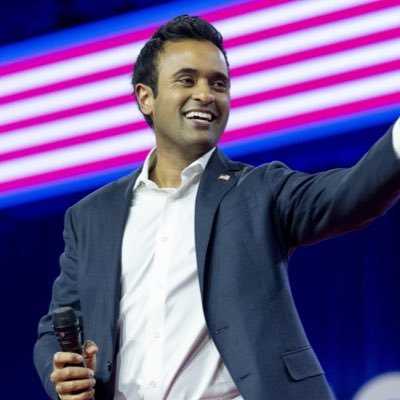
MY DATA CENTER POLICY PLEDGE: OHIOANS-FIRST
A top concern I hear from Ohioans across our state – second only to property taxes – is the accelerating pace of data center expansion. Key citizen concerns about data centers include rising electric bills, noise, pollution, and the absence of clearly defined economic benefits for Ohio families. The data center industry has badly failed to earn the trust of millions of everyday Ohioans who are struggling with electric bills and property taxes, wondering why large corporations receive property tax abatements while ordinary homeowners don’t receive the same.
There are hundreds of data centers already across our state, and the pace of construction is accelerating. While I had no part in these past projects, I am committed to ensuring our policies catch up to current realities. Despite my opponents’ claims, I’m not “pro-data center.” I’m pro-Ohio, and I have a plan to fix the problem.
At the same time, I also hear from Ohio's workers about the need to attract high-paying construction jobs to our state, for which the data center boom has been helpful. Preserving economic growth, capital investment, and high-paying jobs in Ohio is also a vital objective.
After traveling all 88 counties and listening to workers, farmers, union leaders, building trades, small business owners, environmental groups, and grassroots activists, I am convinced that the best path forward is neither unrestrained data center growth nor a permanent categorical ban. The right answer is a policy framework that allows Ohio families to prosper economically while protecting local communities.
Today I am announcing my policy pledge to Ohioans on data centers. If a data center is built in your community, then (i) you will no longer have to pay for your home’s electricity, (ii) you will pay lower property taxes, and (iii) the data center will be required to abide by all air and water quality standards without exception, and we will take the necessary steps to protect Ohio’s fertile farmland. If any one of these three conditions is not met, the data center won’t be built. Period. I will work with Ohio’s state legislature to codify these commitments into law immediately after I assume office.
To ensure urgency, I will further issue an executive order on my first day in office to immediately halt the approval of any new data center project announcements in Ohio, until the above-mentioned data center legislation takes effect. These policy objectives are consistent with the principles I have articulated over the first 18 months of my campaign, and today I am making a legislative commitment to codify them into state law.
My Democrat opponent recently announced that data centers must not contribute to higher electric bills for ratepayers, a concept that I advocated for in early 2025 long before she started parroting the same. This is obvious but insufficient. We can and must go further for Ohio families.
Eliminating electricity costs is the right objective. If Ohio’s governor sets this as a clear requirement and negotiates accordingly, I am confident that hyper scalers would be willing to fully cover the cost of power for Ohioans who reside near a data center. That requires the acumen of a businessman, not a bureaucrat, at the top.
This is very practical to implement. Data centers could generate power behind their own meter, and the excess power generated can be credited to the electric charges on a residential customer’s electric bill within a certain radius (the “benefit zone”). This would operate as if customers in the benefit zone had executed a power purchase agreement with the power plant, but at no cost.
For example, if a data center is constructed along with a 1,000 megawatt (MW) natural gas or nuclear power plant, and the data center uses 700MW of that electricity, the remaining 300MW would flow to the power grid. State law would define the benefit zone and credit the 300MW across all residential customers within that zone. Even 100MW would power 75,000-100,000 homes. Given the potential to power so many homes, most of Ohio’s counties would fit entirely within a benefit zone – which means every resident in the county would pay nothing for their electricity if a data center were built there. Alternatively, data centers could also directly reimburse residential customers within the benefit zone for their electric bills.
In addition to providing free electricity for local residents, my plan would also deliver property tax relief to Ohioans within the benefit zone – by prohibiting property tax abatements for future data centers and creating a property tax rebate for Ohio homeowners. That is, data centers would be required to pay 100% of their property taxes without abatements, and these property tax revenues would directly fund property tax rebates for homeowners. This helps deliver major property tax relief for Ohio families without hurting local police, schools, or firemen – and may become essential with a looming ballot initiative to eliminate property taxes expected in 2027.
Finally, my plan ensures that data centers do not receive special exemptions on air and water quality standards and that our farmland is protected. This respects local conservation objectives, while also giving companies a predictable regulatory environment. Simply put: if a data center is going to be built in Ohio, we will require it to minimize its water usage by recycling and reusing its water with the best available technology. We will also require that when the water is released, it comes out just as clean as when the data center took it in. That’s common sense. We will also emphasize the use of vacant and former industrial sites known as brownfields, rather than the use of fertile farmland. Our water and farmland are some of Ohio’s greatest and most precious resources, and my plan ensures that they are protected for all Ohioans.
Ohio requires a governor who is willing to listen and to adopt thoughtful solutions that actually put Ohioans first, by carefully weighing costs and benefits rather than spouting off meaningless proclamations.
That means supporting economic growth for Ohio’s workers, while ensuring that we do it in a way that helps all Ohioans. In sum, my administration will eliminate electricity costs and reduce property taxes for homeowners, while also ensuring that all environmental laws are respected and that farmland is preserved. No data center will be built in Ohio without actualizing these commitments. I look forward to signing legislation in early 2027 to turn this vision into reality.
JonathanCochran retweeted

It is mindblowing to me how few people realize that their lives and everything they know will change drastically in the near future.
At this point, it should be pretty clear.
JonathanCochran retweeted

A lot of people asked for this, so Muse Spark 1.1 is now on OpenRouter.

Developer choice is core to what we're building.
We’re excited to share that Muse Spark 1.1 is now available on @OpenRouter for US-based developers.
Get started today 👉 bit.ly/4vvjSNa



JonathanCochran retweeted

We’ve received notice that the Department of Commerce has lifted export controls on Claude Fable 5 and Mythos 5.
We'll begin restoring access tomorrow, and will share an update soon.
We’re grateful to our users for their patience, and to everyone who worked with us on redeploying the models.
JonathanCochran retweeted

🥇🏅 STATE CHAMPION & THREE-TIME STATE PLACE-WINNER! 🏅🥇
Congratulations to Lindsey Cochran on an unforgettable performance at the OHSAA Track and Field Championships at Jesse Owens Memorial Stadium!
Lindsey captured the Division II State Championship in the 1600m Run

JonathanCochran retweeted
🏃♀️👑 3x Regional Champion! 👑🏃♀️
Freshman Lindsey Cochran claimed Regional titles in the:
🥇 4x800 Relay
🥇 1600m
🥇 800m
An incredible accomplishment at Regionals in Lexington! Next up: State Championships June 6-7 at Jesse Owens Stadium. 💛🦅
#EagleStrong #StateBound
