

Fixing what's wrong with chemical manufacturing. Rebuilding the base of the industrial pyramid. Unlocking chemical sovereignty.
Joined January 2020
- Tweets55
- Following348
- Followers139
- Likes1.5K


Just wait. One by one, re-industrialists will all come to the same conclusion: all roads lead to (or come from?) chemicals.
9
Jordan Swisher retweeted

soooo the patriot missile story this week is the whole american industrial base in one supply chain.
thread is spun in the czech republic. then carbonized into fabric near bordeaux. ….coated with resin in newton kansas. layered into rocket motor nozzles. then off to the missile line. Ffs oof.
one approved fabric. one supplier. the missile isnt the bottleneck, but that cloth is.
everyone wants to build the thing. somebody should build the boring input nobody else wants to make.
Maybe it’s time to have something other than a patriot missl
The number of people I meet at legacy companies that say "we can only use Copilot" is insane. Add this to the list of advantages startups have. Move fast, no baggage, take swings, avoid red tape, use Claude.
1
125
Someday soon, the world is going to wake up and realize that synthesized chemicals are as critical as the critical minerals we're all so worked up about.
36
"The technology of modern warfare has destroyed the security of ___ that the world once took for granted. Drones have made every ___ and ___ an easily accessible target...Security now lies in more sources of supply, not fewer."
In a recent op-ed (link in comments), Brian Gilvary of @INEOS fills in the blanks in reference to the security of the oil and gas industry, and the vulnerability of pipelines and shipping lanes, but the statement above could be easily transposed onto chemicals.
How many chemicals and materials used in military gear and equipment are made in just a handful of plants in the US? Or even just one? A horrifyingly large number.
What happens if one of those plants is attacked? Forget a drone, what about a cold day in Houston? That's right, the once shining beacon of innovation that was the chemical industry has grown so antiquated that some plants aren't even weatherized to handle a single chilly day in the Gulf Coast.
This is, has been, and will continue to be a national security concern. Thankfully I speak to more and more clear-eyed individuals every day who understand the risk this poses to the United States. Even still, the work required to fix the fundamental problem at hand needed to start yesterday.
If you think about re-industrialization and re-shoring for long enough, you eventually realize the inevitable truth: you can't do any of it without chemicals.
1
2
73

Chemical production is on the same path rare earth refining took. We aren’t ready for the consequences, and we don’t have the fix yet.
Here’s what happened:
1️⃣ The West builds the tech and the capacity.
🧲 1980s: France has the biggest refinery in the world. California supplies much of the ore.
🧪 1990s: The US and Europe dominate on superior technology.
2️⃣ The tech ages out, and the West won’t rebuild without something better.
🧲 1990s: France and California shut down capacity over environmental and safety risks instead of developing new tech.
🧪 2010s: The US builds where shale gas gives it an edge. Europe retreats to specialties. Everything else gets older and less competitive.
3️⃣ China builds and operates what the West no longer will, and gets very good at it.
🧲 2000s: China does ~90% of the world’s refining.
🧪 2020s: China makes ~50% of the world’s chemicals and climbing.
4️⃣ Supply chains get exposed.
🧲 2025: Chinese export controls.
🧪 20??: ?
It’s fundamentally a technology problem. In rare earths and in chemicals, innovation was the missing piece.
To avoid an even bigger supply chain disaster, where we lose access to the base of our industrial pyramid, we need to innovate.
46
The chemicals industry needs solutions. Want to build one of them? Join us.
If one or multiple of the following statements describes you, you should apply:
- Willing and able to build and demonstrate in the lab at a breakneck speed
- Don't consider yourself too good / too experienced for any function
- Don't need your hand held to be effective
- Can thrive in ambiguity and uncertainty
- Want to be in on the ground floor doing the dirty work
Mentality >> Experience > Expertise > Degree. They all matter. Having a killer mindset matters most to me.
linkedin.com/jobs/view/44791…
The chemicals industry is breaking. Help me fix it.
We’re building our team in Chicago. Get in early, get your hands dirty, and help us grow.
Chemists. Electrochemists. Chemical engineers. Polymer chemists. Mechanical engineers. Stack engineers. You get the idea. We’ll need it all.
Come from the hydrogen / fuel cell space? Come from industry? Grad school? Undergrad? National lab? Let’s chat.
If you are considering a change, let’s talk. If you know someone who might be a fit, send them to me. Help me spread the word.
Chicago only. In the lab daily. Building technology that actually matters.
1
64
Want to help fix the chemicals industry? I'm hiring. Building THE team to fix what's wrong. DM me if you want to be a part of the solution.
3
1
185
Department of War is pouring some fuel on our fire. We need to grow our team.
If you, like me, want to get your hands dirty to fix the chemicals industry, DM me.
The team is all in the center of the industrial universe, aka Chicago. Must be willing to upgrade cities and move to the best one there is.
69
Data centers this, AI that. It’s gonna change the world, already has. Blah blah blah. Chemicals? Big yawn.
But what are data centers made of? Chemicals.
What are we getting worse at making YoY? Chemicals.
We’ve corrected the trajectory on so many other manufacturing fronts in preparation for the coming buildout. Massive investments all over the place. Metals. Chips. Turbines. On and on.
Chemicals, though? Plants closing left and right, industry is in the tank, what they call innovation these days is largely a joke.
Shouldn’t we care? Nearly every component in a data center came from a storage tank in a chemical facility just a few manufacturing steps upstream.
What happens when we can’t make the boring stuff that makes all the cool stuff?
It’s time to act. I simply won’t stand for losing my agentic overlord because we forgot what actually builds it all.
57
Is there a better feeling than finally proving something you always knew would work?
Science is fun.
Proving it means something, and isn't just science for science's sake, is even more fun.
And when that something is an efficiency and automation unlock that's impossible otherwise? Oh boy, now we're talking.
Can't wait to share more soon
1
46
BREAKING NEWS: being a dad and a founder is hard.
It’s not the time. Or the sleep. Or the stress. That’s just life.
It’s the constant emotional pull in all directions.
Feeling like you’re slacking at work? Tough, your baby needs you. Your wife needs you.
Feeling like you’re not home enough? Tough, the company isn’t going to build itself.
That’s the hard part, for me at least.
It’s hard. But isn’t that kind of the point?

2
91
Want to build anything at all? You'll need chemicals.
Who has chemical sovereignty? China, and it's not by accident.
Over the last two decades, China invested heavily in the base-layer of manufacturing, while others chased higher margins for less capital.
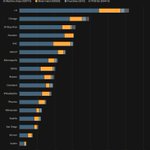
⏺️ CAPEX spend? China wins.
⏺️ R&D? China wins.
⏺️ State support? China wins.
And with that investment, China makes investing elsewhere more difficult, further cementing itself as a soon-to-be unavoidable producer of the world's base manufacturing feedstocks.
China isn't fundamentally advantaged over the US. At least not in most regards. More on this another time.
China made the choice to own this industry. And they are well on their way to owning it.
If we let them, then that is our choice.
The @Cefic / @Advancy_Global report on the European (and global) chemicals industry has a TON of eye opening data (link in comments). Thanks @GeorgeKapantai1 for bringing it to my attention and highlighting some of the important details therein.

1
53

On paper, the US is a great place to make chemicals. More top marks on competitiveness factors than any other region. Yet, our share of production shrinks every year. How come?
Most would tell you Chinese overcapacity is the leading issue, and they're probably right. The willingness of the Chinese to lose money hand over fist in order to maintain control is a big concern (more on this later).
But another major contributor is that we've let the technology fall behind the times. Our edge has shrunk to next to nothing.
Would we still be falling behind if we had new production technologies that we were proud to build? Plants we felt safe around?
I suspect not.
The hyper-commoditization of chemical manufacturing has put us in a bind. When a plant ages out in the US or Europe, that capacity increasingly gets replaced in Asia.
Why build a plant with 1960s technology in the US that will take years to permit and cause local outrage, when you can build that exact same plant with the exact same technology in China?
One by one, value chains slip away across the Pacific, and we slowly lose our chemical sovereignty.
The US will remain a dominant producer of ethylene and ethylene-derived products, thanks to our cheap shale gas and (relatively) new and modern capacity built to process that shale gas.
Everything else, though? If the technology doesn't change, I'm not sure we'll like the answer.
The story in Europe is different, and a whole lot worse. More on that soon.
Once again, thanks to @Cefic / @Advancy_Global for the awesome report on the European (and global) chemicals industry (link in comments).

1
1
73
Welcome to Chicago, @AmerChemSociety! The best city in the world, once the heart of American industry, and now a city striving to become the heart of American re-industrialization.
100 years ago: Chicago was where stuff got made. Not just meat, but chemicals and processes that shaped the modern world.
1
82
Keep sleeping and you’ll miss what’s coming. The next great chemical company that matters might not come from a coast. It might come from right here in Chicago. Chemical Sovereignty emanating from America's heartland.
1
18