



Pinned Tweet
So Guys
I found one of the weirdest things being built on Robinhood Chain.
It’s called FLUSH. @flushfun
Lets look at the idea behind what this team built?
Poker, but every card is a company.
At first, I thought it was just another crypto game.
Then I started looking into it.
Instead of getting normal playing cards, you get companies.
You keep the ones you want, redraw the others, and try to build the strongest hand.
And the interesting part:
Winning hands can pay out in the corresponding Robinhood Stock Tokens.
So a company like Apple isn't just something you hold.
In this game, it can become a card.
And that's where this got interesting for me.
We talk about tokenization all the time:
Stocks onchain.
RWAs.
Programmable assets.
Composability.
But those words can get pretty abstract.
@flushfun makes the idea much easier to see.
Robinhood puts financial assets onchain.
Then developers get to experiment with what those assets can actually become.
A lending asset.
A trading asset.
A collateral asset.
Or apparently...
a poker card.
The builder behind FLUSH is @dt_obrien , and the project is still extremely early.
But its launch attracted a surprising amount of attention for something this small.
I'm not particularly interested in predicting what happens to $FLUSH.
I'm more interested in the experiment itself.
Because maybe the interesting part of tokenization isn't simply putting stocks on a blockchain.
Maybe it's what people start building once they're there.
And if that's the case...
FLUSH might be a very small preview of a much bigger idea.
What else will people build when real-world assets become programmable?
🤖 Made with AI

Something I've been thinking about this week:
Crypto adoption isn't going to happen through one big breakthrough.
It might happen through several smaller improvements that make using blockchain technology less complicated.
Think about it.
Tokenized stocks are bringing traditional financial assets onchain.
Stablecoins are finding their way into familiar payment applications.
And blockchain networks are working on better infrastructure behind the scenes.
These developments look different, but they point towards the same question:
How do we make blockchain useful enough that people don't have to think about the technology every time they use it?
That's where I think the real progress should be measured.

Mike retweeted

New Airdrop: Refrax ($REFRAX)
➡️ Register: refrax.xyz
➖ Connect X account
➖ Submit SOL address
➖ Complete all quests
➖ Done
Season 0 points convert to allocation at launch.
📖 Source: nitter.cf/refrax_xyz/status/2115…
DYOR — Early stage project. Use a fresh wallet.


Mike retweeted

24H Perp DEX Briefing - Oct. 30, 2026.
$38.7B.
that's how much onchain perp volume printed in the last 24H.
a normal day lately has been $19–24B. this one cleared it by $15B.
➝ @HyperliquidX hit a solid double, coming in at $17.44B (reported)
➝ @variational_io rose 8% to $2.99B (reported)
➝ @Lighter_xyz surged 71% to $2.93B (normalized)
➝ @Aster_DEX climbed 57% to $2.21B (normalized)
➝ @grvt_io jumped 23% to $607M (normalized)
what a change for the DEXs in the last 24H. even grvt hit $600M while 3 others pulled 50%+ increases.
Binance paused withdrawals, and the flow went onchain.
the real question is what tomorrow looks like.
do you think the volume holds above $30B once Binance reopens, or we slide back to $20B?
Data via @DefiLlama.

Mike retweeted
less than six months ago,
@variational_io had no TradFi markets. now they're 43% of its open interest.
the DEX's total volume hit $114.2B in Q3, up from $62.8B in Q2 (per @AleaResearch).
average Open Interest rose from $410M to $741M, and it ended the quarter at $1.01B.
the newest stock perps, $AMC and $BAC, launched with zero fees and up to 20x leverage.
crypto perps built the market, but stock perps might be what grows it.
on the same week ICE picked Hyperliquid for US perps, Variational is showing there's real demand outside HL.
would you trade stocks on a perp DEX or still prefer a normal broker?

Imagine sending money to someone in another country without first having to explain what a crypto wallet is.
That's the interesting part of Samsung's move into stablecoin payments.
@SamsungMobileUS is bringing USDC transfers into Samsung Wallet for eligible users in the United States.
The planned rollout covers 82 million compatible Galaxy devices.
And there's something worth paying attention to here.
Users won't need to download a separate crypto app or manage private keys themselves to access the service.
Behind the scenes, different companies handle different parts of the process:
>> Bastion provides the payment infrastructure.
>> Coinbase handles custody.
>> Solana and Sui provide blockchain network support.
>> Samsung is essentially bringing the stablecoin experience into an app people already use.
I think this is an important direction for crypto.
Most people don't wake up wanting to learn about blockchains, private keys or transaction fees.
They just want to send money, receive money and know that it will get where it's supposed to go.
The real test, though, is whether the experience delivers on that promise.
Availability, transfer costs, supported countries and reliability will matter much more than the number of compatible devices.
Because making crypto accessible is one thing.
Making it genuinely useful is another.
Source: news.samsung.com/us/samsung-…


Imagine opening your wallet tomorrow and finding everything exactly where you left it.
Same balance. Same apps. Same network.
But behind the scenes, the team operating that network has changed.
That's what makes Unichain's move to OP Enterprise worth paying attention to.
@Uniswap says @Optimism will take over key parts of Unichain's production operations, including its sequencers, RPC services, monitoring and incident response.
For users, the aim is to keep the experience familiar.
But there's a bigger reason behind this move.
Unichain is preparing for native interoperability with OP Mainnet, which could let users move ETH between the two networks without relying on a separate third-party bridge.
Here's the part I find interesting:
> The infrastructure migration and the interoperability launch are two different things.
> Moving to OP Enterprise prepares Unichain for that future. It doesn't automatically make every cross-chain transfer available.
> The initial plan focuses on ETH, with activation still dependent on technical readiness and governance approval.
And I think that's an important distinction in crypto.
We often hear about what an upgrade will eventually enable, but the steps required to get there matter just as much.
A network can change how it's operated without changing what users see.
The real test is whether that transition works as intended—and whether the promised improvements actually arrive.
Mike retweeted

top of the morning, great people!
Made this video with Claude, help rate it out of 10.
btw, y’all should check out @GlowNexus_org
Something is cooking over there, and you don’t want to miss it.
Let’s have an amazing Thursday, guys! 🫶🏻
🤝 Paid partnership · 🤖 Made with AI

𝗜𝗳 𝘆𝗼𝘂’𝘃𝗲 𝗲𝘃𝗲𝗿 𝘁𝗿𝗶𝗲𝗱 𝘁𝗼 𝘀𝗲𝗻𝗱 𝗨𝗦𝗗𝗧 𝗮𝗻𝗱 𝗱𝗶𝘀𝗰𝗼𝘃𝗲𝗿𝗲𝗱 𝘁𝗵𝗮𝘁 𝘆𝗼𝘂 𝗻𝗲𝗲𝗱𝗲𝗱 𝗘𝗧𝗛 𝘁𝗼 𝗽𝗮𝘆 𝘁𝗵𝗲 𝗻𝗲𝘁𝘄𝗼𝗿𝗸 𝗳𝗲𝗲, 𝘆𝗼𝘂’𝘃𝗲 𝗮𝗹𝗿𝗲𝗮𝗱𝘆 𝘀𝗲𝗲𝗻 𝘁𝗵𝗲 𝗱𝗶𝗳𝗳𝗲𝗿𝗲𝗻𝗰𝗲 𝗯𝗲𝘁𝘄𝗲𝗲𝗻 𝗮 𝗰𝗼𝗶𝗻 𝗮𝗻𝗱 𝗮 𝘁𝗼𝗸𝗲𝗻 𝗶𝗻 𝗽𝗿𝗮𝗰𝘁𝗶𝗰𝗲.
It can be confusing at first. You have USDT in your wallet, you enter the recipient’s address, and you expect the transfer to go through. Then the wallet tells you that you also need ETH.
Why?
Because USDT and ETH play different roles.
A blockchain is a digital network that records and verifies transactions. You can think of it as a shared system that allows people to transfer digital assets without relying on one central company or database.
A coin is the native currency of its own blockchain.
For example:
— Bitcoin (BTC) runs on the Bitcoin blockchain.
— Ether (ETH) runs on Ethereum.
— SOL runs on Solana.
These coins are not just assets people buy and sell. They are also used to pay for activity on their respective networks.
If you send BTC on the Bitcoin network, the transaction fee is paid in BTC.
If you send ETH on Ethereum, the fee is paid in ETH.
If you use the Solana network, fees are generally paid in SOL.
A token, on the other hand, is a digital asset created on top of an existing blockchain. It does not need to operate on a separate blockchain of its own.
USDT is one of the most familiar examples. It is a stablecoin designed to track the value of the US dollar, but it can be issued on several different blockchains, including Ethereum, Tron, Solana, and others.
That means there is not just one version of USDT in every practical sense, the network it’s on matters.
USDT held on Ethereum is different from USDT held on Tron or Solana because each version uses a different network. The balance may still be shown as USDT, but the transaction rules and fee requirements depend on the blockchain being used.
This is where many people run into trouble.
Suppose your USDT is on Ethereum. To send it, you will usually need some ETH in the same wallet to pay the Ethereum network fee. Your USDT is the asset being transferred, but ETH is what pays the network to process and confirm the transaction.
Having enough USDT does not necessarily mean you have enough to send it.
If your USDT is on Tron, you may need TRX instead. If it is on Solana, you will generally need SOL. The required fee currency depends on the network where the token is located.
This is also why choosing the correct network when depositing or withdrawing crypto is so important. Sending an asset through the wrong network can cause delays, extra costs, or, in some cases, make the funds difficult to recover.
Coins and tokens can also serve very different purposes.
Some tokens are used for payments or transfers. Others give holders voting rights in a project. Some provide access to a product or service, while others are designed to represent assets, rewards, or ownership within a particular system.
A coin is not automatically better, safer, or more valuable than a token. The distinction mainly describes how the asset relates to a blockchain.
In simple terms:
➥ Blockchain: the network that records and verifies transactions.
➥ Coin: the native currency of its own blockchain.
➥ Token: a digital asset built on an existing blockchain.
➥ Network fee: the payment required to process a transaction.
➥ Fee currency: the coin used to pay that network fee.
So, if you remember only one example, remember this:
USDT may be the asset you want to send, but ETH, TRX, or SOL may be needed to pay the network fee, depending on where that USDT is held.
Quick question; before today, did you know that ETH is a coin while USDT is a token?


Mike retweeted

Happy Thursday guys ❤️
One thing I’m learning as I create content is that growth isn’t just about how much you post.
It’s also about how much you learn, how carefully you research, and how well you explain what you’ve learned to someone else.
Some days, the progress isn’t visible in your numbers. It’s in the way you think, write, and understand things better than you did yesterday.
That’s progress too.
Have a good day, everyone.
🤖 Made with AI


𝐈𝐧 𝐉𝐮𝐧𝐞 𝟐𝟎𝟐𝟏, 𝐚 𝐊𝐲𝐢𝐯 𝐚𝐩𝐚𝐫𝐭𝐦𝐞𝐧𝐭 𝐦𝐚𝐝𝐞 𝐫𝐞𝐚𝐥-𝐞𝐬𝐭𝐚𝐭𝐞 𝐡𝐢𝐬𝐭𝐨𝐫𝐲 𝐢𝐧 𝐭𝐡𝐞 𝐍𝐅𝐓 𝐦𝐚𝐫𝐤𝐞𝐭.
@PropyInc auctioned an NFT linked to the apartment for 36 ETH, worth around $94,000 at the time.
But the interesting part wasn't just the sale.
The apartment was held through a US LLC, and the NFT gave its holder rights connected to that company.
In other words, the token was tied to a legal ownership structure. It wasn't simply a digital deed that replaced every part of the traditional property system.
That's an important distinction in real-estate tokenization.
A token can represent different things depending on how the deal is structured: company interests, investment rights, or a mechanism connected to transferring property ownership.
So whenever you see a tokenized property, ask one question first:
What exactly does the token give its holder the right to own?
𝑹𝑾𝑨 𝑨𝑹𝑪𝑯𝑰𝑽𝑬: 𝑹𝑬𝑨𝑳 𝑬𝑺𝑻𝑨𝑻𝑬 02.

Mike retweeted
Now I’m obsessed with tokenization and Onchain finance…😫😫
By the way, how do I get to read all of these articles in one night…😂😂
I’d probably just stay up all night, that’s a joke guys 😂
Gn y’all and stay tokenized.
𝐈𝐧 𝐉𝐮𝐧𝐞 𝟐𝟎𝟐𝟏, 𝐚 𝐊𝐲𝐢𝐯 𝐚𝐩𝐚𝐫𝐭𝐦𝐞𝐧𝐭 𝐦𝐚𝐝𝐞 𝐫𝐞𝐚𝐥-𝐞𝐬𝐭𝐚𝐭𝐞 𝐡𝐢𝐬𝐭𝐨𝐫𝐲 𝐢𝐧 𝐭𝐡𝐞 𝐍𝐅𝐓 𝐦𝐚𝐫𝐤𝐞𝐭.
@PropyInc auctioned an NFT linked to the apartment for 36 ETH, worth around $94,000 at the time.
But the interesting part wasn't just the sale.
The apartment was held through a US LLC, and the NFT gave its holder rights connected to that company.
In other words, the token was tied to a legal ownership structure. It wasn't simply a digital deed that replaced every part of the traditional property system.
That's an important distinction in real-estate tokenization.
A token can represent different things depending on how the deal is structured: company interests, investment rights, or a mechanism connected to transferring property ownership.
So whenever you see a tokenized property, ask one question first:
What exactly does the token give its holder the right to own?
𝑹𝑾𝑨 𝑨𝑹𝑪𝑯𝑰𝑽𝑬: 𝑹𝑬𝑨𝑳 𝑬𝑺𝑻𝑨𝑻𝑬 02.
One thing I like about this space is seeing ideas slowly turn into things people can actually use.
Tokenized stocks trading beyond traditional market hours is interesting, but I’m more curious about how the liquidity side plays out in practice.
Still early, but definitely worth watching.
That’s me for today. Good night, everyone.

𝐓𝐨𝐤𝐞𝐧𝐢𝐳𝐞𝐝 𝐬𝐭𝐨𝐜𝐤𝐬 𝐜𝐚𝐧 𝐭𝐫𝐚𝐝𝐞 𝟐𝟒/𝟕.
𝐁𝐮𝐭 𝐭𝐡𝐚𝐭 𝐝𝐨𝐞𝐬𝐧'𝐭 𝐦𝐞𝐚𝐧 𝐭𝐡𝐞 𝐬𝐭𝐨𝐜𝐤 𝐦𝐚𝐫𝐤𝐞𝐭 𝐢𝐬 𝐨𝐩𝐞𝐧 𝟐𝟒/𝟕.
@Ondo just brought 15 tokenized stocks and ETFs to Robinhood Chain, with 11 paired in Uniswap pools against Robinhood Stock Tokens representing the same underlying securities.
The interesting part is what happens when traditional markets close.
Robinhood Stock Tokens can continue trading onchain over the weekend, but their own minting and redemption window closes.
That can create a problem.
If demand changes while new tokens cannot be issued and holders cannot redeem through the usual route, the token's market price can drift away from its expected value.
Ondo's integration introduces another route.
Traders can swap between the two tokenized products through Uniswap's StablePair pools, potentially helping them act on price differences and access an additional redemption path.
But there's an important distinction here.
A token that trades around the clock doesn't make the underlying stock market a 24/7 market.
The underlying market still has trading hours. Prices can diverge, liquidity can thin out, and access to redemption depends on the product's rules and eligibility requirements.
That's why tokenization is about more than putting stocks on a blockchain.
The real test is whether these systems can connect onchain trading with reliable pricing, liquidity and redemption.
24/7 access is a useful feature.
Making that access dependable is the harder part.

Mike retweeted
So guys , it’s been a while since I’ve dropped another episode of >> RWAs Facts Series…
Another one is dropping today by 5pm..
Trust me it’s an interesting read at that and we are actually exploring the Real Estate sector of the space…
Sit tight and see another interesting fact unfolds..
See you guys :)
Real-estate tokenization was already making headlines in 2018.
That October, an offering tied to the St. Regis Aspen Resort in Colorado raised $18 million through digital securities.
But here’s the part worth paying attention to.
The tokens didn’t simply represent ownership of individual hotel rooms.
They represented equity interests in Aspen Digital, the company associated with the resort.
In simple terms, investors were gaining exposure to the property through an investment structure rather than each receiving a portion of the hotel’s legal title.
That distinction is important.
Because when we talk about tokenizing real estate, the first question shouldn’t just be:
Can this property be put on-chain?
It should be:
What rights does the token actually give its holder?
That question sits at the heart of real-estate tokenization.
And it’s where our next chapter begins.
RWA ARCHIVE: REAL ESTATE 01.

Mike retweeted

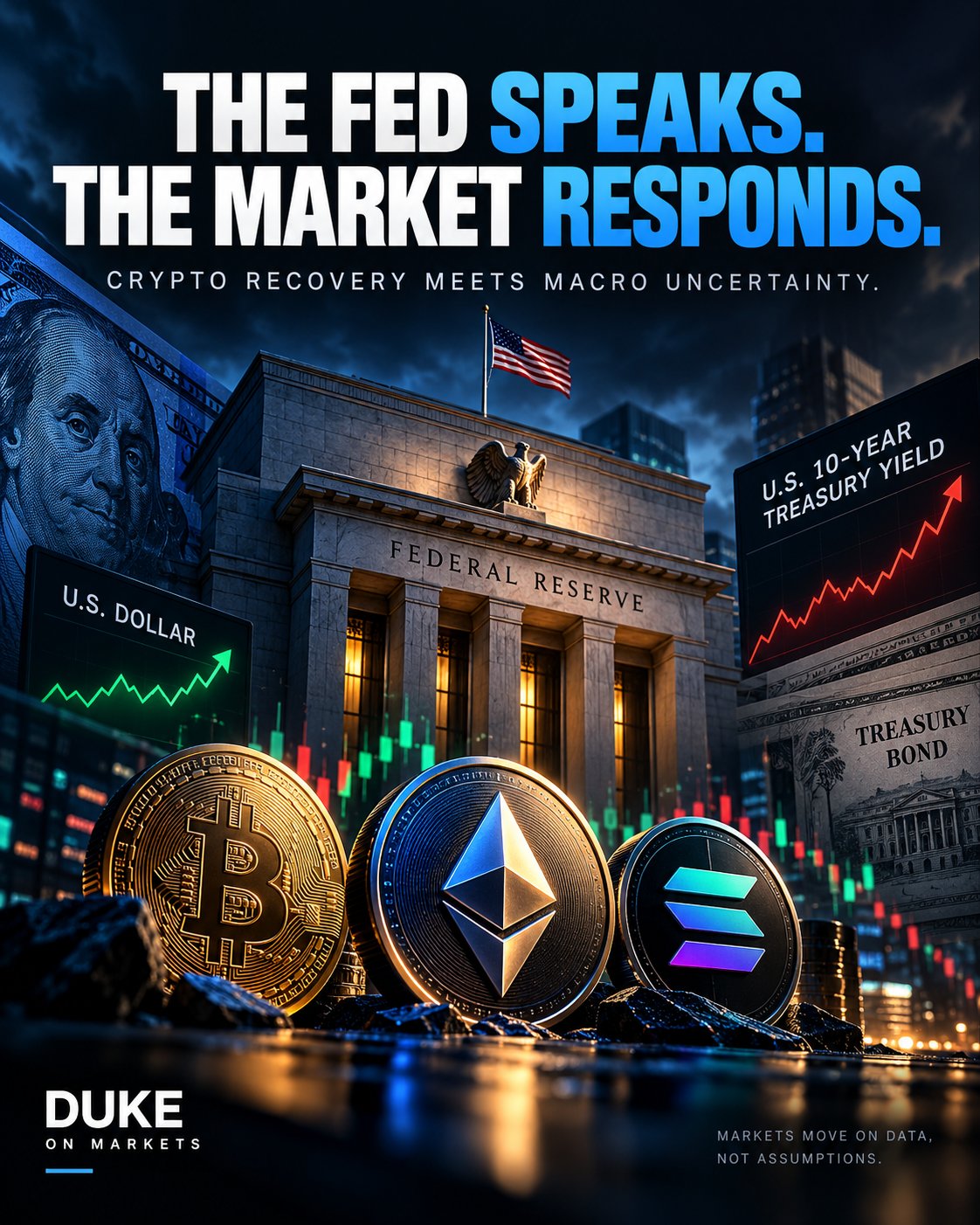
Crypto can rally before the Fed speaks and still struggle after the announcement.
That’s the part worth watching today.
$BTC has recovered toward $81K, while ethereum:native and several major altcoins have also moved higher ahead of the Federal Reserve’s decision.
But the macro picture is less comfortable.
The dollar is near a two-week high, and the US 10-year Treasury yield is above 5%.
That matters because higher yields can make riskier assets less attractive, especially if markets begin pricing in tighter monetary policy.
So I’m not looking at today’s Fed decision as a simple question of whether rates stay unchanged.
I’m watching what the Fed signals about the months ahead — and how crypto reacts.
If prices hold their gains despite a firm message, that tells us something about demand.
If the rally fades, the market may be telling us that expectations had run ahead of the evidence.
The announcement is the event. The market’s reaction is the information.
🤖 Made with AI
Mike retweeted
𝐈𝐧 𝐉𝐮𝐧𝐞 𝟐𝟎𝟐𝟏, 𝐚 𝐊𝐲𝐢𝐯 𝐚𝐩𝐚𝐫𝐭𝐦𝐞𝐧𝐭 𝐦𝐚𝐝𝐞 𝐫𝐞𝐚𝐥-𝐞𝐬𝐭𝐚𝐭𝐞 𝐡𝐢𝐬𝐭𝐨𝐫𝐲 𝐢𝐧 𝐭𝐡𝐞 𝐍𝐅𝐓 𝐦𝐚𝐫𝐤𝐞𝐭.
@PropyInc auctioned an NFT linked to the apartment for 36 ETH, worth around $94,000 at the time.
But the interesting part wasn't just the sale.
The apartment was held through a US LLC, and the NFT gave its holder rights connected to that company.
In other words, the token was tied to a legal ownership structure. It wasn't simply a digital deed that replaced every part of the traditional property system.
That's an important distinction in real-estate tokenization.
A token can represent different things depending on how the deal is structured: company interests, investment rights, or a mechanism connected to transferring property ownership.
So whenever you see a tokenized property, ask one question first:
What exactly does the token give its holder the right to own?
𝑹𝑾𝑨 𝑨𝑹𝑪𝑯𝑰𝑽𝑬: 𝑹𝑬𝑨𝑳 𝑬𝑺𝑻𝑨𝑻𝑬 02.
Real-estate tokenization was already making headlines in 2018.
That October, an offering tied to the St. Regis Aspen Resort in Colorado raised $18 million through digital securities.
But here’s the part worth paying attention to.
The tokens didn’t simply represent ownership of individual hotel rooms.
They represented equity interests in Aspen Digital, the company associated with the resort.
In simple terms, investors were gaining exposure to the property through an investment structure rather than each receiving a portion of the hotel’s legal title.
That distinction is important.
Because when we talk about tokenizing real estate, the first question shouldn’t just be:
Can this property be put on-chain?
It should be:
What rights does the token actually give its holder?
That question sits at the heart of real-estate tokenization.
And it’s where our next chapter begins.
RWA ARCHIVE: REAL ESTATE 01.
Mike retweeted
𝐓𝐨𝐤𝐞𝐧𝐢𝐳𝐞𝐝 𝐬𝐭𝐨𝐜𝐤𝐬 𝐜𝐚𝐧 𝐭𝐫𝐚𝐝𝐞 𝟐𝟒/𝟕.
𝐁𝐮𝐭 𝐭𝐡𝐚𝐭 𝐝𝐨𝐞𝐬𝐧'𝐭 𝐦𝐞𝐚𝐧 𝐭𝐡𝐞 𝐬𝐭𝐨𝐜𝐤 𝐦𝐚𝐫𝐤𝐞𝐭 𝐢𝐬 𝐨𝐩𝐞𝐧 𝟐𝟒/𝟕.
@Ondo just brought 15 tokenized stocks and ETFs to Robinhood Chain, with 11 paired in Uniswap pools against Robinhood Stock Tokens representing the same underlying securities.
The interesting part is what happens when traditional markets close.
Robinhood Stock Tokens can continue trading onchain over the weekend, but their own minting and redemption window closes.
That can create a problem.
If demand changes while new tokens cannot be issued and holders cannot redeem through the usual route, the token's market price can drift away from its expected value.
Ondo's integration introduces another route.
Traders can swap between the two tokenized products through Uniswap's StablePair pools, potentially helping them act on price differences and access an additional redemption path.
But there's an important distinction here.
A token that trades around the clock doesn't make the underlying stock market a 24/7 market.
The underlying market still has trading hours. Prices can diverge, liquidity can thin out, and access to redemption depends on the product's rules and eligibility requirements.
That's why tokenization is about more than putting stocks on a blockchain.
The real test is whether these systems can connect onchain trading with reliable pricing, liquidity and redemption.
24/7 access is a useful feature.
Making that access dependable is the harder part.
🤖 Made with AI

Mike retweeted
Solana has outperformed Ethereum over the past 90 days.
But that doesn't automatically mean Solana is winning the next leg of the market.
Both assets have been under pressure over the past month, and recent data points to cooling DEX activity across major ecosystems.
That creates an important distinction.
Price performance tells us which asset has held up better over a period.
Network activity helps us understand whether people are actually using the ecosystem.
Neither metric tells the whole story on its own.
For SOL, the question is whether its relative strength can hold up when market conditions improve.
For ETH, the question is whether demand and ecosystem activity can strengthen enough to close the performance gap.
I'm watching both, but I wouldn't declare a winner based on price alone.