
Associate professor in economics, Aarhus University
Aarhus, Denmark
Joined March 2018
- Tweets115
- Following310
- Followers338
- Likes626


Kristoffer Hvidberg retweeted

My views on AI have radically shifted over the past few weeks, after spending way too much time reading about it and watching interviews of industry leaders and experts.
First, I really love the tools. I spend $200 on Claude every month and the product is worth every penny for me. Probably even more. I think the existing tools can deliver significant increase to future GDP and help us solve major global challenges faced by humanity.
However, I just cannot comprehend why the industry is not much more regulated, as its leaders and employees seem to request themselves. I meet a lot of people who have heard of the hugging face incident but don’t know the actual chain of events. If you don’t, you definitely should spend a least an hour reading about it.
I also do not know why we need to follow the path that frontier labs are following, to develop ever more powerful models. It seems to me that they are enormous gains that are readily available if we deploy the current technology in economic and scientific organizations without pursuing a super intelligence that they say might kill us and more likely wreak havoc in society. I know a lot of people think these warnings are marketing tricks, and that’s a reasonable assumption. But I don’t see the point of taking such risks.
My median scenario is that of many economists: AI will diffuse slowly and lift gdp growth by a percentage point or so, will cause some economic disruption on the way, but ultimately people will get new jobs and maybe work less.
However, I am deeply uncomfortable with the absolutely wild level of uncertainty around this prediction. And to be honest, even setting the doom scenarios aside, I find the utopia scenarios of some industry leaders actually dystopian. And I think a large majority of the public would agree if they paid attention to what they’re saying. To their credit, they themselves agree publicly that they should not be the ones making these choices. A large majority of the public is now very skeptical of AI as a source of human progress, in particular among younger adults who use it the most. They should have a say.
I don’t want to convince you of anything but to get informed about this topic, express yourself and vote accordingly.
Kristoffer Hvidberg retweeted

An influential paper by Ariely & Wertenbroch (2002) reported two studies with tampered data.
Post 1 of 2.
datacolada.org/138

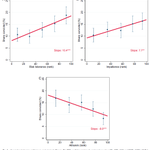
New paper: Do teenagers' economic preferences shape the education they choose? Using incentivized experiments linked to Danish register data, we find more patient youth pick longer, higher-growth programmes, and more risk-averse youth pick safer ones. pnas.org/doi/10.1073/pnas.26…

Hvis bare vi vidste noget mere om, hvordan skandinaver med store formuer reagerer på formueskat🤔
Hov: nber.org/papers/w32153
@CEBI_UCPH

Kristoffer Hvidberg retweeted

🚨 Job alert:
I’m hiring a postdoc in Stockholm to work with me, @marome1 @karthik_econ on edu policy in India
Flexible duration: 1 yr (if you have an AP job lined up) or 2 yr.
The aim is to coauthor high quality papers.
econjobmarket.org/positions/…
More details below ⬇️ (1/4)
Kristoffer Hvidberg retweeted

Virker det at jobsøge på virksomheder, der ikke har opslået stillinger? Det kan der være flere svar på. videnskab.dk/kultur-samfund/… #dkvid #dkforsk #nyforskning

Kristoffer Hvidberg retweeted

There's been a lot of debate about what economic theory says regarding tariffs.
Drawing on my research with quantitative economic models, here's a thread explaining the textbook logic for why "tariffs are bad" for revenue generation.
🧵 Let’s dive in!

I’m not a trade economist. So I’m mainly a consumer of trade economics research. I was trained in classical models, so I get the tariffs bad argument. However, I’ve read @michaelxpettis a bit.
Is there a succinct economics paper (yes, with modeling) that helps me weigh the Pettis view about trade / capital flows, and reconcile it (or not) with traditional models. I want to understand the debate on capital flow restrictions v. Tariff+corporate tax cuts.
@jmhorp @D_A_Irwin @JohnHCochrane
Kristoffer Hvidberg retweeted

📢We are hiring📢
@ifo_Institut is looking to fill 5 positions, incl. one
6-year Postdoc🧑🎓
to join our team at the ifo Center for the Economics of Education!
👉econjobmarket.org/positions/…
Deadline: 24 Nov 2024
Please spread the word!
@ifo_Education @LMU_Muenchen #EconTwitter


Ready for an exhilarating journey in the realm of economic research?🌍✨We are hiring on @EconJobMarket. Find your next challenge in #Munich and make a real impact! 🚀econjobmarket.org/positions/… #ifoCareers #EconTwitter #EconomicResearch @CESifoNetwork

Kristoffer Hvidberg retweeted

Økonomer har brug for både bedre medspillere og bedre modspillere. Tag kurset "Økonomers verdensbillede - økonomi for ikke-økonomer" og bliv begge dele. Undervisningen finder sted over 3 dage i februar og marts 2025. Læs mere her: efteruddannelse.ku.dk/samfun…

Kristoffer Hvidberg retweeted

Tak - det var en fornøjelse at være med! Min medvirken i Lone Franks 24 spørgsmål til professoren kan høres nu. Vi får snakket om betydningen af arv OG miljø, bl.a. hvordan den sociale ulighed bliver større, fordi forældres brug af tid med deres børn afhænger af børnenes genetik.

I’m thrilled to announce that I am joining the Department of Economics and Business Economics at @Aarhus_BSS as an Associate Professor this fall!

Thanks a lot to everyone at @Economics_UCPH and @CEBI_UCPH for 7 wonderful years as PhD and Postdoc, and in particular to @okoCTK, Søren Leth-Petersen, and @NikHarmon for all your support!
Kristoffer Hvidberg retweeted

What works in financial education?
The paper with Tim Kaiser, "Financial Literacy and Financial Education: An Overview," is now out in the @nberpubs working paper series.
nber.org/papers/w32355

Super happy to see that this great overview includes my work on economics education and financial problems!

What works in financial education?
The paper with Tim Kaiser, "Financial Literacy and Financial Education: An Overview," is now out in the @nberpubs working paper series.
nber.org/papers/w32355
Kristoffer Hvidberg retweeted

📢 We are hiring 📢
Join our team in Bonn! We're seeking a Postdoc in labor and/or behavioral economics for initially 2 years.
👉 Apply now: econjobmarket.org/positions?…

Kristoffer Hvidberg retweeted
It is #GlobalMoneyWeek2024 & time to talk about money! In this post, I want to link to the presentation I gave to students at @Harvard last Fall. It covers several topics that make GMW a very important initiative & also an opportunity to push for changes:
gflec.org/wp-content/uploads…

Kristoffer Hvidberg retweeted

Top Econ student + interests in economic behavior and inequality 👉 apply for PhD scholarships at @CEBI_UCPH @Economics_UCPH Deadline March 3 👉 employment.ku.dk/phd/?show=1…
Kristoffer Hvidberg retweeted
Great article in Weekendavisen (in Danish) covering our recent AER paper. Genetic effects on skill formation do not rule out an important role of parents - in fact, parental investments are one of the mechanisms through which genetic effects operate. weekendavisen.dk/2024-8/idee…

Kristoffer Hvidberg retweeted

📢 Come and join our amazing team! Application deadline is March 3rd 👇 employment.ku.dk/phd/?show=1…

Top Econ student + interests in economic behavior and inequality 👉 apply for PhD scholarships at @CEBI_UCPH @Economics_UCPH Deadline March 3 👉 employment.ku.dk/phd/?show=1…