

Indie publisher since 2018. 450K+ book units & $2M+ in KDP royalties. Sharing what I've learned about self-publishing, Amazon Ads & building a book business.
Joined May 2022
- Tweets410
- Following545
- Followers510
- Likes565



Pinned Tweet
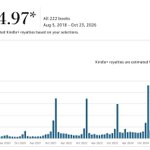
I've published 222 books on Amazon since 2018.
450,000+ book units processed.
$2M+ in estimated royalties.
And more failed experiments than I can count.
Here are 8 lessons I wish I'd known before publishing my first book:

There's an old fable by Aesop about a farmer who owned a rather unusual goose.
Every morning, when he visited the barn, he found something extraordinary waiting for him.
A golden egg.
Not an egg painted gold.
An egg made of solid gold.
At first, the farmer couldn't believe his luck.
He took the egg to the market, sold it for a small fortune, and returned home delighted.
The next morning, there was another.
And another the day after that.
Soon, the farmer was earning more money than he'd ever imagined.
He bought new clothes, improved his house, and no longer worried about putting food on the table.
But as his wealth grew, so did his greed.
One golden egg a day no longer seemed like enough.
He began thinking:
"If this goose can produce a golden egg every morning, imagine how much gold must be inside it!"
Why wait months or years to collect his fortune?
Why not have it all today?
So one morning, instead of collecting his usual egg, the farmer grabbed a knife.
He killed the goose and cut it open.
But there was nothing inside.
No pile of gold.
No hidden treasure.
Just an ordinary goose.
And now the farmer had lost the one thing that had made him wealthy.
I think about this story a lot when it comes to Amazon KDP.
Imagine you've published a book that's consistently making $1,000 profit every month.
It's ranking well.
The reviews are strong.
Your advertising campaigns are profitable.
You've found a little golden goose.
But then you start wondering...
What if I could get it into the top 1,000 bestseller rankings?
What if I doubled my advertising budget?
What if I could turn $5,000 in monthly royalties into $10,000?
So you start increasing your bids.
You launch more campaigns.
You target more competitive keywords.
And it works.
Your sales increase.
Your bestseller rank improves.
Your royalty dashboard has never looked better.
But there's a problem.
Your advertising costs have grown even faster.
That book that was making $1,000 profit each month?
Now it's making $300.
You've tripled your workload, increased your risk, and reduced your actual earnings.
All because you wanted to squeeze more out of something that was already working.
I've published over 200 books, and one of the biggest lessons I've learned is that more sales don't always mean more money.
Sometimes scaling advertising is absolutely the right decision.
Other times, the smartest thing you can do is leave a profitable campaign alone.
Because the goal isn't to have the highest royalties.
Or the lowest bestseller rank.
Or the most impressive screenshots to share online.
The goal is to build a profitable publishing business.
Don't kill a goose that lays golden eggs just because you're impatient for more.
1
66
“The market doesn't like my book.”
“The algorithm isn't favouring me.”
Stop blaming things you can't control.
Is your book actually good?
Does it solve a problem?
Does it have a beautiful, professional cover?
Would you buy it over the competition?
Stop trying to please the algorithm.
Start trying to please your readers.
8
308

I’ve published 222 books.
My top 15 generated 83% of my KDP royalties.
Here’s what that taught me:
Not every book deserves the same amount of attention.
When you find a winner, double down.
Don’t let your best books get neglected because you’re too busy launching your next one.
2
20
799
Amazon Ads are an amplifier.
Not a miracle worker.
If your book has no demand, a weak cover or a confusing title, throwing more money at ads won’t fix it.
You’ll just lose money faster.
Fix the product before you scale the advertising.
Don’t just study Amazon’s US Top 100 Best Sellers.
I also have the UK, Australia, Germany, and France bookmarked.
Sometimes you’ll spot indie publishers competing with the big guys.
Sometimes a book that’s taking off in one country hasn’t caught on in another.
And if you speak another language?
That could be your unfair advantage.
Nobody cares that you spent 6 months writing your book.
They care whether it’s worth buying.
You could spend a year writing a masterpiece and sell 10 copies.
Or spend a month creating a useful book that sells thousands.
Effort doesn’t create demand.
The market decides.
My girlfriend started her account 90 days ago. $2000 royalties - $500 ads. That’s $500/month profit in three months from three books. You don’t need dozens and dozens. Just a few executed properly. 🚀


One successful book can be dangerous.
You start thinking you've cracked the code.
So you rush to publish five more just like it.
Then none of them sell.
One winner proves an opportunity existed.
It doesn't prove you've found a formula.
Stay curious. Keep testing.
Struggling to find book ideas?
Look at your own life.
Your hobbies. Your interests. Your latest obsession.
Next time you’re talking to a friend, get curious.
What are they passionate about? What makes them tick?
I recently got into HYROX. A whole new world of potential book topics.
Book ideas are everywhere.
You just have to pay attention.
I shared my October KDP royalties last week and gained over 100 followers overnight.
Since then, my inbox has been full of questions.
After 8 years and 222 books published, here are my answers to the 5 questions I keep getting:
1. I'm struggling with my book cover. Any advice?
Do the squint test.
People are scrolling through Amazon a million miles an hour.
Shrink your cover to thumbnail size and squint.
Can you still read the title and immediately understand what the book is about?
If not, make it clearer.
Clarity > Cuteness.
2. Why isn't my memoir or novel selling?
This is a tough one.
If you're writing a passion project with the expectation of making money, you're playing on hard mode.
Unless you're already famous or have an audience, getting strangers to care about your personal story is difficult.
When was the last time you bought a memoir from someone you'd never heard of?
If your primary goal is making money, consider starting with a book that solves a specific problem.
Find a pain point. Understand the reader. Make your book the solution.
That doesn't mean fiction can't sell. It absolutely can. But it's a different game.
3. What niche are you in?
It doesn't matter nearly as much as you think.
I used to believe there was some secret niche out there that nobody knew about.
There isn't.
People are making great money in all sorts of markets.
Find a topic you already know well, or one you're willing to spend 20–100 hours learning about.
Study the readers. Understand their problems. Figure out what's missing from the books already available.
Then create something better.
A clear, keyword-relevant title and subtitle. A useful description. A beautiful cover that communicates the topic instantly.
You don't need a secret niche.
You need to serve a market better than the competition.
4. What's your secret? How did you achieve these numbers?
90 minutes of deep work.
Every day.
For 8 years.
Writing. Editing. Researching. Learning. Making mistakes. Trying again.
Some books succeeded. Plenty flopped.
But I kept showing up.
There was no magic keyword, secret algorithm trick or overnight breakthrough.
Just thousands of hours spent getting a little better.
This is a marathon, not a sprint.
Keep going.
5. How can I get better answers to my KDP questions?
Life rewards the specific ask and ignores the vague wish.
Instead of asking "How can I make money on KDP?", ask something specific.
The better your question, the better my answer.
Drop your questions below and follow me so you don't miss the answers in my next post!

You don’t need to beat every book on Amazon.
Just the books your customers are comparing yours against.
Study the top 10 competitors in your niche.
Their covers. Titles. Prices. Reviews.
Find out what readers are missing.
Then make something better.
1
13
459
There's an old story about the British government trying to solve a cobra problem in India.
The streets of Delhi were supposedly crawling with venomous snakes.
So the government came up with a simple solution.
They offered a cash reward for every dead cobra brought in.
And it worked.
Or so they thought.
Thousands of dead cobras were handed in, and the officials congratulated themselves on a job well done.
But something strange was happening.
A few enterprising locals had realized there was more money to be made breeding cobras than hunting them.
So they started cobra farms.
They'd breed the snakes, kill them, collect the reward, and repeat.
Eventually, the British caught on.
Furious, they cancelled the bounty program.
But now the cobra breeders had hundreds of snakes they could no longer sell.
So what did they do?
They released them.
The government had tried to reduce the number of cobras.
Instead, they'd made the problem worse.
This became known as the Cobra Effect.
And I've seen something similar happen countless times in self-publishing.
An author wants to make more money from their books.
So they increase their Amazon Ads budget.
Sales go up.
Their bestseller rank improves.
Royalties hit new highs.
Everything looks fantastic.
Except for one small detail.
Their advertising costs have increased faster than their royalties.
They were making $1,000 profit with $3,000 in royalties.
Now they're making $500 profit with $8,000 in royalties.
More sales. More revenue. Less money.
I've learned that growing your royalties and growing your publishing business aren't always the same thing.
Sometimes the very thing you're doing to improve your results is making them worse.
Don't confuse a bigger number with a better outcome.
3
7
397
Forget the 10,000-hour rule.
Think 10,000 iterations.
I’ve published everything from low-content books and colouring books to workbooks and full-length nonfiction.
Different topics. Different formats. Different audiences.
Some succeeded. Plenty flopped.
But every book taught me something.
You don’t get better at publishing by thinking about publishing.
You get better by publishing.
1
5
308
Your first book probably won’t make you rich.
Good.
It’ll teach you how to research a niche, design a cover, format a manuscript, upload to KDP and run ads.
You can watch 100 YouTube tutorials.
But nothing teaches you publishing like actually publishing.
Your first book is your tuition fee.
I’ve published 222 books.
Not all of them were winners.
Some barely sold.
But the failures taught me things the bestsellers never could.
What topics to avoid.
What covers don’t convert.
When to stop spending on ads.
A failed book is only a waste if you learn nothing from it.

One of my biggest mistakes after publishing 200+ books?
Always chasing the next one.
New topic. New cover. New launch.
Meanwhile, books that were already selling weren’t getting enough attention.
Sometimes the best opportunity isn’t your next book.
It’s the one you’ve already published.