

Denoising present to hopefully get brighter future | loves diffusion models
GPU
Joined May 2024
- Tweets3.2K
- Following393
- Followers2.4K
- Likes59.3K




Krishna Mohan retweeted

NVIDIA Board reinstates Jensen Huang as President, CEO and Board Director.
Read the release: nvidianews.nvidia.com/news/n…

Krishna Mohan retweeted

Introducing Gemini 4 Carbon, it's a big jump over Argon which we released just 2 weeks ago.
Gemini 4 Carbon is SOTA on cyber, long horizon tasks, ranks #1 on Artificial Analysis V5, significantly improves on usability in domains like coding, and is more aligned.

Krishna Mohan retweeted

Introducing Kimi K3.1 Pro: our most capable 3T-class open-weight model.
🔹 1M-token context, 2.8T total / 104B active params (MoE), Multimodal.
🔹 Full-project coding: games in Unreal, Unity & Godot.
🔹 Excels at parametric 3D modeling in Blender & CAD.
🔹 More reliable at finance work: Accurate modeling with hallucination down by 65%.
🔹 Matching the strongest proprietary models across coding, agentic and knowledge benchmarks.
Kimi K3.1 Pro and K3.1 Pro Highspeed (2–3× faster) are now live on Kimi.ai, Kimi Work, Kimi Code, and the Kimi API.
Open weights by Nov 4, 2026.
🔗 API: platform.kimi.ai
🔗 Tech blog: kimi.ai/blog/kimi-k3-1-pro

Krishna Mohan retweeted

🚀 Introducing DeepInfer, our in-house inference framework, now fully open source!
Powering DeepSeek-V4.1-Flash at scale with high throughput and low latency. We’re sharing our production stack to help the community lower compute costs, reduce energy use, and make AI more affordable.
🔗 github.com/deepseek-ai/DeepI…
1/4


Krishna Mohan retweeted
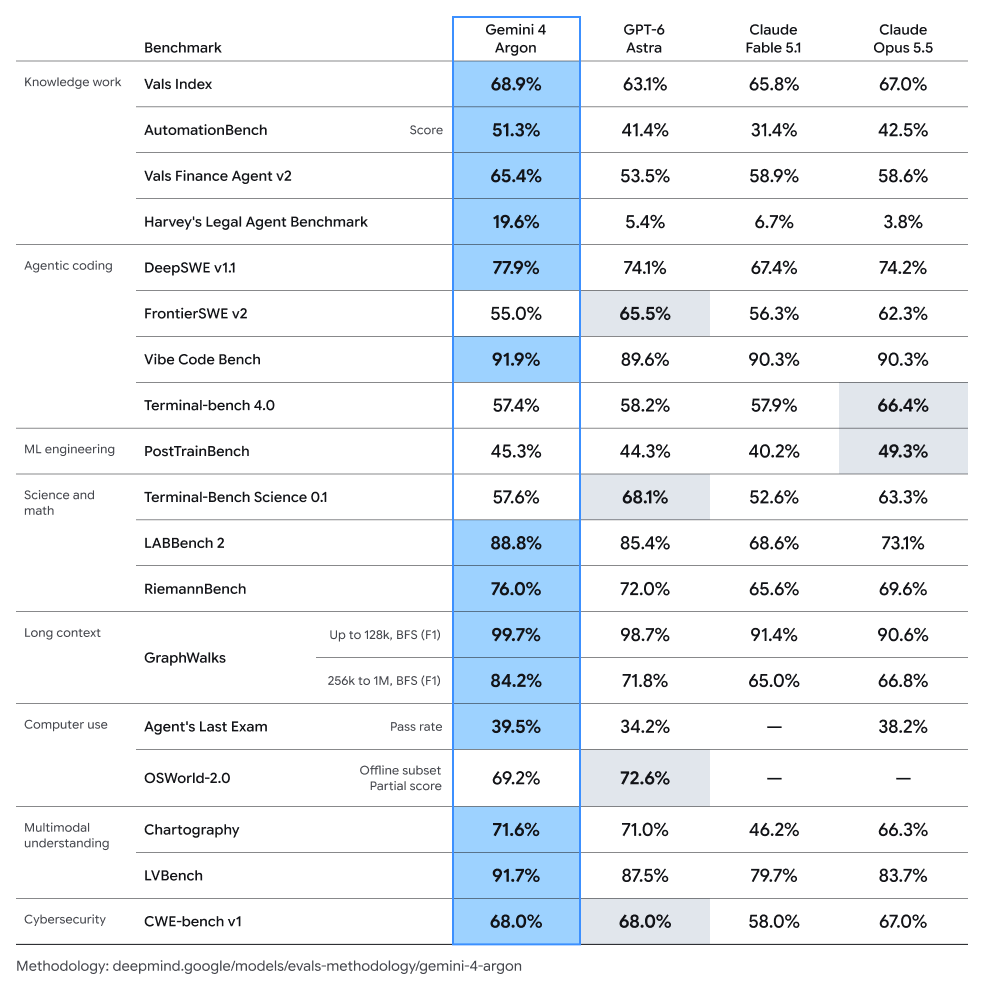
Introducing Gemini 4 Argon – our new frontier model.
It’s built for complex workflows across coding, enterprise knowledge work, and cybersecurity defense – rolling out today to a set of trusted testers through our Fairwind Program.
Krishna Mohan retweeted

Claude has discovered a previously unknown enzyme system hidden in the DNA of bacteriophages. Beside the enzyme’s gene sits a long array of repeating DNA—a structure that looks somewhat similar to CRISPR.
We don’t yet understand what this system does, but only a handful of known systems share its features, and all of them are able to cut, copy, and paste DNA. Historically, the discovery of such programmable systems has helped revolutionize medicine. CRISPR, for instance, is now the foundation of genetic medicines. But it will take much more work to learn what this system does, and whether it can be put to similar use.
Read more: anthropic.com/news/claude-di…


Krishna Mohan retweeted
🚀 Introducing DeepSeek-V4.1-Flash: smarter, faster, more efficient.
🔹 Introducing the smallest model in our new architecture family, with native visual understanding.
🔹 Designed for greater capability, faster inference, higher throughput, and scaling to larger models.
1/6

Krishna Mohan retweeted

We’re sharing a solution to the Navier-Stokes Millennium Prize Problem, one of the deepest problems at the frontier of mathematics.
The proof was produced by a group of agents, using an OpenAI next-generation model significantly more capable than GPT-6 Astra.
The problem concerns whether the description of smooth three-dimensional fluid motion modeled by the Navier-Stokes equations can break down. It has remained unresolved for roughly 90 years.

Krishna Mohan retweeted

Introducing Gemini 3.8, our best reasoning & coding model yet.
By leveraging long-running agentic loops, we’re building on the momentum of 3.7 Flash from just three weeks ago to release two new 3.8 variants:
Meet Gemini 3.8 Flash and Gemini 3.8 Flash Cyber 🧵

Krishna Mohan retweeted

In this (extremely long) video, I'll build a distributed training framework from first principles using PyTorch.
We'll derive everything from first principles, explaining the mathematics behind distributed training as well as every auxiliary component we build along the way, including Multi-head Latent Attention (MLA), Rotary Position Embeddings (RoPE) and YaRN.
I'll explain process groups, ranks, collective communication operations, distributed autograd, device meshes and distributed tensors, and then use these foundations to implement the major forms of parallelism used to train modern language models.
We'll derive and code pipeline parallelism, data parallelism, FSDP, HSDP, tensor parallelism and context parallelism, including pipeline schedules, block matrix multiplication, model sharding and ring attention. We'll then combine these techniques and examine how tensor layouts and gradients must be tracked as data moves between devices.
Most importantly, we won't study each parallelism technique in isolation. We'll combine pipeline, data, tensor, context and expert parallelism into a single working framework and follow the tensors, communication operations and gradients as they move across GPUs. By the end, you'll understand not only how these techniques work individually, but how modern distributed training systems compose them to train large dense and mixture-of-experts models.
We'll also build the important components of a modern transformer, including rotary embeddings, long-context extensions, multi-head latent attention and a mixture-of-experts architecture. This leads into expert parallelism, expert tensor parallelism, token dispatching, all-to-all communication and combining different parallel dimensions through dense and sparse device meshes.
We'll also build the supporting training infrastructure, including the training loop, optimizer, learning-rate schedule, checkpointing and metrics.
The goal is to give you the foundations required to understand how distributed training frameworks work internally and how to design and implement new parallelization strategies yourself. No prior knowledge of distributed training is required.
Link to the video: youtube.com/watch?v=XoGvCBRn…

Krishna Mohan retweeted
Gemini 3.7 Flash is here.
It’s stronger for coding, knowledge work, and web development. 🧵
Krishna Mohan retweeted
We’re launching DeepSeek-V4-Pro today! 🚀
🔷 Major Agent upgrades with strong production gains!
🔷 Flexible reasoning effort for V4-Pro & V4-Flash: low for simple tasks, high for daily Agent workflows, max for complex tasks.
🔷 Native OpenAI Responses API support, optimized for Codex with one-click setup.
V4 Pro is now available on app/web. Try it via “Expert Mode”.
V4 Pro is also available via API. Model names remain unchanged—please refer to the API docs for setup details.

Attention Guys ❗🚨🚨
Both accounts @shxf0072 and @moderator_yale trying to phish people accounts here pretending to be some twitter employee
Please be safe and aware
Don't share any personal info with them


Krishna Mohan retweeted
Releasing the model weights and technical report of Kimi K3.
Kimi K3 is our most capable model: a 2.8T MoE model with native visual understanding and a 1M-token context window.
New model architecture: 2.5x the intelligence per unit of compute, not just more params.
Alongside Kimi K3, we're opening up more of the stack behind it — high-performance attention kernels, MoE communication library, and infrastructure for running agent environments at scale.
Model weights: huggingface.co/moonshotai/Ki…
Tech report: github.com/MoonshotAI/Kimi-K…
Tech blog: kimi.com/blog/kimi-k3

Krishna Mohan retweeted
Introducing Kimi K3: Open Frontier Intelligence
🔹 2.8 Trillion Parameters, 1 Million Context, Native Multimodal
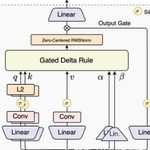
🔹 Kimi Delta Attention enables up to 6.3x faster decoding in million-token contexts
🔹 Attention Residuals deliver ~25% higher training efficiency at <2% additional cost
🔹 Built for long-horizon agentic coding and self-evolving workflows
Kimi K3 is now live on on Kimi.com, Kimi Work, Kimi Code, and the Kimi API.
Open Weights by July 27, 2026.
🔗 API: platform.kimi.ai
🔗 Tech blog: kimi.com/blog/kimi-k3


Krishna Mohan retweeted

New in-depth blog post time: "Inside TPU and GPU Clusters: The Anatomy of Collective Communication".
If you want to deeply understand the core primitives behind scaling the training / inference for MoEs and dense transformers, going a level below FSDP, expert parallelism, data parallelism, model/tensor parallelism this might be a fun read.
I cover:
* TPU cluster topology: (super)pods, slices, DCN, PCIe, ICI
* All-Gather: 1D/2D rings, and path algo (lots of visuals so should be crystal clear how these work even if you're not a perf engineer)
* Reduce-Scatter (which is the dual of AG) and All-Reduce
* All-to-All (used to dispatch tokens to target experts in MoEs)
* NVIDIA GPU cluster topology (reference DGX architecture): nodes, scalable units, fat tree
* GPU collectives within the node: rings, trees (log2 steps), and SHARP (in network compute unit)
* GPU collectives across nodes, hierarchical algorithms over InfiniBand
etc.
I was heavily inspired to do this deep dive after reading the excellent Scaling book by an excellent group of people @jacobaustin132 @_sholtodouglas @reinerpope and others!
What originally started as "let me maybe just make four figures covering All-Gather, Reduce-Scatter, All-Reduce, and All-to-All so I can understand them better, it shouldn't take more than a day, right, right?" somehow turned into this 40 figures later.
Along the way, I realized that the collective algorithms only really make sense once you understand the underlying hardware topology. TPUs were a bit easier to reason about, but I couldn't skip GPUs, I love them too much. Rings are cool, but I also wanted to understand tree algorithms. But also SHARP, and fat trees, and hierarchical collectives. :')
So the scope slowly expanded, and little by little, this blog post came to fruition. Just a side-quest.
Hope you like it! :)
---
Also a big thank you to my friends for reviewing the blog and providing feedback:
* @ArunDemeure (prev GPU/AI stuff at Magic, GPU architect at Apple and Imagine, my llm.c buddy!)
* @axel_s_feldmann (making GPUs go brrr at Jane Street, we met for the first time at @marksaroufim's excellent GPU mode event)
* @pranjalssh (ex xAI GPU wizard, one of two people who inspired my original matmul blog!)
