

CEO of TradeSmith, a leading fintech and quantitative investment research firm. Investors trust over $30 billion to be monitored and analyzed on our platform.
Joined October 2022
- Tweets2.6K
- Following217
- Followers5.4K
- Likes1.1K


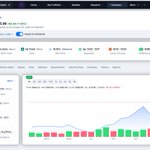
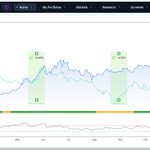

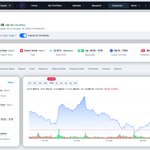


AMD $AMD reports Tuesday, Nov 3, and the Street is looking for $1.94 of EPS on $13.08 billion of revenue.
The setup has changed since summer. AMD's Anthropic deal covers up to 2 gigawatts of MI450-series chips, with the first gigawatt deploying from the first half of 2027. AMD also committed to invest up to $5 billion in Anthropic's equity, released in stages as deployments hit milestones.
Now Anthropic has filed to go public, and one analysis of the filing puts AMD's compute commitment at more than $20 billion starting in 2027.
The stock has been moving with it. AMD rose 5.45% Tuesday to $560.26 after putting $1 billion into Meta's stock offering, then added 3.24% Wednesday. It was down about 2.8% before the open today with the rest of the chip group.
TradeSmith's Quantum Score on AMD reads 94.9.
Tuesday's call is the first chance to hear how the MI450 ramp lines up with those dates.
What matters more Tuesday: the quarter or the 2027 timeline?
Preferred shares sit between the bondholders and the common shareholders.
They pay a fixed dividend, and that dividend gets paid before common stock sees any. In a liquidation, preferred holders get paid before common too. The trade: usually no vote, and almost no upside if the company takes off.
You are buying steady income with priority, not a stake in the growth.
CoreWeave $CRWV paid $640 million of interest expense in the second quarter, up from $267 million a year earlier.
That one line explains Friday's neocloud selloff better than any headline.
CoreWeave fell about 11% to $54.34 by midday. Earlier this week, its 2032 unsecured bonds dropped below 80 cents on the dollar, according to Bloomberg, and the stock fell 15.5% that day.
The demand side still looks strong. CoreWeave reported a $104.2 billion revenue backlog as of June 30. Its CEO said in August that near-term capacity "remains effectively sold out."
So the debate is not whether people want the compute. It is whether the companies selling it can finance it at a price that leaves room for profit.
That is the lens for the next two weeks. Iren $IREN reports Nov 5, and Nebius $NBIS follows in mid-November. Watch interest costs and funding plans as closely as revenue.
Which number will you check first in these reports: backlog or interest expense?
Only about 11% of active pharmaceutical ingredient manufacturers are based in the U.S. Thermo Fisher $TMO, Waters $WAT and Agilent $A all just hit new one-year highs.
So did Mettler-Toledo $MTD and Revvity $RVTY. Same day, same group.
These companies are the picks and shovels of the drug industry. They sell the lab instruments, diagnostics, specialty chemicals and manufacturing equipment used to discover, test and make medicines.
Their fortunes ride on how much drugmakers like Eli Lilly $LLY, Pfizer $PFE and Merck $MRK spend on research and new plants.
Two forces are pushing that spending higher.
First, personalized medicine. Genomic sequencing and AI-powered analytics are moving the industry toward targeted treatments, and that takes more research dollars.
Second, onshoring. The FDA says more than half of the drugs distributed in the U.S. are made overseas.
Since 2025, drugmakers have announced hundreds of billions of dollars in U.S. manufacturing and R&D. CBRE tracked about $350 billion in announcements, though it estimates roughly half was already planned or underway.
Even the new half is a major build-out. Every new plant needs instruments, testing gear and supplies.
We highlighted this group back in September. TradeSmith's Technical Score on $WAT stands at 94, and its Health indicator has held in the Bullish zone since early June.
With personalized medicine and domestic drug manufacturing both pulling in the same direction, this trend has further to run.
Which picks-and-shovels name would you own here?
SpaceX $SPCX closed Friday at $134.72, down 6%, nine days after JPMorgan raised its target to $500 from $240.
The gap between those two numbers runs through one customer.
Anthropic's IPO filing commits it to "an aggregate of up to $120.5 billion over terms extending into 2029" for SpaceX compute capacity. Once that capacity is delivered, the payments run about $3.1 billion a month. SpaceX grew revenue 161% last quarter to $14.6 billion, so a contract that size moves the whole story.
Then Friday's FT report landed: Anthropic is expected to carry a junk credit rating after its IPO.
Read that again. The biggest buyer of SpaceX's AI capacity may soon borrow at speculative-grade rates.
That does not cancel the contract. It changes what investors watch. Revenue growth is one test. Who pays it, and how they fund it, is the second.
JPMorgan's target rests on the long game, including a possible Tesla deal. Friday's tape priced the counterparty.
This could be a big bargain. Is SpaceX's customer concentration a risk you can live with at $134.72?
U.S. cardiovascular care costs are projected to more than triple to about $1.5 trillion a year by 2050. AtriCure $ATRC, Heartflow $HTFL and Kestra $KMTS all just hit new one-year highs.
I made the bullish case for cardiac health back in July. The market is catching up.
The driver is demographics. More than 10,000 Americans reach retirement age every day.
The U.S. population aged 80 and older is projected to roughly double, from 14.7 million to 29.4 million by 2045.
Heart disease is already the leading cause of death in America. Cardiovascular disease killed 915,973 Americans in 2023, and about 47% of U.S. adults have hypertension.
Here is how the three new-high names play it.
AtriCure $ATRC, a $3.1 billion company, makes surgical devices for atrial fibrillation and other heart rhythm disorders. TradeSmith's Technical Score on $ATRC sits at 91.
Heartflow $HTFL, worth $5 billion, uses AI and advanced imaging to analyze coronary arteries and diagnose coronary artery disease.
Kestra $KMTS, a $1.8 billion company, makes wearable defibrillators that monitor heart rhythm and deliver a shock when it turns dangerous.
The bellwether is Edwards Lifesciences $EW, the $52 billion leader in transcatheter aortic valves. Second-quarter revenue rose about 13.6% to $1.74 billion, and the stock has returned 31% over two years.
Devices, diagnostics, clinics, surgical suppliers and drugmakers all sit inside this trend. And the patient base grows every single day.
Which heart health name has the most room to run?
A dividend's size tells you what you get. The payout ratio tells you whether you will keep getting it.
Divide dividends paid by earnings. A company paying out 40% of profit has room to keep paying through a rough year. One paying out 110% is handing out more than it makes, which cannot last.
A high yield with a payout ratio over 100% is not generosity. It is a countdown.
Eli Lilly $LLY jumped 3.8% today to a new all-time high.
It had plenty of company. Here is the roundup of records set this week.
Oil and gas: ExxonMobil $XOM, Chevron $CVX, Shell $SHEL, Canadian Natural Resources $CNQ and Permian Resources $PR all hit new all-time highs. We recommended this group back in September of last year, and the call keeps paying.
Biotech: Amgen $AMGN and Gilead Sciences $GILD both set new all-time highs. We made the case for big biotech last year, and the leaders are delivering.
Pharma: $LLY's 3.8% pop to a record keeps it near the top of the health care leaderboard.
Payments: Visa $V hit a new all-time high. When the world's biggest card network is making records, it is a bullish signal on economic activity and consumer spending.
Tobacco: Philip Morris International $PM and Altria $MO both reached new all-time highs, a reminder that steady cash cows still get rewarded.
The common thread is breadth across sectors. Energy, health care, payments and consumer staples are all printing records at the same time, not just big tech.
That is what a healthy bull market looks like under the hood, with leadership spread well beyond a few mega-caps.
Bookmark this for your watchlist.
An explosion at Intel's Kiryat Gat fab in Israel, which killed two employees, halted output for about two weeks and will cost Intel $INTC about $300 million of fourth-quarter revenue and about 2 points of gross margin.
That is one part of Intel's weak guide. The other part shows where the money in chips is moving right now: memory.
Intel cited higher memory prices as a drag on the PC market. Those same prices are a gift to the companies that make memory. SanDisk $SNDK reported data center revenue of $4.80 billion Thursday, up 61% from the previous quarter, and guided revenue higher again.
Read that again. The same input cost that hurt Intel's outlook lifted SanDisk's results.
That is the split inside semiconductors this fall. Companies that sell scarce parts into AI data centers have pricing power. Companies that depend on PC unit volume are absorbing the cost.
For investors, the question is not whether to own chips. It is which side of the memory price you own.
Which side of the memory trade do you want to own?
Apple $AAPL has committed $600 billion to U.S. manufacturing over four years. Nvidia $NVDA says $500 billion more. And Emerson Electric $EMR just hit an all-time high.
That is not a coincidence.
Emerson is the world's largest industrial automation supplier. It makes the sensors, valves, flow meters, control systems and industrial software that new factories need to run.
It serves energy, chemicals, pharmaceuticals, power generation and advanced manufacturing. It also owns National Instruments.
The business is showing it. Emerson's latest quarter delivered accelerating orders, 7% revenue growth and expanding margins, and management raised its full-year outlook.
The stock is up 58% over the past two years. TradeSmith's Health indicator has had $EMR in the Bullish zone since late July.
The backdrop is a deliberate push to rebuild U.S. industrial capacity after 25 years of sending semiconductors, medicine, machinery and rare earth processing overseas. The pandemic exposed how risky that dependence was.
The commitments keep stacking up. Eli Lilly $LLY has committed more than $50 billion to domestic manufacturing since 2020.
Last month, Essar Group announced an $18 billion plan for an integrated steel company built on Minnesota iron ore and a new Iowa steel plant.
We flagged factory equipment suppliers back in January, and names like Cognex $CGNX, Ouster $OUST and RBC Bearings $RBC have delivered strong returns.
When hundreds of billions in new plants need to be built and automated, the suppliers get paid first.
Which Made in America supplier are you watching after $EMR?
Marvell $MRVL fell 9.3% after hours on a report that it is in talks to buy Lumentum. It was down 9.7% before the open.
Here is the math. On a $221 billion company, a drop of about 9.5% erases roughly $21 billion of value. Lumentum's 13% after-hours jump on about $83 billion added roughly $11 billion.
In dollars, Marvell lost about twice what Lumentum gained.
That is how the market scores most big deals on day one. Buyers usually pay a premium, and investors worry about the price paid and the dilution.
Marvell has earned some room. The stock nearly tripled this year, to $251.65 before the report.
The strategic case is real. Marvell sells the chips that move data inside AI systems. Lumentum makes the lasers and optical parts on the other end. Together, they could sell more of the full optical link.
No deal is signed yet, and terms are unknown.
Would you rather own the buyer or the seller here?
17 regional bank stocks just hit new one-year highs this week, and most of them are worth less than 2% of Bank of America $BAC.
That size gap is the whole point.
Bank of America carries a market cap of roughly $350 billion. Most regional banks sit under $5 billion.
Compared with giants like $BAC and Wells Fargo $WFC, regional banks earn a much larger share of their profits from plain vanilla lending: business loans, real estate development loans and mortgages.
That makes them a catch basin for their local economies.
When local businesses are borrowing and homeowners are paying their loans on time, these banks thrive. When a region struggles, they feel it first.
So a new highs list packed with small banks is a real-world read on Main Street. Right now it is flashing strength.
The regional names making new highs this week: $UCB $CUBI $DCOM $TMP $HBT $EGBN $ORRF $CBNK $BSVN $BSRR $WTBA $FMAO $NECB $FNLC $BPRN $CZFS $FUNC
It lines up with what other consumer-sensitive stocks have been saying. Visa $V, Mastercard $MA, Williams-Sonoma $WSM, Best Buy $BBY and Marriott $MAR have all pointed to a consumer in better shape than the headlines suggest.
The economy has imbalances and real risks. But markets reward environments where the big positives outweigh the big problems.
Regional banks are saying the positives are winning.
Which of these regional banks would you own here?
Net margin is the last number standing, after interest on debt and taxes are paid.
That is why net margin can look worse than operating margin for a heavily indebted company. The business may run well, and the lenders still take a big slice before shareholders see a penny.
Read all three margins together. The gaps between them tell you where the money leaks out.
Iren $IREN fell 6.6% to about $26.95 Thursday, one week before its Nov 5 earnings report.
That leaves the stock about 30% below its 50-day moving average of $38.50 and about 40% below its 200-day at $44.64.
It has company. Iren, CoreWeave $CRWV and Nebius $NBIS are each down more than 30% in October. Today's push came from Alphabet, where free cash flow landed at negative $9.07 billion as AI spending climbed. Investors are repricing anyone who has to borrow to build.
That is the setup for Nov 5. Iren reports its fiscal first quarter that day, with a call at 5pm ET. The questions are simple: how fast contracted capacity turns into revenue, and how the build gets funded.
The gap between price and targets is wide. The average analyst target is $80.79, about three times where the stock trades now. A beta of 4.26 is the reminder that this stock moves fast in both directions.
What number in the Nov 5 report changes your mind on $IREN?
Four new all-time highs and three new one-year highs across health care, payments, infrastructure, income, and the consumer. Here is what the tape is saying.
Biotech: Amgen $AMGN and Gilead Sciences $GILD both hit new all-time highs. Our call to get long biotech keeps paying off.
Payments: Mastercard $MA reached a new all-time high. When consumers are swiping, the economy is healthy.
Infrastructure: United Rentals $URI made a new one-year high. The construction equipment renter benefits from two megatrends at once, AI data center construction and Made in America.
Boomer health care: The Health Care Select Sector SPDR Fund $XLV, the world's largest health care stock ETF, hit a new one-year high.
Dividends: The Invesco Dividend Achievers ETF $PFM set a new all-time high. High-quality dividend payers are in a quiet bull market of their own.
Restaurants: Cracker Barrel $CBRL surged to a new one-year high. A bull market in full-service restaurants is another sign the U.S. consumer is in good shape.
The common thread is breadth. Health care, payments, infrastructure, income, and the consumer are all pushing higher together.
That is the kind of participation that tends to support a durable market.
Narrow rallies led by a handful of stocks are fragile. Broad strength across very different businesses is a healthier sign.
Bookmark this for your watchlist.
Amazon $AMZN reports tonight with AWS expected to grow about 35%, after 37% last quarter, per Pepperstone.
The bar moved overnight. Microsoft's Azure grew 48%. Google Cloud grew 103%. AWS starts from a bigger base, but investors will compare the growth rates anyway.
The consensus is about $1.96 of EPS on roughly $202 billion of revenue. Amazon guided sales to $197 billion to $202 billion and operating income to $22.5 billion to $26.5 billion. Options imply a move of about 7.4% either way.
The other number is spending. Amazon's 2026 capex plan is about $220 billion. After Alphabet's reaction, the market will want to see what that spending is earning.
TradeSmith's Fundamental Score on Amazon reads 91.4.
The setup is simple. AWS acceleration plus a clear payback story, and Amazon can be this week's Microsoft. Slower AWS with rising capex, and it risks Alphabet's reaction.
Where does AWS growth land tonight?
Deere $DE is up 63% over the past two years and trading near an all-time high.
The reason may have less to do with tractors and more with AI.
More than $1 trillion has already gone into hard AI infrastructure: chips, data centers, fiber, power and cooling. Amazon $AMZN, Microsoft $MSFT and the leading AI labs are expected to spend at least $4 trillion more over the next five years.
The next wave of winners will use that infrastructure, the way Amazon, Netflix and Facebook built on top of the internet.
Palantir $PLTR, up more than 1,000% since early 2024, is the poster child of this AI Applications Layer.
Deere could be one of the quieter ones.
The 189-year-old company is America's largest maker of farm machinery. Its precision farming tools use data analytics and machine sensing to place seed, apply fertilizer and spray crops, cutting costs and lifting yields.
Now it is rolling out AI-driven autonomous features that turn tractors into farm robots.
Then there is the money machine underneath. When a farmer buys a $500,000 tractor, Deere collects high-margin parts and service revenue for 7 years or more.
That combination of technology spend, manufacturing scale and recurring revenue is hard to copy.
TradeSmith's Health indicator has had $DE in the bullish zone since late June.
Do you see $DE as an AI stock yet?
9 healthcare stocks hit new one-year highs on Monday, and the SPDR S&P Health Care Services ETF $XHS closed at a new all-time high.
Very few conventional equity ETFs can say that right now.
The leaders span every corner of the sector:
West Pharmaceutical $WST, a $27.8 billion maker of drug packaging and injection components.
Charles River Labs $CRL, $17.1 billion in research and lab services for drug discovery.
Exelixis $EXEL, a $16.1 billion oncology company behind Cabometyx.
Halozyme $HALO, $14.5 billion, collecting royalties on its ENHANZE drug delivery platform.
Penumbra $PEN, AtriCure $ATRC, Certara $CERT, The Pennant Group $PNTG and LTC Properties $LTC round out the list, covering clot removal, AFib treatment, biosimulation, home health and senior housing.
Two megatrends are doing the heavy lifting.
First, the Baby Boom generation is entering the years when healthcare spending rises sharply.
Second, genomic sequencing, AI analytics, imaging and preventive treatment are making care better and more personal. When a useful service improves, people buy more of it.
We have called Boomer healthcare one of our highest-conviction themes for more than three years, and it has dominated the new highs list over the past year.
TradeSmith's Health indicator agrees. It has had $XHS in the bullish zone since May.
Big trends tend to persist, and winners tend to keep winning. This one still looks early.
Which of these nine healthcare names is your favorite?
From Alphabet $GOOGL down 10.2% to Oracle $ORCL up 10.73%, six names moved on one theme in 24 hours: the market is paying for cash, not just growth. Here is the scorecard.
Alphabet $GOOGL: Cloud up 103% to $30.7 billion, free cash flow negative $9.1 billion, down 10.2% before the open.
Microsoft $MSFT: Azure up 48%, guided to 49% to 50%, up 3.6% before the open.
Oracle $ORCL: at least $30 billion of free cash flow targeted for fiscal 2029, closed up 10.73%.
ServiceNow $NOW: next-quarter cRPO growth guided to 18.5% against about 19.8% expected, down 18.2% before the open.
Fortinet $FTNT: billings up 29%, service revenue guide cut, down 25% before the open.
KLA $KLAC: record 46% operating margin, revenue guide of $4.7 billion, up about 3% after hours.
The common thread: guidance and cash flow moved these stocks more than the headline beat or miss.
Next up tonight: Amazon, Intel and SanDisk.
Bookmark this for your watchlist.
Three neocloud reports land inside six days: Iren $IREN on Nov 5, then CoreWeave $CRWV and Nebius $NBIS, expected around Nov 9 and Nov 10.
$IREN: closed Monday at $25.43. 52-week range of $23.72 to $76.87. A $9.7 billion Microsoft contract. Average analyst target of $77.81.
$CRWV: closed at $55.19. 52-week range of $51.24 to $141.79. Morgan Stanley target of $70, cut from $99. 2031 notes near a 15% yield.
$NBIS: closed at $153.27. 52-week range of $73.52 to $299.86. More than $40 billion of long-term contracts. A $3.5 billion Citi facility at SOFR plus 2.75%. Average target of about $281.
What to watch on each call: contracted backlog, utilization, pricing on renewals, and the cost of the next dollar of funding.
The CoreWeave and Nebius dates are estimates until the companies confirm them.
Bookmark this for your watchlist.