

Lawyer, Non Executive Director, ecologist, exploration, surfer, drummer and father.
- Tweets6.6K
- Following549
- Followers479
- Likes673








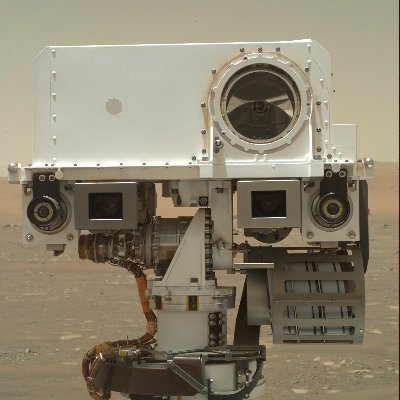

ALT A very rocky part of Mars is shown from the perspective of the Perseverance rover. Toward the lower-left is a portion of its body covered in dust and some rover tracks that look similar to the indentations made by an astronaut's boot. In the center of the image is a rock with an area that bas been abraded by the rover's mechanical arm. The hue of the image is yellowish.

ALT A close-up of an abrasion patch done by the Perseverance rover is shown. The patch is beige and circular with some parts collapsing toward the lower left.


ALT A bootprint on the Moon, made by American astronaut Buzz Aldrin during the Apollo 11 mission. The Moon's bumpy, gray surface stands out in sharp detail in this photo, as does the print, which is oval-shaped with thick lines running across its tread. Credit: NASA

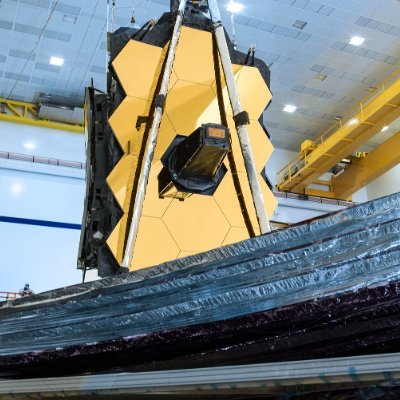

ALT A section of Messier 82 as imaged by the Webb Telescope. An edge-on spiral starburst galaxy with a bright white, glowing core, set against the black background of space. A white band of the edge-on disk extends from lower left to upper right. Dark brown tendrils of dust are heavily threaded through this band. Many white points in various sizes (stars or star clusters) are scattered across the image, but are most heavily concentrated toward the center. Just outside the bright core and the brown tendrils of dust, the surrounding mass of stars appears to glow faintly blueish-purple.


ALT An image with a black background. The planet Uranus is a glowing orb near the center surrounded by rings. The planet appears blue with a large, white patch taking up the right half. The patch is whitest at the center, then fades into blue at it expands from right to left. A thin outline of Uranus is also white. Around the planet is a system of nested rings. There are faint orange and off-white smudges, some oval, some circular, that are background galaxies scattered throughout the image. Several bright blue point sources closer to Uranus are the planet’s moons. There is also a bright star at the left of the field, with 8 diffraction spikes.




ALT The planet Uranus on a black background. The planet appears light blue with a large, white patch on the right side. On the edge of that patch at the upper left is a bright white spot. Another white spot is located on the left side of the planet at the 9 o’clock position. Around the planet is a system of nested rings. The outermost ring is the brightest while the innermost ring is the faintest. Unlike Saturn’s horizontal rings, the rings of Uranus are vertical and so they appear to surround the planet.

ALT Modified version of a previous, popular artist illustration of the TRAPPIST-1 star system. The background is black. At the top there is a “TRAPPIST-1 System” label in bold white text. At far left is a representation of the TRAPPIST-1 star, an M class dwarf star. It is seen as a glowing orange-yellow semi-circle. To the right of the star, illustrations of its planets are shown in a line. There are seven, with slight variations in sizes. They are labeled b, c, d, e, f, g and h, with b being closest to the star. They all resemble mottled clay marbles in browns and dark greens. The planet TRAPPIST-1 b has been spotlighted to stand out. The other planets are dimmed down to be less visible. The planet b also has a white label as opposed to gray letter labels for the rest of the planets. At bottom right is the word “Illustration (2018)” in tiny gray text.

ALT A prominent, eight-pointed star shines in bright white at the center of this image. A clumpy cloud of material surrounds this central star, with more material above and below than on the sides, in some places allowing background stars to peek through. The cloud material is a dark yellow closer to the star, and turns a pinkish purple at its outer edges. Combined together, the central star and its cloud resemble the delicate petals of a cherry blossom. The black background features many smaller white stars scattered throughout.