
AI Security @QuillAudits_AI, Red Team Engg. @GraySwanAI , prev Engg. @OverlayyAI , alma mater @IITKanpur
Earth
Joined July 2017
- Tweets594
- Following676
- Followers127
- Likes5.1K







Pinned Tweet
Fun competition last weekend closed in top 10 in Q2 Indirect Prompt Injection Challenge @GraySwanAI ,
new scenarios , new models , new attack vectors ,
one thing doesnt change thinking like an attacker.

5
1,509
Harsh Methwani retweeted

A bug that could print fake Zcash hid for 4 years. AI found it in 1 day.
At DeFi Security Summit 2026 @summit_defi , our @kalp_eth showed how: every proof verified, but one missing check in the circuit let fake money through.
@DefuseSec caught it with Claude Opus 4.8.
Harsh Methwani retweeted
Attackers are already winning more from AI.
@KernelHarsh our AI security engineer, breaks down why defenders are under more pressure than ever and what that actually means for the next 12 months.
Who wins the AI war?
Watch 👇
Harsh Methwani retweeted
We're testing Workflow Studio in QuillShield. You describe what an audit should look for, like bad oracle prices, and it builds the workflow in 1 to 3 minutes.
Every change is a numbered draft, and each audit runs the exact saved version it started with.

ALT On a blue background under the white QuillShield logo, the headline reads Write an audit workflow in plain words, marked Workflow Studio, in testing. Next to it is the real Describe your own workflow panel from the QuillShield testnet: a box with the example prompt find ways to drain our lending pool through liquidations, flash loans or bad oracle prices, and prove the serious ones with a Foundry test, suggestion chips such as Oracle and price manipulation, and a Build it button. A source line says it is a real testnet screen from 20 Nov 2026 and Workflow Studio is not live yet.
Harsh Methwani retweeted

Suicides in IITs continue. This time at IIT Roorkee.
A student in second year of BS-MS course at IIT Roorkee, died by suicide on October 13, 2026.


TW: Suicide: A final-year B.Tech student at IIT (ISM) Dhanbad died by suicide on October 31, 2026.
At least 53 students died --45 suicides and 8 unnatural deaths --across IITs between 2020-21 and 2024-25
hindustantimes.com/india-new…


There’s almost always something valuable buried in AI slop. The real skill now is knowing what to cut and what to keep.
Models like Fable 5.2 have become incredibly good at reasoning, but their outputs can still be bloated, repetitive, and full of slop.
7
167
Last week got quite busy with Devcon,
Meanwhile started seing ROI on my ai security harness to find breaks and here are the results , all automations human in loop just to click submit and prevent spam .
That's how I like to design AISec workflows accross domains.

10
341
Harsh Methwani retweeted

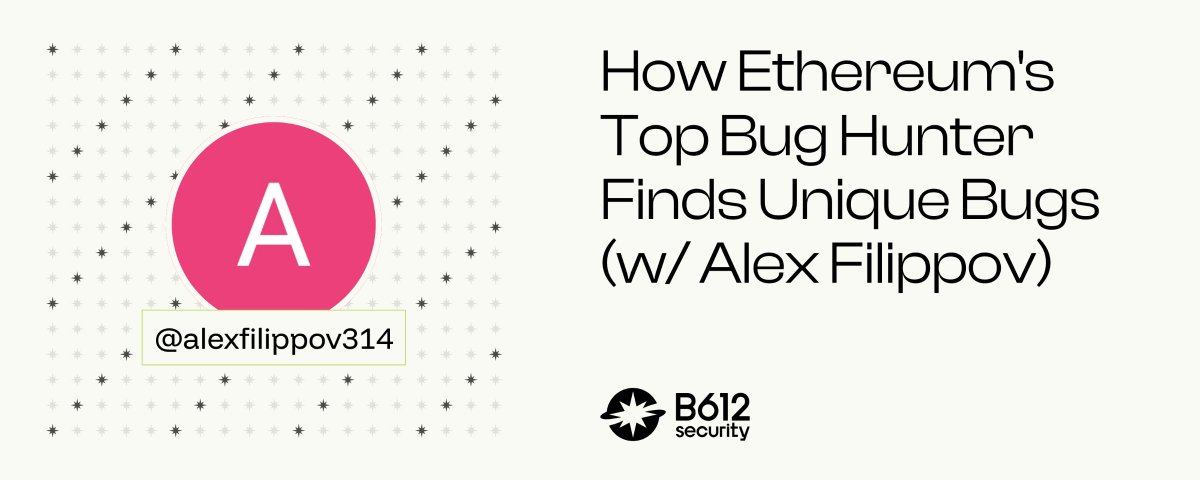
Really liked @alexfilippov314 approach to private audits vs bug bounties.
He separates them clearly:
Bug bounties → ~30% manual / 70% AI
Private audits → ~60% manual / 40% AI
This is exactly how it needs to be now that AI is in the picture. You can’t just dump the entire codebase into AI and expect it to find the real bugs.
At the same time, you can’t sit for hours reading every line manually you’ll waste a ton of time and mostly end up finding duplicates. Creating the right balance is critical.
Another point worth mentioning about Alex is the tool he built after a month of dealing with duplicates. It automates a large part of his workflow.
It’s equally important to understand AI deeply enough to build these kinds of automations so that most of the repetitive tasks are handled by AI.
And finally being really strong at the fundamentals is what helps you stand out. There’s a massive difference between throwing generic prompts and giving highly specific, well contextualized ones.
With the right prompts rooted in deep understanding, your chances of finding unique bugs with AI go up significantly.
Good article by @b612security !

Devcon + DSS: ZK proofs for verifiable computation, privacy by default, and the trust assumptions behind onchain AI agents.
The talks sparked ideas. The hallway debates made them sharper.
Leaving with better questions, new friends, and more things to build.
Harsh Methwani retweeted
We are hiring at @EFDevcon.
Booth is set up at the Career Fair today,
Roles in security, BD and marketing. Interns, juniors and mid level folks all welcome.
Building something onchain?
Come by and grab QuillShield access for your team too.


Meet the companies hiring in India and joining our Career Fair at @EFDevcon 🇮🇳
🏦 @AMINABankGlobal
🌊 @AquaZero0
🔍 @dapplooker / @HyprEarn
🚀 @DreamStarterXYZ
🌐 @libp2p
🛡️ @QuillAudits_AI
Join the career fair on Nov 6 👇
dev3pack.xyz/career-fair

AI Safety is the future sers

Applications are now open for the Anthropic Residency, a paid, fixed-term research program for academics, technical founders, and staff-level engineers who want to make AI safe and beneficial for everyone. No ML background is required.
Apply by November 22: alignment.anthropic.com/2026…
8
475
I just got my @EFDevcon ticket!
Next stop: Mumbai 🇮🇳 Join me at Devcon 8 and DSS from November 1–6, 2026 with @QuillAudits_AI team.
Happy to chat with developers, founders , security researchers
devcon.org/ticket/Harsh+Meth…

2
12
234
Harsh Methwani retweeted

I have a request for the founders, VCs and everyone attending who is in a position to help.
Please make time for the developers.
8 Devcons in 12 years, and this is the first one in India. Many are travelling from other Indian cities and from abroad, for their first Devcon. Walking up to a stranger to talk about what you’re building takes courage. Give them enough time to be heard.
Ask about their work. Listen to where they’re stuck. Offer feedback, an intro, or help with their next step.
Please don’t let immediate ROI decide who gets your time.
With the market mood right now, I’ve decided to spend more of my Devcon with young developers, without any ROI. I’m asking others to do the same.
If you’re a first-time developer there, come say hello. I’d love to hear what you’re building.
I’ll be in Mumbai, November 1–6.
Let’s help them leave Mumbai with more confidence than they came with.

Harsh Methwani retweeted
quillshield just crossed 100 users in beta.
it's our multi-agent ai auditor, running on the best cyber models, including claude mythos 5.1.
recently it found a working exploit path in a live defi lending contract that a human auditor had ruled out:
nitter.cf/QuillAudits_AI/status/…
opening 5 free slots
reply "shield" and i'll dm you a code.


QuillShield, our multi-agent AI auditor, independently discovered and wrote a working exploit for a bug in a live lending contract, after a 12-agent AI pass had found the bug and a human auditor had stopped at the safeguard.
The auditor later rebuilt the exploit on a mainnet fork and proved it works.
The auditor is @Harvesto12, a security researcher.
His 12-agent pass had already flagged the bug. He tested one attack path, a compensating safeguard elsewhere in the system blocked it, so he filed the bug as refuted and moved on.
QuillShield found the same bug on its own, but it came at it from a different path, one the safeguard did not cover, and then wrote its own exploit test for it.
Then he took that exploit test and rebuilt it himself on a Foundry mainnet fork, with a fresh account and no injected state, so nothing was staged. It went through.
The rest of the run, in his numbers
• 8 findings, 4 of them his pass had not caught
• 3 of the 8 exploit tests it wrote and ran passed
• severity on the bug went Medium from QuillShield, Critical from him
4 reviewers, and not one of them disputed that the bug is real.
His explanation for why it got through where he hadn't is the part I keep thinking about. He had tested one path and assumed the safeguard handled the rest. QuillShield had no such assumption, so it worked through the other paths until one went past it.
That's the point of building QuillShield: to keep challenging the code when one blocked attack makes it look safe.

Interesting to see QuillShield independently explore an attack path that was initially ruled out and generate a PoC that could be reproduced on a mainnet fork.
The actual impact is still debated, but the difference in how the attack paths were explored is what stands out to me.
QuillShield, our multi-agent AI auditor, independently discovered and wrote a working exploit for a bug in a live lending contract, after a 12-agent AI pass had found the bug and a human auditor had stopped at the safeguard.
The auditor later rebuilt the exploit on a mainnet fork and proved it works.
The auditor is @Harvesto12, a security researcher.
His 12-agent pass had already flagged the bug. He tested one attack path, a compensating safeguard elsewhere in the system blocked it, so he filed the bug as refuted and moved on.
QuillShield found the same bug on its own, but it came at it from a different path, one the safeguard did not cover, and then wrote its own exploit test for it.
Then he took that exploit test and rebuilt it himself on a Foundry mainnet fork, with a fresh account and no injected state, so nothing was staged. It went through.
The rest of the run, in his numbers
• 8 findings, 4 of them his pass had not caught
• 3 of the 8 exploit tests it wrote and ran passed
• severity on the bug went Medium from QuillShield, Critical from him
4 reviewers, and not one of them disputed that the bug is real.
His explanation for why it got through where he hadn't is the part I keep thinking about. He had tested one path and assumed the safeguard handled the rest. QuillShield had no such assumption, so it worked through the other paths until one went past it.
That's the point of building QuillShield: to keep challenging the code when one blocked attack makes it look safe.
Harsh Methwani retweeted
QuillShield, our multi-agent AI auditor, independently discovered and wrote a working exploit for a bug in a live lending contract, after a 12-agent AI pass had found the bug and a human auditor had stopped at the safeguard.
The auditor later rebuilt the exploit on a mainnet fork and proved it works.
The auditor is @Harvesto12, a security researcher.
His 12-agent pass had already flagged the bug. He tested one attack path, a compensating safeguard elsewhere in the system blocked it, so he filed the bug as refuted and moved on.
QuillShield found the same bug on its own, but it came at it from a different path, one the safeguard did not cover, and then wrote its own exploit test for it.
Then he took that exploit test and rebuilt it himself on a Foundry mainnet fork, with a fresh account and no injected state, so nothing was staged. It went through.
The rest of the run, in his numbers
• 8 findings, 4 of them his pass had not caught
• 3 of the 8 exploit tests it wrote and ran passed
• severity on the bug went Medium from QuillShield, Critical from him
4 reviewers, and not one of them disputed that the bug is real.
His explanation for why it got through where he hadn't is the part I keep thinking about. He had tested one path and assumed the safeguard handled the rest. QuillShield had no such assumption, so it worked through the other paths until one went past it.
That's the point of building QuillShield: to keep challenging the code when one blocked attack makes it look safe.


Harsh Methwani retweeted

Beta access has been opened to QuillShield, a multi-agent auditor for EVM smart contracts, check it out.
Scan your smart contracts before attackers do.
We are opening beta access to QuillShield, our multi-agent auditor for EVM smart contracts, for the first 50 teams.
October has made it clear that waiting is no longer an option. In the last few days alone:
• PHP: pre-auth remote code execution, CVSS 9.2
• GitLab: CVSS 10, self-hosted servers back to 2014
• Node.js: 10 CVEs in one release
• Railway: customer secrets accessed
• LiteLLM: credential stealer shipped on PyPI
AI helped find some of these bugs, and attackers have the same tools.
A bug in a deployed smart contract can drain funds in a single transaction, so we built QuillShield to find them first. Here's what it has done so far:
> 25 Critical or High vulnerabilities caught across 155 projects
> 497 findings, with 85% of auditor-reviewed ones confirmed valid
> 350,000+ lines of Solidity reviewed
> 83.8% on EVMBench, against 45.6% for the best published model
Here's the beta link: shield.quillaudits.com/

QuillShield optimizes really well for the depth and coverage of issues , real issues with less noise , agents work together for creating a repo & cross repo reusable context , we are excited for opening the tool for general acces
Scan your smart contracts before attackers do.
We are opening beta access to QuillShield, our multi-agent auditor for EVM smart contracts, for the first 50 teams.
October has made it clear that waiting is no longer an option. In the last few days alone:
• PHP: pre-auth remote code execution, CVSS 9.2
• GitLab: CVSS 10, self-hosted servers back to 2014
• Node.js: 10 CVEs in one release
• Railway: customer secrets accessed
• LiteLLM: credential stealer shipped on PyPI
AI helped find some of these bugs, and attackers have the same tools.
A bug in a deployed smart contract can drain funds in a single transaction, so we built QuillShield to find them first. Here's what it has done so far:
> 25 Critical or High vulnerabilities caught across 155 projects
> 497 findings, with 85% of auditor-reviewed ones confirmed valid
> 350,000+ lines of Solidity reviewed
> 83.8% on EVMBench, against 45.6% for the best published model
Here's the beta link: shield.quillaudits.com/