

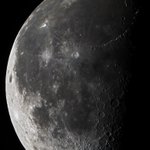
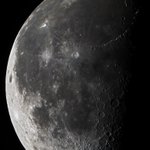


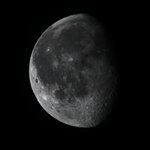


Dusted off an older camera for last night's moon. The second slide is a mineral version showing the hidden colors of the surface.


6


Setup Details:
Gear: Canon Rebel T7 + Sigma 16mm prime on a MoveShootMove Nomad tracker
Sky: 28 x 90-second exposures | ISO 800 | f/2
Foreground: 1 x 90-second exposure | ISO 1600 | f/2
Testing the setup on a road near some hay bales. I am actually surprised how well the constellation came out on its own without needing to dodge or force the foreground in post.


9
Just a quick, un-tracked session to catch a brief break in the weather before the clouds completely took over the frame. But trying to stack multiple longer exposures for the foreground, I accidentally made my first star trails image lol
Setup Details:
Sky: 6 x 16s @ f/2.8, ISO 1600
Foreground: 3 x 5min @ f/8, ISO 400
Gear: Canon Rebel T7 + Sigma 16mm prime (Untracked)


35
Spent some time in Jasper National Park capturing the dark skies. The Milky Way truly never gets old.
This is a 1-hour stack culled down from a full 4-hour tracked session to maximize SNR while avoiding tracking distortion at the lens edges.
• Canon T7 + Rokinon 16mm prime
• Sky-Watcher Star Adventurer 2i
• 40 x 90s exposures
• Stacked/Processed in PixInsight (Starless separation workflow)
• Final landscape blend completed in GIMP

39
Finally got a night of clear skies to test out the new gear on the moon. This is a single stack, and the new sensor is absolutely living up to expectations. It’s capturing the actual landscape and much more subtle terrain than I've been able to get until now.
Gear Setup:
• Camera: SVBONY SC571CC (Sony IMX571 sensor)
• Scope: Orion ED80T CF
• Barlow/Amplifier: Tele Vue Powermate 2x


Its still a bit too early to capture the milky way. The camera gets too much of the twilight to get much detail in it. But I thought the sky glow was kinda nice anyway

14
Cought the moon setting through the smokey horizon, turning it a crimson color. TBH the camera did too good of a job cutting through the film, so I had to try to replecate what it looked like

19
First light on my new camera — Andromeda Galaxy (M31).
Not exactly peak astro season up here at ~55°N (the sun barely goes down), but it was awesome to catch M31 climbing higher in the sky.

13
There was a brief moment of clear skies before the sun came up at 3:00 AM. The moon is waning a bit, but it was nice to just do some moon gazing.

14
Another quick night before the clouds rolled in. West veil nebula. Partner to the nebula I caught the night before

1
5
My favourite phase of the moon.
Just some quick shots of some other nebula, it was pretty murky. Veil nebula and a small part of the elephant trunk nebula


9
Not great visibility, stuck to some bright targets. 2 Globular clusters, M13 and M53. These things are always a treat.


15
Wasn't a clear sky, but Lyra was visible between the clouds for a bit, so I snagged a quick 10 mins of the Ring Nebula. Pretty small target, just a single star that ran out of fuel and shed its outer layer of gas 2,300 ly away.

17
My attempt at the "mineral moon". These colours are there if you boost the saturation. Otherwise, the natural version.


5
