

Interested in neurocognitive underpinnings of OCD, EEG research & non-invasive brain stimulation
Berlin, Deutschland
Joined November 2019
- Tweets43
- Following114
- Followers74
- Likes78




🧠⚡️“Oops“! Do brain signals after errors reflect our negative feelings towards them? Our new paper with @FJueres (shared 1st author🤝), Norbert Kathmann & @JKlawohn examines this link, attempting to shed light on OCD's neurocognitive underpinnings: academic.oup.com/scan/articl… 🧵 1/

🧩 Understanding altered error processing in OCD can bring us closer to unraveling the neurocognitive underpinnings of this disorder. 7/
✅Preregistration, data, and code are available: osf.io/j28hr/
Or directly dive into our rmarkdown code and results overview: balzuslu.github.io/affective… 8/

📢Thrilled to share our new paper out in NeuroImage: Clinical. We examined whether neural responses to errors can be modulated in OCD by non-invasive brain stimulation - Wondering why we were interested in this and what we found out?🧵⬇️ doi.org/10.1016/j.nicl.2022.…
You can find preregistration, data, and code on the OSF: osf.io/7z8hj/ And analysis code nicely combined with the output here: balzuslu.github.io/modulatin…
Finally, a big thanks to my wonderful co-authors: @JKlawohn, and twitterless N. Kathmann, B. Elsner, S. Schmidt, and S. Brandt!
Luisa Balzus retweeted

Does anyone know an example of a #psychotherapy trial that was evaluated using randomization inference (e.g. using ri/2 in #RStats)?
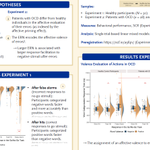
If you're at #PuG2022 and curious about the affective evaluation of own errors (in healthy individuals & patients with OCD) come visit me at poster 1.046 (⏰tmrw 14:30-16:00). Learn about the relation between valence evaluation, neural indices, and autonomic arousal. Sneak peak⬇️

Die vergangenen Tage auf dem #DPK2022 waren
lehrreich und inspirierend: Spannende Themen, großartiger Austausch und tolle Referent:innen und Teilnehmer:innen. Und auf dem Heimweg darf ich sogar noch dieses Dokument in den Händen halten - ich freue mich sehr! ✨
