

Official page for author, educator, humanitarian, artist, philosopher and Scientology Founder L. Ron Hubbard. Discover the life, the legacy, the man.
Joined August 2010
- Tweets36.3K
- Following38
- Followers13.6K
- Likes525





The Alexandra Park manor stands meticulously restored—just as it was during L. Ron Hubbard’s time. Even his vehicles are preserved and gleaming once more: lronhubbard.org/landmark-sit…

Faithfully preserved and gleaming once more, L. Ron Hubbard’s 1965 Ford Mustang Fastback is proudly on display at Alexandra Park. Alongside it: the 1963 Pontiac Parisienne he provided to transport household staff to and from work. Explore it all: lronhubbard.org/landmark-sit…

From L. Ron Hubbard’s Alexandra Park office, he continued to oversee Scientology’s global growth while working on behalf of Rhodesia’s future. Discover more: lronhubbard.org/landmark-sit…

Both the legendary Clearing Course lectures and the renowned An Introduction to Scientology interview were captured here at Alexandra Park, using this 16 mm Auricon movie camera.
Explore the Landmark Site: lronhubbard.org/landmark-sit…

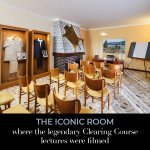
The legendary Clearing Course lectures were filmed in this very room. On display: the attire L. Ron Hubbard wore during the site’s pivotal moments, including the renowned An Introduction to Scientology interview: lronhubbard.org/landmark-sit…

In this room at Alexandra Park, L. Ron Hubbard employed a team of typists, each working on an Underwood typewriter to manage his extensive correspondence, including letters in support of civic progress. Explore more: lronhubbard.org/landmark-sit…

The parlor at Alexandra Park once welcomed cabinet ministers, cultural figures and dignitaries for drinks and hors d’oeuvres. “I am knee deep in ministers and parliament people,” L. Ron Hubbard wrote.
Discover more: lronhubbard.org/landmark-sit…

The estate once known as 31 John Plagis Place is now a Landmark Site honoring Scientology Founder L. Ron Hubbard, who arrived in the mid-1960s with a vision destined to echo far beyond Southern Africa.
See it all: lronhubbard.org/landmark-sit…

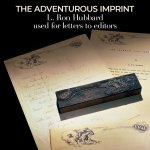
L. Ron Hubbard’s letters to editors often bore an adventurous imprint—fitting, given they came from the author who wrote: “If you adventure through life, you have a good chance to be a success on paper.”
Discover more: lronhubbard.org

Described as a man who lived 20 lifetimes in the span of one, here is L. Ron Hubbard’s account, told in his own voice, of his observations from living amongst diverse cultures. These would profoundly influence and broaden his perspectives on the world: scientology.tv/series/l-ron-…

L. Ron Hubbard’s “My Philosophy” brings to light his deep personal belief that despite those who would corrupt the truth, wisdom must be shared with all humanity.
Read the definitive statement on L. Ron Hubbard’s philosophic stance here: lronhubbard.org/articles-and…

The Landmark Site where L. Ron Hubbard authored Dianetics: The Modern Science of Mental Health stands fully restored today in Bay Head, New Jersey, an hour south of New York City on the Atlantic shore.
Explore the birthplace of the book that provided the means to release the full potential of the human mind: lronhubbard.org/landmark-sit…


L. Ron Hubbard’s vision for the future of Scientology included utilizing technological advancements across every media platform to reach “planetary dissemination” of Scientology’s religious technology “at the correct orders of magnitude.”
New Era Publications in Copenhagen, Denmark, is today a fulfillment of that vision, dedicated to making Scientology Founder L. Ron Hubbard’s works accessible throughout Europe and the United Kingdom.
Learn more about L. Ron Hubbard, Founder of Scientology: lronhubbard.org

“Sometimes others seek to crush one down, to make nothing out of one’s hopes and dreams, one’s future and oneself,” L. Ron Hubbard wrote.
What is the real handling of such a situation and such people—the long-range handling that seldom fails?
Your answer is here: thewaytohappiness.org/theway…

The Way to Happiness has inspired a worldwide movement. Discover the acclaimed common sense guide to better living, authored by L. Ron Hubbard, that people all over the world use in their daily lives to achieve more lasting and fulfilling relationships with family, friends and colleagues: scientology.tv/documentaries…

“While no one can guarantee that anyone else can be happy, their chances of survival and happiness can be improved. And with theirs, yours will be,” L. Ron Hubbard wrote in the first moral code based wholly on common sense.
Find out how you can point the way to a less dangerous and happier life: lronhubbard.org/ron-series/p…

The Way to Happiness offers 21 precepts for life in what has become a cynical and largely faithless age. Each precept marks the edge of a road to better survival and happiness for oneself and one’s fellows.
Authored by L. Ron Hubbard, its results may be described as miraculous.
Discover it for yourself: lronhubbard.org/ron-series/p…

The first moral code based wholly on common sense, The Way to Happiness provides a universal guide to living applicable to all peoples in all cultures.
Learn more about its author, humanitarian L. Ron Hubbard: lronhubbard.org/ron-series/p…


“I will not admit that there is a naturally bad, evil man on Earth.” —L. Ron Hubbard
Discover the man who paved the road to restored honor and self-respect: lronhubbard.org/ron-series/p…

Located in the English countryside, Saint Hill serves Scientologists worldwide as the movement’s iconic spiritual center.
Take a look at the place where L. Ron Hubbard lived and made many of his important discoveries: scientology.tv/series/inside…
