
Melbourne, Victoria
Joined January 2021
- Tweets129
- Following187
- Followers99
- Likes835






This is about a 1% increase to the sticker price; about a quarter of what it costs to add leather seats to a car! It is far short of the 25% price increase the FCAI is claiming. And even using this figure is misleading - it counts the costs, but not the benefits.
Consumers may pay 1% more for a car, but get a lot for their money in better tech + lower running costs. Gov estimates are that consumers will save $108 billion in fuel savings to 2050. I see no reason to dispute this - consumers will definitely be better off in the long term
In 2021, we published modelling of ambitious emissions standards: grattan.edu.au/wp-content/up… We modelled similar, slightly more ambitious targets than what the government has proposed. Using conservative assumptions, we found the average new car may increase in price by about ~$500
We know that in most cases manufacturers will choose to sell efficient cars instead of paying a penalty. How do we know this? Because: a) every international scheme shows this is what car companies choose to do to meet targets; and b) we, and many others have modelled this.
The article suggests that the $38b figure is calculated on the assumption that no-one - vehicle manufacturers or consumers - change their behaviour. Instead, manufacturers simply pay the penalty cost, and Australians continue to buy inefficient vehicles.
Claims by the vehicle industry that the new vehicle emissions standard will cost $38b over five years are wrong, and disingenuous (afr.com/politics/federal/lab…). A short thread:

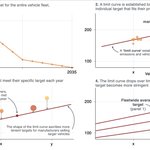
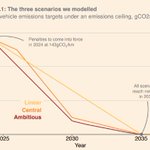
We finally have a new vehicle fuel efficiency standard! It's better than expected - targets are on a trajectory to 0 by 2035, needed for net zero. But there's some confusion that it will make vehicles heavier. This is unlikely, and worth clearing up. A long-ish thread:
All in all; it would be surprising if manufacturers made vehicles heavier in response to targets. There may be some shifting between vehicle types (caused by the fact there are two standards); but there is limited scope for this, given SUVs/LCVs are already 75% of the fleet.