







Lambda_ele retweeted

“Envy was once considered to be one of the seven deadly sins before it became one of the most admired virtues under its new name, ‘social justice.’”
— Thomas Sowell

Lambda_ele retweeted
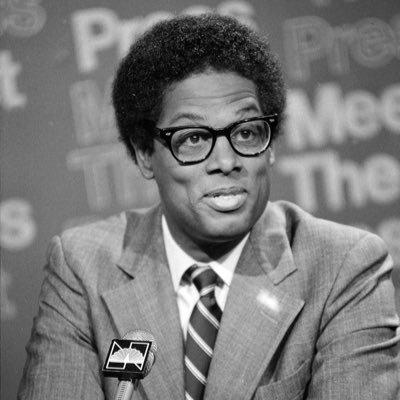
Why does Thomas Sowell get so little mainstream media attention compared to figures like Jesse Jackson and Al Sharpton?
Sowell has spent decades challenging conventional wisdom with facts, economics, and logic.
Lambda_ele retweeted

Four Charlie Munger beliefs that challenge conventional wisdom:
1. All intelligent investing is value investing.
2. Volatility isn’t risk.
3. Wide diversification is nonsensical for the expert investor.
4. Study topics outside of investing to become a better investor.

Lambda_ele retweeted
Charlie Munger: “The great home run hitters do not remotely swing at every pitch that looks halfway good. They wait for one that they can really handle.”
Preserve capital & attention until the odds become unusually attractive.
Knowing what to pass on is half of knowing what to buy.

Lambda_ele retweeted

Fact: Charles Gave part de deux idées que je trouve très justes.
-Le capitalisme, laissé à lui-même, est déflationniste : chaque chef d'entreprise se lève le matin en se demandant comment produire plus avec moins.
-Mais la démocratie, elle, est inflationniste : chaque responsable politique promet plus qu'il ne veut financer.
Entre les deux, c'est la banque centrale qui fait pencher la balance.
Le souci quand vous avez un monde ou le politique fraye un peu trop avec la banque centrale est que vous allez vous retrouver avec un monde qui s'éloigne de plus en plus des fondamentaux du capitalisme pour aller vers une économie faussement dirigée par les banques centrales et c'est comme cela que vous vous retrouvez dans la situation de la France actuelle.
Pas par un excès de capitalisme mais bien parce que cela fait longtemps que personne ne l'écoute plus.
Lambda_ele retweeted

Joel Greenblatt said Ben Graham's rule fits in one sentence: "figure out what it's worth, pay a lot less, leave a large margin of safety." Buffett's twist was also buying good businesses cheap instead of just cigar butts.
Lambda_ele retweeted
"After 25 years of buying and supervising a great variety of businesses, Charlie and I have not learned how to solve difficult business problems. What we have learned is to avoid them."
— Warren Buffett
Lambda_ele retweeted
Stanley Druckenmiller: “I like to be very patient and then when I see something, go a little bit crazy.”
The great opportunities are rare. That’s why they require patience & aggression.
The ability to sit still when nothing stands out. The ability to bet big when something does

Lambda_ele retweeted

Warren Buffett: "All of these economists with 160 IQs who spend their life studying it, can you name me one super-wealthy economist who's ever made money out of securities?"
"If you look at the whole history of them, they don't make a lot of money buying and selling stocks — but people who buy and sell stocks listen to them. I have a little trouble with that."
Lambda_ele retweeted
Charlie Munger:
“A few, rare opportunities will come. You got to learn how to recognize them...” “Opportunity doesn’t come often, so seize it when it comes.”
Lambda_ele retweeted
“Patience and aggressive opportunism is what you need. It's an odd combination, but it's what works best.”
— Charlie Munger


Lambda_ele retweeted
“The way to build long-term returns is through preservation of capital and home runs.”
— Stanley Druckenmiller

Lambda_ele retweeted

A man who escaped China with no money and no English went on to compound about 30 percent a year for two decades. In 2006 he sat down in a Columbia classroom and taught the entire method to a room of students.
For free.
No bank and no fund has ever put this recording in front of you.
His name is Li Lu. He fled after Tiananmen in 1989 and reached America with nothing, then wandered into a lecture that turned out to be Warren Buffett speaking to a value investing class. Years later Charlie Munger handed him about $88 million of his own family money, the only outside investor Munger ever trusted that way.
The lecture is not a formula or a screener. It is about why the market is built against the few people who treat a stock as a piece of a business. He walks Timberland live off a stock manual, bought near book value at about 5 times earnings, a stock that rose about 7 times in two years. Then he does the same with a forgotten Korean stock that was even cheaper.
The uncomfortable part is what he says about the crowd. By one estimate fewer than 5 percent of the money in the market belongs to value investors. The other 95 percent is built to trade, and it funds the whole game. Columbia charges tens of thousands a year to sit in that room. The man at the front gave the method away for nothing.
His thesis was blunt. The stock market was not created for value investors. The edge, he said, is not more data. It is the temperament to stand alone when everyone disagrees.
He says that same class made him more than $100,000 within the year, just by acting on what he heard. The recording has sat online for years. Almost nobody sits through an hour of it.
The man Charlie Munger trusted with his own money taught the whole thing to a room of students for free. The people charging you to manage your savings have known it for decades. They just never sent you the tape.

Lambda_ele retweeted
“A majority of life’s errors are caused by forgetting what one is really trying to do.”
— Charlie Munger

Lambda_ele retweeted
Charlie Munger: “If we've got one thing we can do more of, we're not interested in anything that's not better than that. That simplifies life a great deal.”
“It's amazing how intelligent it is to spend some time just sitting. A lot of people are way too active.”
