

We drive excellence in internal audit and GRC professional training. Take control of your career with our cutting-edge training solutions.
Edenvale, Gauteng
Joined November 2017
- Tweets9.3K
- Following1.5K
- Followers1.2K
- Likes3.7K






Waiting until year five of your EQA cycle to identify non-conformance gaps creates unnecessary risk.
A Readiness Review conducted 9 to 12 months prior to a full External Quality Assessment gives your internal audit function the breathing room needed to remediate weaknesses before a formal rating is reported to the board.
What a Readiness Review delivers:
• An objective gap analysis against all 15 Principles of the Global Internal Audit Standards.
• Targeted reviews across mandatory Topical Requirements embedded into current workflows.
• A prioritised, phased improvement roadmap tailored to your available capacity and operating environment.
Identifying documentation gaps early allows your team to close them systematically, ensuring your subsequent EQA reflects true performance rather than administrative oversight.
Is your internal audit function scheduled for an EQA in 2027? Start the conversation with our technical team today:
Email: [email protected] visit our website to learn more: governanceacademy.co.za/page…
#InternalAudit #QualityAssurance #ReadinessReview #EQA #IIAStandards #GoodGovernance #LeadershipAcademy

6
Thank you to everyone who weighed in on our recent LinkedIn poll!
When we asked what your audit committee wants most from your report-back at the AC meeting, two clear priorities stood out:
1) 43% said a forward-looking risk view
2) 29% said clear root causes
Audit committees are looking beyond historical checklists; they want strategic foresight, persuasive reporting, and sustainable fixes that prevent recurring issues. At the Leadership Academy, our upcoming CPD programmes are designed to help internal auditors deliver exactly what your board and audit committee need most:
Sharpen Your Forward-Looking Risk & AC Reporting Skills
Strategic Risk Oversight: Integrating Governance, Risk & Compliance for Better Decision-Making (SROERM) (2 Days | 16 CPD | Levels 3 & 4) – Apply futures thinking and scenario analysis to anticipate strategic disruptions (including AI and climate), build Combined Assurance models, and elevate your risk reporting.
Cybersecurity Governance, Risk and Audit Controls for Internal Auditors (CSIA) (3 Days | 24 CPD | Levels 1–3) – Master cyber risk domains and the NIST framework to give management and the board clear assurance through an organisational Cyber Score.
How to perform Cybersecurity Risk Assessment the Right Way (ITCRA) (2 Days | 16 CPD | Levels 1–3) – Move beyond tick-box exercises using NIST CSF 2.0, ISO 27005:2022, POPIA integration, and Key Risk Indicators (KRIs) to deliver actionable executive reports.
The Influential Auditor Programme (IAP) (3 Days | 18 CPD | Levels 2–4) – Master persuasive reporting, the SBAR communication model, and influencing up so your insights land with audit committees and boards.
Master Clear Root Cause Analysis
Root Cause Identification (RCI) (3 Days | 24 CPD | Levels 1–3) – Follow an integrated five-phase investigation process using Ishikawa (Fishbone) diagrams, the 5 Whys, and the Root Cause Model to build sustainable recommendations.
Root Cause Analysis in Internal Audit (RCA) (2 Days | 16 CPD | Levels 2 & 3) – Distinguish symptoms from underlying causes to strengthen audit recommendations and boost management buy-in.
Improving Root Cause Analysis (IRCA) (2 Days | 16 CPD | Levels 2–4) – Use fault tree, Pareto, and 5 Whys techniques to link systemic causes to control design in line with the Global Internal Audit Standards.
Ready to bring sharper foresight and stronger insights to your next AC meeting? View upcoming dates and book your spot here: governanceacademy.co.za/even…
#InternalAudit #AuditCommittee #CorporateGovernance #RiskManagement #CPD #InternalAuditors #CyberSecurity #RootCauseAnalysis #CombinedAssurance #GoodGovernance #LeadershipAcademy

26
The Occupational Certificate: Internal Auditor is an opportunity to augment your skills and knowledge. This qualification aims to prepare Internal Auditors to conduct internal audit engagements under the guidance of an Internal Audit Professional. The entry requirement is NQF Level 6.
Seize this chance to participate in a dynamic learning experience.
For more information, email [email protected], or visit our website: governanceacademy.co.za/page…, or leave a comment, and we will be in touch.
#Learnerships #InternalAudit #GoodGovernance #LeadershipAcademy

22
Integrating data analytics into internal audit is no longer optional, it is essential for expanding audit coverage and delivering forward-looking assurance. The Integrated Data Analytics - Basics (IDAB) course equips internal auditors, IT auditors, and risk professionals with hands-on technical capabilities across the entire audit analytics lifecycle. This practical course is aligned with the Global Internal Audit Standards, it covers data extraction, cleaning, and preparation using SQL, Excel, and Power Query. Delegates will learn how to run core audit tests (such as duplicate detection, ageing analysis, and exception reporting) before advancing to DAX measures and interactive Power BI dashboards that translate raw data into clear, compelling executive insights.
Date: 13 - 15 January 2027
Location: Online
CPD Hours: 24
Learn more and register here: governanceacademy.co.za/even…
#CPD #GoodGovernance #LeadershipAcademy

14
Much of the commentary surrounding new Standards and Topical Requirements assumes large audit teams with dedicated methodology divisions and specialist budgets.
That is not the everyday reality for many internal audit functions across South Africa. Many operate with a CAE and two Internal Auditors, or rely on shared-services and co-sourced arrangements stretched across entities.
For smaller teams, the question is practical: how do you conform with the capacity and technical skills you realistically have available?
A few practical steps to maintain conformance:
• Build coverage incrementally: One exhaustive audit is not mandatory; coverage can be established across multiple reviews over time.
• Document scoping rationale: Professional judgement is fully permitted under the Standards, but undocumented professional judgement is difficult to defend during an EQA.
• Be transparent about gaps: Where specialist technical skills are unavailable, state this clearly to the audit committee. The Standards provide for obtaining external competence; identifying the gap is sound governance.
• Invest once in methodology: Standardising your engagement templates and workflow early provides the highest return for a lean team.
The requirement sets a mandatory baseline, but it does not assume unlimited resources.
What is the primary operational constraint currently facing your internal audit function?
Learn more: governanceacademy.co.za/page… email: [email protected]
#InternalAudit #QualityAssurance #EQA #GlobalInternalAuditStandards #GoodGovernance #LeadershipAcademy

1
20
Taking spreadsheet skills to the next stage is vital for internal auditors seeking greater autonomy and analytical precision during fieldwork. The Intermediate Excel for Internal Auditors (INTEX) course builds directly upon foundational spreadsheet techniques, transforming Excel into both a general audit solution and an effective data analysis platform. Delegates will learn how to design custom formulas, audit complex worksheets, clean imported data, and conduct practical fraud analysis using pivot tables, slicers, and interactive reporting. Aligned with GIAS Standard 3.1 for professional competency, this practical course also introduces macro recording and automation to eliminate repetitive tasks and strengthen overall audit evidence.
Date: 9 - 11 December 2026
Location: Definitive Conferencing, Cnr Definitive Lane & Kruin Streets, Harmelia, Isando, Gauteng
CPD Hours: 24
Learn more and register here: governanceacademy.co.za/even…
#CPD #GoodGovernance #LeadershipAcademy

1
24
In your organisation, what would improve audit committee effectiveness?
0%Truly independent members
0%Better quality info
0%Authority 2 act: IA finds
0%More frequent engagement
0 votes • 2 days 1
22
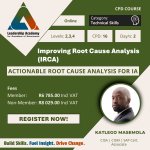
Treating the symptoms of an audit finding rather than the underlying drivers leads to recurring control breakdowns and diminished assurance value. The Improving Root Cause Analysis (IRCA) course equips internal audit professionals, audit managers, and quality assurance leaders with structured, repeatable methodologies to uncover why operational failures occur. Aligned with the Global Internal Audit Standards, the curriculum explores practical analytical techniques (including the 5 Whys, Ishikawa (fishbone) diagrams, fault tree analysis, and Pareto analysis) to evaluate people, process, technology, and cultural drivers. Delegates learn how to connect root causes directly to control design weaknesses, isolate systemic risks across engagements, and draft clear, high-impact findings with sustainable recommendations that prevent recurrence and drive strategic value.
Date: 14 - 15 December 2026
Location: Online
CPD Hours: 16
Learn more and register here: governanceacademy.co.za/even…
#CPD #GoodGovernance #LeadershipAcademy

1
24
Strengthen your internal audit function with customised in-house training delivered directly at your venue.
The Leadership Academy is offering an exclusive Black Friday 10% discount on customised in-house training programmes when a valid Purchase Order or formal approval is received between 1 November and 30 November 2026.
Our courses span Governance, Risk, Compliance, and Internal Audit. Facilitated by seasoned real-world practitioners, our programmes combine practical industry insights with flexible scheduling and significant cost savings.
Key benefits and offer highlights:
• 10% discount on approved in-house training programmes
• Lock in 2026 budgets and schedule training at your convenience up to 31 May 2027
• Tailored content and industry-relevant case studies for your operational needs
• Cost-effective training for teams through discounted group pricing.
• Expert facilitation by experienced GRC and internal audit professionals
(Offer requires a minimum of 10 delegates per programme. Excludes CIA and CISA exam preparation courses, kits, and training materials.)
Contact Sharene Smit today at [email protected] to request a quote or secure your booking, or visit our website: governanceacademy.co.za
#InHouseTraining #InternalAudit #BlackFriday #CorporateGovernance #CPD #LeadershipAcademy

1
17
Become an indispensable internal audit manager. Our Occupational Certificate equips you with the skills and knowledge to lead, plan, and execute high-impact internal audits. Gain a nationally recognised qualification that validates your expertise and opens doors to career advancement.
Ready to take control? For more information, email [email protected], or visit our website: governanceacademy.co.za/page…, or leave a comment, and we will be in touch.
#Learnerships #InternalAudit #GoodGovernance #LeadershipAcademy

1
16
Take charge of your professional growth on your own terms. With Gamified Training from the Leadership Academy, advancing your career is seamless, engaging, and completely adaptable to your working week. Immerse yourself in interactive, scenario-based business simulations that allow you to put complex standards into practice in a safe, risk-free environment.
Key benefits for your professional journey:
• Flexible "Hop-on, Hop-off" Learning: Train for five minutes or an hour on any digital device; the platform automatically saves your place.
• Immediate Feedback: Test your judgment against real-world scenarios and receive instant insights to strengthen your skills in real time.
• Recognised Growth: Earn verifiable CPD hours while mastering critical technical and decision-making capabilities.
• Zero Technical Friction: Jump straight in with an internet connection and your browser (no complex setup required).
Elevate your technical proficiency and keep your continuous development moving forward as an Internal Audit professional. Discover more at gamifiedtraining.co.za
#InternalAudit #ProfessionalDevelopment #CostEfficiency #GoodGovernance #PlayLearnAdvance #GamifiedTraining #GRCTraining #ValueOptimisation #LeadershipAcademy

1
14
Maintaining a high-performing internal audit function requires continuous monitoring and objective evaluation to ensure operations consistently deliver stakeholder value. The Performing an Effective Quality Assurance Review (PEQA) course equips internal audit professionals with the practical competencies needed to plan, execute, and evaluate internal and external quality reviews. Aligned with the Global Internal Audit Standards and the official IIA Quality Assessment Manual, delegates examine core tools; including interview guides, evaluation programmes, and the Quality Conclusion Model. Participants learn to assess conformance, navigate complex scenarios demanding sound professional judgement, and establish a defensible QAIP that provides rigorous assurance to the board and audit committee.
Date: 9 - 11 December 2026
Location: Definitive Conferencing, Cnr Definitive Lane & Kruin Streets, Harmelia, Isando, Gauteng
CPD Hours: 24
Learn more and register here: governanceacademy.co.za/even…
#CPD #GoodGovernance #LeadershipAcademy

1
25
“Does this mean we now have to audit every vendor?”
No. This is perhaps the most common misunderstanding, creating unnecessary concern around the Third-Party Topical Requirement.
The requirement does not expect internal audit to audit every external relationship. It requires a consistent, risk-based approach to those third parties that matter most; the relationships whose failure could materially disrupt operations, compromise information, or harm the organisation’s reputation.
There are three misconceptions worth addressing:
Myth 1: It is simply a procurement checklist. It is not. The requirement extends into governance and oversight; who owns third-party risk, what the governing body or audit committee sees, and how decisions are escalated.
Myth 2: You need one large, standalone third-party audit. You do not. Coverage can be demonstrated through several engagements over time, provided the approach is deliberate, risk-based and properly documented.
Myth 3: You can exclude third-party risk from the plan and avoid the requirement. Technically, the requirement is triggered by the scope of an engagement. However, explaining to an audit committee why third-party risk was excluded from the 2026/27 internal audit plan may be a difficult conversation.
Which of these misconceptions have you encountered in your own organisation?
Start the conversation with our technical team today: Email: [email protected] visit our website to learn more: governanceacademy.co.za/page…
#InternalAudit #ThirdPartyRisk #IIAStandards #AuditCommittee #GoodGovernance #LeadershipAcademy

1
1
23
Finance doesn't have to be dry, and it certainly shouldn't be disconnected from your daily reality.
We have completely modernised our popular Accounting Made Easy for Internal Auditors course with a brand-new, game-based web application. Instead of looking at generic spreadsheets, your team will run a virtual business with a completely personalised learning experience, live financial feedback, and direct support from expert facilitators.
Ready to transform your team's financial literacy?
For direct bookings or enquiries, contact our team: Neo Mashike: [email protected] | Karabo Maoko: [email protected] or visit our website to learn: governanceacademy.co.za/page…
#GoodGovernance #InternalAudit #FinancialLiteracy #CorporateGovernance #LeadershipAcademy

1
27
The Occupational Certificate: Internal Auditor is an opportunity to augment your skills and knowledge. This qualification aims to prepare Internal Auditors to conduct internal audit engagements under the guidance of an Internal Audit Professional. The entry requirement is NQF Level 6.
Seize this chance to participate in a dynamic learning experience.
For more information, email [email protected], or visit our website: governanceacademy.co.za/page…, or leave a comment, and we will be in touch.
#Learnerships #InternalAudit #GoodGovernance #LeadershipAcademy

1
27
As automated systems handle the bulk of operational transactions, internal audit practitioners can no longer rely solely on IT specialists to test key controls. The Using CAATS to Audit Application Systems: Auditing Through the Data (CAATACR) course empowers internal auditors to extract, verify, and analyse application data independently. Delegates will explore practical techniques using computer-assisted audit techniques such as ACL and IDEA alongside advanced Excel functionalities to uncover irregularities and interrogate digital audit trails. Through hands-on simulations, participants will master end-to-end data access, fraud detection, and findings analysis, gaining the essential competence to deliver rigorous, data-led assurance across any business environment.
Date: 7 - 9 December 2026
Location: Online
CPD Hours: 24
Learn more and register here: governanceacademy.co.za/even…
#CPD #GoodGovernance #LeadershipAcademy

1
41
Under the Global Internal Audit Standards, every internal audit function (regardless of size, and whether in-house, co-sourced or fully outsourced) must be independently assessed at least once every five years.
Your board relies on internal audit for assurance, but who assures the Internal Auditors?
At the Leadership Academy, we structure our quality assurance support into two clear pathways designed to ensure your function both conforms and performs:
1. The Assessment Path: Evidence-based evaluations ranging from light-touch Readiness Reviews and Self-Assessment Validations to Full External Quality Assessments (EQA) and Maturity Assessments.
2. The Technical Services Path: Hands-on technical implementation training, QAIP design, and methodology updates to build sustainable internal capability.
An external quality assessment is not a pass-or-fail examination; it is an ongoing road to excellence.
Where is your internal audit function on its five-year assessment cycle?
Email: [email protected]
Learn more: governanceacademy.co.za/page…
#InternalAudit #QualityAssurance #EQA #GlobalInternalAuditStandards #GoodGovernance #LeadershipAcademy

1
31
From graduate IA trainees to Chief Audit Executives, full alignment with the Global Internal Audit Standards™ is vital for delivering credible, high-quality assurance. The GIAS: What Every Internal Auditor Should Know (GIAS3) course breaks down the complete framework; spanning all 5 Domains, 15 Principles, and 52 Standards—into clear, actionable workplace practices. Delegates will explore the key differences between the legacy 2017 International Professional Practices Framework (IPPF), and the current Standards, examining mandatory requirements alongside practical evidence of conformance. Through interactive case studies evaluating real-world Quality Assurance (QA) review findings, quizzes, and scenario-based exercises, participants will gain the confidence to update internal audit methodologies, enhance engagement quality, and ensure seamless professional conformance across every stage of the internal audit process.
Date: 7 - 9 December 2026
Location: Online
CPD Hours: 24
Learn more and register here: governanceacademy.co.za/even…
#CPD #GoodGovernance #LeadershipAcademy

1
36
Upskilling your Internal Audit function should be as dynamic and practical as the business environment your practitioners navigate every day. Gamified Training from the Leadership Academy offers leaders an innovative way to complement professional development programmes. Through realistic Serious Business Games, your Internal Audit practitioners practise navigating complex risk, governance, and internal audit scenarios, refining critical thinking and strategic judgment before applying them in the organisation.
Why leaders choose our platform:
• Safe, Practical Application: Practitioners test strategies, make crucial decisions, and learn from mistakes in an immersive simulation without real-world consequences.
• Effortless Deployment: A zero-footprint solution that requires no IT overhaul or software installation (accessible immediately across any digital device).
• High Engagement & Retention: Interactive storytelling and continuous progress tracking foster a strong mindset of shared excellence and continuous improvement.
• Measurable CPD Compliance: Keep your entire Internal Audit function fully compliant with accredited CPD points while building practical capability.
Equip your Internal Audit function with the decision-making confidence to deliver strategic value across your organisation. Explore enterprise options at gamifiedtraining.co.za
#InternalAudit #ProfessionalDevelopment #CostEfficiency #CorporateGovernance #PlayLearnAdvance #GamifiedTraining #GRCTraining #ValueOptimisation

1
21
Delivering high-impact assurance requires internal audit functions to look beyond operational controls and evaluate the strategic pillars of governance, culture, and risk architecture. The Auditing Governance, Strategy, Ethics and Risk Management (GSER) course equips internal audit managers and senior leaders with practical tools to audit enterprise risk management maturity, assess organisational ethics strategies, and benchmark practices against King IV and COSO frameworks. Aligned with the Global Internal Audit Standards (GIAS); including Standard 9.1 and Domain II professional ethics principles; this programme provides the methodology needed to evaluate governance effectiveness, mitigate fraud risk, and fulfil the IIA annual ethics declaration requirements.
Date: 7 - 8 December 2026
Location: Definitive Conferencing, Cnr Definitive Lane & Kruin Streets, Harmelia, Isando, Gauteng
CPD Hours: 16
Learn more and register here: governanceacademy.co.za/even…
#CPD #GoodGovernance #LeadershipAcademy

1
21