LeafHope (@LeafHopeCan) header
LeafHope (@LeafHopeCan) profile picture

Multi University @NSERC_CRSNG Alliance SARI project focused on reducing the use of insecticide and GHG production in Canada led by @universitelaval 🐞

Québec, Canada
Joined June 2023
Photo by LeafHope (@LeafHopeCan)Photo by LeafHope (@LeafHopeCan)Photo by LeafHope (@LeafHopeCan)Photo by LeafHope (@LeafHopeCan)Photo by LeafHope (@LeafHopeCan)Photo by LeafHope (@LeafHopeCan)Photo by LeafHope (@LeafHopeCan)Photo by LeafHope (@LeafHopeCan)Photo by LeafHope (@LeafHopeCan)Photo by LeafHope (@LeafHopeCan)
Here some highlights of the day! 🤖Smart traps and AI ✈️Insects migration 🪲Leafhoppers ecology
The @LeafHopeCan Project HQP shined at the @CanEntomologist-@EntSocAlberta joint annual meeting ! 🪲 Between my lab members and project students from @usask and @DalhousieU, we delivered 5 oral presentations and 4 posters 👏 Writing and leading a project like this is challenging, but seeing the next generation of scientists thrive makes it all worth it 💚 #LeafHope #Entomology #ProudPI
1
6
573
Amazing research we are happy to support 👏
Finally published! 💚 This paper brings nearly ten years of persistence full circle: 'Candidatus Phytoplasma zeae', the phytoplasma associated with maize bushy stunt, now has a species name. The story began during my PhD, working with native maize varieties in communities in Mexico. Studying this pathogen, I became convinced that it deserved recognition as a distinct species. Its sequence similarity to another species exceeded the usual threshold, but the guidelines at the time allowed ecological differences to support species delineation. We submitted the manuscript, went through peer review and revisions, and were ultimately rejected during the second round. That was a major disappointment. But the idea never left me. 🌽 Our work in Mexico: doi.org/10.1007/s10658-016-0… 🌽 Impact of MBS on communities: doi.org/10.1007/s10668-017-9… In 2025, finding Dalbulus maidis in Québec brought the question back with renewed urgency. By then, we were firmly in the genomic era, and the rules had changed. Revisiting the same biological question under different criteria was frustrating, and at times felt arbitrary. Still, we kept going. 🍃 Our discovery of Dalbulus in Québec: cell.com/cell-reports-sustai… After almost a year of discussion and revision following the preprint, we finally got there! For me, this is about much more than a name. Recognizing this pathogen as a distinct species will help us communicate more clearly with growers and decision-makers, connect research across countries, and draw attention to a disease becoming an increasing concern as its vector reaches new areas, both north and south in the Americas. What might happen beyond our continent remains an open question, although its known Dalbulus vectors are native to the Americas. Along the way, we have also been exploring the Dalbulus microbiome—and there is so much more to discover, including new microbial species that we look forward to describing! 🧫 Microbiome: doi.org/10.1093/ismehm/aazag… Bravo, @TPellegrinetti, for leading this work and helping bring a long-standing idea to fruition! 👏 And a heartfelt thank-you to all the amazing colleagues who contributed, both here on twotter and beyond: Joshua Molligan, Abraao Almeida Santos, @canale_cristina , @AOV_OlmedoVelar , Jordanne Jacques, @MahDuffeck , Ashleigh Faris, Paola Reyes Caldas, Jairo Rodriguez Chalarca, @DumonceauxTim 🌽 Some ideas stay with you for years. I’m very happy we stayed with this one. 📄 Read the paper: doi.org/10.1099/ijsem.0.0073…
1
1
161
Hier, j’ai eu le plaisir de discuter avec Guillaume Dumas à l’émission C’est encore mieux l’après-midi, sur Radio Canada, du fulgore tacheté et de son arrivée possible au Québec, à la suite d’un article paru dans La Presse. 🐛🎙️ Malheureusement, je suis moins optimiste quant au délai : je pense que cet insecte pourrait atteindre le Québec au cours des cinq prochaines années. Cette estimation s’appuie notamment sur nos observations de la cicadelle du maïs, Dalbulus maidis, détectée au Québec dès 2024. Même si les deux espèces ont des modes de dispersion différents, nos résultats rappellent que l’arrivée de nouveaux insectes peut nous surprendre et qu’il faut renforcer la surveillance pour pouvoir agir tôt. Cette conversation avec Guillaume nous a d’ailleurs inspirés à poursuivre les échanges sur cet enjeu au congrès #ESC2026, ici à Winnipeg! 📰 L’article de La Presse : lapresse.ca/actualites/envir… 🔬 Nos résultats dans Cell Reports Sustainability : cell.com/cell-reports-sustai… 🎧 Écouter l’entrevue avec Guillaume Dumas : ici.radio-canada.ca/ohdio/pr…
2
5
438
Day 3 of #ESC2026 done! 🎉 Today we had three oral presentations connected to our @LeafHopeCan project! 🧬 Florent shared the progress of our leafhopper genome sequencing work (at this point, we are basically the Wellcome Sanger Institute 😂). We now have 18 leafhopper genomes sequenced, with 18 more collected this summer ready to join them! 🌾 Brianne, from Prager’s lab presented her work on leafhopper diversity across the Prairies and canola fields, helping us better understand these communities across agricultural landscapes. 🦗 And I presented part of Joshua ’s PhD on the genome of the potato leafhopper and how we are establishing it as a model to better understand insect biology and support more sustainable agriculture. Lots of LeafHope science today! 🍃🦗
1
1
19
724
And we are off to #ESC2026 in beautiful Manitoba! 🦋🌾 What a first day full of great science, fascinating stories, and three amazing speakers! 🏅 Prof. Sandy Smith, this year’s Gold Medal recipient. 🐛 Prof. David Wagner, who led the PNAS Special Feature The Global Decline of Insects in the Anthropocene. This work has inspired a lot of my own research on how insect populations are changing in a rapidly changing world: doi.org/10.1073/pnas.2023989… 🐝 And Prof. May Berenbaum, Editor-in-Chief of @PNASNews , who took us from plant phytochemistry and insect adaptations all the way to the “insect apocalypse”, while also reminding us why she inspired the iconic entomologist Dr. Bambi Berenbaum in The X-Files! 👽🪳 Science, insects, climate change, evolution, and even The X-Files… not a bad way to start a conference! 😅 Can’t wait for Day 2! @RqradQc @NSERC_CRSNG @LeafHopeCan
1
9
721
Proud supporters of @prideinmicro annual symposium 👏
Join us this November! 🏳️‍🌈🧫 We’re happy to sponsor one of the presentation awards through our @LeafHopeCan project 👏 A great opportunity to share your research, connect with the community, and celebrate LGBTQIA+ people in STEM. Submit your abstract and join us on November 18!
1
2
156
La nouvelle est sortie! Je suis très heureux de représenter le Québec à l’Académie royale de Belgique, dans le cadre de la Chaire du Québec organisée avec la Délégation générale du Québec à Bruxelles 🇨🇦 💙 🇧🇪 Les 2 et 3 décembre, je donnerai deux conférences grand public sur les insectes, l’agriculture durable et la sécurité alimentaire : 🐛 2 décembre: Les insectes disparaissent-ils ou changent-ils d’adresse ? 🔗 : academieroyale.be/fr/le-coll… 🐝 3 décembre: Guêpes, microbes et autres alliés pour protéger les cultures avec moins de pesticides 🔗 : academieroyale.be/fr/le-coll… Ce sera aussi une semaine d’échanges et de collaborations autour de la place du Québec dans la science francophone. Si vous êtes à Bruxelles ou ailleurs en Belgique, venez nous voir! Les conférences sont gratuites et ouvertes à toutes et à tous 😊 @CRSNG_NSERC @RqradQc @LeafHopeCan @universitelaval @MRIF_Quebec
2
4
19
712
Thank you, Botany One, for the feature! My research program is rapidly expanding into the fascinating world of insects, but plants will always remain at its heart! 🌱🪲💚 Edel Pérez-López: Fighting Plant Diseases with Genomics and AI botany.one/edel-perez-lopez-…
3
28
879
Come join us!
🚨 We are recruiting three PhD students to join EdeLab at Université Laval in summer 2027! The projects will explore: 🧬 Evolution of ankyrin-repeat effectors in gall-forming plasmodiophorids 🦠 Microbiome-mediated insect adaptation to extreme environments 🍃 Leafhopper effectors at the plant–insect interface Applications are welcome in English or French until September 15, 2026. Full details are available in the attached PDF. Please share! 🔁 1/2
1
384
Sorry for the long post, but I’m leaving #PlantHealth2026 with a heart full of emotions 💚 Another The American Phytopathological Society (@plantdisease) annual meeting has come to an end, and once again I’m reminded how incredibly lucky I am to be part of this community. This year’s meeting had the courage to center its conversations on something that truly matters: diversity. Diversity of ideas. Diversity of approaches. Most importantly, diversity of people. Looking at APS today gives me hope. Who would have imagined, not long ago, having four women leading the society in succession: the past president, immediate past president, current president, and president-elect? Four outstanding scientists showing all of us what leadership can look like. These are not easy times. Trainees are facing uncertainty, researchers often feel unheard, and many of us wonder what the future of science will look like. That’s why spaces like this matter so much. They remind us that we are not navigating these challenges alone. Community matters. Education matters. Supporting each other matters. 💚 One of the most powerful moments of the conference was Dr. Tererai Trent’s plenary lecture. She reminded us that education changes lives, that hope is an act of courage, and I don’t think there was a single dry eye in the room. On a more personal note, one of my favorite parts of every APS meeting is reconnecting with fellow Latin American plant pathologists. Friends from Honduras, Brazil, El Salvador, Guatemala, Nicaragua, Colombia, Mexico, and so many other places always make me feel at home. As someone who built a career far from where I was born, those conversations, hugs, and shared experiences mean more than I can put into words. Thank you for being such an inspiring, welcoming, and supportive community. To all the friends I had the chance to reconnect with, and to the many new colleagues I met from academia and industry—thank you for another unforgettable week. See you in Minneapolis! 💚🌱
2
39
1,392
Beautiful study!
🚨 New study out! We are very happy to see this work published in the Annals of the @EntsocAmerica ! 🪲 🔗 : academic.oup.com/aesa/advanc… What began with Abraão’s curiosity became a beautiful piece of scientific detective work. By combining museum collections, historical records dating back to 1868, scientific literature, and Québec’s Réseau d’avertissements phytosanitaires (RAP), we reconstructed how the pest status of leafhoppers has changed across the province, highlighting Léon Provancher’s first formal records from 1886. We are also especially proud that the article’s title includes French: « Loin des yeux, loin du cœur ». French is a North American language, spoken not only in Québec and elsewhere in Canada, but also in parts of the United States. Merci aux éditeurs et aux évaluateurs pour l’accueil si positif réservé à notre article! This historical perspective will help us better understand the results our laboratory has generated since we began systematically sampling leafhoppers across Québec in 2021, all toward more sustainable agriculture. Merci, Abraão, pour ce remarquable travail de détective! 💚 Merci @RqradQc, @NSERC_CRSNG , @mapaquebec 👏
3
238
Another big LeafHope achievement 👏💚
🚨🪲🏆 The news is officially out! Our study has won the 2026 @EntsocAmerica Environmental Entomology People’s Choice Award! 🎉 A huge bravo to Abraão and all our wonderful co-authors! 💚 Thank you to everyone who voted for and supported this beautiful work. We are incredibly grateful! 🪲🌿 See other winners here: academic.oup.com/insect-scie…
2
135
Because they are beautiful and the best model ever! Let’s admit it! 👏💪💚
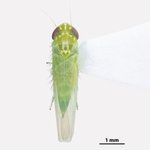
🚨 Leafhoppers on the cover! This stunning photo by our close collaborator Joseph Moisan-De Serres has made it onto the cover of the @EntsocAmerica ’s Journal of Economic Entomology, representing our recent review led by @TPellegrinetti! 🪲👏 Very happy to keep putting these gorgeous bugs in the spotlight! If you want to learn more about their microbiomes and how they could inspire new pest-management strategies, check out our work here: academic.oup.com/jee/advance…
2
327
Another year, another two amazing @MitacsCanada trainees we have to say goodbye to! 💔 Hopefully, we’ll have you back someday soon, Fernanda and Sergio! It was a pleasure having you as part of our team. 💚 Next year, we’re hoping to host two more talented undergrads, so if your country is eligible, keep an eye out for our projects! 👏🌱 – at Notre-Dame-des-Anges, Québec
1
10
657
This is from our award winning cover study! What award? @EntsocAmerica Environmental Entomology People choice award! 👏🏆 See the award news here: academic.oup.com/insect-scie… See the manuscript here: academic.oup.com/ee/article/…
📸 [Ravageur au repos] Florent Sylvestre et Nicolas Plante, @universitelaval Voici l’une des 20 images de recherche finalistes au concours La preuve par l’image #LPPI @_Acfas de cette année. Votez pour le Prix du public Découverte @iciradiocanada 2026 : tinyurl.com/3z4chhjx
1
4
278
Early morning at @CBC Québec AM with Rachel Watts talking about the exciting work of Abraao Almeida Santos, Nicolas Plante, and Amélie Grégoire Taillefer on the surprising diversity of leafhoppers in the Canadian Arctic 🦗❄️ Always a pleasure to share how biodiversity research helps us better understand our rapidly changing northern ecosystems. 📰 News story: share.google/RM7SfAh0UTWuN2o… 📄 Research article: share.google/LsV9N9aFCcOaiU8…
1
2
13
2,137
ℹ️ Edel Pérez-López is #CRC in Insect Vectors Invasions and Emerging Plant Diseases @universitelaval. He is also leader at @LeafHopeCan, a Multi-University @NSERC_CRSNG Alliance SARI project focused on reducing the use of insecticide and GHG production in Canada.
2
5
270
🎙️📻 @Edel_PLopez discovered 25 species of #leafhoppers in Northern Quebec, 14 of which were previously unrecorded in Quebec/Labrador. He shares @CBC why these insects will be important for the future of #ClimateChange research. Listen ▶️ tinyurl.com/mu3bwptn #NSERCsupport
Early morning at @CBC Québec AM with Rachel Watts talking about the exciting work of Abraao Almeida Santos, Nicolas Plante, and Amélie Grégoire Taillefer on the surprising diversity of leafhoppers in the Canadian Arctic 🦗❄️ Always a pleasure to share how biodiversity research helps us better understand our rapidly changing northern ecosystems. 📰 News story: share.google/RM7SfAh0UTWuN2o… 📄 Research article: share.google/LsV9N9aFCcOaiU8…
1
1
2
10
2,792
Field trials with transgenic plants are never simple. One of the requirements is that there can’t be any Brassicaceae within a 200 m radius of the trial site. And guess what counts as Brassicaceae? Many weeds! 🌱😅 So today we were out making sure everything was in order before the trial begins. We’re incredibly fortunate to have the facilities, infrastructure, and outstanding support to make this kind of research possible at @universitelaval. 💪💛 – at Saint-Augustin-de-Desmaures, Québec
4
38
1,377