

This is my only official account Conservation Scientist & Climate Diplomat | Special Envoy, Congo Basin Science Panel #NatureFinance 🌿
United Kingdom
Joined July 2012
- Tweets1K
- Following757
- Followers2.9K
- Likes152






Pinned Tweet
I had intended for my Field Notes to be a strictly once-a-month affair but Wild Food Day is a special case and I couldn’t resist making an exception.
Last night, I made my take on a 'Scottish' lasagne, using wild-shot venison, field mushrooms, wild garlic pesto and a rather unexpected secret ingredient: sugar kelp, gathered from the sea, blanched and frozen, then folded into the béchamel for a little extra umami. Followed by sea buckthorn sorbet and homemade elderflower syrup (naturally).
It took me straight back to Gabon, where I spent 35 years exploring rainforests and teaching my children to forage. Iona, William and Ailsa grew up eating wild fruits and weaver ants, whose nests of knitted leaves contain plump grubs and ants that taste rather like lemon juice. (The trick is to crunch them quickly, before they get the chance to bite your tongue). I reasoned that if the children were ever separated from us by a charging elephant, they could survive for weeks on weaver ants, young arrowroot stalks and water from a sandy rainforest stream. Perhaps not every parent's idea of a packed lunch, but a useful life skill nonetheless.
Wild food has a way of connecting us to the landscapes we inhabit and to the wildlife that depends on them. It reminds us that the natural world is not simply something to debate about and admire from a distance but also a larder, provided we learn what is safe to eat and how to harvest responsibly.
One small rule I always hold: for every wild fruit you take for yourself, leave one for the gorillas, or whatever other wildlife shares your patch.
linkedin.com/pulse/weaver-an…

1
91
I was at a Squeeze concert in Glasgow last week, with Billy Bragg as support and it brought back some unexpected memories. In 1989, while doing my PhD in Lopé, Gabon, we named a young forest elephant Billy Bragg after the music we played in camp. He grew into a magnificent bull, became something of a local hero, and in a part of Gabon where some people believe that powerful men can transform into elephants, even inspired an amusing rumour: nobody had ever seen Billy and “Mr Lee” together!
With COP31 now underway, I was also reminded of COP26 in Glasgow five years ago. Much has changed, but we are still making promises, failing to adequately reward those protecting our tropical forests and falling short on climate action.
As Billy Bragg sings, we have to act today. Otherwise, as Squeeze might put it, we're selling future generations up the junction.
linkedin.com/pulse/field-not…

70
For the first time in 20 years I am not at the climate COP. Here I try to explain the importance of the Congo Basin and of developing an economic model that provides economic growth and creates jobs on the African continent whilst preserving its natural capital . .
agenceecofin.com/actualites/…


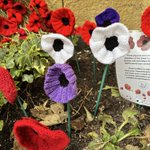
The King, The Queen and Members of the Royal Family have attended the annual Royal British Legion Festival of Remembrance at the Royal Albert Hall.
The special commemorative concert, organised by @PoppyLegion, honours all those who have lost their lives in conflict.


54


I was part of the High Ambition Coalition of Ministers group, pushing for this agreement in Montréal. This agreement gives an opportunity to the private sector to lead on scientific advancement, sustainable development and respect for the traditional communities that are guardians of tens of thousands of years of accumulated biodiversity knowledge. It is a terrible reflection of the avarice of the pharmaceutical companies and other industries built on biodiversity that this fund is a catastrophique failure. We desperately need leadership for a sustainable future!

Two years ago, countries at a UN biodiversity summit agreed that companies profiting from Earth’s genetic data should pay to help preserve nature. So far they’ve contributed just US$10,588.
go.nature.com/4zq2yMr

1
85
Prof. Lee White CBE retweeted
Human, animal and environmental health are inseparable.
From climate change to antimicrobial resistance, what harms nature harms us.
On #OneHealthDay, let’s back a One Health approach—for healthier people and a healthier planet.

It was interesting to join the predominantly private-sector delegates at the CC Forum last week in London on the « science panel », with Climate change science-icons Hannah L. Cloke OBE and Hayley Fowler FRS, alongside my friend Ian Redmond, biodiversity’s roving ambassador at large, to add a dose of reality to the proceedings.

1
1
84
Indeed I made the point that politicians today seem to have shorter and shorter horizons and less and less vision and long-term strategy and leadership, and it is up to the private sector, which does (sometimes) have that long-term eye to profitability and stability, to step up and show leadership. +
1
13
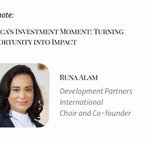
As CC Forum prepares to travel to Cape Town in March next year, I was also struck by the words of Runa, Chair of Development Partners International, who invest $4 billion on the continent. Twenty-five years ago, just 1% of global investment capital was flowing to Africa, the continent arguably worst impacted by climate change. In 2025, that figure was still just 1%.

40
I was out delivering the NE Fife LibDem Gazette today in « Sunny Fife ». Judging by the number of dogs on the other side of the doors that barked loudly in excitement and ripped it out of my hand, it was eagerly awaited. I have new respect for our nations post men and women!

1
3
131

I went to South Africa to talk about the forests of the Congo Basin and came home thinking about a tree in Scotland.
My latest Field Note explores the curious paradox of Sitka spruce: a valuable timber crop that, once it escapes the boundaries of a plantation, can threaten the very habitats Scotland is trying to restore. From South Africa’s experiments with biological control to new research tracking Sitka’s spread across Scotland, there may be more to learn from looking beyond our own borders.
We need better evidence, smarter forestry and a willingness to tackle problems before they become much harder to solve. And in the meantime, if you spot a Sitka spruce seedling growing where it shouldn’t, consider pulling it up. Just watch those prickly needles!
#UprootSitka
linkedin.com/pulse/field-not…

77
An interesting article from the Guardian about Iboga, the sacred plant in Gabon that plays an important role in the traditional Bwiti religion, that has been practised for thousands of years (Iboga has been carbon-dated from archeological digs as having been being used before Christ).
As Minister of Environment in Gabon, in 2022 I authorised the first sales of fully legal, Nagoya Protocol compliant iboga grown by a small village cooperative in NE Gabon, achieving a price of 2,000 euros per kg of dried root bark (with a commitment to rise to 6,000).
Prior to this, all Iboga taken out of Gabon, including seeds that were used to create plantations in Costa Rica, Brazil, Cameroon, China . . . , and iboga used to undertake research in universities in the US and Europe, or to treat drug addicts in hundreds of clinics around the world, was taken illegally from Gabon.
The World would not know about Iboga if were not for the traditional knowledge of the Gabonese people and if it does prove to be the foundation for treatments of PTSD, brain injuries, addictions, or of diseases like Parkinson’s and Alzheimer’s, a fair % of the proceeds must flow back to the Gabonese Republic and its people.
theguardian.com/environment/…

Prof. Lee White CBE retweeted

In the immediate term, clearing a hectare of forest can generate more income than protecting it, even when the long-term costs of forest loss to society are much greater, observe Carlos Nobre and @LeeJTWHITE. project-syndicate.org/commen…

Prof. Lee White CBE retweeted
To succeed, the Tropical Forest Forever Facility must mobilize enough capital to translate global commitments into predictable payments and support governments in implementing policies that protect forests, argue Carlos Nobre and @LeeJTWHITE. project-syndicate.org/commen…
The UN Sustainable Development Solutions Network @UNSDSN and the Science Panel for the Amazon @theamazonwewant present “Scaling Tropical Forest Finance: Perspectives From the Amazon Basin, the Congo Basin, and Borneo,” launched on September 24 in the framework of the 81st session of the United Nations General Assembly (UNGA 81) and Climate Week NYC.
A necessary read covering the financing gap facing tropical forests and the pathways we need to explore to ensure that protecting them becomes an economically viable choice for the countries and communities that depend on them.
sp-amazon.org/publications/#…


