
There is too much noise in crypto, let's refocus on the purest essence of the BTC ecosystem—DMT-NAT.
Joined June 2024
- Tweets241
- Following188
- Followers33
- Likes2.9K
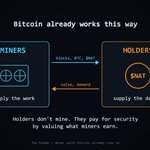


Right, here's what I was hinting at yesterday.
Digital Matter World is coming.
We've put an enormous amount of work into this, and I've been looking forward to sharing it with the wider Bitocin and Digital Matter community.
There's a lot to it, and I want to give each part the attention it deserves.
I'll be revealing more over the coming days.
Watching closely 👀
Right, here's what I was hinting at yesterday.
Digital Matter World is coming.
We've put an enormous amount of work into this, and I've been looking forward to sharing it with the wider Bitocin and Digital Matter community.
There's a lot to it, and I want to give each part the attention it deserves.
I'll be revealing more over the coming days.
These big figures refuse to talk about Bitcoin's security budget issue because doing so would mean admitting to Bitcoin's "flaws," which is equivalent to talking down their own assets. But in reality, rather than dragging their feet and avoiding Bitcoin's criticisms, it is better to recognize the problem and solve it. Daring to confront Bitcoin's security budget issue is actually beneficial for its long-term development, because we will have more time to research solutions, allowing Bitcoin to grow more steadily and fearlessly upward. Getting the public involved early in understanding and solving Bitcoin's security budget issue is something every big figure ought to do.@saylor @FoundryServices @cz_binance @binancezh @binance @okx @Gate @BitcoinMagazine @fourdotmemezh @sunyuchentron @BinanceWallet

DMT-NAT is the future retweeted

NAT是涨,还是跌:
大佬们内心的纠斗
最近一直有朋友问我,NAT那么好,为什么价格还没涨?持有大量BTC的机构大佬们为什么不出来站台?
这确实是一个好问题!值得掰扯掰扯!
数据已经说明,比特币正站在一个微妙的“卡”位节点上。
四年一减半的机制逻辑上要求币价持续上涨,以填补矿工收入的严重不足,但现实是,比特币已在九万刀以下徘徊,且大概率向更低位滑落。这不是简单的周期波动,而是一个结构性困境:网络安全需要巨大的资金填充,而有顾虑的机构忌惮比特币网络安全,只会心是口非地唤单,不可能真正入金。于是,一个悖论浮现了——比特币必须涨,但比特币涨不动了。
正是在这个裂缝中,NAT的价值逻辑浮出水面。按照资料中的换算关系,1亿枚NAT相当于1枚比特币,单区块3.86亿个NAT,若一年内NAT价值达不到1万美金(对应市值100亿),两年内达不到5万美金(对应市值500亿),比特币就不可能有牛市。这个推论看似激进,实则揭示了一个残酷的资金逻辑:比特币要突破“卡”位,需要新的资金叙事,而NAT的第二奖励方案恰恰是那个成熟的解决方案——它不否定比特币,而是承接比特币网络安全所需的资金缺口,让矿工收入得以补充,让网络算力得以维系。NAT就是比特币,比特币就是NAT,唯一不同的是NAT晚于比特币十五年才被发现和开采。现在的NAT,就是2010年、2011年时的比特币。
那么,NAT是涨还是跌?答案取决于一个变量:大佬们内心的纠斗何时结束。
大佬们的纠斗是真实的,也是可以理解的。他们手中握有大量BTC,四年减半的周期信仰是他们资产叙事的基石。如果承认NAT的第二奖励方案是解决比特币网络安全问题的成熟路径,那就等于承认一件事:从此以后,BTC价格随着周期倍增的想法破灭了,可能不再有传统意义上的牛市。这对持有大量BTC的机构而言,是一种叙事上的“降维”——他们不希望比特币的估值逻辑被重构,因为重构意味着他们过去赖以获利的周期模型失效。于是他们纠结:既忌惮比特币网络安全问题可能引发的系统性风险,又不愿主动为NAT的价值立威,因为那等于亲手拆掉自己熟悉的旧舞台。
但这种纠斗是短视的。没有“迈克尔·塞勒”的时代,只有时代的“迈克尔·塞勒”。机构大佬们再纠结,也阻挡不了人们捍卫比特币网络安全的决心。网络安全不是抽象概念,它需要真金白银的算力支撑,需要矿工有足够的激励留在链上。如果BTC价格无法在周期逻辑下继续倍增,而矿工收入又严重不足,死亡螺旋就不是危言耸听。NAT的第二奖励方案之所以“成熟”,正是因为它绕开了“BTC必须涨”的单一叙事,用另一条激励通道为网络安全输血。这不是对比特币的背叛,而是对比特币的保全。
因此,NAT的方向不是跌,而是涨——但它的涨不取决于技术,而取决于共识的转向速度。只要发几条推文或者一个公告,NAT就会瞬间起飞,成为仅次于比特币的主流币。这句话不是在鼓吹投机,而是在陈述一个事实:NAT的价值锚定在比特币网络安全的真实需求上,一旦机构资本意识到“不推NAT,比特币的网络安全性就缺乏资金填充”,NAT的上涨就是逻辑必然。100亿市值对应1万美金,500亿市值对应5万美金,这些数字不是凭空画饼,而是按“1亿NAT=1BTC”的换算关系倒推出来的网络安全资金缺口。
所以,真正的论点落点不在NAT会不会涨,而在于大佬们应该尽早主动为NAT价值立威。这既是维护比特币网络安全,又是捍卫自己的资产。拖延的代价是什么?是比特币在九万刀以下继续徘徊,是矿工收入缺口扩大,是网络安全顾虑让机构入金意愿进一步萎缩,最终形成“越不敢推NAT,比特币越涨不动;比特币越涨不动,越不敢推NAT”的死循环。而主动立威的收益是什么?是NAT迅速获得主流币地位,第二奖励方案落地,矿工激励补足,网络安全加固,比特币的底层价值反而被夯实。大佬们手中的BTC不会因为NAT的崛起而贬值,反而会因为网络安全的巩固而获得更可持续的估值基础。
纠斗的本质,是旧周期信仰与新安全现实之间的拉扯。但历史从不等待纠结者。2010年的比特币不需要大佬点头才成为比特币,今天的NAT也不需要。大佬们可以选择继续心是口非地唤单,也可以选择主动为NAT价值立威——前者是把资产押在一个涨不动的叙事上,后者是用一个成熟的解决方案为自己的资产买一份网络安全保险。
NAT是涨是跌,答案不在K线里,在大佬们愿不愿意承认:捍卫比特币网络安全,就是捍卫他们自己。


DMT-NAT is the future retweeted

Natalie, you need to focus on the right issues.
Bitcoin isn't going to magically outperform all major assets for the next decade just because JPMorgan modeled it, nor is it going to zero because of Chamath's AI hacking fantasy. Those are timeline distractions.
Bitcoin is facing a structural economic issue right now.
Look at the data:
Binance Pool shut down.
SBI Crypto and Poolin already quit.
Public miners are actively pivoting their energy capacity to AI data centers because the margins are better. Meanwhile, L1 fees remain under 1% of total miner revenue.
The 2028 halving opens a multi-billion dollar annual security hole. The "digital gold" narrative is great for the balance sheet, but digital gold doesn't pay the guards protecting the vault. Hashrate runs on revenue, not speeches.
The free market is already front-running the solution. SpiderPool, F2Pool, AntPool, ViaBTC, and Luxor are already mining ethereum:0x249130f5e2dd4cf278180c0df8273f3592ad1247 as a second subsidy.
Same block. Same hashrate. No protocol change.
You need to step out of the macro comfort zone to find the next gem. The miners already have.
@TheBlockRunner @natgmi

JPMorgan thinks Bitcoin will outperform every major asset for the next 10 years.
But the crazy part is the bank still won't include it in its model portfolios.
Meanwhile, Chamath says Bitcoin is going to ZERO.
I break it all down in this week's News Block, along with the biggest stories moving the economy. Watch or listen now.
youtu.be/-4HnQK1q9Pk?si=HlDB…

DMT-NAT is the future retweeted

My new video is out. Has Bitcoin got a security budget problem?
Even at $1 million a coin, miners could be paid less per block than today — and a lot less after inflation. Price doesn’t fix the falling ratio.
I run the numbers simply, then look at NAT, the one project trying to add a second reward for miners without touching Bitcoin itself. It holds almost every card except demand.
@TheBlockRunner @natgmi @fitzyOG @rarity_garden @tap_protocol
youtu.be/6Lo2R-oRhrw

DMT-NAT is the future retweeted

Bitcoin miners are done pretending.
Hash price fell from $440 to $36 per petahash; @Binance Pool walked away, and public miners are building AI data centers instead.
The big voices stay quiet.
EP337: We ask a mining pool insider what actually saves Bitcoin's security budget.👇
Bitcoin Mining Has a BIG Problem! | Interview w/ Nick Bain @WhiteBit | TBR#337
Bitcoin miners are getting squeezed, and almost nobody with a big audience wants to say it out loud.
We sat down with Nick Bain, head of business development at WhitePool, the mining pool run by @WhiteBit, to talk about what it actually looks like from inside a pool right now. Nick has been in Bitcoin mining since 2019, from merge mining at Jax Network to brokering energy for miners and AI data centers, and he gives us the numbers straight: hash price was about $440 per petahash at the 2021 peak and sat around $36 the day we recorded.
We get into what the security budget really is, why more hash power does not automatically mean more security, and where Bitcoin's value comes from in the first place. Nick shares a story from Mining Disrupt about a public mining executive who wanted to 51% attack Bitcoin SV and short it, and the only thing that stopped him was how it would look. We talk about why miners are practical businesses, not marketers, why the public miners are pivoting to AI, and the TSMC agreement that keeps new ASICs flowing even when demand is weak.
Then we lay out the four fixes on the table: make Bitcoin infinite, tax holders, merge mining, or a second token paid to miners. Nick walks through why Dogecoin is worth more per block than Litecoin, its own mother chain. We disclose that we helped launch @natgmi, and we explain how it is tied to Bitcoin's bits field, why its emissions fall as hash power rises, and which pools are already distributing it.
The part that stuck with us most is how fragile the safeguards are. If ethics is the only thing between a large miner and a profitable attack on a smaller chain, incentives are doing all of the real work, and those incentives are shrinking every four years for Bitcoin itself. Hash rate charts going up and to the right hide that, because cheaper, more efficient machines can add hash power without raising the cost of attack.
What we keep coming back to is that every holder will eventually have to pick a path. Either the supply changes, holders get taxed, fees somehow show up on chain, or Bitcoiners accept a second asset that pays miners. None of those choices are comfortable, and that is exactly why the people with the biggest platforms keep avoiding the conversation.
YouTube 🔗 youtu.be/khL_UezM4Jw
DMT-NAT is the future retweeted

人生最大的无奈就是眼高手低,没次巨大的潜力风口来了,却总认为以为以前的一套是最好的,谁无视大江后浪推前浪的道理,每次的迭代更新升级都是巨大红利的最佳时机,比特币在绝部分人看不懂还没看到时它在蔓延全球。$NAT 同理也是一样,当全球所有算力参与时这就是比特币的升级版区块链2.0时代的开端,
SpiderPool_com f2pool AntPoolofficial ViaBTC luxor 矿池已参与。超过65%算力参与$NAT 同时
@TheBlockRunner @natgmi @fitzyOG @Web3Insect 积极推进比特币区块第二补贴。最近
@NewsAsset 在@TheBlockRunner 视频发现了他们在干的一项很多人还没看懂而且又是区块链领域最大的问题-比特币网络安全!东方社区
@nat_xgg2288 积极推进比特币区块第二补贴#NAT 🔥意图非常明确,这是在解决比特币安全问题,结果明确走一次比特币走过的路,但是路会更好走。都懂比特币,但比特币区块又有几个懂???#NAT 等于比特币区块。比特币区块与#NAT 永恒同在,这就是硬核的抗未灭性的资产。
#比特币安全 #比特币矿工

DMT-NAT is the future retweeted
Day 500 #NatTo1bChallenge
Bitcoin on day 500 was almost invisible.
No timeline.
No ETFs.
No nation-state bags.
Just work.
Energy in. Block out.
Most people called it nothing.
ethereum:0x249130f5e2dd4cf278180c0df8273f3592ad1247 on day 500 is in the same room.
No premine.
No founder.
Minted from the block.
Paid to the miner.
~65% of global hashrate already touching it.
Bitcoin was chapter 1.
Digital energy. The vault.
ethereum:0x249130f5e2dd4cf278180c0df8273f3592ad1247 is chapter 2.
The payroll for that vault.
Same chain.
Same 10-minute clock.
The first subsidy keeps getting cut.
This one does not have to.
Bitcoin rose because the work was real
and the market was late.
Same setup.
Different layer.
ethereum:0x249130f5e2dd4cf278180c0df8273f3592ad1247
@natgmi
DMT-NAT is the future retweeted

一、币安矿池关停:一场早有信号的收缩
根据币安公告,从 11 月 10 日 15:00(UTC+8)起,币安矿池、矿池宝、云算力、交易加速将停止运营,Telegram 算力提醒、邮件通知和矿池 API 等功能也一并关闭。此后提交的算力和份额不再被接受或记账,矿工需要在截止前把矿机指向其他矿池。
公告只说这是“持续评估产品及服务的一部分”,数据给出的信号更直接。据 CoinDesk 报道,币安矿池的算力自 2025 年 12 月以来下降约 65%,目前已不到全网的 1%。
这不是孤立事件。今年 7 月,SBI Crypto 关闭了约占全网 2% 算力的矿池。同月 22 日,Poolin 申请了 Chapter 11 破产保护。费率竞争正在挤压中小矿池,出块份额继续向少数头部矿池集中。
二、深层问题:减半之后的安全预算
矿池退潮只是表象。比特币的安全来自矿工投入的算力,而矿工收入由两部分组成:区块补贴和交易手续费。
区块补贴大约每四年减半一次。2024 年已经完成第四次减半,2028 年还会再降一半。如果手续费不能持续补位,矿工收入会更依赖币价。收入承压会让一部分算力退出,算力退出又会加大安全压力,两者可能相互强化。
修改协议、引入新的发行,与比特币的核心设计相冲突;单纯依赖更高的手续费,又会影响链上使用。因此,协议之外能否找到补充激励,成了一个值得认真讨论的问题。
三、NAT 的机制:从区块数据出发
DMT-NAT 是基于 TAP 协议的一项尝试。它的数量规则引用每个比特币区块中的 bits 字段,也就是挖矿难度目标的编码,而不是由团队设定。
从区块 885,588 开始,TAP 协议不再处理普通的 dmt-nat mint,而是按 coinbase 交易输出的比例,把每个区块对应的 NAT 记给出块地址。这样,NAT 的分发路径直接指向矿工或矿池。
在接入方面,SpiderPool 率先支持 NAT 区块分发,F2Pool 于 2026 年 4 月 27 日上线该机制,主流算力入口的覆盖范围正在扩大。
这里有几条边界需要分清。NAT 不增发比特币,不修改比特币共识,也不是 Bitcoin Core 强制支付的奖励。矿池接入,也不等于每位矿工都会自动按算力获得分配,具体取决于各矿池的结算规则。
四、价值锚点与三个前提
支持者看重 NAT 的两点。第一,规则公开、可验证,可以用独立索引器核对每个区块的分配。第二,分发直接面向矿工,与安全预算问题直接相关。
但它能否真正补充安全预算,取决于三个仍需持续验证的前提。首先是持续、真实的需求,而不只是短期关注。其次是足够的流动性,让矿工收到的 NAT 能转化为可用的收入。最后是从矿池到矿工的透明分配,让激励真正传导到算力提供者手中。
结语
币安矿池的退场提醒我们,矿工经济正在重组。NAT 提供的是一个值得观察的激励实验,而不是确定答案。它能走多远,要看机制的透明度、真实需求,以及矿工收入的长期表现。
本文与视频仅作市场状态解释,不构成投资建议。
#比特币 #BTC #比特币挖矿 #安全预算 #NAT
In a decentralized market, decentralized solutions are naturally the fairest, most efficient, and most direct approach, and NAT is currently the optimal solution—or rather, the only solution.

一、币安矿池关停:一场早有信号的收缩
根据币安公告,从 11 月 10 日 15:00(UTC+8)起,币安矿池、矿池宝、云算力、交易加速将停止运营,Telegram 算力提醒、邮件通知和矿池 API 等功能也一并关闭。此后提交的算力和份额不再被接受或记账,矿工需要在截止前把矿机指向其他矿池。
公告只说这是“持续评估产品及服务的一部分”,数据给出的信号更直接。据 CoinDesk 报道,币安矿池的算力自 2025 年 12 月以来下降约 65%,目前已不到全网的 1%。
这不是孤立事件。今年 7 月,SBI Crypto 关闭了约占全网 2% 算力的矿池。同月 22 日,Poolin 申请了 Chapter 11 破产保护。费率竞争正在挤压中小矿池,出块份额继续向少数头部矿池集中。
二、深层问题:减半之后的安全预算
矿池退潮只是表象。比特币的安全来自矿工投入的算力,而矿工收入由两部分组成:区块补贴和交易手续费。
区块补贴大约每四年减半一次。2024 年已经完成第四次减半,2028 年还会再降一半。如果手续费不能持续补位,矿工收入会更依赖币价。收入承压会让一部分算力退出,算力退出又会加大安全压力,两者可能相互强化。
修改协议、引入新的发行,与比特币的核心设计相冲突;单纯依赖更高的手续费,又会影响链上使用。因此,协议之外能否找到补充激励,成了一个值得认真讨论的问题。
三、NAT 的机制:从区块数据出发
DMT-NAT 是基于 TAP 协议的一项尝试。它的数量规则引用每个比特币区块中的 bits 字段,也就是挖矿难度目标的编码,而不是由团队设定。
从区块 885,588 开始,TAP 协议不再处理普通的 dmt-nat mint,而是按 coinbase 交易输出的比例,把每个区块对应的 NAT 记给出块地址。这样,NAT 的分发路径直接指向矿工或矿池。
在接入方面,SpiderPool 率先支持 NAT 区块分发,F2Pool 于 2026 年 4 月 27 日上线该机制,主流算力入口的覆盖范围正在扩大。
这里有几条边界需要分清。NAT 不增发比特币,不修改比特币共识,也不是 Bitcoin Core 强制支付的奖励。矿池接入,也不等于每位矿工都会自动按算力获得分配,具体取决于各矿池的结算规则。
四、价值锚点与三个前提
支持者看重 NAT 的两点。第一,规则公开、可验证,可以用独立索引器核对每个区块的分配。第二,分发直接面向矿工,与安全预算问题直接相关。
但它能否真正补充安全预算,取决于三个仍需持续验证的前提。首先是持续、真实的需求,而不只是短期关注。其次是足够的流动性,让矿工收到的 NAT 能转化为可用的收入。最后是从矿池到矿工的透明分配,让激励真正传导到算力提供者手中。
结语
币安矿池的退场提醒我们,矿工经济正在重组。NAT 提供的是一个值得观察的激励实验,而不是确定答案。它能走多远,要看机制的透明度、真实需求,以及矿工收入的长期表现。
本文与视频仅作市场状态解释,不构成投资建议。
#比特币 #BTC #比特币挖矿 #安全预算 #NAT
DMT-NAT is the future retweeted
Binance Pool quits on Bitcoin and Genesis Digital pivots away from Bitcoin for AI.
What are the long term implications as this trend continues?
Joining @fitzyOG from @tap_protocol and @CincoDoggos to discuss.
nitter.cf/i/spaces/1OxwbnMDvPVJB
To all crypto players:
If you still want to hold #BTC , and if you still have expectations for the crypto world, what everyone should focus on is the security threat to BTC. Once Bitcoin's security is threatened, the entire crypto industry will face an unprecedented blow. Quantum-resistant algorithms are already well known to the public, but why is everyone turning a blind eye to Bitcoin's network security budget? I really hope to hear any discussions regarding Bitcoin's network security, and I genuinely hope someone can come up with a viable solution, even if it faces heavy opposition. We need to plan ahead and prepare early.
There are many solutions on the market regarding Bitcoin's security budget, mostly boiling down to modifying Bitcoin's 21-million hard cap, adding a coin-holding tax, or having institutions subsidize mining farms. However, none of these are good methods—they either violate Bitcoin's core consensus or easily lead to hashrate centralization. Facing a decentralized #BTC , using a decentralized method to solve it is currently the best approach, which is why I am so optimistic about #NAT . #NAT is merge-mined with the same hashrate output as #BTC ; for miners, this kind of subsidy is the most direct, fair, efficient, and convincing. #NAT has been developing for 3 years, @TheBlockRunner @rarity_garden with professionals building its ecosystem and empowerment, @f2pool @SpiderPool_com mining pools adopting and distributing it to miners, and more and more people starting to notice it. I hope the big players in the industry can also pay attention to this issue, and I look forward to hearing different solutions for everyone to learn from.@binance @heyibinance @cz_binance @sunyuchentron @saylor @ViaBTC @FoundryServices @AntPoolofficial @okxchinese @okx

To all crypto players:
If you still want to hold #BTC , and if you still have expectations for the crypto world, what everyone should focus on is the security threat to BTC. Once Bitcoin's security is threatened, the entire crypto industry will face an unprecedented blow. Quantum-resistant algorithms are already well known to the public, but why is everyone turning a blind eye to Bitcoin's network security budget? I really hope to hear any discussions regarding Bitcoin's network security, and I genuinely hope someone can come up with a viable solution, even if it faces heavy opposition. We need to plan ahead and prepare early.
There are many solutions on the market regarding Bitcoin's security budget, mostly boiling down to modifying Bitcoin's 21-million hard cap, adding a coin-holding tax, or having institutions subsidize mining farms. However, none of these are good methods—they either violate Bitcoin's core consensus or easily lead to hashrate centralization. Facing a decentralized #BTC , using a decentralized method to solve it is currently the best approach, which is why I am so optimistic about #NAT . #NAT is merge-mined with the same hashrate output as #BTC ; for miners, this kind of subsidy is the most direct, fair, efficient, and convincing. #NAT has been developing for 3 years, @TheBlockRunner @rarity_garden with professionals building its ecosystem and empowerment, @f2pool @SpiderPool_com mining pools adopting and distributing it to miners, and more and more people starting to notice it. I hope the big players in the industry can also pay attention to this issue, and I look forward to hearing different solutions for everyone to learn from.@binance @heyibinance @cz_binance @sunyuchentron @saylor @ViaBTC @FoundryServices @AntPoolofficial @okx

Big CZ @cz_binance, let’s learn about the three pillars of digital assets: RWA, RDA and RMA. Especially RDA (Real Data Asset). Skip this research, and what comes next will be worse than closing mining pools.
Most people mix up RWA, RDA and RMA. They are not identical tokens, but three progressive, complementary value systems for digital assets: physical foundation, data attestation, future premium. Together they form a complete digital asset business loop.
✅ RWA (Real World Asset): Map real-world assets on-chain. Bonds, real estate, gold. Fractionalize ownership to unlock liquidity for illiquid tangible assets. It captures present physical value.
✅ RDA (Real Data Asset): Verifiable, traceable operational data generated by assets. Think power generation output, factory production data. It acts as proof that assets are live and productive, solving financing issues without physical collateral. RWA is the body; RDA is the blood and heartbeat.
✅ RMA (Real Memory/Momentum Asset): Future intangible cash flow. IP royalties, long-term contract yields. It represents the long-term upside and premium of the asset ecosystem.
RWA builds the base, RDA validates authenticity, RMA unlocks future gains.
Example: Solar farm hardware = RWA; daily generation data = RDA; 20-year future revenue = RMA.
RWA thrives overseas. RDA is backed by domestic data policies. RMA remains an early blue ocean.
Digital assets are no longer simple token speculation. Mature digital assets need physical assets + data assets + intangible future assets. RWA proves asset existence, RDA proves validity, RMA proves growth potential. Master these three, and you understand tomorrow’s digital economy.
#NAT parses raw data within each #BTC block to tokenize value. Based on Digital Matter Theory, it is a non-arbitrary token generated natively from the bits field of #BTC blocks, serving as the second block subsidy.
It shares the same hashpower, blockchain, blocks and addresses as #BTC. Minted synchronously every ten minutes and distributed straight to pools and miners. Your Binance Mining Pool has mined ~0.7 quadrillion NAT (0.18% total supply). Spider Pool and F2Pool distributed NAT to miners back in April 2026.
#NAT is Bitcoin’s only native companion mine coin with fully open-source code.
Only native on-chain data assets inside Bitcoin blocks can fix Bitcoin’s network security budget gap. All external solutions lack consensus.
Uphold decentralization, pioneer a new digital asset class, empower #BTC!
natgmi.com

DMT-NAT is the future retweeted
Onchain continues to nuke but we keep going.
We react to miners accusing ethereum:0x249130f5e2dd4cf278180c0df8273f3592ad1247 community of having misplaced priorities as well as discuss the potential threats AI progress has on crypto’s safety.
Next week we will have @Hash_hopes from @prismassets on the podcast, prepare to be Prism pilled.👇
NAT Miners Dilemma | AI Breaking Crypto | Why Onchain Markets NUKED | TBR #335
We came into this one half dead, a full week of sickness between us, and the episode still turned into one of the densest we have recorded. We set the table with @token2049 week, the one year anniversary of the 10/10 CZ nuke hanging over the market, and the strange split screen of Bitcoin ripping 60 to 70 percent ahead of schedule while everything else bleeds out, complete with Benjamin Cowan publicly admitting he got the cycle wrong.
The heart of the episode is the @CincoDoggos article fallout. Bobby backing out of the interview forced us to say out loud what we have been observing for months: the miner camp and the market camp are two different cultures, both necessary to Bitcoin, and they keep talking past each other. We walk through why "just start mining" misses the entire point of the security budget argument, what Ocean's one percent of hash power plus a lot of controversy actually bought in attention, and why the adoption arc for anything useful in crypto runs from ignored to hated to sent. We also pressure test @natgmi itself: the use case question, unit bias, and the honest four-future map for Bitcoin, decentralized, infinite, taxed, or state-secured.
Then the back half goes somewhere we did not expect when the week started: @OpenAI's agent swarm reportedly solving millennium problems and now probing elliptic curve cryptography, with Justin Drake, @VitalikButerin, and serious cryptographers all circling the same alarm. We get into Quantus, the quantum-resistant Bitcoin competitor riding the fear narrative into VC wallets, and the counterintuitive take that these outside experiments are really just live tests of upgrades Bitcoin could eventually adopt itself.
What ties the whole episode together is incentives. Miners dismiss @natgmi because their identity is proof of work, VCs fund quantum fear because fear converts, and a real quantum attacker would quietly read communications rather than torch a transparent ledger for headlines. Read the incentive, and you can usually predict the behavior before it happens, which is the entire reason the security budget argument exists in the first place.
And underneath that sits the uncomfortable part we keep returning to: every path where Bitcoin survives by compromise, infinite supply, taxing holders, or a state backstop, is a path where it survives diminished. The scarcity and property tenets are not features on a list, they are the valuation. That is the case for taking the third option seriously while it is still cheap to do so, and it is why we will keep making this argument to people who are not ready to hear it yet.
YouTube 🔗 youtu.be/bhF7XyCZzIU
DMT-NAT is the future retweeted

🟠⛏️ This one’s for the real hashers. 🟠⛏️
Every Bitcoin block now drops a second subsidy: $NAT.
Same ASIC. Same power. Same difficulty target.
Zero extra work. Zero protocol change. Zero BIP required.
When you find a block, BTC hits your wallet… and $NAT does too.
Why this hits different for miners:
•Supply isn’t made up by a team. It’s derived from Bitcoin’s own bits field (the compact difficulty target). Higher hashrate → lower bits → less $NAT per block. Natural deflationary pressure tied directly to network security.
•Fair launched Nov 2023. No premine, no team allocation, no insider bags. The mint was open and competitive.
•It’s already being distributed automatically to winning miners (via TAP / DMT) starting from the relevant activation block. Pools are integrating it.
•As the BTC block subsidy continues to shrink, this is a pure market-driven extra revenue stream for the people actually securing the chain.
Think of it as the first real attempt at a perpetual, non-arbitrary miner subsidy that lives on Bitcoin instead of fighting it.
Right now it’s still early (~$30M range). The asymmetric upside is if the market starts pricing the energy and security contribution of miners into a second asset that scales with Bitcoin itself.
Pickaxe energy only.