

Retrieving from oblivion the antiquities of the old kingdom, where the sun sets and the divine awakens. Personal account: @FCMart1n
Joined March 2025
- Tweets1.5K
- Following37
- Followers2.7K
- Likes4.6K



Pinned Tweet
Reasons to lump Callaecian and Lusitanian together:
>Same onomastics.
>Same toponymy.
>Same gods.
>Same Celtic and pre-Celtic strata.
>Same recorded pre-Latin language.
Reasons to differentiate Callaecian and Lusitanian:
>"Bro, Galicia sounds like Galatian/Gaelic/Gaulish."


>There is zero evidence of a "Gallaecian language" distinct from Lusitanian. Neither was Hispano-Celtic, as neither was Celtic to begin with.
>Cantabria as a mixed Celto-Vasconic area makes no sense at all.
nitter.cf/Lethescholar/status/20…

Lethe scholar retweeted
>P-Celtic/Gallo-Brittonic emerges in central Alps, becomes Hallstatt prestige speech.
>La Tène emerges ~450 BC, peripheral & core Celts re-form a cultural koiné, P-Celtic spreads through it.
>Peripheral La Tène Celts continue carrying Q-Celtic, including to Ireland.

Lethe scholar retweeted
My current view on the Celtic westward expansion:
>By ~1000 BC, Celtic still limited to central and eastern France; Atlantic cultures NOT Celtic yet.
>RSFO group peaks; Q-Celtic infiltrates Languedoc-Iberia (Proto-Celtiberians) and the Channel/MMN area (Proto-Gaels)… (+)


Lethe scholar retweeted
I'm still waiting for a response to this from people in the trenches of Celtic Bell Beakers.
nitter.cf/Lethescholar/status/21…
Lethe scholar retweeted
I'm not suggesting that at all.
I'm suggesting that the earliest Celtic intrusion into Britain occurred by 1000 BC, it was ancestral to Gaelic, (Gallo-)Brittonic entered later as mature developments in the La Tène koiné, and all this involved migration and political domination.
My current view on the Celtic westward expansion:
>By ~1000 BC, Celtic still limited to central and eastern France; Atlantic cultures NOT Celtic yet.
>RSFO group peaks; Q-Celtic infiltrates Languedoc-Iberia (Proto-Celtiberians) and the Channel/MMN area (Proto-Gaels)… (+)
Why the Duffaits group from central-western France could have been Celtic as early as the Middle Bronze Age:
nitter.cf/Lethescholar/status/20…

Why P-Celtic emerged in the central Alps (plus another thread linked at the end of this, dealing why P-Celtic emerged around 1000 BC and how it became the Hallstatt prestige speech):
nitter.cf/Lethescholar/status/20…

Ireland was one of the richest, densest and most advanced Bronze Age European societies besides the Aegean.
Big reasons to exclude it could be Celticized at that time. But by the Iron Age you have: societal collapse + huge foreign intrusion (La Tène).
Put two and two together.


I would group Brythonic, Gaulish, Italic and Venetic as one cluster of related dialects.
Lusitanian development may have been influenced by early Goidelic from Ireland. Recent research postulates that Ireland’s population may have been 3-4 million in the Bronze Age, one of the most densely populated areas of Europe in fact. You have a small amount of Y-DNA R-DF27 on the South Coast of Ireland and also in Western Iberia. So a migration by boat from Ireland would make sense.
Ireland influenced abroad during the Bronze Age? Absolutely. Nothing to do with Celts.
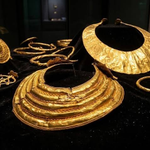
Proto-Celtic was still forming in central Europe when early Bronze Age pre-Celtic Irish traded this goldwork in Portugal:
nitter.cf/Lethescholar/status/19…

Why La Tène was Gaelic in Ireland:
nitter.cf/Lethescholar/status/21…
WHY LA TÈNE WAS GAELIC IN IRELAND
Yes, my point could sound odd, as La Tène is mainly associated to P-Celtic Gaulish and the ancestors of Brittonic, not Q-Celtic Gaelic.
But don't assume La Tène = P-Celtic. That's WRONG, especially when dealing with early La Tène… (1/5)🧵


Take Champagne, part of the old Manche-Mer du Nord cultural group. Its dialect MUST have been something ancestral or at least very close to Gaelic.
From these northern peripheries, the La Tène koiné was structured: peripheries were reunited once again with the centre… (+)

You can find a lot of lists of Asturian tribes on the internet, but I shall take the liberty of referring to my thesis:
academia.edu/44493528/_2020_…


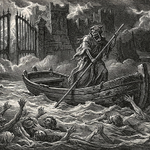
The river Lima or Limia in Galicia & Portugal was also called Lethe in Antiquity. The Romans associated it with an underworld river of Greek mythology of the same name. Modern Celticists argue it was instead related to Litavis.
Which option do u prefer?
Some keys below…🧵(1/4)


It was said that whoever crossed the Galician and Greek Lethe would lose their memory.
So the idea of an Indo-European cognate shared by Greek and Galaico-Lusitanian is very tempting.
Not to mention: what if Greek and Galician Lethe and Celtic Litavis were all related?... (+)

Perhaps something to link to early Celtic influences on Greece: a mythological place associated with the westernmost edge of the world, whose name was brought in the heroic age by western barbarians. /END
nitter.cf/Lethescholar/status/20…
