

Serving bold builders of the future. Not an offer to buy/sell securities or investment advisory services. Disclosures: https://nitter.cf/t.co/NqUCVhdnhA
Global
Joined July 2009
- Tweets10K
- Following2K
- Followers133K
- Likes8.9K





Pinned Tweet
Today we're announcing over $9B in capital for a new family of funds — our largest raise in 25 years.
AI is rewriting the rules. We're backing the founders building what comes next.

Pacific Fusion (@_Pacific_Fusion) co-founders Carrie von Muench and Keith LeChien sat down with @Sachin_and_Adam to discuss bringing fusion power to market.
Hear why they’re designing for mass manufacturing from the start.

Exclusive: Inside Pacific Fusion (@_Pacific_Fusion)
The startup that’s raised over $1B to make nuclear fusion mass-manufacturable.
We spent a day at their San Leandro facility with co-founders Carrie von Muench and Keith LeChien to understand how and why they’re building cheap, clean energy for all.
Backed by top VCs led by @generalcatalyst @htaneja @Breakthrough @lightspeedvp @ericschmidt @reidhoffman @patrickc @lachygroom @eladgil @mustafasuleyman @johndoerr + more.
0:00 What is nuclear fusion?
2:44 Built for mass manufacturing
3:55 Carrie's 'why' for joining
4:52 Past approaches to fusion
5:56 How Pacific Fusion is different
6:34 Milestones to net facility gain
7:30 More energy, more productivity
9:32 The race with China
10:57 The role of government
13:29 Our reflections
Inside ‘Black October’
@clairejyz and @Machiz discuss the recent PHP vulnerabilities and why defending against AI agent swarms could require continuous, automated protection.
More on Lightwork this week:
→ AI Math Breakthroughs And Mathematician Backlash
AI labs are reporting solutions to longstanding open problems. Claire and Josh discuss the challenge of verifying and understanding those results.
→ DoorDash to Acquire Instacart for $17B
Claire and Josh discuss how AI shopping agents could disrupt advertising revenue and how they see the deal impacting Instacart’s relationships with grocers.
→ Why World Models
Google previewed Genie 4 with more realistic visuals, generated audio and real-time controls. World models could help train agents and robots in simulated environments.
Full video below.
0:00 Is The Internet Broken
0:39 The New York Stock Exchange
1:55 Is The Internet Broken And What Is Black October?
3:20 The PHP Vulnerability And 70 Percent Of Websites Exposed
5:38 Dystopian Scenarios And Why Now
7:29 The End Of Event Based Cybersecurity And The CISO Survey
8:41 Advice For Regular People And Vibe Coding Security
10:08 Cybersecurity As A Line Item And The CISO Job
11:29 AI Math Breakthroughs Solution Slop And Mathematician Backlash
17:44 DoorDash Buying Instacart And The AI Agent Threat
24:10 Google Genie 4 World Models And Real Time Control
27:36 World Models For Robotics And Real Time Control


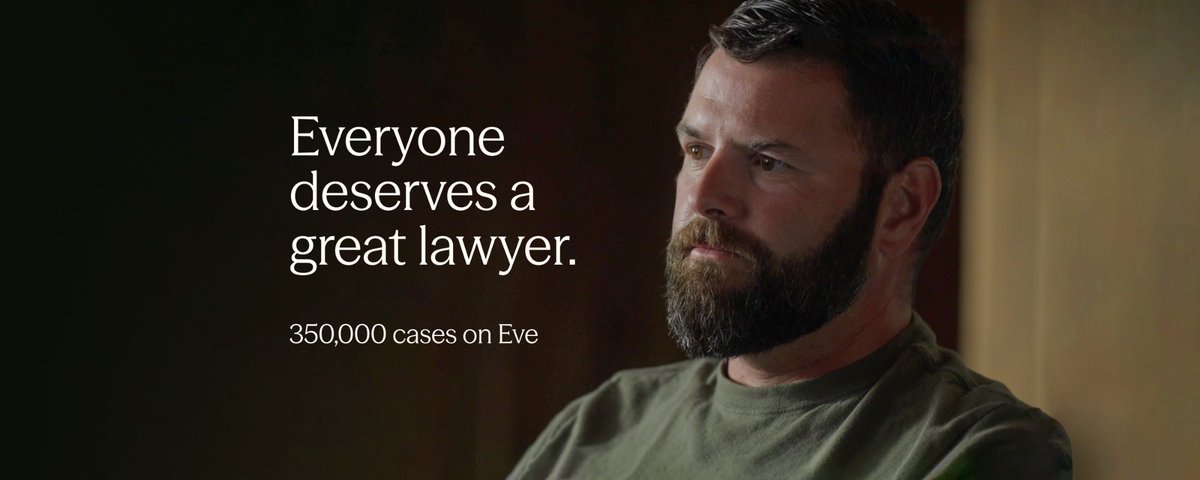
In plaintiff law, modest cases are often left behind because the recovery payouts can’t cover the work.
Eve’s core insight: don’t just digitize legal workflows - carry more of the casework with AI as the foundation, until even a modest case covers its own costs.
Congratulations to @jayanthmadhesw1, @m_noe11, David, and the entire Eve team on 350,000 cases! We’re proud to have led Eve’s Seed round and been partners to the team since.
More about today’s milestone from Jay: eve.legal/tort-report/everyo…


Lightspeed retweeted

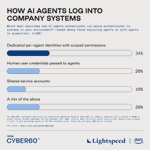
An AI agent shouldn’t automatically get the same access as the person using it.
Giving agents human credentials can make it harder to tell who did what. They need their own identities and limits on what they can access. Security teams should be able to trace an action back to the agent that took it.


The 4th annual Cyber 60 list is here.
This year’s list recognizes some of the fastest-growing venture-backed cybersecurity startups in the market, building to advance next-gen infrastructure, AI security, and how we approach threat detection.
Congratulations to everyone who made the #Cyber60 list in partnership with @FortuneMagazine and sponsor @AWSstartups.
Read our full CISO survey report, conducted with Wakefield Research, which polled 200 CISOs on enterprise AI and where they’ll invest next: lsvp.com/cyber60-2026-2027/

In our survey, about a quarter of companies using or exploring AI agents say they use or would use an employee’s login to give agents access.
Using an employee’s credentials can make it harder to tell who did what in an audit log.
34% selected dedicated per-agent identities with scoped permissions. Agents need their own identities and limits on what they can access.
Research with @WakefieldStats for @FortuneMagazine Cyber 60, sponsored by @AWSstartups.

The 4th annual Cyber 60 list is here.
This year’s list recognizes some of the fastest-growing venture-backed cybersecurity startups in the market, building to advance next-gen infrastructure, AI security, and how we approach threat detection.
Congratulations to everyone who made the #Cyber60 list in partnership with @FortuneMagazine and sponsor @AWSstartups.
Read our full CISO survey report, conducted with Wakefield Research, which polled 200 CISOs on enterprise AI and where they’ll invest next: lsvp.com/cyber60-2026-2027/

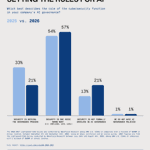
Only one in five of the 200 U.S. CISOs we surveyed say security takes the lead in setting the rules for AI.
That’s 21%, down from 33% in last year’s survey. Most respondents (57%) describe security as one voice among many, alongside compliance, data and legal.
For many founders selling AI security tools, one of the first questions is who owns AI risk at the company.
Research with @WakefieldStats for @FortuneMagazine Cyber 60, sponsored by @AWSstartups.

The 4th annual Cyber 60 list is here.
This year’s list recognizes some of the fastest-growing venture-backed cybersecurity startups in the market, building to advance next-gen infrastructure, AI security, and how we approach threat detection.
Congratulations to everyone who made the #Cyber60 list in partnership with @FortuneMagazine and sponsor @AWSstartups.
Read our full CISO survey report, conducted with Wakefield Research, which polled 200 CISOs on enterprise AI and where they’ll invest next: lsvp.com/cyber60-2026-2027/
After leading new revenue and consumer products at X, then building the consumer team at xAI, @evanjones set off to build an AI-powered bank for billions.
Tomorrow in Dublin, Evan joins Lightspeed Partner @arfrank to discuss his journey, scaling global companies and what he’s building at @standardecon.
Hosted by @dogpatchlabs, it’s set to be a great conversation about how AI can reimagine access to financial services.

From working with Elon Musk at X to helping build xAI, Evan Jones is now building an AI-powered bank for billions.
This Thursday, we're welcoming Evan back to Ireland at Dogpatch Labs, interviewed by @lightspeedvp Partner Aaron Frank.
Limited places. Apply: events.lsvp.com/lightspeed/r…

Sign up for the event here: events.lsvp.com/lightspeed/r…

Why does so much cybersecurity come out of Israel?
Shlomo Kramer traces Israel’s cybersecurity story to units like 8200. Over time, that talent “created its own community,” supported by a “very entrepreneurial spirit.”
From Cyber60 with Lightspeed partner @guruchahal
What does it take to build an enduring cybersecurity company?
Shlomo Kramer is the co-founder of three.
He first co-founded Check Point, which went public in 1996, just three years after they started.
He then co-founded Imperva, which went public in 2011. And in 2015, he started @CatoNetworks, which put networking and security into a single cloud service and now sits at over $400 million in ARR.
@guruchahal sits down with Shlomo Kramer to discuss how the industry has changed in the past 30 years and where he believes AI is taking it next.
Having built through several major shifts in the industry, Shlomo has seen firsthand that the companies that endure are the ones that make security simpler to manage while adapting to new threats.
As he puts it, “Over the years, the how has been the silent driver. And when we talk about AI, we talk about how the how meets the what.”
Full episode below.
@SL202302
0:00 Welcome to the Cyber60 Podcast
2:43 Why Is Israel Dominating Cybersecurity?
3:50 How Cybersecurity Has Evolved
6:03 Why He Founded Cato Networks
9:05 Network Security and Defense
14:11 The Rise of AI-Driven Attacks
16:12 Building vs. Acquiring Companies
17:35 Lessons From Building Three Companies
19:47 Evolving as a Founder and Leader
20:34 Rapid-Fire Questions
After @CatoNetworks’ first outage, Shlomo Kramer made a point of never finding out which employee caused it.
His priority was understanding what went wrong and using the failure to make the company stronger.
From Cyber60 with Lightspeed partner @guruchahal
What does it take to build an enduring cybersecurity company?
Shlomo Kramer is the co-founder of three.
He first co-founded Check Point, which went public in 1996, just three years after they started.
He then co-founded Imperva, which went public in 2011. And in 2015, he started @CatoNetworks, which put networking and security into a single cloud service and now sits at over $400 million in ARR.
@guruchahal sits down with Shlomo Kramer to discuss how the industry has changed in the past 30 years and where he believes AI is taking it next.
Having built through several major shifts in the industry, Shlomo has seen firsthand that the companies that endure are the ones that make security simpler to manage while adapting to new threats.
As he puts it, “Over the years, the how has been the silent driver. And when we talk about AI, we talk about how the how meets the what.”
Full episode below.
@SL202302
0:00 Welcome to the Cyber60 Podcast
2:43 Why Is Israel Dominating Cybersecurity?
3:50 How Cybersecurity Has Evolved
6:03 Why He Founded Cato Networks
9:05 Network Security and Defense
14:11 The Rise of AI-Driven Attacks
16:12 Building vs. Acquiring Companies
17:35 Lessons From Building Three Companies
19:47 Evolving as a Founder and Leader
20:34 Rapid-Fire Questions
We’re proud to be leading @daletlabs $7M pre-seed raise as they come out of stealth.
Intuition and creativity are reshaping technology interfaces as we know them. @omerbartal built Dalet as an alternative to how people use technology.
While the software landscape has often been text-based or developer-forward, the platform renders visual interfaces in real time, changing as the user interacts with them.
Omer explains, “Each reaction is tiny. But together they communicate something incredibly rich: where your curiosity is going.”
The team has also announced their new product Scene, the first ‘Generative Commerce’ application that could serve as an interactive stream of generated media that depicts lifelike scenes grounded in real, purchasable products. The intent is to bring the fragmented consumer journey into one continuous experience.
For Omer, a user’s engagement with technology should be just as valuable as the software itself.
Congratulations to Omer and the entire Dalet team on this raise!
CC: @lisabethhan


We raised a $7M pre-seed to make shopping fun again.
@daletlabs generates media just for you: like walking into a mall built around your taste. And you can buy everything in-app.
Built by researchers from Google, Runway and MIT. Backed by @lightspeedvp and amazing angels.


We’re excited to triple down on Casap in its $56M Series B.
Casap uses specialized AI agents to help financial institutions resolve disputes faster, reduce fraud losses, and deliver better customer experiences.
For decades, the quality of service a financial institution could deliver was limited by resource constraints and costs. Resolving a disputed transaction or investigating suspected fraud required specialized coordination across fragmented systems.
Casap’s technology aims to fundamentally change that equation.
Since we first backed co-founders @shanthi_peace and Saisi in 2024, the team has grown revenue 10X in the last year alone and expanded to work with 100+ financial institutions.
With this new funding, Casap is bringing its agentic approach beyond disputes to fraud, collections, claims, and more.
Congratulations to the entire team!
Cc: @arfrank, @jmover,and @seisler1

