
Postdoctoral researcher in RC Trust group for trustworthy AI. My main research interest is theory of deep learning. My home university is TU Dortmund.
Joined September 2021
- Tweets78
- Following116
- Followers146
- Likes139





Linara retweeted

📢 AXIOM @ #NeurIPS2026 — Call for Papers!
A workshop on the foundations of efficient deep learning, connecting theory, scaling laws & efficiency.
📍 Paris, Dec 12–13
⏰ Deadline: Aug 29
Submit & spread the word! 🚀
axiom-neurips2026.github.io/

Love the perspective: I definitely do believe that there are falsifiable predictions to be built about DL generalization based on thr information theory.


1
118
Linara retweeted

A while back, Andrej Karpathy said the app store will be replaced by generated, disposable software," and Amjad Masad predicted that the value of all application software will go to zero
I think this "ephemeral software hypothesis" is wrong, though, and I want to explain why:

Keep attending! Now our meetings will get even more interesting discussions

📣 Re-launch of a joint ELLIS Reading Group “Mathematics & Efficiency of Deep Learning”, affiliated with the ELLIS Unit Graz and co-organized by ELLIS Members @LinaraAdylova (🇩🇪 @ruhrunibochum) and @osaukh (🇦🇹 @tugraz).
sites.google.com/view/effici…

157
Linara retweeted

🚨 Incredibly excited to share that I'm starting my research group focusing on AI safety and alignment at the ELLIS Institute Tübingen and Max Planck Institute for Intelligent Systems in September 2025! 🚨
Hiring. I'm looking for multiple PhD students: both those able to start in Fall 2025 (i.e., as soon as possible) and through centralized programs like CLS, IMPRS, and ELLIS (the deadlines are in November) to start in Spring–Fall 2026. I'm also searching for postdocs, master's thesis students, and research interns. Fill the Google form below if you're interested!
Research group. We will focus on developing algorithmic solutions to reduce harms from advanced general-purpose AI models. We're particularly interested in alignment of autonomous LLM agents, which are becoming increasingly capable and pose a variety of emerging risks. We're also interested in rigorous AI evaluations and informing the public about the risks and capabilities of frontier AI models. Additionally, we aim to advance our understanding of how AI models generalize, which is crucial for ensuring their steerability and reducing associated risks. For more information about research topics relevant to our group, please check the following documents:
- International AI Safety Report,
- An Approach to Technical AGI Safety and Security by DeepMind,
- Open Philanthropy’s 2025 RFP for Technical AI Safety Research.
Research style. We are not necessarily interested in getting X papers accepted at NeurIPS/ICML/ICLR. We are interested in making an impact: this can be papers (and NeurIPS/ICML/ICLR are great venues), but also open-source repositories, benchmarks, blog posts, even social media posts—literally anything that can be genuinely useful for other researchers and the general public.
Broader vision. Current machine learning methods are fundamentally different from what they used to be pre-2022. The Bitter Lesson summarized and predicted this shift very well back in 2019: "general methods that leverage computation are ultimately the most effective". Taking this into account, we are only interested in studying methods that are general and scale with intelligence and compute. Everything that helps to advance their safety and alignment with societal values is relevant to us. We believe getting this—some may call it "AGI"—right is one of the most important challenges of our time.
Join us on this journey!

Being part of #ELLIS was one of the best experiences in my PhD path. I hope to continue productive collaboration with the network further as a more senior researcher!
Meet Linara Adilova, Postdoc at @TU_Dortmund 🇩🇪, ELLIS Member, & ELLIS PhD Grad 🎓 at RU Bochum & @EPFL
Her research explores the theory of #DeepLearning from loss surfaces to info-theoretic training analysis.
Check out her research goals in AI/ML 👇
#WomenInELLIS
I wonder if it is common place, that after finishing doctorate in AI one really cannot find a job: too little practical experience for industry, not fancy enough for big research companies. Being rejected just based on your CV is somehow frustrating.
6
212
Linara retweeted
The Road to AGI
along with @emilianogl (who's awesome, go follow), I built an interactive timeline of everything in AI the past few years
we're living through the most exciting time in history and this site hopes to document it!
go visit:
ai-timeline dot org (link below)
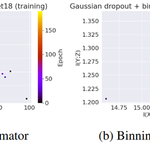
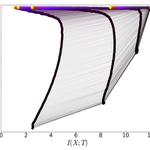
I was happy to present the initial results from the research about information-theoretic view on generalization, conducted together with @BernhardGeiger in the frame of the #enfield grant. The #enfield second call is already open! enfield-project.eu/

13
373
Linara retweeted

Stop discarding your old gradients! Introducing AdEMAMix, a novel (first-order) optimizer capable of outperforming Adam. Let’s have a thread on momentum and the surprising relevance of very old gradients. A joint work with @GrangierDavid and @PierreAblin #ml #optimization
1/🧵

One more perspective to tackle understanding of loss surfaces 🤓: adversarial examples!

Does sharpness positively or negatively correlate with adversarial robustness? The answer is both! We explore this question and discover a peculiar property of the loss surface: "The Uncanny Valley".
For more details, check out our paper arxiv.org/abs/2405.16918 .

4
291
Linara retweeted
We are presenting three works at ICLR next week:
1️⃣ Layer-wise Linear Mode Connectivity (main track): some curious explorations of the layer-wise structure of deep net loss surfaces. Includes experiments on ConvNets, transformers, Pythia LLMs, connections to federated learning and more!
Paper: arxiv.org/abs/2307.06966
2️⃣ Scaling Compute Is Not All You Need for Adversarial Robustness (R2-FM workshop): scaling laws for adversarial training in a simple CIFAR-10 setting - is it feasible to reach high accuracy just by scaling up? The improvements are consistent but the scaling laws don't look very optimistic.
Paper: arxiv.org/abs/2312.13131
3️⃣ Long Is More for Alignment: A Simple but Tough-to-Beat Baseline for Instruction Fine-Tuning (DMLR workshop): our ICML'24 paper on using response length as a very simple (but very competitive) data point selection criterion. Lots of interesting findings there: e.g., fine-tuning on 1k longest responses from Alpaca-52k can significantly outperform fine-tuning on the whole set. So you should be careful on what you fine-tune on :)
Paper: arxiv.org/abs/2402.04833
If you are interested in these topics, talk to the first authors @LinaraAdylova, @edoardo_debe, and @H_aoZhao who will be at ICLR!

Linara retweeted

If you want to visit me at @Know_Center to work in the fields of information theory for deep learning or physics- informed neural networks, this might be a great opportunity. Drop me a line if you are interested!

Exciting News!
🌟The Open Call for ENFIELD's Third-party Exchange Scheme (TES) is now live 🚀
🗓️ Feb 1 - Mar 31, 2024 💡 Addressing AI challenges in Healthcare, Energy, Manufacturing, and Space
🔗 Details & Apply: enfield-project.eu/1st_open_…
ENFIELD Partner Institutions cannot apply!

Proud of my collaboration with EPFL, @maksym_andr and Martin Jaggi in particular 😎

This work on *layer-wise* linear mode connectivity is now accepted at ICLR 2024 (led by @LinaraAdylova)!
See you in Vienna :)
Should be very interesting!

🎄🎄🎄Christmas Talk by @jefrankle!🎄🎄🎄
🤩 Today in the EfficientML Reading Group!
sites.google.com/view/effici…

Linara retweeted

#ArtificialIntelligence affects us all! At ELLIS, we are creating a multicentric research lab attracting talent from around the world to secure Europe’s leadership in this crucial field. Take a look at our new video and #JoinELLISforEurope! youtube.com/watch?v=euqOfQ5a…
How would one protect private datasets and train on them? Only federated learning and differential privacy might not be enough 🤔

1/ 🔬We propose a Federated Co-Training approach that leverages a public unlabeled dataset to share predictions of local models. It achieves a test accuracy similar to Federated Averaging with greatly improved privacy and can even train interpretable models. #trustworthyAI

2
276
✨️ Attention!
🚨 I'm looking for a postdoc position to start in Fall 2024!
My most recent research interests are related to understanding foundation models (especially LLMs!), making them more reliable, and developing principled methods for deep learning.
More info: andriushchenko.me/
3
806
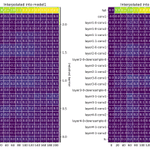
🤔We know that linear mode connectivity doesn't hold for two independently trained models. But what about *layer-wise* LMC? Well, it is very different!
📄Our new work explores this (+ applications to federated averaging) arxiv.org/abs/2307.06966.
🧵1/6

Can robustness explain this property, i.e., all the neural networks have a particular weight changes robustness that allows to compensate for one layer modifications?
For some layers the answer is yes, it is indeed much harder to get to a high loss for a more robust model.
🧵5/6


1
3
346
