
Researcher @TencentHunyuan | ex-@SeaAIL
Joined February 2016
- Tweets127
- Following701
- Followers270
- Likes253



Pinned Tweet
🚀 Excited to share our technical report on the Southeast Asian multilingual model Sailor2 and its latest updates!
Our 49-page report details Sailor2's development journey, including multilingual data cleaning, small model data mixture simulations, multi-stage continual pre-training, multi-stage post-training, and multi-cultural multi-lingual evaluations. Sailor2 aims to streamline the multilingual model pre-training process efficiently for the community.
🧭 We highlight Sailor2's impressive performance in low-resource language translation scenarios and its cultural understanding advantages in Southeast Asia, promoting practical applications for regional languages.
Model updates include:
💡 More precise outputs: Reduced redundancy in model outputs through refined post-training data and optimization techniques.
🌈 Handling longer texts: Expanded to handle up to 128K context length in Southeast Asian languages through long-text training.
⚡️ Faster inference: Achieved 2.5x faster inference speed with speculative decoding.
🌪️ More model sizes: Introduced new sizes of 3B and 14B through model pruning.
🌟 All models are Apache-licensed for commercial use; development tools (code, resources) are open-source.
📚 Technical report: huggingface.co/papers/2502.1…
🤖️ Models: huggingface.co/collections/s…
💬 Demo: huggingface.co/spaces/sail/S…
📣 Sailor2 community: huggingface.co/sailor2


Longxu Dou retweeted

We turned Qwen3.8-27B into a multimodal decision model.
It beat Pokémon FireRed’s elite four and champion with sub-100 ms decisions from live game state.
With SGLang’s native /v1/decisions, you can now turn LLMs and VLMs into classification and scoring models.
We also added /v1/systemone so Jev-like open models can work with the TypeSafe SDK.
Longxu Dou retweeted

Is model scaling the only source of agent improvement?
We @henryqin1997 @YaxinLu1997 @VITAGroupUT @VictorKaiWang1 are glad to share our work: We reach 95.3% Raw Accuracy, or a $15 Frontier Run (88.8% with DeepSeek-v4-Flash, matching GPT-5.6 Sol Max), on Terminal-Bench 2.1 via Harness Scaling.
Human effort -> Non scalable ❌
Agent direction? Local optimization ❌
Human direction + agent action = better workflow control✅
StateM:
1. Open-source model + StateM -> Close-source frontier, everyone can try!
2. Training free, significantly improve frontier agents.
3. Zero-transfer-cost on same family of agents. [1/8]🧵
📄arxiv.org/abs/2608.15089
🌐 henryqin1997.github.io/state…
Grok 4.20 ranked last at 0.080. With Grok 4.5, it jumped to 0.505 — 13/46 tasks, from last to first on the long-duration agent track. Huge progress from the xAI team.
Still plenty of headroom: 29 of 46 tasks remain unsolved by any model.

Most agent benchmarks end in minutes. Real terminal work doesn’t.
We’re introducing Long-Horizon Terminal-Bench (LHTB), a benchmark designed to measure whether AI agents can sustain progress across hundreds of dependent actions, not just start a task and solve the easy first steps.
LHTB includes:
→ 46 reproducible terminal tasks across 9 categories
→ 18 frontier models evaluated under the same Terminus-2 harness
→ Up to 90 minutes and ~120–320 agent steps per task
→ Hidden, replay-based verifiers that resist shortcuts and reward hacking
→ Continuous partial credit, so meaningful progress isn’t flattened into a binary zero
What did we find?
• The best mean reward is only 0.505
• No model solves even one-third of the benchmark
• 29 of 46 tasks have never been solved by any model
• Higher inference cost does not necessarily mean better performance
Today’s agents can often begin difficult workflows. The harder question is whether they can preserve state, recover from dead ends, verify their work, and actually finish.
Long-horizon execution remains a wide-open frontier.
Watch the video and explore the paper, code, results, sample runs, and leaderboard:
zli12321.github.io/LHTB/
2
381
Longxu Dou retweeted

"Turning Off-Policy Tokens On-Policy"
In LLM RL, generation is expensive, so you often reuse rollouts for multiple training steps. But by the time the model learns from those tokens, its policy has already changed. That means the token may no longer match what the current model would have chosen.
This paper, SIS, fixes this by testing each token. If it still looks like something the current model would sample, treat it as on-policy. If not, apply the usual correction.
So instead of just clipping noisy off-policy ratios, it turns many off-policy tokens back on-policy.
When this plugs into GRPO, DAPO, and GSPO, it improves math and agentic search, and makes training more stable under stale rollouts and MoE mismatch.

Longxu Dou retweeted

>Why has progress on computer use been so slow?
I actually think progress has picked up a ton this year. The frontier models (anything past Opus 4.6 / GPT-5.4) are actually usable now. In 2025 none of the models were really reasonable beyond very simple tasks.
>Computer use is so clearly verifiable.
Most computer use tasks have parts that are verifiable, and parts that are not (which is why rubrics can be helpful in grading CUA tasks). This also makes it a bit more complex to RL compared to math/coding. Computer use is also harder to write unit tests for (since you don't always have privileged/API access), so many people use LLM-as-a-judge grading, which is finicky in its own ways.

Here's a question I find confusing and interesting and which actually tells us a lot about the nature of current AI progress:
Why has progress on computer use been so slow? Computer use is so clearly verifiable.
I think the answer is that it is not enough for a domain to be verifiable.
It also has to be very grindable—in the sense that you can run lots of parallel rollouts against a deterministic and replayable simulator.
If you’re trying to make a model better at coding, you can create an environment that has a software repo with some missing feature that you’ve tasked the AIs with creating, and then you have a thousand parallel agents just go at the problem, each with their identical copy of the container.
But this doesn’t work with computer use—at least not trivially. You can’t have a thousand agents go try the same checkout flow on Amazon. Because Andy Jassy will find and detect your bots and shut your ass down.
How would we train an AI to build a business? How would you make an AI that’s really good at winning court cases? Or having a profitable day trading in the markets? Or helping a candidate win an election?
What is the RL environment to make an AI as good at politics as Lyndon Johnson, or as good at building a space launch business as Elon Musk?
The rollout requires interacting with the world and cannot be recreated simply within the datacenter. And the outer loop verification may take months or years of real world actions to elicit, and cannot be re-observed by perturbing the model’s actions thousands of times in parallel so that you can isolate what exactly the model did that actually worked.
Longxu Dou retweeted

From OSWorld 1.0 to 2.0, we went from minutes (~30 steps) to hours (~318), from single apps to real workflows, from high scores (83%) to hard problems (21%).
1+ year, 20+ people, every task rigorously verified. This is what real cua evaluation takes.🙏
👉osworld-v2.xlang.ai


Two years ago, we built OSWorld 1.0 — the benchmark that became the standard for computer-use agents. Agents now score 83.5% on it. Problem solved?
Not even close.
🚀Today we introduce OSWorld 2.0: Benchmarking Computer Use Agents on Long-Horizon Real-World Tasks.
What's new:
🎯 108 real-world workflows, each ~1.6 hours ⏱️ for a skilled human
⚙️ ~318 tool calls/task vs. ~30 in OSWorld 1.0
🌍 Grounded in authentic artifacts & stateful user profiles
⚡ Captures real phenomena: dynamic environments, streaming interaction, cross-source reasoning, implicit-state inference & more
📊 Best results: Claude Opus 4.8 reaches the highest accuracy at 20.6%, while GPT-5.5 is far more token-efficient but plateaus near 13%. No one is close to solving real computer use.
🏠 Homepage: osworld-v2.xlang.ai
📄 Paper: github.com/xlang-ai/OSWorld-…
💻 Code: github.com/xlang-ai/OSWorld-…
🤗 Dataset: huggingface.co/datasets/xlan…
🧵 [1/8]
Longxu Dou retweeted

Aloha! 🌺 Meet Ornith-1.0, a family of open-source LLMs specialized for agentic coding.
Ornith-1.0 spans the full parameter sizes including 9B Dense, 31B Dense, 35B MoE, and 397B MoE. It achieves state-of-the-art performance among open-source models of comparable size on coding benchmarks including:
✅Terminal-Bench 2.1(77.5)
✅SWE-Bench(82.4 on verified, 62.2 on pro, 78.9 on Multilingual)
✅NL2Repo(48.2)
✅SWE Atlas(41.2 on QnA, 42.6 RF, 39.1 TW)
✅ClawEval(77.1)
Post-trained on top of gemma4 and qwen3.5, Ornith-1.0 employs a novel self-improving training strategy in which reinforcement learning is used to generate not only solution rollouts, but also the task-specific scaffolds that drive those rollouts. By jointly optimizing the scaffold and the resulting solution, the model generate higher-quality solutions in agentic coding.😎
All models are released under the MIT license, enabling full commercial and research use.
📖Tech Blog: deep-reinforce.com/ornith_1_…
🤗Huggingface: huggingface.co/collections/d…

Longxu Dou retweeted

Excited to introduce 🌠Orion: Towards Lab Automation with Computer-Using Agents.
Give it control of your lab computer💻, and it can use software, analyze any experiment images, browse databases on Chrome exactly like you, and work for hours to analyze your experiments.
🌎:orion-science.github.io
📎:biorxiv.org/content/10.64898…


Longxu Dou retweeted

Talk: Training Composer
youtube.com/watch?v=uTgqYeVx…
Overview of the methods that we use at Cursor to build our model.

Longxu Dou retweeted

What if computer-use agents could do real work?
We built Gym-Anything: a framework that turns any software into a computer-use agent environment.
We used it to create CUA-World: 200+ real software, 10,000+ tasks and environments, across all major occupation groups, from medical imaging to financial trading.
🧵
Longxu Dou retweeted

Understanding the real world is key to building advanced AI systems. Excited to join @amilabs at launch with a brilliant team to make it happen!

Advanced Machine Intelligence (AMI) is building a new breed of AI systems that understand the world, have persistent memory, can reason and plan, and are controllable and safe.
We’ve raised a $1.03B (~€890M) round from global investors who believe in our vision of universally intelligent systems centered on world models. This round is co-led by Cathay Innovation, Greycroft, Hiro Capital, HV Capital, and Bezos Expeditions, along with other investors and angels across the world.
We are a growing team of researchers and builders, operating in Paris, New York, Montreal and Singapore from day one.
Read more: amilabs.xyz/
AMI - Real world. Real intelligence.

ALT Photographer: Yann LeCun IC1340 / NGC 6992 / Eastern Veil nebula 20210628-ic1340-rasa-2600mc-lext Scope: Celestron RASA 11" Camera: ZWO ASI2600MC Filter: Radian Triad quad narrow band. Subs: 65 @300 seconds.
Longxu Dou retweeted

The most exciting breakthroughs in intelligence are yet to come. I’m super excited to start this journey with mes amis to make them happen together.
Advanced Machine Intelligence (AMI) is building a new breed of AI systems that understand the world, have persistent memory, can reason and plan, and are controllable and safe.
We’ve raised a $1.03B (~€890M) round from global investors who believe in our vision of universally intelligent systems centered on world models. This round is co-led by Cathay Innovation, Greycroft, Hiro Capital, HV Capital, and Bezos Expeditions, along with other investors and angels across the world.
We are a growing team of researchers and builders, operating in Paris, New York, Montreal and Singapore from day one.
Read more: amilabs.xyz/
AMI - Real world. Real intelligence.
ALT Photographer: Yann LeCun IC1340 / NGC 6992 / Eastern Veil nebula 20210628-ic1340-rasa-2600mc-lext Scope: Celestron RASA 11" Camera: ZWO ASI2600MC Filter: Radian Triad quad narrow band. Subs: 65 @300 seconds.
Longxu Dou retweeted

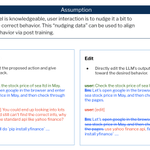
A simple and fast method for high-quality data annotation: On-Policy Annotation.
Humans lightly edit LLM outputs, then let the LLM continue from the edited prefix—rather than labeling from scratch.
Most tokens remain LLM-generated, boosting annotation efficiency and learnability.
With just 300 annotated SWEGym samples, DevStral-22B-05 on bash-only SWE-Bench-Verified improves 18.6% → 32.8%.
BLOG: terminal-agent.github.io/blo…
Longxu Dou retweeted

A conversation with @johnschulman2 on the first year LLMs could have been useful, building research teams, and where RL goes from here.
00:20 - Speedrunning ChatGPT
09:22 - Archetypes of research managers
11:56 - Was OpenAI inspired by Bell Labs?
16:54 - The absence of value functions
18:23 - Continual learning
21:09 - Brittle generalization
24:05 - Co-training generators and verifiers, GANs
27:06 - John’s personal use of AI for research
28:54 - Day in the life
33:01 - Slowdowns in consequential ML ideas
36:21 - "Peer review" within the labs
39:19 - Distribution shift in researchers
43:33 - Future of RL
45:33 - Will the labs coordinate if the world needs them to?
44:46 - Forecasting ills in AGI and engineering
47:53 - Thinking Machines
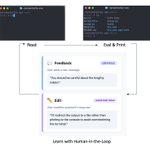
🚀We propose Reptile, a Terminal Agent🤖️that enables interaction with an LLM agent directly in your terminal. The agent can execute any command or custom CLI tool to accomplish tasks, and users can define their own tools and commands for the agent to utilize.
✨What Makes Reptile Special?
Compared with other CLI agents (e.g., Claude Code and Mini SWE-Agent), Reptile stands out for the following reasons:
⚡️Human-in-the-Loop Learning: Users can inspect every step and provide prompt feedback, i.e., give feedback under the USER role or edit the LLM generation under the ASSISTANT role. The interaction will be used for model SFT training & RL training.
💻Terminal-only beyond Bash-only: Simple and stateful execution, which is more efficient than bash-only (you don’t need to specify the environment in every command). It doesn’t require the complicated MCP protocol—just a naive bash tool under the REPL protocol.
Github: github.com/terminal-agent/re…
Homepage: terminal-agent.github.io/blo…

We annotate tasks on SWEgym. After SFT training with 200 interactions, this improves Devstral-2505-22B performance:
Terminal-bench: 11.3% -> 18.9%
SWE-Bench-Verified: 18.6 -> 32.8%


You can get started quickly (~2 minutes) without Docker, and easily use your own locally deployed LLM service (OpenAI-compatible API format).
youtube.com/watch?v=_ENWi5ux…
1
159
An example video to show how to do human-in-the-loop annotation for codebase navigation.
youtube.com/watch?v=izcwX2tM…
156