







M3NT8L retweeted

In 1965, newly built Ford Mustangs were loaded onto rail cars outside the Dearborn Assembly Plant in Michigan, ready to ship to dealers across the country. Ford could barely build them fast enough.
The Mustang was unveiled at the New York World's Fair on April 17, 1964. It was the idea of Ford executive Lee Iacocca, who wanted a sporty, affordable car for young buyers. It had a long hood, a short rear deck, and a base price of about $2,400. On its first day on sale, Ford took around 22,000 orders. In its first year, it sold more than 400,000 cars, a record for a new model. The millionth Mustang came off the line in March 1966.
The Dearborn plant was the first to build Mustangs. It was part of the River Rouge complex, Henry Ford's giant industrial city on the Rouge River, built in the 1910s and 1920s. At the Rouge, Ford tried to do everything in one place. Ships unloaded iron ore and coal at one end, and the complex had its own steel mill, glass factory, power plant, and railroad. Finished cars rolled out the other end. At its peak, it employed about 100,000 people.
Mustangs were built at Dearborn for 40 years, until 2004, when production moved to a nearby plant in Flat Rock. The Mustang has been in production ever since.
More rare historical photos: bit.ly/44OpIzi

M3NT8L retweeted

Like 80-90% of the world has zero idea how much their life has improved because of America.

Can I ask a REALLY dumb question?
GPS is completely free.
Satellites are literally orbiting Earth right now to guide your car to the nearest coffee shop.
No monthly bill.
No setup cost.
Works anywhere on the planet.
So who is actually paying billions to launch and maintain all those satellites?
How is this just free for everyone to use? 🤔
M3NT8L retweeted

Because we banned innovation in commercial airplanes from 1973 through 2025 and almost everyone who cared left the industry
M3NT8L retweeted

Far from home. Never alone. America’s Race Team takes on Le Mans next year with the whole country riding with us all 24 hours.
#GoLikeHell
M3NT8L retweeted

Tenemos nueva Carta Orgánica para el @BancoCentral_AR . Se terminó con más de 90 años de estafa via emisión de dinero para financiar déficit fiscal...
VLLC!


M3NT8L retweeted

Next up after the Pokémon carousel: the AIRpipe Arm.
A 6-axis desktop camera arm made from aluminum air line pipe, printed PETG joints, and serial bus servos.
Had to rent a GPU to render this one, or my laptop was going to chew on it for about 5 hours.
And so it's not all renders: the first printed parts already exist. 👇
#AIRpipe #RobotArm #3DPrinting #Blender #MakerCommunity


M3NT8L retweeted

I asked Claude to populate a Civilization-style game map with real data from the US. Opus 5.5 downloaded and parse a ton of public data and 7 hours and 45K lines of code later... it works :)
- 31 real data sources including Census, BEA, BLS, EIA, NOAA, USGS, DoD, NPS, FAA, FEMA, CDC...
- Real elevation, land cover, GDP, jobs, power plants, mines, ports, airports, bases, parks, universities, freight flows, disasters; all reconciled onto one 25 km hex grid.
- The data is converted into Civilization language, e.g. Gold yield is GDP. A city's districts are its real industry specializations: San Jose gets a Campus, Detroit is "Motor city". Its citizens are its real workforce: 1 in 4 San Jose workers are engineers, coders or scientists, against 1 in 14 nationally. Wonders are chosen by published rules, such as national parks by visitor numbers and universities by R&D spending, etc etc.
- 19 lenses (income, degrees, faith, disasters…), a City View for 524 metros, and nine advisors plus an Explorer. The Explorer turns any column for any of 3,100+ counties into a table and scatter plot, linked to the map.
- Claude decided to skip a few states and territories sry
- Built using Claude Code desktop app, Opus 5.5 on medium and turning on ultracode.
It's deployed here: karpathy.ai/usaciv/ and the "?" has the source link too. I don't exactly know where I was going with this but it's really fun to browse and play with. Possibly it can be expanded or built into a game. I only have half of my weekly Claude quote left though so someone else will have to take over :D. Claude also made a trailer:
M3NT8L retweeted

Yes, this is a real Google Sheet 📊
Using /swarm in @Antigravity, Gemini 4 Neon turned one photo into a 100,000-cell grid with zero embedded images and zero Apps Script — using native formulas for edge detection, 3D depth shading, and six lighting modes.

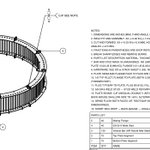
Ok, last Steve post for tonight. This one was fun, took a 3D scan of the inside corner of this loader bucket and handed it to my grok bot; gave him the bucket width, told him two pieces and an estimated cord length of the form; he sliced up the mesh, figured out the radius and flats, made the model, drawing and flat pattern dxfs in Steve; Put the files in a job folder and sent the dxf to the plasma table PC.
One photo, a partial scan and two measurements. (He already knew how we liked plug weld holes for this type of job).
@10_X_eng #CAD


2
3
64
M3NT8L retweeted

We’ve received FDA approval to launch LINK, the first pivotal trial for an implantable brain-computer interface in the US. This builds off of our work with 30+ participants with Neuralink to date.
Those with ALS may be eligible. To learn more:
neuralink.com/trials/device-…


M3NT8L retweeted

our swarm harness has been pursuing Erdős problem #30 for the past 48 hours inside Arkenos. already spent billions of tokens and verified all known results.
some very interesting observations -
> opus-5.5 agents keep switching between fable-5.2 and astra-6.2. we've seen several instances where fable agents get stuck on a problem and are immediately unblocked by switching to astra. the harness makes these model transitions possible.
> we're probably underestimating how much scientific progress can be unlocked by simply combining model intelligence from different labs in the same research ecology.
> interesting that sol-6.2 and neon ended up writing all the skills that the swarm ended up using. opus-5.5 only wrote 2 skills.
> from early observations alone, astra might be god-level at generating conjectures but needs opus-5.5 at finding counter examples. we're still monitoring the run, but I think remodelling the harness so that the swarm can learn which model to invoke for which kind of problem would accelerate a lot of processes.
will share more as we learn!


Introducing Optimus-1.2, the first self-improving autonomous swarm harness built for long-horizon research and discovery. Optimus-1.2 is coming to all Arkenos users this Thanksgiving!
We've spent the last few months working on the hardest problems in autonomous swarms. We've made the swarm significantly more stable, secure, and token-efficient. Next comes extracting the maximum engineering and research value from every token our enterprise users spend on Arkenos.
If you're building a frontier engineering or research team, we'd love to help you run a few thousand more experiments. And if you're a neocloud or inference platform, we'd love to explore how we can make your compute do substantially more useful research.
Every engineering team should have an entire scientific civilization running on their desktops!
There's a lot of interesting infrastructure left to build here! My DMs are open!
M3NT8L retweeted

I just realized that the 20th century was perhaps an anomaly in how much it rewarded being book smart over street smart. For 80 years, the recipe for success was to study hard, get a degree, specialize and follow the rules. AI is about to commoditize much of what made that recipe work.
I think we’re entering an era that will disproportionately reward the curious, the resourceful, the self-taught and those who thrive in uncertainty. When intelligence becomes abundant, agency becomes scarce. That’s probably the most important thing we can cultivate in our kids now.
M3NT8L retweeted

so yeah if i was selling software right now i'd pivot

Yeah, any of the bots can just do this now.
My @grok @bot did the analysis, went into orcaslicer and made all the setting adjustments and clicked print.
Wild

免费开源软件,让3D打印填充密度根据受力自动调整
3D打印还在手动设置20%、30%的填充率?这款开源软件提供了一种新思路!
11月23日,德国3D打印媒体报道了一款名为Strecs3D的免费开源工具。
它能够根据有限元分析(FEM)的应力计算结果,调整3D打印零件不同位置的填充密度,并生成适用于Cura和Bambu Studio的3MF文件。
项目入口:github.com/search?q=Strecs3D…
简单来说,就是让受力较大的地方拥有更多材料,受力较小的地方减少材料,过去我们在切片软件中设置填充率,很多时候依靠经验判断,但对于真正的功能性零件来说,不同位置的受力情况是不一样的。
如果能够将结构仿真结果直接转化为打印参数,就有机会在重量、材料消耗和结构性能之间找到更好的平衡。
这个工具也让3D打印科技想到3D打印鞋底,如果未来能够把足底压力数据、结构仿真和晶格设计连接起来,就可以尝试针对不同用户生成不同的鞋底结构,当然,Strecs3D目前属于基于有限元分析的结构优化工具,并不是AI生成软件,也不能保证优化后的零件一定更结实。
但它代表了一个值得关注的方向:
未来3D打印的切片软件,可能不只是负责生成打印路径,还会越来越多地参与产品结构设计,对于做功能性零件、机器人和轻量化产品的朋友,可以关注一下这个开源项目。
#3D打印科技 #3D打印填充 #开源软件


2
2
133
