

Senior Economist @jecrepublicans , formerly @mercatus Open Health & @MasonEconomics. Retired soccer player. Coffee enthusiast.
Washington, DC
Joined May 2012
- Tweets2.7K
- Following434
- Followers482
- Likes4.8K



Pinned Tweet
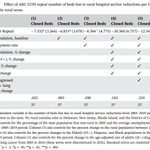
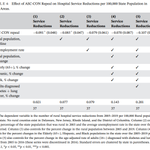
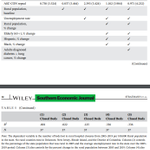
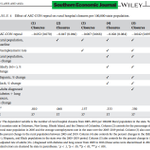
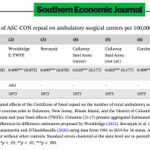
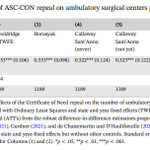
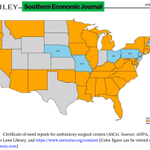
🧵1/ New Paper Alert! My latest paper, co-authored with Thomas Stratmann and Chris Koopman @ckoopman, is now published in the Southern Economic Journal. 🧵Thread: onlinelibrary.wiley.com/doi/…

Markus Bjoerkheim retweeted

Medicare will require $10 trillion in taxpayer subsidies over the next decade.
What would it take to make that number smaller?
We asked a handful of Medicare experts for their $100 billion proposals. Here's what they came up with.
1/n

Markus Bjoerkheim retweeted

One hundred and fifty-seven BILLION dollars, folks.
Just by telling Medicare to pay the same prices for the same services done the same way.

New GAO recommendations call for site neutral payment reforms that could save 156.9B over 10yrs by equalizing payment rates between physician offices and hospital outpatient departments for evaluation and management office visits and other services, gao.gov/products/gao-26-1089…

Markus Bjoerkheim retweeted
I really enjoyed talking with @ilanayurkiewicz about the many ways in which our Medicare reimbursement rates and licensing policies prevent us from producing enough doctors where we need them.
Listen here! ilanayurkiewiczmd.substack.c…

The U.S. has doctors, but not where they’re needed most. Incentives like pay and lifestyle shape what doctors do and where they go. Many point the wrong way.
I talk with @lawsonhmansell: can policy make the jobs that save the most lives more desirable?
ilanayurkiewiczmd.substack.c…
Markus Bjoerkheim retweeted

Paragon's Medicare roadmap outlines reforms CMS can make to advance choice, competition, and fiscal sustainability in Medicare in 2026.
t2m.io/vJjdhch

Markus Bjoerkheim retweeted

It was an honor to testify in front of the @HouseCommerce subcommittee on health regarding healthcare affordability.
We discussed consolidation and the demise of independent physician practice.
My solutions include:
Repeal section 6001 of the ACA which banned physician owned hospitals
Reform Stark law
Implement site neutral payments
Reform 340B
Use FMAP to encourage states to be pro-competition (repeal CON, eliminate non competes)

Markus Bjoerkheim retweeted

LIVE NOW: JEC Hearing titled “Keeping Our Promises: Labor Inflows, Maintaining Competitiveness, and Supporting an Aging Population”
nitter.cf/i/broadcasts/1Nxarazan…
Markus Bjoerkheim retweeted
Washington is on the verge of becoming the 21st state to create a permanent licensing pathway for international docs!
This week, Senate Bill 5185 passed both chambers and is being sent to the Governor's desk. The bill creates a new pathway to full medical licensure for PCPs.

Markus Bjoerkheim retweeted
Amazing work by @JECRepublicans

The average American senior’s Medicare premiums last year were about 10% higher, or more than $200 annually, because of alleged overpayments to private Medicare Advantage plans, congressional investigators found. 🔗 on.wsj.com/46OHz9Y

Markus Bjoerkheim retweeted

Average senior paid about $212 extra for Medicare Part B last year so Medicare Advantage insurers could pad their payments. That is $13.4 billion pulled out of Social Security checks.
Exclusive: America’s seniors paid billions in excess premiums due to alleged Medicare overpayments, a congressional committee finds on.wsj.com/46NkaFN

Markus Bjoerkheim retweeted

Utah just became the first state to let AI renew prescriptions—no doctor involved.
Startup @Doctronic's AI walks patients through questions, sends renewals directly to pharmacies. 190 common chronic meds. $4 per renewal.
Company: AI "infinitely safer than a human doctor."
AMA: "Without physician input it poses serious risks."
FDA: "outside our purview."
One less reason to visit the doctor.
#AIinHealthcare #DrYou #HealthTech
buff.ly/8j5xmN4


Markus Bjoerkheim retweeted
LIVE NOW: The Joint Economic Committee titled "Stop Paying More for Less: Realigning Healthcare Incentives to Improve Outcomes and Reduce Costs" nitter.cf/i/broadcasts/1PlJQOyNa…
Markus Bjoerkheim retweeted
Washington turned health care into financing, not lower prices.
For every $1 coming in this fiscal year, we’re spending $1.62.
The ACA costs $195B to cover just 7% of the market.
41% pay $0 premiums.
6.4M improper enrollments cost $27B.
The technology exists. Washington blocks it.
Markus Bjoerkheim retweeted

Five ideas that would lower U.S. healthcare costs immediately:
1.Repeal Certificate of Need laws.
They restrict supply, block competition, and protect incumbents.
2.Lift the ban on physician ownership in hospitals.
When physicians compete, costs fall and quality rises.
3.Expand ASC capacity everywhere.
Most states still restrict the lowest-cost, highest-value surgical setting.
4.Eliminate nonprofit tax loopholes.
If you behave like a corporation, you should be taxed like one.
5.Eliminate site-of-service payment differentials.
The same service at two different prices is not a market, it’s a subsidy.
Markus Bjoerkheim retweeted
ICYMI Chairman @RepDavid Schweikert's OpEd: Stop Propping Up Sickness and Start Propping Up Health. @thehill ran the Op-ed on Congress’ misguided focus on subsidizing healthcare instead of looking at innovative solutions that reduce costs and help people become healthier. "If we truly want to make health care affordable and accessible, we need to cut prices, not inflate subsidies. That means encouraging competition, transparency, and technology that lowers costs. We should be legalizing innovation rather than protecting the status quo."
jec.senate.gov/public/index.…

Markus Bjoerkheim retweeted
The Biden COVID premium subsidies for ACA Marketplace plans have not only outlived their intended temporary purpose, but evidence indicates that their design, focused on maximizing coverage regardless of cost, reduces pressure on insurers to contain costs.
As a result, these subsidies perform poorly as permanent policy: they do more to improve the financial outcomes of large health insurers than to reduce healthcare costs for Americans.
Find the full brief here: jec.senate.gov/public/vendor…

Markus Bjoerkheim retweeted
As enhanced PTCs expanded, the share of consumers paying nothing in premiums surged and pressure to compete on price weakened, allowing insurers to benefit from raising gross premiums largely unnoticed.

Markus Bjoerkheim retweeted

More options can mean better care. 👉 cato.org/research-briefs-eco…

Markus Bjoerkheim retweeted
Long-term care in the U.S. faces growing pressure as the senior population expands.
In our new @CatoInstitute Research Brief in Economic Policy, @MBjoerkheim and I look at what happens when states lift certificate-of-need limits on long-term acute care hospitals.
#LongTermCare