

Assistant Prof. of Innovation Management @TU/e
Arnhem, Nederland
Joined June 2015
- Tweets178
- Following343
- Followers230
- Likes182




Maral Mahdad retweeted

اگر در حال اپلای برای دانشگاه ها و تحت تاثیر وقایع اخیر و قطعی اینترنت قرار گرفته اید، اساتید ایرانی در هلند مثل @SaeedKhanagha یک وب سایت برای کمک به شما و فرستادن مدارک در صورت از دست دادن ددلاین درست کرده اند 👇👇
#ریتویت_لطفا
nlstudentsupport.github.io/i…

Maral Mahdad retweeted

Join our strong innovation group💪 at the heart of the #brainport high-tech innovation ecosystem 🚀!
We're #hiring an assistant professor to dive deep into understanding and enhancing innovation processes.
Apply now: shorturl.at/lvST3 #Innovation #AssistantProfessor
Maral Mahdad retweeted

If you have constructive feedback, it’s not rude to speak up. It's unkind to stay silent.
Honesty is the highest form of flattery. It signals that you respect their ability to handle the truth.
Don't deprive people of the opportunity to learn. Offering ideas is an act of care.
Maral Mahdad retweeted

Opportunity to work as a postdoctoral researcher with @MaralMahdad, @ceesleeuwis and @lauklerkx on the topic of innovation ecosystems in food systems transformation. wur.nl/nl/vacature/postdoc-r…

Maral Mahdad retweeted

@AcademicParity Newsletter | September/October 2023 #bullying #harassment
@DrNancyOlivieri @ProfTimNoakes @UrsiKeller @JanetGHering @lkeashly @SayaAmeli @nafisajadavji @AGianakosDO @muka_taulant @StevenZanganeh @MaralMahdad
linkedin.com/pulse/academic-…


Maral Mahdad retweeted
An informative editorial @natrevbioeng on academic #bullying
@ChristineHorejs
nature.com/articles/s44222-0…

I literally lost track of all of my #academic peers who won x/y/z #prizes and appeared in X/y/z rankings and %s of top scientists in the xyz field. I am among the top 1% proud peer 😌
@AcademicChatter
Maral Mahdad retweeted

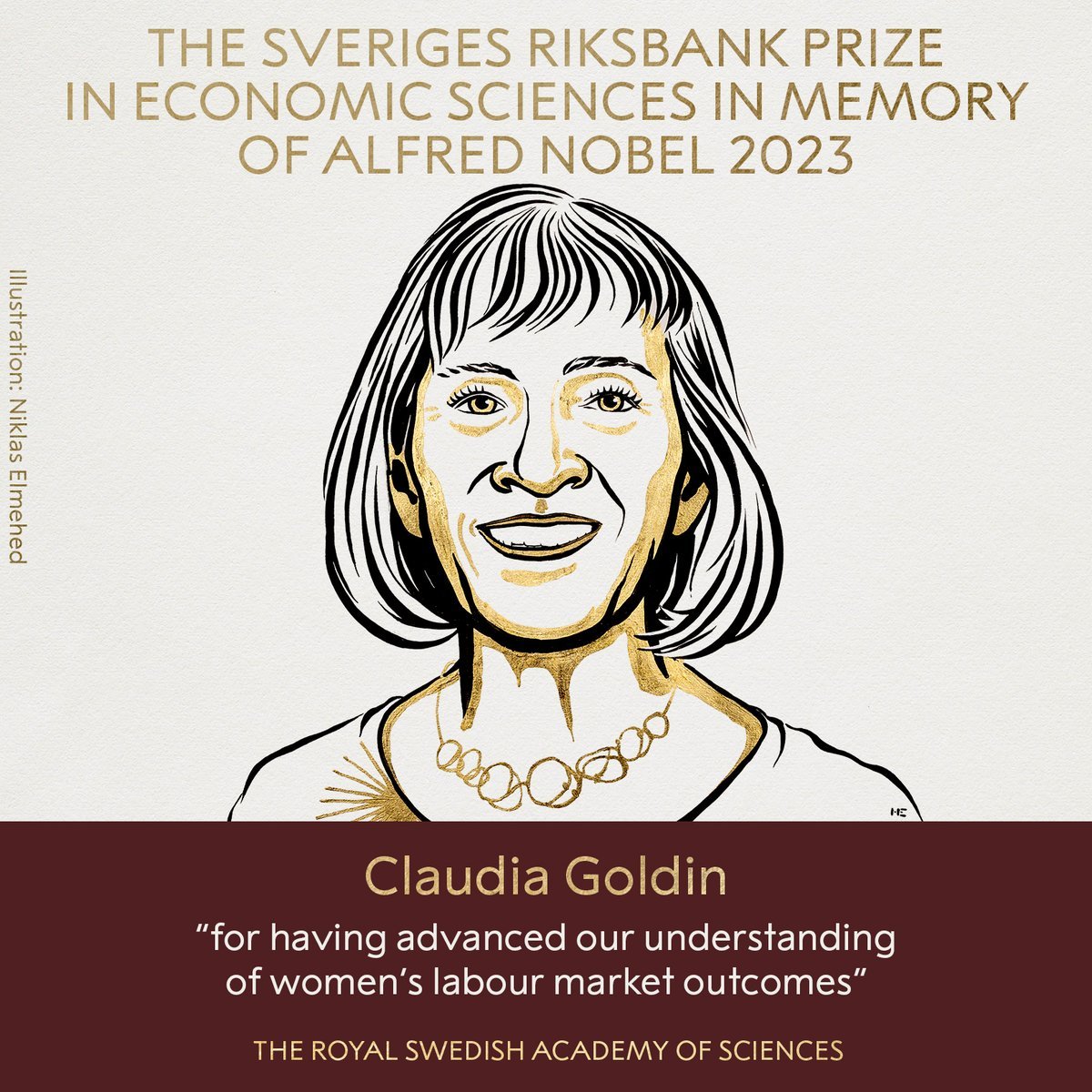
To no one's surprise, the Nobel Prize goes to Claudia Goldin
Here are 3 things from her to start your dive into her work:
Let's be the driver of change not only wish for it! Dear academic community :)
#AcademicTwitter
gofundme.com/f/empowering-ta…

The @AcademicParity has started its mid-term goal “empowering targets” through the following processes:
i) financial assistance;
ii) counseling for crisis intervention and/or support for stress, fears, anxiety, panic attacks, suicidal ideation/ depression
gofundme.com/f/empowering-ta…
Maral Mahdad retweeted

We have a new PhD vacancy for someone who is interested in doing high-quality research and creating real impact in relation to the role of universities in addressing societal challenges. @TUeindhoven @TUeITEM @WorkingAtTUe jobs.tue.nl/en/vacancy/phd-o…

Maral Mahdad retweeted

Awards, papers, and h-indexes might seem appealing, but in the end what you'll remember are the people that celebrated with you when you were up and lifted you up when you were down.
Maral Mahdad retweeted

🧵Is it Academic Bullying?
@TargetsTip provide several scenarios and ask you to distinguish between #academicbullying and acceptable forms of #academic and scientific conduct; @MoriMahmoudi co-founder @AcademicParity an expert, then, provides their opinion
youtube.com/playlist?list=PL…

Maral Mahdad retweeted

A great guide to what Reviewers of top bus journals look for. It helps scholars understand what is needed "to get into" a journal.
It also reveals why our profession faces a crisis of relevance. There is no consideration for impact to practice or societal issues.

Hey @AcademicChatter
Advise on how to choose a reliable senior #coauthor and be sure of seniority contributions If you haven't worked with them before!
#AcademicChatter #AcademicTwitter


Maral Mahdad retweeted

Weird thing has happened in #LK99 twitter storm - scientist's h-indices are being quoted, I think as a proxy for their reliability. This is not good, can't let it become normalised
Some examples:
Peter Higgs (Nobel prize) h=11
Grigori Perelman (solved Poincaré conjecture): h=10

In 2 days there are have been 4 studies that help explain LK-99's potential superconducting abilities.
These simulations converge on key properties that suggest a new class of SC materials, and help explain quirks of TK-99 we've seen so far.
Here is the easy-to-digest summary so far:
(Reminder: still no experimental replication yet!!)
All studies converged on the fact that LK-99 has interesting electronic properties, formed by these 'flat energy bands' that can enable superconductivity through several different mechanisms.
- This effect relies on copper replacing lead atoms in the crystal, but it has to replace very specific lead atoms for the bands to appear, meaning it may be hard to synthesize with high purity (paper 1)
- The conduction pathways in the material may be one-dimensional, meaning they aren't equal in all directions, and this could be why it doesn't act as a perfect magnetic levitator but rather a semi-levitator. Also, other metals like gold could make LK-99 perform even better (paper 2)
- TK-99 appears to be much more robust to disorder, or randomness in the crystal, while retaining its superconducting properties. And, it appears the overlap of copper and oxygen electron orbitals might explain why this occurs at ambient pressures (paper 3)
- The most dramatic result of all is by the most distinguished author: the appearance of diamagnetism without superconductivity seems unlikely (paper 4).
Here is the technical deep-dive to back it up:
Note: I include highest h-indexes of authors, which is like a 'science high score'
h=20: 'successful scientist', e.g. full professor
h=40: 'outstanding scientist', e.g. fellowship in APS
h=60: 'truly exceptional scientist', e.g. national academy
1st Paper - Lawrence Berkeley National Lab
Sinead Griffith (h-index 20)
arxiv.org/abs/2307.16892
@LBNLresearch scientist @sineatrix published the first simulation study on LK-99. Her study supported the original Korean team's (LKK) proposed mechanism whereby copper atoms replace lead atoms in a crystal structure, which introduces a twist or strain on the crystal.
LKK measured a 0.5% volume contraction from this strain, which @sineatrix's simulation corroborated, but more interestingly this change in shape creates an interesting change in the available places electrons can fit into the material. These are known as 'energy bands' and normally are quite jagged, going up and down below the 'sea level' of energy like a mountain range.
However, when these energy bands remain quite flat and stay close to sea level, aka 'fermi energy', it is thought to enable interesting properties like superconductivity, insulation, etc, and more.
Notably these energy bands only form when one particular location receives the copper replacement atom, and it is the least-likely location. This suggests synthesizing the material may be difficult, with low-efficiency yield or purity.
2nd Paper - Shenyang National Laboratory
arxiv.org/abs/2307.16040
Lai, Li, et al, and Xing-Qiu Chen (h-index: 47)
These authors find similar results to @sineatrix, showing a volume contraction with lead-apatite has copper introduced, and which produces the signature 'flat energy bands' near the fermi level which are thought to make possible superconducting effects.
They note that the available conduction pathways through the material seem one dimensional, meaning they do not extend in all directions equally. This might explain an imperfect Meissner effect where the material does not levitate perfectly, but only partially (my interpretation).
Most interestingly, they try simulating similarly-sized atoms like silver and gold in replacement of copper atoms, and find that these maintain flat energy bands at the fermi surface. Other elements besides copper may improve the performance of LK-99-like materials.
3rd Paper - University of Colorado, Boulder
arxiv.org/abs/2308.00698
Kurleto et al, Daniel S Dessau (h-index: 49)
Also finds the same flat energy band structure at the fermi surface. More interesting, these authors simulate the effects of disorder being introduced to the crystal lattice, and see an interesting result: energy bands in TK-99 remain flat even when slightly disordered, i.e. not perfectly 'ideal crystal'.
They suggest this could help explain how it retains superconductivity at such high temperatures. Also, they put forward an interpretation of the superconductivity as reliant on overlapping wave functions, or distributions, of the electron energy levels, i.e. the electrons are just slightly overlapping with each other, which creates the flat bands.
They also claim the most important consideration is the overlap between the copper and oxygen electron orbitals, noting that the Oxygen-Copper pairing may explain why TK-99 may superconduct at much lower pressures than previous RTS materials (hydrides). (previous hydride-based RTS materials were superconducting at room temperature, but only at millions of atmospheres of pressure).
4th Paper - Northwest U and TU Wien
arxiv.org/abs/2308.00676
Liang Si and Karsten Held (h-index: 67)
These authors find the same results as the previous two studies - flat energy bands around the fermi surface as a result of copper atoms replacing lead. Two different methods for superconductivity are coupling between electrons, 'electron-electron', or coupling between electrons and vibrations in the crystal lattice, 'electron-phonon'. These authors find that both mechanisms could be possible given the structure that is formed.
There is strong agreement with general findings of all the other papers mentioned, however they additionally claim the appearance of diamagnetism without superconductivity is at odds with their results.
This would have immense implications for the early attempts at synthesis which show diamagnetism but have not yet yielded electrical measurements of zero resistance.
~~~~~~~~~~~
All the authors in these studies noted that their simulation results are not predictive or conclusive of TK-99 being the holy grail of materials science - a room temperature, ambient pressure superconductor.
Taken together they paint an interesting and compelling picture - at the very least, TK-99 is a very interesting material that suggests new lines of research into superconductors that have the potential to perform at room temperatures and ambient pressures.
Here is my mental model right now:
This material is difficult to synthesize because getting the copper in the right place is not very likely, producing low-yields. However, it's possible to separate out individual flakes, or crystal grains, that are diamagnetic but these are quite small. Internal to these tiny crystal grains are one-dimensional 'superconducting' channels that result in partial flux-pinning / levitation, however because these don't enable currents to flow in any direction it isn't perfectly pinned. The energy bands that superconduct are resilient to slight disorder, and are oriented in such a way that lets them perform well without requiring large temperatures.
The flakes that levitate aren't just diamagnets, but, the 1-dimensional conduction pathways might feasibly make it difficult to measure resistance (i.e. anisotropic resistance? - my speculation).
~~~~~
I'll reiterate that everything depends on experimental verification, but it is fascinating to read and share this rapidly developing scientific breakthrough.
My personal odds keep going up.


