

Co-Founder @redstone_defi Oracles ♦️ Summoner @ETHWarsaw 🇵🇱 DeFi Ratings @CredoraNetwork 📊 Forbes 30u30
Warsaw, Poland
Joined April 2018
- Tweets11.1K
- Following3.8K
- Followers12.7K
- Likes21.4K








Pinned Tweet
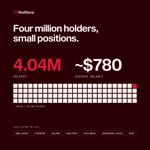
More than 4 million addresses now hold stocks onchain, which puts them at an average of just under $800 each.
The holder base is wide and the tickets are small, the opposite of tokenized treasuries, where $1M+ wallets hold ~93% of the capital.

Tokenized stocks total $3.17B+ in onchain value.
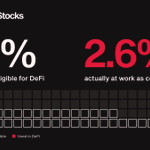
Only 2.6% of that is used in DeFi.
Read our latest report with @FourPillarsFP and @AleaResearch, revealed at @TokenizeThisNYC Singapore edition, to learn why.
Features insights from: @Securitize, @DinariGlobal, @SuperstateInc, @extendedapp, @lista_dao, @JupiterExchange, @CredoraNetwork.
Marcin Kazmierczak ♦️ retweeted

People like to celebrate when a fund gets tokenized. Fair. But @MarcinRedstone’s point is that the hard question comes after. Can you actually borrow against it, and does the math work? We tend to agree.
Full episode of The Meridian: youtube.com/watch?v=XORSHmuR…
Not investment advice or an offer of securities. Contains forward-looking statements; actual results may differ materially. Risk factors: sec.gov/edgar/browse/?CIK=20…
Today we start our official collaboration with Hadron by Tether.
$184B of USDT moves onchain 24/7.
Most tokenized assets take T+1 or longer to settle.
We are addressing that gap.
Every Hadron issuer gets our price and NAV feeds plus RedStone Settle - working closely with the Hadron team on new tokenization projects.
Why this matters:
500M+ USDT users
$132.4B in US T-bills
$4.5B net operating profit in 9 months
Tether has the balance sheet and distribution to bring governments, enterprises and funds onchain at scale. Hadron is the platform through which it will happen.
But issuance alone does not make an asset useful. It needs a trusted price and instant liquidity. That is what we bring. Settle is the key piece. Lending markets liquidate in seconds, while government debt, real estate and fund shares redeem in days or months. Settle gives these assets T+0 liquidity without changing the issuer’s redemption process or compliance rules.
The result: every asset issued on Hadron can be priced, accepted as collateral and used to borrow USDT from day one. Every new issuance becomes new demand for onchain dollars.
A priced token with near-instant redemption liquidity can serve as collateral. A token without either just sits in a wallet.
This deal also shows where RedStone is heading. ISO 27001 certified this year. Now building alongside one of the largest companies in digital assets. The calibre of partners we work with keeps rising, and every one of them raises the bar for us.
The tokenization decade is here.

@hadron_tether collaborates with RedStone to Expand Pricing, Settlement, and Liquidity Infrastructure for Tokenized Assets
Learn more: tether.io/news/hadron-by-tet…

Open interest on @EntropyIO Anthropic market just passed $130M.
In the meantime, Nasdaq is down about 10% from its high.
Giants are reeling, with Intel shedding 29% and Alphabet’s market cap plunging by about $500B after earnings.
Amid this selloff, IPO buyers now want Anthropic at $1.5–1.6T, per the WSJ, down from the ~$2T floated just weeks ago.
Onchain, the picture is different. The perp market on Entropy prices Anthropic at $1.84T, and open interest keeps growing.
That leaves a ~$240B gap between the people negotiating the price and the people trading it.
Anthropic’s amended S-1 dropped the same day as the WSJ story, and it puts those $200B into context.
→ Q3 revenue: $17B, up from $11.6B in Q2, ~$68B annualized
→ Growth: +47% QoQ, down from +144% in Q2
→ Q3 operating loss of $567M, after a $974M profit in Q2
→ Compute and infrastructure commitments: ~$895B
The revenue growth is still massive, but it’s slowing down, and the commitments are through the roof.
At $1.5–1.6T, IPO buyers are paying ~22–24x run-rate revenue. At $1.80T, onchain traders are paying ~26.5x. That’s the difference between pricing Anthropic on a roadshow and pricing it 24/7.
Where do these prices meet? We’ll see at the IPO.


5/ That said, the push towards 23/5 trading means liquidity gets more options. To retain it, onchain issuers need to deepen the moat. Best option: DeFi composability.
42% of tokenized stock supply is eligible as collateral, but only 2.6% is at work in DeFi.
Close that gap, and the moat gets serious.
6/ How can the industry get there?
Learn in our comprehensive report on tokenized stocks: redstone.finance/research/to…

Revolut just confirmed a $115bn valuation.
2021: $33bn
2024: $45bn
2025: $75bn
2026: $115bn
While most of fintech was repricing down, Revolut kept compounding. Europe can build global financial champions.
When should @entropyIO launch pre-IPO, powered by RedStone?
The RWA market has an instant liquidity problem.
And now we have the numbers.
Over the last 12 months, $37.4B of tokenized RWAs was redeemed through standard issuer queues. Only $4.06B was redeemed instantly.
We measured 444 redemption routes across 169 tokenized assets, straight from contract state and settlement events:
-> $1 redeemed instantly for every $9.22 waiting in a standard queue.
-> Median standard redemption takes 1.38 days. One in five routes takes 10+ days. The slowest took 126 days.
-> Instant redemption capacity onchain today is about $205M, against $39.3B of transferable RWAs.
-> 87% of instant redemptions are funded by issuers and partners parking idle cash on their own desks.
Demand is accelerating. Instant redemptions went from 7 to 8 cents per $1 of standard in February and March to 22 to 24 cents in August and September.
@StellarOrg is the clearest case. $2.25B was redeemed there in the past year across 9,023 accounts, with zero instant redemptions. That was the core of my Meridian keynote last week.
No curator lists an RWA without a credible liquidity path, and no lender commits real capital without one.
That is why we published The DeFi Distribution Playbook for RWA Issuers today: a step by step guide, with indicative costs, to making tokenized assets DeFi-ready.
It is also why we built RedStone Settle. The holder gets USDC in one atomic transaction, while the fund keeps its normal redemption cycle.
Tokenization solved issuance. Settlement and distribution decide whether an asset scales.
The RWA decade is here. Read the playbook below.
RWA issuers bringing a tokenized fund into DeFi now have a step-by-step route, from token design to a working lending market and an exit before the redemption window.
The DeFi Distribution Playbook for RWA Issuers, by Krzysztof Gogol, PhD (@krzysgogol), with RedStone
Tokenization isn’t the hard part anymore.
Using RWAs as collateral still is.
$2B+ redeemed on Stellar last year. Every redemption made holders wait. Lenders won’t accept an asset they can’t liquidate - RedStone Settle solves that.
Thanks @CamiRusso for having me at Meridian.

Over $2B in assets were redeemed on Stellar last year. The median wait was 1.5 days and the longest was 126 days. None were instant.
@redstone_defi is bringing RedStone Settle to Stellar, an RFQ platform where market makers and banks buy tokenized assets on the spot so holders exit right away.
@MarcinRedStone explains it to @CamiRusso
Stellar Meridian throwback.

Come check out @StellarOrg Meridian in Lisbon with me! Highlights include an amazing speaker lineup, awesome merch w/ Meridian pay & high level interviews. Thanks @redstone_defi @jacqmelinek @jasonkarsh @m1xglobal for the chats! More to come soon on Deep Dive podcast!
@BuildOnStellar #HackMeridian2026
It's Saturday, a good moment to reflect on 24/7 markets enablement.

New episode of The Meridian: youtu.be/XORSHmuRuEE
What's a share of Apple worth at 7 p.m. on a Saturday?
Somebody has to answer that before tokenized stocks can trade around the clock. @MarcinRedStone answers it for a living.
He sat down with @ashgoblue at @XRPSEOUL to talk about pricing assets when Wall Street is closed, what it took to bring BlackRock's BUIDL fund on-chain, and why he spent eight days in Seoul meeting with Korea's financial institutions.
Not investment advice or an offer of securities. Contains forward-looking statements; actual results may differ materially. Risk factors: sec.gov/edgar/browse/?CIK=20…

RedStone turns 6 this year.
We started in 2020, during the DeFi Summer, because the data infrastructure that onchain markets needed to scale simply didn’t exist. Oracles back then were inflexible. So we built one designed for trillions of dollars from day one, one that could handle thousands of data streams as opposed to just 20 most popular tokens.
Six years later, that bet looks different. Zero mispricing incidents, full uptime, and the trust of the biggest names in finance: @Securitize, @Spiko_finance, BlackRock, Apollo, Hamilton Lane, VanEck. Some people still think of RedStone as “just an oracle,” but it isn’t not the whole picture. The stack today is price, risk assessment through Credora, instant liquidity through Settle, and compliance via Sanctions Oracle - the full package institutions need to actually operate onchain.
Here’s what I have been pitching past months: we are in the RWA decade.
It won’t happen overnight, or in a quarter, or in a year. We’re at just under $40B in tokenized RWAs today, a drop compared to traditional markets. In the coming years, tokenized money market funds, private credit, and yield strategies are going to explode onchain, and all of that needs battle-tested infrastructure for pricing and settlement.
I think the industry is having the same moment as social media did with the Facebook launch. Over the next five years, digital assets will get implemented at scale across institutions, FinTechs and RedStone is going to be the critical player in the middle, between Wall Street and everything already tokenized onchain.
The future of onchain finance looks very perspective and I am confident that we’re the infrastructure partner this shift needs. We’ve grown every year for six years. The next RWA decade is the one we’ve been building toward.
Thank you to the whole team. Onwards.


Stellar has been winning on the RWA issuance side.
Franklin Templeton, Ondo, Spiko, Centrifuge are all here.
The next phase is utility: RWAs you can lend against, liquidate and redeem instantly.
That’s what RedStone will be unlocking for the ecosystem.
Stellar’s RWAs grew 5.5x in a year, to $3.56B+.
Only about 0.1% of that is used as DeFi collateral. And RWAs on other chains also largely stay off DeFi.
Our latest report breaks down why, and how these assets could go to work in DeFi before DTCC arrives on Stellar in 2027.
Features insights from: @StellarOrg, @TemplarProtocol, @CredoraNetwork.
The controls that brought RWA issuers to @StellarOrg also keep liquidators out.
Likewise, on other chains, RWAs struggle with DeFi adoption.
All that is fixable. Read our report to learn how.
Stellar’s RWAs grew 5.5x in a year, to $3.56B+.
Only about 0.1% of that is used as DeFi collateral. And RWAs on other chains also largely stay off DeFi.
Our latest report breaks down why, and how these assets could go to work in DeFi before DTCC arrives on Stellar in 2027.
Features insights from: @StellarOrg, @TemplarProtocol, @CredoraNetwork.
Marcin Kazmierczak ♦️ retweeted
An oracle is the part of on-chain finance nobody notices until it's wrong.
It's the price feed that tells a blockchain what an asset is worth. @MarcinRedStone says @redstone_defi has run six years with zero mispricing events, and explains why that's the minimum bar for asset managers putting real money on-chain.
New episode of The Meridian, recorded at @XRPSEOUL, drops Friday.
Not investment advice or an offer of securities. Contains forward-looking statements; actual results may differ materially. Risk factors: sec.gov/edgar/browse/?CIK=20…
DeFi has plenty of good infrastructure by now.
But broader distribution is still lacking.
Most new chains launch with strong tech and then spend years trying to buy attention. Dogecoin has the opposite problem. It’s one of the most recognized brands in the mainstream with a massive community, but its holders have mostly stayed out of DeFi because nothing was built for them.
DogeOS changes that. It’s an app layer for Dogecoin built by the MyDoge team, so it launches with a real wallet and real users already in place.
But once a chain has regular Joe reach, the infrastructure underneath it matters a lot more. Lending, perps and stablecoins all depend on price data. If that data fails, it doesn’t just hit a few DeFi degens. It hits people trying onchain finance for the first time, and they get burned easily.
That’s why RedStone goes live on DogeOS from day one, across testnet and mainnet. It’s the first oracle integration in the Dogecoin ecosystem. Builders don’t have to wait months for feeds, and they get the same infrastructure behind BlackRock’s BUIDL or Apollo’s ACRED.
A big part of the next wave of DeFi users will come from ecosystems that already have attention and finally get the rails to use it.
NEW: RedStone data infrastructure is now integrated with @DogeOS
For over a decade, 10M+ DOGE holders had no way to put their coins to work in DeFi.
That changes today.