

Speculator. Penthouse Gypsy. Crypto Expert. Bon Vivant. Rebel. Audiophile. Beachcomber. Art Collector. Anarcho-Capitalist. https://nitter.cf/t.co/Oc86mZzP3q
Joined June 2013
- Tweets903
- Following2.9K
- Followers1.4K
- Likes1.3K




Marco Wutzer retweeted

The Fed is printing money to buy US Treasury bills... more than during Covid.
- Covid: ~$320B
- Last 9 months: ~$355B
Everyone is talking about Fed rate hikes... no one is talking about Warsh printing money Covid-style to buy UST bills.
Some purchases are offset by declining holdings of MBS and other assets.
But the Fed's total balance sheet has still expanded by ~$160B.
Meanwhile, Bessent is issuing more UST bills to buy back long-term US debt.
In other words, the Treasury is shifting debt issuance toward the front end while the Fed is creating money to absorb more of that supply.
QE in disguise...
We don't own enough hard assets for what's coming.

Step 1 (COMPLETE): Build out blockchain infrastructure
Step 2: All financial assets will move on-chain (tokenization). This includes legacy instruments such as stocks and bonds, novel assets such as compute/inference, as well as private assets.
UNLOCK: Permissionless, global access. Composability -> novel financial primitives
Step 3: All assets will be natively issued on-chain. The share of tokenized assets shrinks as crypto-native issuance takes over.
1
3
321
Atlas shrugged

Just to put things in perspective. In several European countries, cash benefits, housing support, and related services like healthcare for an unemployed family of four can easily match or exceed the net pay of one average full-time worker.
In Germany, standard rates for a couple with two children plus reasonable housing often total €2,300–3,000+ monthly, plus free healthcare. Median full-time gross pay is about €4,200, after taxes and contributions, a typical single earner takes home roughly €2,800. The gap widens for lower-wage jobs, which pay less than welfare for doing nothing.
When out-of-work income approaches or exceeds in-work net income for ordinary jobs, the incentive to take or keep low- to medium-skilled work falls sharply. Unconditional welfare and high effective marginal tax rates create well-documented unemployment and inactivity traps. A safety net for true short-term need is legitimate, a system that systematically weakens work incentives for large numbers is unsustainable and unfair to those who work and fund it. Why does the left call this "social justice"?
This design also creates a strong pull factor for immigration. The left denies the reality, but facts and data are clear. Danish reforms for example that roughly halved benefits for non-EU immigrants significantly reduced inflows. Immediate, unconditional access to generous lifelong support strongly incentivizes migration by lower-skilled people.
None of this requires ending support for those who genuinely cannot work. But it does require restoring basic conditionality, time limits where appropriate, stronger work requirements, and contribution-based elements so that working remains clearly better than not working for those able to do so. Without that balance, the system undermines its tax base and becomes a global magnet for unskilled immigration.

1
153
Brazil is such a juggernaut. If they were to simplify their ridiculous tax/bureaucracy structure just a little bit, the place would absolutely explode with growth.

4
202

Sitting at La Ramade in St. Tropez you can't hear anything from any of the other tables. Except one. Three Americans loudly having the most shallow, superficial conversation. The lack of class is unmatched. New Money Russians would be proud.

Marco Wutzer retweeted

Capitalism did not begin in a boardroom. Voluntary exchange, repeated across generations, built the fairs, the credit networks, the double-entry books that Luca Pacioli codified in 1494. Nobody planned this. That's the whole point.
The story you learned in school runs backwards. You were taught that greedy factory owners exploited children until noble legislators rescued them in 1833. What actually happened: the Industrial Revolution dragged English living standards up so fast that population doubled between 1750 and 1850 because people stopped dying. Wages rose. Life expectancy rose. The factory that horrifies the modern reader was an upgrade from a life of starving on a tenant farm at the mercy of the harvest. Children worked because their families were poor, and the factory made those families less poor. The reformers arrived after the market had already done the heavy lifting, then took credit for the sunrise.
Real capitalism needs sound money, and here is where the tragedy sharpens. Between 1815 and 1914, under a classical gold standard, prices in Britain fell gently while output exploded. You could save a coin and expect it to buy more later. That world died in stages: 1914, when governments suspended gold to print war; 1933, when Roosevelt confiscated citizens' gold at $20.67 an ounce then revalued it to $35; 1971, when Nixon closed the window entirely and handed us the pure fiat regime you live under now.
What followed was corporatism wearing capitalism's coat. When the Federal Reserve can conjure trillions and hand them to the banks and firms closest to the spigot, you no longer have a market allocating capital. You have a cartel allocating privilege. The 2008 bailouts were a monetary system doing exactly what a monetary system built on the printing press does.
When someone blames "unfettered capitalism" for the mess around you, ask them to point to the fetters.
The answer is to let go. Less regulation, no central bank, less tax, less government. Not more!

Tirana, Albania seems to have the highest density of Maybachs in Europe. It's a small city and just walking around a bit I saw 5 of them.
2
277
Marco Wutzer retweeted

Money supply is skyrocketing:
Global money supply is now up to a record $121.9 trillion.
Over the last 2 years, money supply has soared +$17.1 trillion, or +16%.
This also marks a +$27 trillion increase, or +28%, since the 2022 low.
This means that global money supply is surging +7% to +8% a year.
Meanwhile, US M2 money supply jumped +$1 trillion YoY, or +4.6%, to a record $22.7 trillion.
Money supply growth is accelerating.


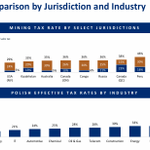
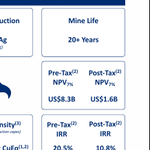
Imagine a world-class copper/silver asset. You have to invest 7 billion dollars, take ten years of exploration and market risk. Plus 20+ years of operational and market risk... only for the government to take most of your profits?! That's Europe for you. You are left with an IRR that MAYBE covers inflation. WTF.


The only conclusion you can come to after reading this is that people are retarded.

Own Nothing And Be Happy? The Car Market Is Showing Us The Future Of Ownership
This chart is bigger than cars. It shows what happens when ownership gets so expensive that the only way to keep the payment alive is to stretch the debt into the future.
A record 42.6% of underwater car buyers are using 84 month loans. These are buyers who already owe more than the car is worth, rolling negative equity into the next vehicle, then spreading the debt across seven years to make the payment look affordable.
The Payment Trap
Edmunds’ Q1 2026 data shows more than 3 in 10 trade ins were underwater. The average negative equity trade in carried about $7,183 in unpaid debt. Once rolled into the next car, the average amount financed hit nearly $55,970, and the average monthly payment jumped to a record $932.
Even worse, 90.2% of negative equity loans were at least 72 months, and roughly 43% stretched to 84 months. The buyer is financing the old loan, the new vehicle, higher rates, taxes, insurance, repairs, and depreciation at once.
Why Vehicles Became So Expensive
The average new vehicle price was around $49,275 in March 2026, while average MSRP has been above $50,000 for 12 straight months. The cheap car is disappearing as automakers shift toward trucks, SUVs, higher trims, sensors, batteries, software, safety systems, and globally sourced parts.
Add tariffs, insurance inflation, repair inflation, and financing near 6.9%, and the entry point moves out of reach. The average amount financed hit a record $43,899. The average new car payment hit $773. Roughly 20% of buyers now pay $1,000 or more per month.
The Delinquency Signal
U.S. auto loan debt is around $1.67 trillion. In Q4 2025, 5.2% of outstanding auto debt was at least 90 days delinquent. The Great Financial Crisis peak was 5.3% in Q4 2010.
The 30 day transition rate is not yet as bad as 2009, when it reached about 10.9%. This is not a perfect replay of 2008. But seriously delinquent auto debt is already near crisis era levels before a major unemployment shock.
Subprime is where the stress is clearest. Fitch auto ABS data showed subprime borrowers 60 plus days late hit 6.9% in January 2026, the highest level in data going back to the early 1990s, before easing to 6.8% in February.
In 2008, auto stress was downstream of housing collapse, job losses, and frozen credit. Today, it is driven by affordability. Buyers paid pandemic era prices, financed at high rates, watched depreciation outrun loan amortization, then rolled the shortfall forward.
From Ownership To Access
You do not need a formal ban on ownership for the ownership economy to disappear. You only need the price of entry to become impossible.
That is how the World Economic Forum scenario can become real through market structure rather than decree. If the average car is near $50,000, the payment is $773, insurance is exploding, repairs require specialized parts and software, and the only way to buy is a 7 year loan, then ownership becomes a luxury tier.
Fewer people own the asset. More people lease. More people rent access. Transportation becomes a monthly service because owning the asset requires too much capital and balance sheet risk.
The 84 month loan is the illusion of affordability stretched across seven years. The payment never ends. Ownership fades. Dependency gets repackaged as convenience.


Marco Wutzer retweeted

Money was literally invented to not have to know your customer.
It was created to eliminate the layer of trust needed between the exchange of goods.
KYC is antithetical to money.