

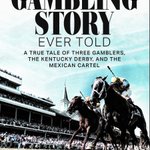
Author of The Greatest Gambling Story Ever Told - A true tale of three gamblers, The Kentucky Derby and the Mexican Cartel. Buy Audio Book, eBook, or Print.
Beverly Hills, CA
Joined January 2018
- Tweets365
- Following2K
- Followers518
- Likes1.4K


Pinned Tweet
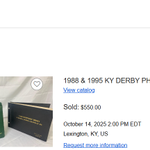
THE FIX WAS IN. In 1988 two buddies and I made a million-dollar score on the Kentucky Derby — betting, unknowingly, with a Mexican cartel in Tijuana. Last week D. Wayne Lukas's Derby photo album hit the auction block. One bidder I could not beat. New in @paulickreport ⬇️


Mark Paul Author retweeted

I’ve spoken to trainers and owners preparing for this week’s @BreedersCup, and the overwhelming theme is FRUSTRATION.
Between excessive veterinary scrutiny, PET scans and scratches, what should be one of the most exciting weeks in racing has become stressful, frustrating and downright unenjoyable.
I’m 100% for Thoroughbred safety, but I’m also 100% FOR THOROUGHBRED RACING!!!!!
At some point, enough is enough.
I’m not a veterinarian or trainer, but I listen to those who have spent 20-30 years caring for horses. One concern I keep hearing is whether restrictions on therapeutic medications and treatments are actually doing more harm than good.
Could a horse with a manageable condition end up compensating and injuring something else because appropriate treatment was restricted???
ARE WE PROTECTING HORSES OR PROTECTING REGULATIONS???
Are some medication withdrawal periods unnecessarily long??? Could shortening certain periods allow better treatment without compromising safety???
And LASIX continues to make ZERO sense to me. We allow it in claiming and allowance races but prohibit it for two-year-olds and stakes horses???
Does Lasix suddenly become dangerous because the purse is bigger???
If it’s harmful, ban it everywhere.
If it’s beneficial, why not allow it consistently???
OUR GOAL SHOULD BE HEALTHIER HORSES, NOT SIMPLY FEWER MEDICATIONS!!!!!
And of course, let’s not forget the @jockeyclub. They helped draft the legislation behind HISA, and somehow the same familiar faces keep appearing throughout The Jockey Club, Keeneland and Breeders’ Cup leadership. Everett Dobson chairs The Jockey Club, is a Keeneland trustee and a Breeders’ Cup member. Bill Lear helped draft the legislation and is also a Keeneland trustee. DIFFERENT ORGANIZATIONS. SAME INNER CIRCLE. Amazing how much influence a small group of clowns can have over an entire industry, yet somehow accountability always seems harder to find.
HISA spends approximately $80 million annually. We should demand safer racing, fewer fatalities and catching cheaters.
But shouldn’t we also question whether some of these regulations are making things WORSE???
We’re already dealing with a declining foal crop, shrinking fields, frustrated horseplayers and owners wondering why they’re spending millions to participate in a sport that’s becoming less enjoyable every year. HOW MANY MORE PEOPLE DO WE NEED TO DRIVE AWAY BEFORE SOMEONE REALIZES WE HAVE A PROBLEM???
WE MUST PROTECT OUR HORSES, BUT WE ALSO NEED TO PROTECT AND GROW THE FUTURE OF THOROUGHBRED RACING. THOSE TWO OBJECTIVES SHOULD NEVER BE IN CONFLICT!!!!!
Am I missing something here, or has common sense become the latest scratch???
What do you guys think???
Mark Paul Author retweeted

"One track needs to have the guts to say no caws in any of our pools.
Even what they are doing at @TheNYRA is kinda like lipstick on a pig." Vic Stauffer.
Vic is 100% right. Anyone who allows the caws to scam off their customers/gamblers is not interested in growing the sport.

Mark Paul Author retweeted

During today's @caCHRB meeting on the agenda item of Xpressbet.com seeking renewal of their ADW license, vice chairman Oscar Gonzales is the lone opposing vote. Gonzales asked the Xpressbet representative a couple of questions on Xpressbet's computer assisted wagering players, including about the @TheNYRA's CAW "guardrails."
The rep seemed reluctant to discuss the CAWs, claiming he had nothing to say on the topic. Xpressbet is part of the Stronach Group/1ST Racing that is majority owner of the biggest CAW, Elite Turf Club.
Gonzales expanded on his comments a few minutes later, saying maybe the board should stop "rubber stamping" ADW approvals when the CAW topic is so important to retail horseplayer customers.
I don't always agree with Gonzales, but he makes a very good point on this subject.
Thanks you Oscar for speaking out on Behalf of horseplayers !

During today's @caCHRB meeting on the agenda item of Xpressbet.com seeking renewal of their ADW license, vice chairman Oscar Gonzales is the lone opposing vote. Gonzales asked the Xpressbet representative a couple of questions on Xpressbet's computer assisted wagering players, including about the @TheNYRA's CAW "guardrails."
The rep seemed reluctant to discuss the CAWs, claiming he had nothing to say on the topic. Xpressbet is part of the Stronach Group/1ST Racing that is majority owner of the biggest CAW, Elite Turf Club.
Gonzales expanded on his comments a few minutes later, saying maybe the board should stop "rubber stamping" ADW approvals when the CAW topic is so important to retail horseplayer customers.
I don't always agree with Gonzales, but he makes a very good point on this subject.
1
116
My new column in @paulickreport — the D. Wayne Lukas dispersal, Lot 369, and the one bidder I couldn't beat. markpaulauthor.com/2026/09/0…

I've spent 50 years handicapping American Thoroughbreds. I even wrote the book on it — a true tale of the Kentucky Derby and a Mexican cartel.
Then I went to France, and couldn't cash a single ticket. Not one.
My new piece for @paulickreport 🐎📖
paulickreport.com/news/ray-s…

The whole story is in my book — "The Greatest Gambling Story Ever Told." Over 75,000 copies, 4,000+ reviews. 👉 markpaulauthor.com

1
1
63
Mark Paul Author retweeted

Saratoga Takeout and CAW Summary
The chart below compares @TheNYRA @Saratoga1863 (SAR⬆️) to min/med(⭐️)/max takeout across ALL tracks for each wager type.
Saratoga is near or below the median for all wager types and has penny breakage, which are all good for players.
But most importantly NYRA is the ONLY racing jurisdiction attempting to throttle CAW access in ALL pools.
Unless you enjoy getting crushed by CAW teams, then you should be shifting some or all of your handle to Saratoga this summer.
You will get better results and will help horseplayers collectively send a strong message that we are capable of change and rational behavior and prefer betting into pools in which we have a fighting chance rather than into pools in which we are being “T O Elvised” on a regular basis.
See the link below for takeout and CAW info on all tracks.
Wager wisely and enjoy the races.
drive.google.com/file/d/1_gQ…
Excellent predictions. I think Mike is spot on..

🚨WARNING to all horse racing participants:
As we enter Year 3 of the NTA, the accomplishment I'm most proud of is that @PatCummingsNTA and I have helped give people a platform, and the courage, to speak openly about the real issues facing this sport.
For too long, too many people stayed silent.
We've pushed for transparency, demanded answers, and refused to allow industry organizations, including the @BreedersCup, @jockeyclub, @NTRA, @TOBAhorses, @hisa_us, sales companies, racetracks, ADWs, and others, to ignore the problems that continue to plague horse racing while remaining comfortable with the status quo.
What we've discovered is that the challenges facing this sport are even worse than we anticipated.
While we are proud of the collaboration and industry progression made in areas such as:
• Increased financial support for aftercare
• Advancing the SAFE Act
• introducing untimed gallops at sales
• Bringing serious attention to CAWs
• Raising awareness about the declining foal crop and struggling state-bred programs
• Highlighting the continued erosion of the everyday horseplayer
• Pressuring the old guard to embrace change, including leadership changes at the Jockey Club
…I believe the next two years will be the most important in the history of American Thoroughbred racing.
If these issues are not addressed simultaneously, with urgency, collaboration, and meaningful change, I can see the sport shrinking another 50% and becoming largely regionalized.
For every step forward we've taken, we've uncovered two more steps backward.
What do I see by 2028 and beyond if nothing changes???
• No racing in California
• Tampa the only track left in Florida
• Tracks like Monmouth, Delaware, and Parx closing
• Maryland facing even more uncertainty
• State-bred programs severely weakened
• Foal crop falling below 10,000
• Handle declining from $11 billion toward $6 billion
• A largely empty and financially challenged Belmont Park
• The state of Kentucky and Oaklawn remaining strong while many others struggle to survive
• The retirement of great horsemen and women who have carried this sport for decades with a younger generation not interested in replacing them.
• Trainers like Todd Pletcher eventually stepping away.
• Owners like me holding dispersal sales
The future of this sport will not be determined by one issue. It will be determined by whether we can finally unite, collaborate, and align to address all of these challenges together.
The time for change isn't tomorrow.
It was yesterday.
Who is going to step up???
Agree or disagree, what are your thoughts???
1
195
Mark Paul Author retweeted
🚨WARNING to all horse racing participants:
As we enter Year 3 of the NTA, the accomplishment I'm most proud of is that @PatCummingsNTA and I have helped give people a platform, and the courage, to speak openly about the real issues facing this sport.
For too long, too many people stayed silent.
We've pushed for transparency, demanded answers, and refused to allow industry organizations, including the @BreedersCup, @jockeyclub, @NTRA, @TOBAhorses, @hisa_us, sales companies, racetracks, ADWs, and others, to ignore the problems that continue to plague horse racing while remaining comfortable with the status quo.
What we've discovered is that the challenges facing this sport are even worse than we anticipated.
While we are proud of the collaboration and industry progression made in areas such as:
• Increased financial support for aftercare
• Advancing the SAFE Act
• introducing untimed gallops at sales
• Bringing serious attention to CAWs
• Raising awareness about the declining foal crop and struggling state-bred programs
• Highlighting the continued erosion of the everyday horseplayer
• Pressuring the old guard to embrace change, including leadership changes at the Jockey Club
…I believe the next two years will be the most important in the history of American Thoroughbred racing.
If these issues are not addressed simultaneously, with urgency, collaboration, and meaningful change, I can see the sport shrinking another 50% and becoming largely regionalized.
For every step forward we've taken, we've uncovered two more steps backward.
What do I see by 2028 and beyond if nothing changes???
• No racing in California
• Tampa the only track left in Florida
• Tracks like Monmouth, Delaware, and Parx closing
• Maryland facing even more uncertainty
• State-bred programs severely weakened
• Foal crop falling below 10,000
• Handle declining from $11 billion toward $6 billion
• A largely empty and financially challenged Belmont Park
• The state of Kentucky and Oaklawn remaining strong while many others struggle to survive
• The retirement of great horsemen and women who have carried this sport for decades with a younger generation not interested in replacing them.
• Trainers like Todd Pletcher eventually stepping away.
• Owners like me holding dispersal sales
The future of this sport will not be determined by one issue. It will be determined by whether we can finally unite, collaborate, and align to address all of these challenges together.
The time for change isn't tomorrow.
It was yesterday.
Who is going to step up???
Agree or disagree, what are your thoughts???
Great insight. Thank you Tinky.

‡
More Questions Than Answers: The Jockey Club Edition
The Jockey Club released a statement yesterday (embedded) on the publication of veterinary information in two sets of "custom" past performances that recently circulated online. For anyone who may have missed it, I wrote a fairly extensive post on the topic, which can be accessed through this link:
nitter.cf/Tinky47flat/status/206…
The response from The Jockey Club strikes me as a classic example of raising more questions than it answers.
“The InCompass Track Manager software-as-a service platform enables racetrack personnel and veterinarians to access a variety of third-party information. We and our racetrack customers maintain narrow control over who may access this information, including third-party veterinarian’s list information."
– "narrow control"? What an odd turn of phrase. Does it mean relatively little control, or were they trying to say "tight control"? Either way it's a problem, as the evidence suggests strongly that the control over who has access to vet's list information is not nearly tight enough.
"While it appears that some veterinarian’s list information was presented in a pair of past performances distributed by an unknown party, a portion of the included veterinarian’s information is not available via the Track Manager system, and it is unclear if Track Manager was used to access the information in this case."
– The above raises further questions. Having planted a vague seed of doubt, the conclusion fails to rule out the possibility that the InCompass system was used to access the information revealed in this case.
@DougieSal, who has recently worked in a racing office, continues to provide useful, related information. Thanks to a recent video that he posted on Youtube (link below), we don't have to take his word for what information is available to racing officials on TJC's InCompass system, we can view it (I have also attached an example image).
youtube.com/watch?v=WWjvsv4J…
The horses in the video and image were entered to race on Preakness day, and, as discussed in depth in my previous post on the topic, the problem revolves around the details (seen on the far right) relating to veterinary work. The purpose of such lists, and essential reason to allow racing office personnel to access them, is so that officials can check and confirm the eligibility of horses entered to run, as they must be "off" of a vet's list in order to be eligible to race. But that appears to be a simple matter of checking the on/off dates. It's binary: either they are eligible to race or not. The specific reasons for why they were placed on the list are – or should be – irrelevant. So why couldn't The Jockey Club simply separate the veterinary treatment details from the on/off list data, and provide only the latter to racing office personnel?
Another question raised by the vet's list history posted by Doug is what "portion of the included veterinarian’s information is not available via the Track Manager system" ? The two sets of "enhanced" PPs that originally circulated included two specific types of veterinary treatment data, intra-articular injections and shockwave therapy. Both can be seen on the video that Doug provided, confirming the availability of such information on TJC's InCompass system.
"Our team is continuing its investigation and review of our records relating to veterinarian's list information and thus far has not identified any unusual, unauthorized, or suspicious activity."
– It's good that they are continuing to investigate, of course. But unless I am missing something, it seems to me that if TJC were to agree to provide only on/off vet's list data to racing officials going forward, and no specific treatment data, it could possibly prevent the type of leak that appears to have occurred in this case, and would minimally reduce the field of suspects significantly, and help to identify the source, should such information continue to leak.
Finally, though tangential, I want to note something about the efforts of the online "hive mind" to analyze the veterinary data in the subject PPs, and/or vets lists like those discussed in this post. The dates of treatments in databases that include such information can never be relied on for 100% accuracy. Private vets input the data, and they are fallible. So cross-checking a treatment date with a workout date, for example, can possibly be misleading.

1
137
Tinky, as usual, is spot on.
Horse players/Gamblers are never consulted or make appearances on the panels and industry discussions on how to save racing.. racing needs Horse players to fund the game..
A Common Omission
The author of the linked piece is a long-standing participant in the game. He claims to "look at our sport with optimism", and that he is "not wearing rose-colored glasses".
While I really do appreciate optimism, I have a difficult time understanding how anyone in the game might be optimistic about the industry, given its trajectory, and the incessant internecine fighting.
Interestingly, he touches on aftercare, horse safety, and the attrition of racetracks, but fails to mention wagering. Of course the piece was not meant to be thorough analysis, but I think that the omission could be interpreted as a symptom of the myopia that has led to a >50% decline in inflation-adjusted wagering handle over the past ~20 years, and the dubious, increasing reliance on (slot) revenues from a competing industry.
Would the industry have contracted as rapidly, or be in such a fragile place today, had wagering handle been emphasized, and thoughtfully managed? That's a rhetorical question, I'd say.
Most of the power and money is concentrated amongst owners and breeders, and that has contributed to a number of the problems that the industry faces today. Yet wagering, which was once the backbone of the industry, and benefits everyone in the game, appears not to be high priority for at least some of those who are contributing to the current debates.
It should be.
Mark Paul Author retweeted

🎂 Today we honor the birthday of Winning Colors, the 1988 Kentucky Derby champion!🏆
🐴 She goes down in Derby history as a rare winning gray Thoroughbred and also only one of three fillies to have ever won the Run for the Roses !🌹
📸: Churchill Downs Racetrack

I have posted final my "Part-3" of my "Piranhas In The Pools" series explaining how Computer Assisted Wagering ("CAW) is driving the most committed horse racing fans away from the game we love.paulickreport.com/news/ray-s…
Tinky as usual is totally logical and defends his position in great detail..
I agree completely.
‡
If Not Nationalism, Then What?
In the wake of the three finalists in each Eclipse Award category having been released, Mike @RepoleStable has been joined by others in expressing outrage over Mindframe's omission in the Older Male division. The finalists are:
Forever Young (JPN), Nysos, Sierra Leone
In my recent post on the topic, albeit before the finalists were announced, I expressed agreement with Mike's questioning of Sierra Leone's credentials, and I didn't mince words:
Sierra Leone? Whose only win in 2025 came at the expense of Highland Falls and Disarm? The latter ran 19 times, and recorded just a single stakes victory, a Gr. III. The former won a single, exceedingly weak Gr. I race, in which the second and third-place finishers combined won two Gr. III races.
It is disrespectful to the intelligence of serious racing fans and professionals to vote for Sierra Leone as the Champion Older Male.
But while I agree with all of those who now argue that Mindframe should have minimally made it into the top three, I believe that the controversy distracts from another Eclipse voting issue, namely the choice by at least some voters to exclude Forever Young from consideration on the basis that he only started once in the U.S. in 2025.
Note that the official guidelines for voters include:
Horses under consideration for an Eclipse Award must have made at least one start in the United States or Canada in the relevant year
That means that by definition, Forever Young is eligible, and those who chose to exclude him from consideration did so in a purely subjective, and utterly arbitrary manner.
Would two starts suffice, if one didn't, and if so, why? Are those who choose to disqualify foreign runners unable to judge their relative merit vis-a-vis North American based horses? Or is it, possibly, a reflection of thinly veiled Nationalism?
Needless to say, there is a long history of foreign horses winning Eclipse Awards, and a good percentage did so on the strength have having beaten America's best in the Breeders Cup. Yet some voters have apparently arrived at the conclusion that a decisive win in a Breeders' Cup race should be ignored if the winner did not race more than once in North America.
Consider the irony of arriving at that conclusion, given that the Breeders' Cup is marketed as The Breeders' Cup World Championships. The best horses in the world are invited to participate, the whole (racing) world watches, but for Eclipse Award purposes, if foreign horses should happen to win, it's fine to ignore them unless they raced more than once in the U.S.
Absurd!
Imagine attempting to rationalize such a decision after Arazi won the Juvenile in 1991. His performance was one of, if not the most impressive in Breeders' Cup history, and I am referring to all BC races! He displayed a turn-of-foot that was far more impressive than those produced by the average Champion. The runner-up that year, Bertrando, who would have been the choice of the "two or more starts" voters, was a very good colt, yet Arazi blew by him like he was tied to the rail. And to top it off, he was making his first start on dirt, and on a left-handed course!
Yes, that is an extreme example, but one cannot honestly say "Well, sure, Arazi deserved the Eclipse, but Forever Young shouldn't even be considered because he raced just once in N.A.", because the slope is far too slippery. Miesque, Goldikova, and too many other to list, were brilliant racehorses, which towered over their American counterparts. Choosing to ignore their dominant performances in the BC, while contemplating the Eclipse Awards, would have been ludicrous.
***
Bill Finley of TDN was at least honest when he wrote about his choices last year at this time. He said (bold emphasis mine):
"Rebel's Romance (Ire) will probably get the nod off his recent win [in the BC Turf]. But that was his only start stateside. He also ran in Qatar, Dubai, Hong Kong, Great Britain and Germany and lost only once all year. Was he the best male turf horse to run in the U.S. in 2024? Absolutely. Did he get my vote? No, he did not.
"I have always been against handing out Eclipse Awards to foreign horses who come in, run once in the U.S., win a Breeders' Cup race and then catch the next flight out. What someone did outside of North America should have no bearing on their Eclipse Award status.
"In fact, it's time for the Eclipse Award committee to institute a new rule, that a horse is ineligible for an Eclipse Award unless running at least twice in the U.S."
So apparently Bill resents foreign horses shipping into the BC, proving their superiority, and not having the courtesy to stick around and race again. Or something like that.
He also argues that races outside of North America should have "no bearing on their Eclipse Award status", despite having written this in early 2017 about Tepin:
"Tepin may not have finished up her year the way she started, as she lost in her final two races of 2016. But she did something historic, going over to Royal Ascot and winning the G1 Queen Anne S. Add to that wins in the GI Woodbine Mile and the GI Jenny Wiley S. and this mare for the ages had another sensational year."
So it's apparently fine for American horses to have their Eclipse decisions informed by foreign results, but when it comes to foreign runners...
I'm not attempting to catalyze a political discussion or argument, but boiled down to its essence, it seems to me that voters who choose to disqualify non-American runners that only started once in N.A. are either incapable of judging foreign horses on their merits, vis-a-vis American runners, or they are displaying a form of thinly veiled Nationalism.
If it is the former, are they really well-equipped to vote? If it is the latter, is there any reason why it should not, in context, be considered poor sportsmanship?
In my view, Championships should be won and lost on the relative merits of the horses competing in each division. Assessments should be made as objectively as possible, but when there is a close call, voters should have every right to make subjective judgements and choices.
In any case, however, to completely exclude a horse like Forever Young, as some voters did on their ballots, based on a totally arbitrary metric which has nothing to do with merit, is wrong. Full stop.
1
3
172
Mark Paul Author retweeted

‡
If Not Nationalism, Then What?
In the wake of the three finalists in each Eclipse Award category having been released, Mike @RepoleStable has been joined by others in expressing outrage over Mindframe's omission in the Older Male division. The finalists are:
Forever Young (JPN), Nysos, Sierra Leone
In my recent post on the topic, albeit before the finalists were announced, I expressed agreement with Mike's questioning of Sierra Leone's credentials, and I didn't mince words:
Sierra Leone? Whose only win in 2025 came at the expense of Highland Falls and Disarm? The latter ran 19 times, and recorded just a single stakes victory, a Gr. III. The former won a single, exceedingly weak Gr. I race, in which the second and third-place finishers combined won two Gr. III races.
It is disrespectful to the intelligence of serious racing fans and professionals to vote for Sierra Leone as the Champion Older Male.
But while I agree with all of those who now argue that Mindframe should have minimally made it into the top three, I believe that the controversy distracts from another Eclipse voting issue, namely the choice by at least some voters to exclude Forever Young from consideration on the basis that he only started once in the U.S. in 2025.
Note that the official guidelines for voters include:
Horses under consideration for an Eclipse Award must have made at least one start in the United States or Canada in the relevant year
That means that by definition, Forever Young is eligible, and those who chose to exclude him from consideration did so in a purely subjective, and utterly arbitrary manner.
Would two starts suffice, if one didn't, and if so, why? Are those who choose to disqualify foreign runners unable to judge their relative merit vis-a-vis North American based horses? Or is it, possibly, a reflection of thinly veiled Nationalism?
Needless to say, there is a long history of foreign horses winning Eclipse Awards, and a good percentage did so on the strength have having beaten America's best in the Breeders Cup. Yet some voters have apparently arrived at the conclusion that a decisive win in a Breeders' Cup race should be ignored if the winner did not race more than once in North America.
Consider the irony of arriving at that conclusion, given that the Breeders' Cup is marketed as The Breeders' Cup World Championships. The best horses in the world are invited to participate, the whole (racing) world watches, but for Eclipse Award purposes, if foreign horses should happen to win, it's fine to ignore them unless they raced more than once in the U.S.
Absurd!
Imagine attempting to rationalize such a decision after Arazi won the Juvenile in 1991. His performance was one of, if not the most impressive in Breeders' Cup history, and I am referring to all BC races! He displayed a turn-of-foot that was far more impressive than those produced by the average Champion. The runner-up that year, Bertrando, who would have been the choice of the "two or more starts" voters, was a very good colt, yet Arazi blew by him like he was tied to the rail. And to top it off, he was making his first start on dirt, and on a left-handed course!
Yes, that is an extreme example, but one cannot honestly say "Well, sure, Arazi deserved the Eclipse, but Forever Young shouldn't even be considered because he raced just once in N.A.", because the slope is far too slippery. Miesque, Goldikova, and too many other to list, were brilliant racehorses, which towered over their American counterparts. Choosing to ignore their dominant performances in the BC, while contemplating the Eclipse Awards, would have been ludicrous.
***
Bill Finley of TDN was at least honest when he wrote about his choices last year at this time. He said (bold emphasis mine):
"Rebel's Romance (Ire) will probably get the nod off his recent win [in the BC Turf]. But that was his only start stateside. He also ran in Qatar, Dubai, Hong Kong, Great Britain and Germany and lost only once all year. Was he the best male turf horse to run in the U.S. in 2024? Absolutely. Did he get my vote? No, he did not.
"I have always been against handing out Eclipse Awards to foreign horses who come in, run once in the U.S., win a Breeders' Cup race and then catch the next flight out. What someone did outside of North America should have no bearing on their Eclipse Award status.
"In fact, it's time for the Eclipse Award committee to institute a new rule, that a horse is ineligible for an Eclipse Award unless running at least twice in the U.S."
So apparently Bill resents foreign horses shipping into the BC, proving their superiority, and not having the courtesy to stick around and race again. Or something like that.
He also argues that races outside of North America should have "no bearing on their Eclipse Award status", despite having written this in early 2017 about Tepin:
"Tepin may not have finished up her year the way she started, as she lost in her final two races of 2016. But she did something historic, going over to Royal Ascot and winning the G1 Queen Anne S. Add to that wins in the GI Woodbine Mile and the GI Jenny Wiley S. and this mare for the ages had another sensational year."
So it's apparently fine for American horses to have their Eclipse decisions informed by foreign results, but when it comes to foreign runners...
I'm not attempting to catalyze a political discussion or argument, but boiled down to its essence, it seems to me that voters who choose to disqualify non-American runners that only started once in N.A. are either incapable of judging foreign horses on their merits, vis-a-vis American runners, or they are displaying a form of thinly veiled Nationalism.
If it is the former, are they really well-equipped to vote? If it is the latter, is there any reason why it should not, in context, be considered poor sportsmanship?
In my view, Championships should be won and lost on the relative merits of the horses competing in each division. Assessments should be made as objectively as possible, but when there is a close call, voters should have every right to make subjective judgements and choices.
In any case, however, to completely exclude a horse like Forever Young, as some voters did on their ballots, based on a totally arbitrary metric which has nothing to do with merit, is wrong. Full stop.
TInky has learned to be a racing FAN over being a gambler.
This is a skill I need to learn as the CAW participation in the pools has me vowing to give up any aggressive horse wagering.
I still adore the game on big stakes days but not as a gambler.
‡
Might (the) Grass Ultimately Prove Greener?
Golden Tempo, a two-year-old colt by Curlin, owned and bred by Phipps Stable & St. Elias Stables, LLC, recently won his debut in eye-catching style. It was a 6f. MSW race at the Fair Grounds, and he came from the clouds, as they say, to win going away. He earned a 99 Beyer figure, which I believe to be the second-highest assigned to any 2yo of 2025, and a 12 on Ragozin sheets.
The attached video clip begins roughly midway through the turn, with the announcer saying that "Golden Tempo has dropped back to last", but the colt actually raced at the back of the pack from just after the break.
With only one race under his belt, it is a bit early to be making confident assumptions, particularly as he was both bred to be, and appears to be a later-developing physical type. But the challenge of using even scant available evidence to make projections can be both fun, and potentially useful. So let's dive in.
***
Given the colt's pedigree and physical type, I would say that it would be safe to assume that he will prove better suited to longer races, though the question of whether or not he is likely to stay effectively beyond 9f. is very much open at this early stage.
Given how fast he ran, it should also be safe to assume that he will prove to be of stakes quality, and probably at the Graded level.
What interests me the most, though, are a couple of more nuanced, and possibly connected aspects of Golden Tempo's debut, and what they may imply when filtered through the lens of his pedigree and physical characteristics.
First, does the fact that the colt rallied from last to win over 6f., a distance well short of those to which he is likely to prove better suited, necessarily imply that he is a "one-run" horse? Or will he, given more ground, and experience, prove capable of displaying good tactical speed?
I would note that when inexperienced horses fail to break alertly, and/or take some time to get their feet under them after the break, some, like Golden Tempo, lag back for a few furlongs before mounting a late run, while others show some, if not a burst of speed, earlier in the running.
I think it's fair to say that broadly speaking, the former are more likely to prove to be one-run types than the latter. While that is far from sufficient evidence to confidently assume that Golden Tempo will necessarily turn out to be a one-run horse, it does at least hint in that direction.
Another, even more nuanced hint, is his action. When I first watched the replay of the race, my initial thought was that the colt was finishing like a typical one-run horse. What do I mean by that? The best way to explain it is to say that he appears, in a sense, to be pulling with his forelegs, more than pushing from behind. The distinction is subtle, so bear with me.
Dirt surfaces are, albeit to differing degrees, "break-away" surfaces. Think of what it is like when you run on a beach over loose sand, as opposed to concrete, or a running track. Some horses handle dirt surfaces well, while others don't, and there are several variables that contribute to such preferences.
Pedigree is, of course, a primary consideration, but often the more important variables are conformation, physical type, and action. In the U.S., dirt horses are often, though not always, more heavily muscled than those best suited to turf. I'd suggest that one of the more likely reasons is that speed is such an important quality in American dirt racing, and muscular horses, especially through the hind-quarters, are typically able to accelerate more quickly. It may also be the case that strong propulsion from behind helps horses to, in a sense, power through looser surfaces.
There are exceptions, of course, and plenty of them. Fierceness, to use a recent example, had a very high cruising speed, yet was not heavily muscled, nor did he have a powerful looking hind end. But every aspect of the game features exceptions, and they help to define, rather than diminish the value of pattern recognition.
Beyond the "pulling" action that I mentioned above, I found the embedded photo posted by his trainer to be interesting as well. While it's not an ideal conformation shot, he does give the impression of a leggy, later-developing type, and not yet fully "furnished", despite being an early February foal. He also gives me the impression, both overall and in terms of foreleg conformation, of a horse that would likely be suited to turf racing.
Now, needless to say, due to typical preferences and the incentives found in American racing, there is little, if any chance of Golden Tempo ever racing on turf, as long as he continues to perform well on dirt. But setting that aside, I dug into his pedigree in an effort to see if there were any further hints to be found.
Superficially, it's easy to see why most would assume that the colt was bred to be a dirt horse. After all, his sire, Curlin, and dam-sire, Bernardini, were both dirt performers, and are best known as sires of dirt horses. His dam, Carrumba, also performed well on dirt.
However, on closer inspection, I wouldn't be so confident in that thumbnail reading. Consider that Golden Tempo does not closely resemble Curlin, in part in terms of coat color. And while many would consider that to be of little importance, I would disagree, based on long experience. What I mean is that I have often found value in connecting the appearance of horses which don't closely resemble their own sires, with other genetic influences that are not too distant. And in this case, I would say that Golden Tempo reminds me more of Curlin's sire, Smart Strike, and some of his offspring. Though he only raced on dirt himself, Smart Strike got plenty of good turf horses (e.g. Champion English Channel) through a successful career at stud.
As for Golden Tempo's dam, Carrumba, she has thus far produced one other foal to race, Hype House, a filly which failed to place in three starts. She was trained by Shug McGaughey, and, interestingly, all three of her starts were on turf.
His second-dam, Castanet, was by El Prado (Ire). Though a versatile sire, El Prado produced top turf horses such as Artie Schiller and Kitten's Joy. Castanet was also trained by Shug McGaughey, and she only started twice. The first race was on dirt, and the second on turf, in which she placed third.
Castanet produced Dancing All Night, a filly also trained by Shug McGaughey, which began her career with a number promising dirt races, before appearing to plateau, and being switched to the turf for her final two starts. That she was unplaced in both (the latter was taken off the turf) is not nearly as important, to my mind, as why Shug might have chosen to make the surface switch.
Golden Tempo's third-dam, Dancinginmydreams, produced the Gr. I turf winner Dancing Forever, and several other good turf runners.
So, while I wouldn't say that Golden Tempo's bottom-line screams turf, it has been more than versatile enough to consider the possibility, given other hints, or encouragements.
***
Finally, there is a good chance that this analysis will ultimately prove to be purely academic, and I'd be perfectly happy to see Golden Tempo thrive on dirt, and perhaps develop into a serious KY Derby prospect. But if, by chance, he were to plateau at some point, or for any other reason be given an opportunity to try the turf, I have a fairly strong suspicion that he would adapt very well, and reward the colt's connections.
There's a new version of this post
1
3
242
These were my predictions for horse racing- published in the Paulick Report October 2023.
How did I do???
markpaulauthor.com/2023/10/2…
Racing In Crisis – Thoughts From A Passionate Fan
@raypaulick
@paulickreport
@theTDN
@stoolpresidente
1
124