

PhD Mathematics | Market Architect 📈 Quantitative Mind • Precision Execution SMC • Market Structure • Liquidity Trading Price, Telegram https://nitter.cf/t.co/9NvjOZk1eV
Missouri, USA
Joined April 2026
- Tweets2.8K
- Following407
- Followers834
- Likes1.9K






Pinned Tweet
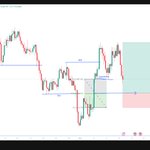
VIX 10 (1s) | BEFORE & AFTER
Trading becomes interesting when you understand market structure and know what to look for.
Look closely at this setup.
We had a liquidity sweep, inducement, a bullish Order Block, and a clear BOS.
The most important lesson here is understanding the relationship between these concepts.
The liquidity sweep gave us context, the BOS showed a bullish structural break, and the Order Block provided our area of interest.
Price eventually reacted from our marked zone and delivered a beautiful bullish move.
SMC is not about drawing rectangles everywhere. It's about understanding why you're marking those levels.
Learn to read price, not just memorise trading terminology.
🔁 Repost, share and bookmark this chart. Let other traders learn something from it.
📲 Join my Telegram for more trading tips:
t.me/ArchiFXh
Learn. Study. Trade. Make money. Live life. No competition!
#SMC #SyntheticIndices #MarketArchitect


😂 SOME TRADERS ONLY BECOME PROFESSIONAL ANALYSTS AFTER HITTING SL!
Before entering:
"Market looks bullish. Let me buy." 😎
After SL:
"Actually, there was internal liquidity, external inducement, bearish displacement, an unmitigated Order Block, and a higher-timeframe imbalance." 😭🤣
My brother, where was all this analysis before you clicked BUY? 😂
You cannot keep discovering your trading strategy after losing money.
Your analysis should come before your entry, not after your stop-loss.
Define your bias, entry conditions, invalidation, and target before risking your capital.
The chart should not become clearer only after your account has suffered. 😂
Analyse first. Execute second. Review afterward.
Learn. Study. Trade. Make money. Live life.
NO COMPETITION!
#TradingCruise #MarketArchitect #SyntheticIndices
1
54
WHY DO TRADERS CLOSE WINNING TRADES TOO EARLY BUT HOLD LOSING TRADES FOR TOO LONG?
This is one psychological problem every trader should understand.
You enter a trade with a planned 1:5 RR.
Price moves to 1:1, and suddenly you're afraid of losing the profit.
You close the trade.
But when price moves against you and approaches your SL, you start hoping it will reverse. Sometimes, you even move your SL farther away. 😂
Think about it.
Why are you quick to secure a small profit but willing to tolerate an increasingly large loss?
This behaviour is often linked to loss aversion and the disposition effect.
A trader may prefer the emotional satisfaction of locking in a small gain while avoiding the discomfort of accepting a loss.
The solution is not to hold every trade until TP. It is to have a tested exit strategy and follow it consistently.
Your entry gives you an opportunity. Your exit determines how that opportunity affects your account.
Master both.
— Market Architect
#TradingPsychology #RiskManagement #SMC
60
Let gist about the charts 😜 @FXADA237 @PrincessElendu

CHARTS📉📈 & GIST | EP144 | WEEK IN FOCUS nitter.cf/i/spaces/1OdVkBznlAQnY…
1
1
131


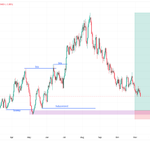
I did not pay attention to what was happening at the HTF and Vix 10 Index humbled me...
Onto the next


Learn, Study, and Execute your edge no matter what.
This gave me a massive profits. Onto the next one guys.
Quote and reshare for others to learn.


😂 TRADERS AND THEIR TRADING JOURNALS!
January 1st:
"This year, I will journal every trade, follow my rules, and become a disciplined trader." 💪
January 3rd:
Trade 1: Beautiful entry. Screenshot saved. Full explanation written. 😂
Trade 2: TP hit. Journal updated immediately! 😎
Trade 3: SL hit.
Journal: "We'll discuss this later." 😭🤣
Trade 4: Another SL.
Journal: "File not found." 💀😂
My brother, why is your trading journal only available when you're making money? 🤣
Your losing trades deserve documentation just as much as your winning trades.
A journal that records only victories is not a trading journal. It's a personal advertising agency! 😂
Document the wins, the losses, the mistakes, and the lessons.
Your journal should tell you the truth, not protect your ego. 🎯
— Market Architect
#TradingCruise #TradingJournal #MarketArchitect
CAN TOO MUCH MARKET ANALYSIS ACTUALLY MAKE YOU A WORSE TRADER?
Let's think critically.
You start your analysis on the Daily timeframe. Everything looks bearish.
You move to 4H. Still bearish.
On 1H, you identify a bullish retracement.
On 15M, you see a bearish shift.
Then you open 5M, 3M, and 1M looking for more confirmation.
Suddenly, you're confused about a market you understood 30 minutes ago. 😂
The problem may not be the market. It may be your lack of a defined analytical framework.
Every timeframe provides information, but not every piece of information deserves equal importance in your trading model.
A structured approach should answer:
📌 Which timeframe determines my directional bias?
📌 Which timeframe identifies my area of interest?
📌 Which timeframe provides my execution trigger?
📌 What evidence would invalidate my original analysis?
Without these rules, you can spend hours analysing the same chart and still struggle to make a decision.
More information doesn't always produce better decisions. Sometimes, clarity comes from knowing what to ignore.
At the end of the day, trading is not a competition to see who can identify the most BOS on a chart. 😂
Master your analytical framework before adding more complexity.
— Market Architect
Who is seeing what I am seeing on #XAU right now


