

Founder @ 7PI Social Sports Platform | Social Media monetizes attention | We monetize Real-World Action through sports
San Francisco, CA
Joined November 2022
- Tweets626
- Following564
- Followers341
- Likes2.1K


Pinned Tweet
We closed our first funding round. 🚀
7Pi is now backed by its first external investors at a $7M post-money valuation.
We’re building a new category in sports: Active Media.
Social media monetizes attention.
We’re building the infrastructure to monetize real-world participation through sports fandom.
Because we believe sports fandom should be playable, not just watchable.
Fans should be able to participate with the athletes and teams they love - not just follow them from a screen.
And when participation becomes measurable, something else changes too:
Sports sponsorship becomes measurable.
Brands can finally see what they activate beyond views, likes and impressions - and athletes and teams can prove the real-world value of their communities.
That’s what we’re building at 7Pi.
And soon, we’ll be opening our next funding round.
Thank you to everyone who believed in us.
And to those who didn’t.
We needed both. 🙏🏻
Still early.
Still a lot to prove.
But 7Pi is officially funded.
Let’s go. 🫡

1
127
Over the past few days, 270 people were a little less hungry.
It’s hard to describe what it feels like when people rush toward the tuk-tuk to get food. And even harder to imagine what life must be like when, day after day, hour after hour, you have to worry about where your next meal will come from.
A lot goes through my mind in moments like these.
First, how unequal our world is. And how I genuinely believe there are enough resources for everyone to have at least their basic needs met.
I don’t believe everything should be given to everyone for free. But I do believe that access to food and basic necessities should be a given in any developed society.
At the same time, I find myself thinking about my own problems. Those moments when I get frustrated about how difficult things are in my life or in my business.
Then I meet people like this, and I realize how little I actually know about what it means to struggle just to survive each day.
1
31
7Pi is in Anthropic’s Claude Startups Program!
21x more applications than usual.
And we made it! 💪🏻

1
97
Sports fans were never meant to be an audience.
That’s probably why I’ve always loved the @packers 💛💚
539,000 people own a piece of the team.
They’re not just watching something that belongs to someone else.
They’re part of it.
That’s also the idea behind our Active Media Platform 7Pi.
Less audience.
More ownership.
More participation.
Maybe the future of sports isn’t about building bigger audiences.
Maybe it’s about turning audiences into participants.

33
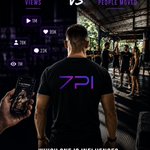
I don’t think the world needs more influencers.
It needs activators.
The creator economy is exploding.
U.S. brands are expected to spend around $44B on creators in 2026.
But something still doesn’t add up.
We’ve become incredibly good at measuring how many people someone can get to watch.
Followers.
Views.
Likes.
Watch time.
We’re still pretty bad at measuring how many people they can get to do something.
And that feels like a massive gap.
Especially when 1.8 billion adults globally still don’t get enough physical activity.
This is one of the reasons we started building 7Pi.
We don’t want creators to just create content.
We want them to become activators.
Launch a challenge.
Get 500 people running.
Get 2,000 people walking.
Get a community to show up somewhere in real life.
And suddenly the metric isn’t:
“How many people saw this?”
It’s:
“How many people did something because of it?”
That’s what we mean by Active Media.
And I think it could create something much bigger than another creator platform:
A shift from the creator economy to the participation economy.
We’re getting close to launching the V1 of 7Pi.
And this is the thesis we’re putting to the test.
🤖 Made with AI

We’re way too obsessed with being successful young.
I turned 39 today.🎂
And somehow, I feel like I’m just getting started.
In my 20s, I thought success meant moving faster than everyone else.
Build the company.
Raise the money.
Grow fast.
Win early.
I did a lot of that.
But somewhere along the way, I learned that building a great company means very little if you destroy yourself while doing it.
So at 39, my ambition isn’t smaller.
It’s actually bigger.
I want to build the most ambitious company of my life.
Get into the best shape of my life.
Be a great husband, friend and human.
And enjoy the fucking ride while doing all of it.
Maybe we need to stop treating life like there’s a deadline for becoming successful.
You don’t need to peak at 25.
Or 30.
Or 39.
The goal isn’t to peak early.
It’s to keep becoming someone you haven’t met yet.

1
48
Every minute you spend on our screen is a minute we’ve failed.
Sounds like a terrible business model.
Until you realize every platform creates the behavior it rewards.
Social Media monetizes attention.
We’re building Active Media to monetize real-world participation.
That’s a fundamentally different incentive.
The average teenager now spends around 8.5 hours a day on entertainment screen media.
Not because people suddenly lost discipline.
Because today’s digital economy rewards time spent on screens.
We’re asking a different question.
What if platforms made money when people put their phones away?
When they went for a run.
Played basketball.
Walked with friends.
Joined a local event.
Actually did something.
The metric changes everything.
Attention creates one kind of internet.
Participation creates another.
We believe the next generation of platforms won’t compete for your screen time.
They’ll compete for your real life.
That’s what we’re building at 7Pi.
Not another social platform.
The world’s first Active Media platform.

27
I don’t think productivity apps will fix screen addiction.
They’re solving the symptom, not the cause.
The average teenager now spends 4+ hours a day on recreational screen time. Research links excessive screen use to higher rates of anxiety, depression, poor sleep, lower physical activity, and social isolation.
Yet most solutions still ask people to do one thing:
Use your phone less.
I don’t think that’s how behavior changes.
Over the past year, we’ve interviewed thousands of people - users, athletes, creators, brands, coaches, and researchers.
One pattern keeps coming back.
People don’t want another app that tells them to stop scrolling.
They want something that’s simply more rewarding than scrolling.
That’s why we’re building Active Media at 7Pi.
Not to reduce screen time through restrictions.
But by making real-world participation more valuable than passive consumption.
We believe the future isn’t built by apps competing for more attention.
It’s built by products that make people want to put their phones away.
We’re building the first platform that monetizes off-screen activity instead of on-screen attention.
Don’t fight the behavior.
Change the incentive.

1
2
39
We didn’t celebrate our first angel investment.
We opened a to-do list.
Everyone sees the fundraising.
Almost nobody sees what comes next.
For us, the money wasn’t the milestone.
It was the starting gun.
Our to-do list quickly became something like this:
→ Build the product.
→ Launch the waitlist.
→ Bring in the first creators.
→ Sign the first brands.
→ Prepare the pilot.
→ Measure what actually matters.
→ Prove we were worth betting on.
At this point, we’re pretty sure we also need a coffee brand… not just angel investors. ☕️
That’s where we are today.
At SevenPi, we’re not trying to convince people to download another app.
We’re trying to answer a much bigger question:
Can technology get people off their screens and back into the real world?
Everything we’re building right now—the product, the waitlist, the creator partnerships, and the brand pilots—is one big experiment to answer that question.
Because investors don’t validate a company.
The market does.

1
32
Social Media created influencers.
Active Media creates Activators.
Would you rather inspire people to watch
or inspire them to move?
21
I don’t think Gen Z is the problem.
We built the products. They grew up with them.
Blaming them for adapting to the incentives we created won’t solve anything.
Our responsibility is to build products that make real-life participation as rewarding - and as cool as scrolling.
30
Our first investors invested at a $7M valuation. 🇺🇸
15 months ago, this company didn’t exist.
People see the valuation.
They don’t see the hundreds of conversations.
The months spent questioning whether the problem was worth solving.
The research.
The personal investments.
The workshops.
The pivots.
The countless decisions made with incomplete information.
Or the uncertainty that comes with trying to build something that doesn’t fit into an existing category.
A funding round isn’t the story.
It’s simply recognition of all the work that happened long before anyone was watching.
I’m incredibly grateful to our first investors for believing in our vision at such an early stage.
And I’m equally grateful to everyone who said no.
Every difficult question, every piece of skepticism, and every rejection forced us to think harder, improve faster, and build a stronger company.
It turns out you need both.
People who believe in your vision.
And people who challenge it.
We’re just getting started. 😎

28
Our first investors invested at a $7M valuation.
15 months ago this company didn’t exist.
The invisible work always comes before the visible results.
18
Social Media says: “Keep scrolling.”
Active Media says: “Let’s go outside.”
Which one feels more like you?
1
49
I don’t think Product-Market Fit comes first.
I think Behavior-Market Fit does.
Everyone talks about building products.
We started by studying people.
At Active Media, we’re not building another social platform.
We’re trying to create a completely new behavioral loop - one that naturally encourages people to spend more time off-screen instead of endlessly scrolling.
There was no playbook.
No benchmark.
No dataset.
So we had to build one.
Over the last 15 months, we:
• worked with behavioral scientists,
• ran multiple rounds of live research,
• interviewed 250+ Gen Z sports fans,
• conducted 1,000+ in-depth user interviews,
• and challenged every assumption we had.
That wasn’t Product-Market Fit.
That was Behavior-Market Fit.
Only after we understood why people change their habits did we start validating how our product could help them do it.
That’s when the real work began.
Landing pages.
Community challenges.
Waitlists.
Content.
Rapid iterations.
Some experiments failed.
Some completely changed our roadmap.
All of them made the product better.
Research builds the hypothesis.
The market validates the product.
If you’re building another CRM, copy what’s already working.
If you’re trying to change human behavior, there is no playbook.
You have to write it yourself.

1
54
Our brand name helped us close an investment.
“What does 7Pi mean?”
7 represents every day of the week.
Pi stands for Positive Impact.
That question led to a conversation that lasted nearly an hour.
Not because of the name.
Because of what the name stands for.
We believe most people already agree that endless scrolling is a problem.
The mistake is trying to solve a cultural problem with productivity tools.
Screen-time reminders.
Time limits.
“Take a break” notifications.
They all assume people should fight against the product.
We believe the product itself should make people want to leave.
That’s why we’re building what we call Active Media.
Instead of maximizing screen time, we’re designing experiences that lead people into the real world.
Walk with friends.
Complete real-world challenges.
Unlock rewards from brands, creators and sports clubs.
Come back to the app only when there’s a reason to.
Ironically, our business grows when people spend less time staring at their phones—and more time creating memories off-screen.
Getting there wasn’t a product decision.
It was a behavioral science challenge.
We spent more than a year researching one question:
How do you build a platform people genuinely want to close?
Because if we can align healthy user behavior with a sustainable business model, reducing screen time no longer becomes a sacrifice.
It becomes the product.
That conversation is what ultimately convinced the investor.
The brand name opened the door.
The mission closed the investment.
A strong mission attracts the right people.

34
What if the next billion-user social platform encourages you to close the app?🎙️
We’re building a platform designed to do exactly that.
For years, the social media business model has optimized for one metric: attention.
But the landscape is changing:
• Gen Z is becoming increasingly conscious of screen time.
• Digital advertising is becoming less effective.
• Customer acquisition costs continue to rise.
• More people are looking for healthier relationships with technology.
The challenge is that social media is no longer just a product.
It’s a cultural behavior.
And I don’t believe cultural behaviors can be changed with productivity tools, screen-time reminders, or by simply telling people to use social media less.
That’s why we’re building Active Media.
We’re not competing with social media.
We’re building an additional layer on top of it.
A layer that helps creators, brands, and communities turn online engagement into real-world experiences through off-screen challenges.
We don’t believe people will use less social media in the future.
We believe the future need a better balance between our digital and real lives.
Maybe the next evolution of social media isn’t replacing today’s platforms.
Maybe it’s helping them create more value beyond the screen.
What’s more likely to change behavior: restrictions or better incentives?

34
This got me 2 investors in 2 weeks:
Investor: “So what’s your business model?”
Me: “Get people off our app.”
Do bold ideas still win? 😃
1
60
Today I’m a guest on a podcast. 🎙️
Can we build a billion-dollar company by encouraging people to use it less?
For the last 20 years, social media has been built around one metric:
More screen time.
The longer we scroll, the more money platforms make.
Most people think the solution is digital wellbeing, screen-time limits or another app reminding us to put our phones down.
I don’t.
I think we’re trying to solve a cultural problem with productivity tools.
We’re building something different.
A platform where creators launch real-world challenges.
Where brands reward participation instead of impressions.
Where the business model grows when people move more, experience more and scroll less.
The goal isn’t to convince people to spend less time on their phones.
The goal is to build something so much more fun that they simply choose real life instead.
That’s the future I want to help build.
Looking forward to talking about it today. 🎙️

33