

Assistant Professor Université de Montréal - psycho/neurolinguistics & first language acquisition
Montréal, Québec
Joined November 2018
- Tweets82
- Following245
- Followers207
- Likes217



Pinned Tweet
I graduated this May from @nyuling and my dissertation “Neural and Developmental Bases of Processing Language Outside the Here-and-Now” is now available on ProQuest: tinyurl.com/MATdissertation.
Very excited to be continuing this line of research at @UMontreal & @theCRLBM! (1/13)
Maxime Tulling retweeted

This is an interesting extension of the findings reported in Hauptman & Bedny (2025) (doi.org/10.7554/eLife.101944), which demonstrated the domain-specificity of causal reasoning in the human brain using fMRI. (1/4)


Maxime Tulling retweeted
Our paper entitled "Neural specialization for 'visual' concepts emerges in the absence of vision" is now out at Cognition. authors.elsevier.com/a/1kSe%…


New study with @gellidog, Rashi Pant, and @mbedny1 on the neural basis of ‘visual’ concepts in congenitally blind individuals. Main takeaway: specialized neural responses to living things and light events emerge independent of vision. 1/ tinyurl.com/52htnzsb
Maxime Tulling retweeted
What makes humans uniquely cognitively adaptable? In our new paper, @TakuaLiu624, @mbedny1, and I review neuroscience studies of sensory loss, language acquisition, and cultural skills (e.g., programming), and propose a 'flexible specialization' account: 1/

Our new reveiw paper is published!
Built to Adapt: Mechanisms of Cognitive Flexibility in the Human Brain
annualreviews.org/content/jo…
Great thanks to @mbedny1 for initiating this writing project, and @miriam_hauptman for major contribution to this article!
Maxime Tulling retweeted

I will be presenting this work tomorrow (Thursday) at #INTERSPEECH2024, 10.00-10.40 in the Acesso room!
Looking forward to discuss how we can learn from human speech science to interpret end-to-end neural speech models 💡
The paper is here: isca-archive.org/interspeech…

✨ Do current neural speech models show human-like linguistic biases in speech perception?
We took inspiration from classic phonetic categorization experiments to explore whether & where sensitivity to phonotactic context emerges in Wav2Vec2 models 🔍
📑 arxiv.org/abs/2407.03005

Maxime Tulling retweeted
✨ Do current neural speech models show human-like linguistic biases in speech perception?
We took inspiration from classic phonetic categorization experiments to explore whether & where sensitivity to phonotactic context emerges in Wav2Vec2 models 🔍
📑 arxiv.org/abs/2407.03005
Maxime Tulling retweeted

NYT INVESTIGATION: Israel ordered civilians to go to safe zones then dropped 2,000 pound “bunker-busters” that “turns earth to liquid [and] pancakes entire buildings” the bomb means “instant death” for anyone within 30 meters. Lethal fragmentation can extend for up to 365 meters:

Maxime Tulling retweeted

Resource for PsychoPy fans who do pupillometry and eye-tracking 👁️
I’ve created an EyeLink-compatible example experiment and walkthrough, shared via my website: sites.google.com/view/drewjm…
(Eye-tracking version to come)
Hoping this pays-it-forward by saving someone else time 🤞🏻

Maxime Tulling retweeted

"This is a text-book case of genocide." Read every word of this letter by a UN human rights official.


Maxime Tulling retweeted

De aanval van Hamas op Israël is inmiddels drie weken geleden. Maar de geschiedenis van dit conflict gaat nog veel verder terug. En hoewel die geschiedenis zeer complex is, willen we toch een poging doen er dieper in te duiken. #avondshow youtu.be/qMqq-dWCAd0

We have a Dutch saying “dweilen met de kraan open”: moping the floor while water is running. If you offer Palestinians a mop to wipe up blood the Israeli government intentionally spills in tons, you are being utterly useless. Turn off the bloody faucet! Stop supporting genocide!

Hamas terror is now bringing immense suffering to the Palestinian people.
There is no contradiction in standing in solidarity with Israel and acting for the humanitarian needs of the Palestinians ↓
nitter.cf/i/broadcasts/1rmGPMZBl…
2
828
Maxime Tulling retweeted

New paper finally out, co-authored with @liinapy!
doi.org/10.1016/j.neuroimage…
Highlights in thread 🧵

Maxime Tulling retweeted
Our new study on non-literal language comprehension (NLC) @ibandlank @ev_fedorenko. Which mechanisms does NLC rely on? A novel meta-analytic approach (74 fMRI studies) finds that linguistic & social cognition resources—not executive control—support NLC. 1/ biorxiv.org/content/10.1101/…

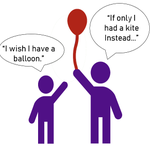
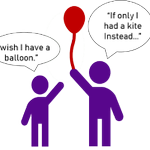
Now out in @LangDevRes (all the open science and no fees one can wish for!): my corpus paper with @ACournane delving into children's early counterfactual productions to show the role linguistic complexity plays in the acquisition of counterfactuality tinyurl.com/2022LDR (1/4)

ALT Two kids (abstract), a young one and an older one. The older one is holding a balloon, the younger one points to the balloon and says "I wish I have a balloon.". The older one says "If only I had a kite instead..."
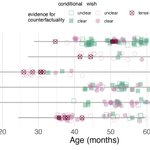
Examination of the longitudinal development of 6 individual children revealed that children mostly start producing counterfactual wishes before counterfactual conditionals, suggesting wishes might be easier to acquire (3/4)

ALT Scatterplot showing children's individual development of wish and counterfactual conditional constructions. The y-axis has the child's name (Abe, Adam, Laura, Mark, Ross and Thomas), the x-axis indicates age in months ranging from 18-72 months). We see that for 4/6 children, wishes occur before counterfactual conditionals (with onset gaps ranging from 6-13 months).
1
1
Our paper contains much more information about children's and adults' counterfactual productions as well as many adorable examples! All data and R-scripts are publicly shared. Very glad to have published with @LangDevRes, supporting the mission to make science accessible for all.
3
Come work with us! @UMontreal is hiring a theoretical syntactician at the Assistant Professor level. Special interest in fieldworkers and/or specialists in Indigenous languages. Excellent French (C1 or equivalent) required. tinyurl.com/UmonSyn
To end it, the discussion of this dissertation synthesizes and contextualizes the main findings and poses many more questions than it answers. I therefore hope that this dissertation will inspire further investigation into the fascinating ability of modal displacement. (12/13)
1
1
Most importantly, for those who missed my tearful gratitude during my defense, I included heartfelt acknowledgments for everyone who supported me during my PhD. Special thanks to my advisors @liinapy and @ACournane for bearing with me, and a dozen different experiment versions.


1
3