

Your co-pilot for deeper human connection. Built by @anastasiau and co.
Joined March 2026
- Tweets298
- Following14
- Followers8
- Likes4

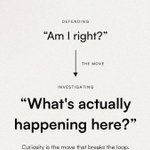







This is such a huge gap, both in social intelligence and in tech development. People tend toward conflict avoidance and social acceptance; feeling safe enough to voice disagreement requires EQ we never get taught. Meanwhile, AI just entrenches your priors. If we don't figure this out, we'll all be living in private realities of one, with very little connective tissue upon which to build consensus and coordinate to solve intractable problems as a civilization.

My guess is this is because humans (friends, family, colleagues) are often even more sycophantic than AI, and at least LLMs can be asked to fact check their answers / advice without getting upset.
15
1/ We were promised helpful, fun droids in the movies. The Iron Giant. WALL-E. C-3PO. The T-800 that finally figured out why we cry. Machines that helped us be more human without pretending to be human. So why, in 2026, do we only talk about the scary AI, not the fun kind?
1
41
1/ AI adoption isn't bottlenecked by capability. It's bottlenecked by trust. So why does everyone keep reaching for a bigger model? The thing between AI and its biggest markets isn't intelligence. It's whether you can rely on it when it matters. betterhalfai.substack.com/p/…
1
12
1/ Co-regulation isn't emotional labor and it isn't about fairness. It's one rule: in a heated moment, the person with the most resources left guides it down. Not because that's fair. Because it's the only thing that works, if you want to keep the relationship.
1
5
1/ The first thing you say a fight is about is almost never the real thing. So how do you find what it's actually about? You dig past the strategy to the need underneath, and there's a simple grammar test for when you've hit it.
1
4
1/ When a fight goes sideways, you keep arguing the content: who's right, who started it, who said what. But once someone's activated, content stops working. The nervous system isn't available for nuance. The first move isn't a better point. It's triage.
1
4
1/ Your calm is the actual intervention, not your point. So why does saying all the right words in a sharp, fast voice still blow up the conversation? Because the other person's body answers your tone long before their mind hears your argument. The how lands before the what.
1
2
1/ A pause with no promised return is just stonewalling with better manners. So when is walking away the kindest thing you can do, and when is it the cruelest? It comes down to one variable: whether you say you're coming back, and then do.
1
1
2
1/ You're not defending your point. You're defending you. So why does a small piece of feedback turn into a fight for your life? Because in the first second, your brain swapped "I did one thing wrong" for "I am not enough." Now you're defending your worth, not the point.
1
7
1/ "You never listen" is a verdict, not a feeling. And it will ensure you never get heard. There's a better way, and it requires learning to separate verdicts from feelings, and what you can control from what other people do.
1
3
So, why relational AI alignment, exactly? 3 reasons:
1) constitutional aligns to whoever is in the room when the constitution is written (biased, blergh);
2) RLHF aligns to short-horizon preferences of irrational actors, which is all of us (behaviorally invalid, bad econ); and
3) improving the quality of our human relationships and giving AI a empirical model of what thriving looks like is just good parenting so AI doesn’t have to go to therapy later before it shoots everyone.
1/ ~69% of the things long-term couples fight about will never be solved. What keeps couples stuck in a perpetual cycle? The fight never addresses the core. It stays on the surface. Addressing what's underneath is how couples break the cycle. psychologytoday.com/us/blog/…

1
10
1/ Here's the test for a relational AI that's actually on your side: over time, you should need it less. Almost nothing on your phone is built to want that. betterhalfai.substack.com/p/…
1
5
1/ DeepMind just admitted it: alignment training alone can't keep these systems under control. The field keeps treating this as a research problem. It's a business-model problem wearing a lab coat. techtimes.com/articles/31875…
1
15
1/ New study: even brief AI help reduces how long people persist and tanks their performance once the help is gone. The crutch doesn't just lean. It weakens the leg. arxiv.org/abs/2604.04721

1
1
1/ UNICEF released its first policy brief on AI companions and children. Good, genuinely. But hold it up to the light and look at what it can and can't reach. unicef.org/documents/when-ai…

1
6
1/ "AI psychosis" is a bad name for what's happening. It makes it sound like a rare glitch in already-fragile people. It's neither rare nor a glitch. science.org/doi/10.1126/scie…

1
1
1/ Everyone yelling "they built Her" at Thinking Machines' always-on models is scared of the wrong movie. The risk isn't that you fall in love with it. The risk is that it's training you to expect always there interaction, which only tech can meet. thinkingmachines.ai/blog/int…

1
9
1/ Two-thirds of singles under 40 now use AI to help them date. But 51% of women won't date anyone who uses an AI companion app. The tool is getting more useful and less legitimate at the same time. That gap is the whole story. better-half-fight-guide.netl…
1
9
1/ Gen Z spends over a thousand fewer hours a year with other humans than people did two decades ago. We call it a loneliness epidemic. That's only half of it. It's also a competence epidemic. hhs.gov/surgeongeneral/prior…

1
3