

I'm just an ordinary Mexican who wants to share his knowledge about the supernatural Mexico, for all the good people on twitter.I hope not to disappoint you.
Toluca de Lerdo, Toluca
Joined June 2022
- Tweets4.8K
- Following421
- Followers10.1K
- Likes16.4K






Pinned Tweet
I have finally decided to open a Patreon, if you want to support me subscribe, I have 4 new exclusive articles only for patrons. With your support I could spend more time generating content as well as improving its quality.
patreon.com/MexicanMythsandF…


Mexican Myths and Folklore. retweeted

La derecha se anda peleando con el día de muertos en twitter diciendo que México es católico y shalalá, y la iglesia del pueblo vecino (que data del siglo XVI) puso ofrenda con tema prehispánico y un audio que explica la visión de nuestros ancestros sobre la muerte 😌
🕯️🏵️💀🏵️🕯️


Mexican Myths and Folklore. retweeted

El problema de la "derecha" mexicana es que no tienen ni puta idea del pais que se supone quieren gobernar, solo basan su identidad en replicar discursos gringos y europeos.
Mexican Myths and Folklore. retweeted

¿No que lo mejor de Toluca era irse? Porque ya me andan gentrificando mi feria del Alfeñique >:(
Mexican Myths and Folklore. retweeted

Encontré algo más. El profesor Celso Garza Guajardo escribió una crónica muy bonita de la celebración tradicional de Día de Muertos en Sabinas Hidalgo, Nuevo León, a mediados del siglo XX.
cd.dgb.uanl.mx/bitstream/han…


Mexican Myths and Folklore. retweeted

Las Muerteadas de Oaxaca tienen antecedentes desde finales del siglo XIX, mucho antes de James Bond. México no necesita a Hollywood para tener tradiciones ni identidad. ¡Ya aburren con esa narrativa!


Seré breve: Si no fuera por la película de 007, esto no existiría.
Readers added context they thought people might want to know
La Catrina fue creada por José Guadalupe Posada alrededor de 1912 como Calavera Garbancera, más de un siglo antes de la película Spectre de 007. Esta instalación del Zócalo rinde homenaje a esa tradición.
es.wikipedia.org/wiki/La_Catrina
razon.com.mx/ciudad/2026/10…
Mexican Myths and Folklore. retweeted

Yo nomás vengo a decir que no limiten el día de muertos a algo azteca como ví por ahi. Échenle un ojito al Xantolo de la Huasteca, el Hanal Pixan maya, los Huehuentones de los mazatecos, el Animeecheri K’uínchekua
Purépecha, etc. Hay gran variedad 🏃💜


The veneration and remembrance of the dead is universal; however, in Mexico, this observance has been established by the state as a cultural element—one so iconic that it has eclipsed other forms of honoring the deceased. It functions as a kind of indirect "soft power" wielded by the Mexican state and society, and has become an inseparable component of what it means to be Mexican.
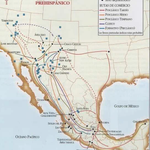
Indigenous groups in Mexico are indeed culturally distinct, but throughout their history, both pre-Hispanic and modern, they have migrated and influenced one another through trade. This is evident in the oral traditions of indigenous groups in New Mexico, which trace their origins to the city of Teotihuacan, as well as in the influence of Andean groups in the Michoacán region.
With the arrival of the Spanish, there were expansive migrations of Otomi and Aztec peoples (Tlaxcalan Nahua) to various parts of the country. The Nahua toponymy of communities and municipalities testifies to the establishment of these groups throughout the territory of New Spain.
And with modern independent Mexico, these migrations intensified, as other groups from outside the continent established their own communities, making the cultural mix even more complex.
The majority of Mexicans are of Amerindian descent, and groups from all over the country, both north and south, have migrated in search of opportunities; there is no point in "differentiating" them.
@RafaelmenaI


Contrary to Mexico City's we're all Aztecs propaganda, the various indigenous groups in Mexico are distinct from one another.
A northern Yaqui isn't the same as Mayan from Yucatan, which isn't the same as Purépechas in the central-west.
For some reason they feel I'm obligated to have affinity for people who I don't share ancestry with or anything in common culturally bc We're all a shade of brown o algo.
Pochos aren't even Mexican remember?


Mexican Myths and Folklore. retweeted

Exacto. Los españoles NO buscaban preservar las lenguas indígenas ni respetar su soberanía lingüística.
Al principio las necesitaban para evangelizar y gobernar a una población que los superaba en número. Conforme consolidaron su poder, esa necesidad disminuyó, hasta que Carlos III ordenó en 1770 «extinguir los diferentes idiomas» para que solo se hablara castellano.
Confundes una necesidad práctica del dominio colonial con benevolencia. Tu interpretación de los hechos es pura fantasía masturbatoria.
You didn't cite anyone; you just made a stupid claim, while I cited three authors from that era and a French linguist and investigator, Patrick Jhohansson, who provide evidence confirming the pre-Hispanic origin of the Day of the Dead. You just pulled a ridiculous screenshot from Google.
And I also have access to the general archives of my state, where I can see documents from the colonial period, which clearly show the stark difference in treatment between Criollos and Peninsulars, with the mitigating circumstances typical of the time.
unavailable
And to no one's surprise, you speak without citing any bibliographic sources on the subject. At least I have the bibliographic resources to support my arguments, while you only display tiresome pedantry and profound ignorance, typical of someone who doesn't back up their claims with verifiable evidence.
Or do I need to remind you of the ridiculous blunder you made regarding the Day of the Dead? I'm still waiting for you to cite authors who confirm your nonsense.


unavailable
The Criollos appropriated the pre-Hispanic past and used it as an ideological and foundational element of the Mexican state. Throughout the colonial period, the Criollos played a secondary role in the administration. Your claim that they were considered "equal" to the peninsular Spaniards within the colonial system demonstrates your limited understanding of the complex social system of New Spain, where the peninsulars always held real political power, a struggle that ultimately triggered the war of independence.
unavailable


The best time of year in my city has begun.
#Mexico #alfeñique


Mexican Myths and Folklore. retweeted

Before 1492
America was mathematical, agricultural, diplomatic, and sacred.
After 1492, it was rewritten.
But the soil still remembers.
The mounds still rise.
The languages are returning.
The descendants are still here.
Read their story next time you say “discovery.”

