

@MichaelHadleyMD
Account based inUnited States
About this account
- Account based in
- United States
- Connected via
- United States App Store
Account-level information from X, not a live location or the device used for a specific post.
System Director, Advanced Cardiac Imaging, Northwell Health | not medical advice | views are my own | retweets are not endorsements
New York City
Joined June 2015
- Tweets229
- Following200
- Followers173
- Likes177




🚨 2026 Dyslipidemia Guideline
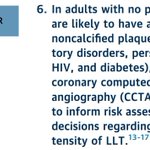
💥 CCTA gets Class 2b rec in pts without prior #ASCVD prone to noncalcified plaque (DM, HIV, inflammation)
👉️ First time @ACCinTouch endorses #CCTA (selectively) in asymptomatic pts, opening door to plaque-based #prevention
#CardioTwitter

🫀 Top 8 Takeaways from the 2026 ACC/AHA Dyslipidemia Guidelines [for Cardiac Imagers 📸]
doi.org/10.1016/j.jacc.2025.…
1. Coronary Artery Calcium score (#CAC) is now Class 1 for risk stratification when treatment is uncertain.
👇

5. Incidental CAC on non-cardiac CT is actionable (Class 1) for risk assessment and management.
6. Subclinical atherosclerosis is now its own treatment category, with imaging findings driving management.
7. #CCTA gets Class 2b rec in select asymptomatic patients, marking its first ACC/AHA endorsement in screening.
8. The paradigm shifts from risk factors to plaque detection, positioning cardiac imaging at the center of preventive cardiology. ❤️🚀
#CardioTwitter @ACCinTouch

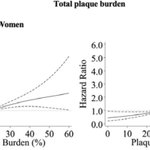
🔹 In women, MACE risk began rising at lower plaque burden and climbed more steeply
🔹 HR crossed 1.0 at ~20% total plaque burden for women vs ~28% in men
🔹 These patterns persisted even after accounting for traditional risk factors, CAC, stenosis, and high-risk plaque features
Bottom line: Quantitative plaque burden likely needs sex-specific interpretation, so we can intervene earlier for women who may be labeled “lower risk” by conventional scoring.
ahajournals.org/doi/10.1161/…
#WomensHealth #PreventiveCardiology #PrecisionMedicine @lesleejshaw


🚀This study moves the field forward with cutoffs for CT by valve type:
👉️ New CTA AVA cutoffs for severe AS (AUC 0.89)
🔹Tricuspid valve: ≤0.95 cm² = likely severe; ≥1.10 cm² = unlikely severe
🔹Bicuspid valve: ≤1.08 cm² = likely severe; ≥1.20 cm² = unlikely severe
⚠️Caveats: single-center; bicuspid subtype mix; planimetry is flow-influenced; outcome-based validation pending.
🧑⚕️Bottom line: Echo first, but if AS measurements are discordant, CT cut-offs can help reclassify patients as either severe or non-severe.
ahajournals.org/doi/10.1161/…

Family hx of premature CAD is one of our most powerful risk signals (~2x ASCVD risk), but it’s under-recorded and missing from the calculators we actually use.🤯
As a result, young pts with premature CAD in the pedigree may be labeled "low 10-year risk" ... until their first MI.

This review covers what actually moves the needle for personalizing risk:
🔹 Early, structured FHx collection
🔹 Polygenic risk score to quantify lifelong risk
🔹 CAC for personalization (even if “low risk”)
🔹 CCTA selectively in high-risk young pts
nature.com/articles/s41569-0…
🫀 Time to rethink routine angiography before #TAVR
New meta-analysis in @CircAHA: Coronary CTA (CCTA) safely replaces invasive coronary angiography (ICA) in many TAVR candidates.
🔗 doi.org/10.1161/CIRCINTERVEN…
Key findings (w/ low heterogeneity)👇

🔹 Pre-TAVR CCTA avoided ICA in 54% of patients
🔹 No difference vs ICA in death, MI, MACE, or unplanned revascularization
🔹 Most scans done without nitro or beta-blockers
Aligns w/ recent data showing CCTA as effective gatekeeper (53% ICA deferral)
🔗 doi.org/10.1161/CIRCINTERVEN…
💡 Translation: Half of pre-TAVR patients can skip the cath lab without added risk.
👉️ #CCTA first. ICA only if needed.
Better for patients. Better for throughput. Better for value.
@OKhaliqueMD
💥 New study: In asx primary-prevention pts, only #Lp(a) tracked independently with low-density non-calcified plaque (vs CAC, LDL-P, hsCRP)
👉️ If you’re not measuring Lp(a), you’re flying partially blind in primary prevention
doi.org/10.1093/ehjci/jeag02…
#CCTA @MountSinaiHeart

Terrific summary of #HFpEF eval in @CircAHA 🫀
HFpEF isn’t a diagnosis - it’s a syndrome
New therapies mean HFpEF phenotyping is actionable
Let's stop “HFpEF = diuretics + shrug" 💧🤷♂️
and start “HFpEF = CMR to find the substrate” 🧲🎯
doi.org/10.1161/CIRCIMAGING.…
@Otavio_Coelho_F

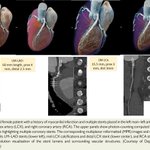
🚀 Photon-counting CT is the most meaningful leap in cardiac CT since #CCTA itself:
🔹Ultra-high resolution (down to 0.2mm) cuts calcium blooming, clarifies lumen edges, reduces intrastent artifacts, and downgrades overcalled stenoses➡️fewer false positives and unnecessary caths

🔹Spectral imaging➡️plaque phenotyping + myocardial characterization with strong correlation to CMR
🔹Better assessment of leaflets/thrombus/prostheses➡️lmproved structural heart workflows
🔹Dose efficiency➡️often lower radiation for comparable or better quality
One word of caution: Evidence is early and mostly single-vendor in select patient groups. Outcome-driven trials are still in progress. We still need better standardization and generalizability .
Just reviewed in @ESC_Journals:
doi.org/10.1093/eurheartj/eh…
@gpontone1 #cardiotwitter
