

Retarded and Bipolar because of crypto,nothing is a financial advice.
Joined October 2024
- Tweets43.7K
- Following985
- Followers1.9K
- Likes40.3K





Pinned Tweet
This is the most embarrassing season ever, driven buy same devs,teamsand kols,with their cabal Alpha who always ends up as just another Scam after few days.
Pre sales, supply given and right after on the heads of their followers.
Im not a Kol,never gonna be ,just another father investing my own money to try to make up for the family.
MickeyLad retweeted

𝐈𝐟 𝐈 𝐩𝐨𝐬𝐭 𝐬𝐨𝐦𝐞𝐭𝐡𝐢𝐧𝐠 𝐨𝐧 𝐗 𝐚𝐛𝐨𝐮𝐭 $QUBIC 𝐏𝐀, 𝐭𝐡𝐞 𝐩𝐫𝐢𝐜𝐞 𝐰𝐢𝐥𝐥 𝐢𝐧𝐬𝐭𝐚𝐧𝐭𝐥𝐲 𝐩𝐮𝐦𝐩 𝐩𝐚𝐬𝐭 𝟓𝟎𝟎/𝐁 :𝐭𝐫𝐨𝐥𝐥𝐟𝐚𝐜𝐞:
But a friend of mine is still buying, and I don't want to ruin the party 😂
10x loading…. 👀
The MACD on the daily chart is formed Bullish Cross, which signal an uptrend in the coming weeks. The downtrend is broken, and we're now forming Higher Highs (HH) and Higher Lows (HL) 🔥
#QUBIC #Crypto #TechnicalAnalysis #MACD #HigherLows #Altcoins #LTC #BTC #ETH #ETC

MickeyLad retweeted

$QUBIC to billions is inevitable.


MickeyLad retweeted

This team built ChatGPT Voice, but for trading. Makes trading so much more accessible day to day.
You often see more of the same old come out these days with just plain copies of others BUT I haven't seen this anywhere else so far.
Just SAY the trade, confirm it, and done.
Right now it supports @Hyperliquidx and @dreamDEXSomnia. Pretty sure it will evolve even further from there.
Their waitlist is open as well.

Introducing Floorcall.
Your perps account now takes orders by voice.
Say it. Hear it back. Confirm. Placed.
Available on @HyperliquidX and @dreamDEXSomnia.
Perps are high risk. Not financial advice.
MickeyLad retweeted

Knowing a coin is a gem is not enough. You also have to find a good entry else you minimize your profit. Better not to enter than to have bad entry.
Tomorrow we feast

Great
Partnership 🔥

Packed x @ChopLogsApp
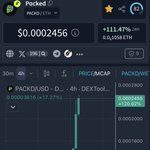
We're partnering with Chop, and it's good news for everyone holding PACKD.
Until now your PACKD could only sit in your wallet. Now it can work for you. Every time the price moves, up or down, the PACKD log takes a small fee and pays it to the people farming it, in CHOP. You keep your PACKD the whole time and can unwrap it whenever you like.
How to join:
1. Open the PACKD log: choplogs.app/logs/0x2145d47C…
2. Wrap your PACKD into chPACKD, one for one
3. Add it to the log's pool with WETH and stake
We seeded the log, now it's your turn. The more liquidity in it, the more trading it catches and the more it pays everyone in it. Let's take it past $1K together.
And it works both ways. Chop gets PACKD liquidity and new farmers from our community, and Packed Skyline now knows Chop's contracts: coins wrapped into a log show as farming on Chop, not as sold, so holders who farm don't look like sellers.
Fees, risks and the full guide: packd.cc/holders


MickeyLad retweeted

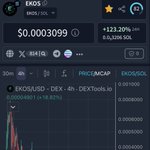
There is no other technical project in crypto that I follow that could match @ekosproject
I am smart, but this Devs are way smarter than me. Reminder this is a doxxed team with good LinkedIn and interactions from other big CEOs/Team members.
A matter of time before it goes where it belong:)
solana:CwubepDFJndzSKFmAMAm9u8Xx3PrizAwSq8hcGimpump is really being built for complex enterprise environments like:
- Databases
- Application code
- Data pipelines
- Cloud infrastructure
- AI agents
and knowing them it`s only the beginning, so DYOR and check their post below, this is just one of many technically superior ones.
Let`s go
🤝 Paid partnership

🔐 MAJOR SECURITY & CODE QUALITY REVIEW WITH SONARQUBE CLOUD!
🚀 EKOS HAS COMPLETED A MAJOR ENGINEERING HARDENING PASS, USING SONARQUBE CLOUD TO IDENTIFY AND ADDRESS CODE QUALITY AND SECURITY FINDINGS ACROSS THE PROJECT.
This is more than another development milestone. It’s about strengthening the foundations of enterprise AI infrastructure.
🛡️ WHAT DID WE WORK ON?
Our latest engineering effort covered findings from SonarCloud, including 96 previously open issues and 57 newly identified findings.
🔹 Security & Supply-Chain Hardening
🔹 GitHub Actions pinned to specific commit hashes.
🔹 Enforced HTTPS for downloads and strengthened S3 transport policies.
🔹 Reduced unnecessary Kubernetes Service Account permissions.
🔹 Hardened Azure disk access configurations.
⚙️ INFRASTRUCTURE & RELIABILITY
🔹 Improved Bash script safety and argument handling.
🔹 Strengthened Docker build processes.
🔹 Refined asynchronous I/O operations in the benchmarking workflow.
🧠 CODE QUALITY & MAINTAINABILITY
🔹 Reduced cognitive complexity in critical Rust components.
🔹 Refactored important Build and Commit operations.
🔹 Improved code readability and maintainability.
💡 WHY DOES THIS MATTER?
EKOS is being built for complex enterprise environments — databases, application code, data pipelines, cloud infrastructure, and AI agents.
That requires more than adding new features.
It requires continuously strengthening the security, reliability, and engineering quality behind every layer.
🔥 WE DON’T JUST BUILD NEW CAPABILITIES. WE STRENGTHEN THE FOUNDATIONS THEY RUN ON.
🚀 EKOS | PHASE 3 DEVELOPMENT UPDATE #5
🔗 🧵
@SonarSource @ekosproject
@googlecloud @Azure @intel
@IBM

MickeyLad retweeted

Tomorrow could be interesting.... 😲
1.
@greg16676935420
greg = 4 characters
16676935420 = 11 numbers
411 🔄 11/4
The last 3 digit is 420 = 240 = 114
2. If you look at @greg16676935420 hero banner on the left side of the hotdog, you will see 5 candles, happy, birthday.
5 candles = 5
Happy = 5
Birthday = 8
@tsukionsolana posted 855 (Reverse of that) signaling us to look into this number.
Now this is where things get very interesting... 🤨
11/4/2026 - 55 weeks and 8 days is 10/7/2025.
What did @gamestop posts on 10/7/2026? A picture of Greg.
nitter.cf/gamestop/status/197533…
3. On that day @greg16676935420 posted the M&Ms picture, MO-ASS?
nitter.cf/greg16676935420/status…
4. 11/4 🔄 is 42, 42 in Gematria is RWA (solana:G8aVC4nk5oPWzTHp4PDm3kAuixCebv9WRQMD93h9pump)
In our @tsukionsolana community, we believe RK will come back as an AI, and that AI is solana:G8aVC4nk5oPWzTHp4PDm3kAuixCebv9WRQMD93h9pump , this AI is build using Grok technology btw....(Yes.. Elon's Grok)
Are you ready... folks?
$GME solana:463SK47VkB7uE7XenTHKiVcMtxRsfNE2X4Q9wByaURVA


MickeyLad retweeted

Why are you rushing to make millions in crypto within a few weeks or months? I see this ALL THE TIME!
People work their entire lives and wait until their 60s or 70s to retire. And I know you think you are smarter and want to retire “early” but you’re in your 20s, dreaming of becoming a millionaire by 30- it ain’t gonna happen with this attitude. Ironically, that rush might be the fastest way to lose it all.
How about taking it easy? Taking it slow? Trump became a billionaire in his 80s… (okay, that’s obviously a joke, but you get my point).
Come on, be reasonable. It’s not about making money as quickly as possible. It’s about making it in a sustainable way, building skills that can serve you for the rest of your life.
Counting on that one lucky shot is fool’s dream and it really doesn’t guarantee you a good, comfortable life. But learning how to do things the right way, building consistency and developing the discipline to protect what you make? That might just be the real game changer.
$Qubic
And chill

Around $1.5 billion across three established Layer-1 projects.
Roughly $48 million across their three challengers.
A combined market-cap gap of about 30×.
→ $KAS vs $QUAI
→ $QUBIC vs $SUPRA
→ $APT vs $KTA
Six projects. Three head-to-head comparisons.
• Scalable Proof-of-Work
• Useful Compute and AutoFi
• High-Performance Execution and Payments
The established networks bring different foundations in mining, computation, and application execution.
Adoption, reliable execution, and token value capture will determine whether these gaps make sense.
So how do these projects compare?
Let’s break it down 👇
🟢 $KAS vs $QUAI: Scalable Proof-of-Work
Kaspa: The BlockDAG Monetary Network
Kaspa approaches scalability with a simple idea: a Proof-of-Work network should process transactions faster while preserving open participation and a shared transaction history.
✦ Vision → Fast, Permissionless Digital Money
Kaspa aims to make Proof-of-Work practical for more frequent economic activity. It combines a monetary focus with faster transaction processing, while keeping predictable issuance and permissionless participation central to its design.
The opportunity extends beyond producing blocks quickly. Kaspa needs that capacity to make the network useful for people and businesses that want to transfer value.
✦ Architecture → Parallel Blocks, Shared Ordering
Kaspa uses GHOSTDAG to organize competing blocks within a blockDAG. Instead of discarding every parallel block, the protocol incorporates those blocks into a shared ordering process.
This structure supports its approach to increasing block production while maintaining a common ledger. Its launch without a premine or presale also forms an important part of its monetary identity.
✦ Moat → Focus and Network Participation
Kaspa’s potential advantage comes from its mining ecosystem, operating experience, and clear monetary positioning. Those foundations give miners and users a recognizable reason to participate.
A focused network can build a strong identity around one core purpose. However, that identity becomes more economically valuable when users consistently choose the network for real transactions.
✦ Biggest Risk
Technical capacity must translate into sustained demand. Faster block production alone does not guarantee payment adoption, deeper liquidity, or a broader application ecosystem.
The network also needs durable incentives for miners as issuance declines. Long-term security depends on the economics of participation as well as the protocol’s design.
✦ My Take
KAS is the more direct PoW monetary thesis in this pairing. Its core bet is that faster settlement, open participation, and a clear monetary model can attract lasting demand.
The main question is how much economic activity that foundation can support. Performance matters most when users have a recurring reason to use it.
Quai Network: The Hierarchical PoW Challenger
Quai approaches the same scaling problem through a different structure. It asks whether multiple coordinated chains can expand network capacity while retaining Proof-of-Work and supporting programmable applications.
✦ Vision → Scale Through Coordinated Chains
Quai aims to distribute activity across a hierarchical network. Its broader ambition combines monetary utility with applications that need programmable execution.
This approach creates a different scaling thesis from Kaspa’s shared blockDAG. Quai’s opportunity depends on making multiple chains operate as a practical, connected system.
✦ Architecture → Hierarchical, Merge-Mined PoW
Quai’s design organizes the network around Prime, Region, and Zone chains. Merged mining connects those layers, while the architecture distributes activity across different parts of the network.
Its dual-token approach gives QUAI and Qi different economic roles. Qi follows an energy-linked monetary design, while programmability adds another potential source of network activity.
✦ Moat → Scaling and Programmability
Quai’s potential advantage comes from combining PoW with a structure designed for horizontal expansion. That approach could appeal to developers who want programmable infrastructure secured through mining.
However, the architecture must make that additional complexity worthwhile. Developers and users need a smooth experience across the system, rather than having to manage its internal coordination themselves.
✦ Biggest Risk
Multiple chains create challenges around coordination, liquidity, and application interactions. Cross-chain activity must work reliably without making the network difficult to use.
The execution test goes beyond headline throughput. Quai needs to demonstrate that its design can support useful applications under realistic conditions.
✦ My Take
QUAI is the hierarchical PoW scaling thesis. Its opportunity depends on turning a coordinated multi-chain architecture into infrastructure that developers and users choose.
The design offers a different route to scale, but architectural ambition alone does not establish an advantage. Reliable execution and adoption must support the thesis.
Setup:
$KAS → BlockDAG-based monetary infrastructure
$QUAI → Hierarchical PoW scaling with programmability
More focused monetary thesis: $KAS
More expansive multi-chain design: $QUAI
🟣 $QUBIC vs $SUPRA: Useful Compute and Integrated Automation
Qubic: The Useful-Computation Thesis
Qubic starts with a question: can computational work contribute to something useful beyond conventional mining? Its broader positioning connects computation, AI ambitions, and blockchain execution within one economic system.
✦ Vision → Connect Computation and Network Utility
Qubic aims to give computational resources a productive role within its ecosystem. Its thesis depends on those resources contributing to outputs or services that people value.
That creates a different proposition from simply increasing transaction capacity. The opportunity rests on what the computation achieves and whether demand supports it.
✦ Architecture → Quorum-Based Execution
Qubic uses a defined set of participants called Computors to reach agreement. Its design combines quorum-based execution, smart contracts, and a distinct computational work model.
AI forms part of its broader ambition, but network consensus and useful AI output require separate evaluation. Strong performance in one area does not automatically prove commercial value in another.
✦ Moat → A Distinct Computational Model
Qubic’s differentiation comes from the relationship it aims to build between computation and network utility. That model gives it a different identity from a conventional general-purpose Layer 1.
The potential advantage becomes stronger if useful outputs attract demand beyond existing token participants. An economically valuable service would give users a reason to engage with the network beyond speculation.
✦ Biggest Risk
Computational activity must generate measurable value. A network can perform substantial work without producing outputs that customers want to use or pay for.
Its defined Computor set and contract participation model also raise questions about openness and concentration. Those design choices matter when evaluating resilience and the distribution of influence.
✦ My Take
QUBIC is the useful-computation thesis in this pairing. Its opportunity depends on proving that its work model can create durable economic value.
The most important evidence would connect computation to useful outcomes and recurring demand. Technical differentiation provides a starting point, but adoption must complete the argument.
Supra: The AutoFi Infrastructure Thesis
Supra begins with integration. It asks whether applications can operate more effectively when execution, data, and automation sit within the same infrastructure stack.
✦ Vision → Make Financial Applications More Autonomous
Supra’s AutoFi positioning centers on applications that respond to data and execute predefined actions. The aim is to reduce the separate infrastructure arrangements developers need to coordinate.
That could make automated financial products easier to build and operate. Its value depends on whether integration improves the experience for developers and the people using their applications.
✦ Architecture → Integrated Execution and Services
Supra’s positioning brings together blockchain execution, oracle data, automation, verifiable randomness, and cross-chain capabilities. Each component addresses a different requirement within programmable finance.
The broader proposition comes from how those services work together. Developers need dependable data and execution, particularly when applications move assets automatically.
✦ Moat → Reduced Integration Friction
Financial applications often rely on several infrastructure providers. Supra aims to bring more of those requirements into one environment, potentially simplifying development and operation.
That integration could become an advantage if it improves reliability, cost, or development speed. However, developers still need a compelling reason to choose the combined system over existing alternatives.
✦ Biggest Risk
A wider infrastructure stack creates a wider execution challenge. Each service must work reliably, and weaknesses in one component can affect the applications that depend on it.
Automation also needs recurring demand to become economically meaningful. Infrastructure availability alone does not guarantee that developers will build successful products on top of it.
✦ My Take
SUPRA is the integrated AutoFi infrastructure thesis. Its opportunity depends on turning native services into applications that attract sustained usage.
The strongest evidence would come from products that need its integrated capabilities and generate recurring economic activity. That would show whether the architecture solves a practical problem for developers.
Setup:
$QUBIC → Computation-centered network utility
$SUPRA → Integrated execution, data, and automation
More direct useful-computation exposure: $QUBIC
More direct automated-finance infrastructure exposure: $SUPRA
🟡 $APT vs $KTA: High-Performance Execution and Payments
Aptos: The Move-Based Execution Platform
Aptos asks how developers can build scalable applications while maintaining predictable execution and asset safety. Its approach combines a specialized programming model with infrastructure designed to process transactions efficiently.
✦ Vision → Infrastructure for Financial Applications
Aptos aims to support applications across payments, trading, and digital asset ownership. Its general-purpose design allows different products to share the same execution environment.
That gives the network several potential sources of demand. Its opportunity depends on attracting applications that bring users, liquidity, and recurring activity.
✦ Architecture → Move and Parallel Execution
Aptos combines the Move programming language with parallel execution through Block-STM. Move provides an asset-oriented programming model, while parallel execution aims to process independent transactions efficiently.
Together, these features form a foundation for applications with demanding execution requirements. Their practical value depends on the products developers build and how those products perform for users.
✦ Moat → Ecosystem and Operating Experience
Aptos has an existing application ecosystem and mainnet operating history. Developer tooling, integrations, and available liquidity can make the network more useful as participation grows.
These foundations can also reduce the effort required to launch new applications. However, the network needs to convert that development activity into products people use repeatedly.
✦ Biggest Risk
Network growth must create meaningful token demand. Transaction counts and ecosystem announcements alone do not establish strong fee revenue or favorable token economics.
Aptos also faces competition from other execution platforms. Developers and users can choose alternatives when another network offers better distribution, liquidity, or application experiences.
✦ My Take
APT is the broader execution-platform thesis in this pairing. Its opportunity comes from supporting multiple financial applications within one ecosystem.
The test is whether infrastructure and development translate into sustained economic activity. Token value capture remains a separate question that needs its own evidence.
Keeta: The Payments and Interoperability Thesis
Keeta starts with a narrower financial problem. It asks how different networks can move assets and settle transactions more efficiently while supporting the requirements of payment providers and institutions.
✦ Vision → Connect Financial Rails
Keeta positions itself around payments, tokenized assets, and interoperability. Its ambition is to support asset movement across blockchain and traditional financial systems.
Identity and compliance capabilities form part of that positioning. Their usefulness depends on how effectively partners can apply them within real financial workflows.
✦ Architecture → Payment-Focused Infrastructure
Keeta emphasizes transaction processing, settlement, and controls relevant to financial applications. High performance forms part of its proposition, alongside the ability to connect different systems.
However, payment infrastructure needs predictable behavior as well as speed. Reliable integrations, liquidity, and settlement processes determine whether participants can use the network consistently.
✦ Moat → Financial Specialization
Keeta’s potential advantage comes from focusing directly on payments and asset-transfer requirements. That narrower focus could help it address needs that general-purpose chains leave to application developers.
Specialization matters when it solves a difficult problem for customers. The strongest evidence would come from payment providers and institutions using the infrastructure for recurring activity.
✦ Biggest Risk
Performance claims need validation under realistic operating conditions. Financial integrations also need to progress into sustained settlement activity.
Adoption depends on counterparties, liquidity, and distribution as well as technology. A capable network still needs participants willing to move meaningful financial flows through it.
✦ My Take
KTA is the more focused payments and interoperability thesis. Its opportunity rests on turning technical capabilities into infrastructure that financial participants use regularly.
The key question is how that usage creates demand for the network and token. Institutional interest becomes more meaningful when it produces measurable activity.
Setup:
$APT → General-purpose execution for financial applications
$KTA → Specialized infrastructure for payments and asset movement
Broader application ecosystem thesis: $APT
More focused financial connectivity thesis: $KTA
⚔️ $KAS vs $QUAI vs $QUBIC vs $SUPRA vs $APT vs $KTA
These projects represent different choices within the Layer-1 market. Their architectures reflect different views of where blockchain demand will emerge and what infrastructure that demand will require.
✦ Scalable Proof-of-Work
KAS focuses on parallel blocks within a shared monetary network. QUAI pursues coordinated chains that combine PoW with programmability.
Both target scaling, but they introduce different requirements for coordination and adoption. Their strengths need evaluation against the uses they aim to support.
✦ Computation and Automation
QUBIC centers its thesis on a distinct computational model and AI ambitions. SUPRA brings execution, data, and automation together for financial applications.
The comparison turns on the utility each network creates. Qubic needs valuable computational outcomes, while Supra needs applications that benefit from its integrated services.
✦ Execution and Payments
APT provides general-purpose infrastructure built around Move and parallel execution. KTA focuses more directly on financial connectivity, payments, and asset settlement.
Their opportunities overlap in finance, but their routes differ. Aptos depends on a broader application ecosystem, while Keeta emphasizes the movement of assets between financial systems.
✦ Foundations to Evaluate
KAS → Mining participation and monetary usage
QUAI → Multi-chain coordination and application development
QUBIC → Useful computational outputs and economic demand
SUPRA → Developer adoption of integrated services
APT → Application activity, liquidity, and token demand
KTA → Payment integrations and recurring settlement volume
These indicators help separate technical capability from economic traction. A network needs both, but strong evidence in one category does not automatically establish strength in the other.
The opportunity depends on how important each bottleneck becomes and how effectively the network addresses it. Several approaches could succeed if they serve different sources of demand.
🔚 Final Verdict
The Layer-1 race goes beyond transaction speed. Each project targets a different bottleneck.
KAS and QUAI pursue different approaches to PoW scaling. QUBIC focuses on useful computation, while SUPRA integrates financial automation. APT supports a broad application ecosystem, while KTA targets payments and financial connectivity.
Smaller valuations and higher throughput alone do not establish stronger opportunities. The real test is sustained usage, reliable execution, and economic activity that creates value for the token.

MickeyLad retweeted

Getting some dms with what do you thinks that will go to millions next?
Imo there is one play that ez can 10X from here and still below 500k.
robinhood:0x853e1a36876cc4538be636b78e7b2bd0aabc0ded 🫱🏼🫲🏻
MickeyLad retweeted

„If you plan to trade this be careful about SL placement.
Intra day i could see this wicking to 75 or even 74k to catch the lows and reverse.
I‘m pretty sure SL hunting here will be quite aggressive.“
No daily close below this 1D HOB so far.
Intraday wick close to 75k.
This doesn’t guarantee anything yet but some comments thought I‘m crazy longing there…
Also adding $ETH setup (was shared private only)


Another step
solana:CwubepDFJndzSKFmAMAm9u8Xx3PrizAwSq8hcGimpump
🔐 MAJOR SECURITY & CODE QUALITY REVIEW WITH SONARQUBE CLOUD!
🚀 EKOS HAS COMPLETED A MAJOR ENGINEERING HARDENING PASS, USING SONARQUBE CLOUD TO IDENTIFY AND ADDRESS CODE QUALITY AND SECURITY FINDINGS ACROSS THE PROJECT.
This is more than another development milestone. It’s about strengthening the foundations of enterprise AI infrastructure.
🛡️ WHAT DID WE WORK ON?
Our latest engineering effort covered findings from SonarCloud, including 96 previously open issues and 57 newly identified findings.
🔹 Security & Supply-Chain Hardening
🔹 GitHub Actions pinned to specific commit hashes.
🔹 Enforced HTTPS for downloads and strengthened S3 transport policies.
🔹 Reduced unnecessary Kubernetes Service Account permissions.
🔹 Hardened Azure disk access configurations.
⚙️ INFRASTRUCTURE & RELIABILITY
🔹 Improved Bash script safety and argument handling.
🔹 Strengthened Docker build processes.
🔹 Refined asynchronous I/O operations in the benchmarking workflow.
🧠 CODE QUALITY & MAINTAINABILITY
🔹 Reduced cognitive complexity in critical Rust components.
🔹 Refactored important Build and Commit operations.
🔹 Improved code readability and maintainability.
💡 WHY DOES THIS MATTER?
EKOS is being built for complex enterprise environments — databases, application code, data pipelines, cloud infrastructure, and AI agents.
That requires more than adding new features.
It requires continuously strengthening the security, reliability, and engineering quality behind every layer.
🔥 WE DON’T JUST BUILD NEW CAPABILITIES. WE STRENGTHEN THE FOUNDATIONS THEY RUN ON.
🚀 EKOS | PHASE 3 DEVELOPMENT UPDATE #5
🔗 🧵
@SonarSource @ekosproject
@googlecloud @Azure @intel
@IBM
MickeyLad retweeted

That’s massive, not because limit orders don’t exist elsewhere, but because robinhood:0x853e1a36876cc4538be636b78e7b2bd0aabc0ded is the only place you can set them while saving 100% on taxes for any Robinhood token.
Actually, I requested this feature a few days ago, dev liked it and shipped it within days. Respect @packedcc
Limit orders are on the chart now.
Open a coin, press Limit, and drag the green line to the price you want to buy at. Type how much ETH, press Place order, confirm. That's it.
When the price gets there, it fills on its own. You can close the tab.
app.packd.cc
MickeyLad retweeted
⚡ New Milestone
⚡ @ekosproject
And the tech improves again from 53.3% to 66.9% so that`s a +13.6% improvement in their BIRD Mini-Dev Text-to-SQL evaluation with the EKOS G2.
When engineers gather and build, then you know the quality in it!
solana:CwubepDFJndzSKFmAMAm9u8Xx3PrizAwSq8hcGimpump team really putting up the hours to make it happen, and the fruits of it come into spotlight.
Read more below:)
🤝 Paid partnership

🚀 EKOS | PHASE 3 DEVELOPMENT UPDATE #4
🔥 WE DON’T JUST BUILD AI KNOWLEDGE INFRASTRUCTURE. WE PROVE WHAT IT CAN DO.
Today, we’re hitting another major milestone.
📈 FROM 53.3% TO 66.9%.
That’s a +13.6 percentage-point improvement in our BIRD Mini-Dev Text-to-SQL evaluation with EKOS G2.
And this is just the beginning.
🧠 WHAT DOES THIS MEAN?
AI agents need more than access to data. They need the right knowledge, context, and understanding of the systems behind that data.
That’s exactly what we’re building with EKOS.
⚡ BEHIND THIS RESULT:
🔹 Dedicated BIRD Mini-Dev benchmark infrastructure.
🔹 Strict data-leakage protection.
🔹 Statistical evaluation with Confidence Intervals and McNemar’s test.
🔹 Official BIRD scorer validation across 704 predictions — identical Execution Accuracy results.
🔹 Deep regression investigation and improved evaluation methodology.
🔹 Public benchmark results and reproducible documentation.
🛡️ NO SHORTCUTS. NO BLIND CLAIMS. JUST ENGINEERING AND EVIDENCE.
We built the evaluation infrastructure, investigated unexpected results, validated the scoring process, and published the findings.
🌐 THE BIGGER VISION
EKOS is building a knowledge compilation layer that transforms enterprise databases, codebases, pipelines, and technical documentation into structured, versioned, evidence-backed knowledge.
Our goal is to give AI agents something far more powerful than raw data access:
A reliable understanding of the systems they work with.
🚀 66.9% PERFORMANCE.
+13.6 POINTS OVER BASELINE.
KNOWLEDGE COMPILATION, MEASURED.
And we’re just getting started.
EKOS 1.2.0 — COMPILE KNOWLEDGE. UNLOCK INTELLIGENCE.
🔗 🧵
