

💰 Founder of Augusta Lawn Care & Homeworks 👉 vlog challenge: building a $1M biz in 1 yr
Bellingham, WA
Joined February 2022
- Tweets358
- Following1
- Followers663
- Likes18






Pinned Tweet
My business was valued at $43M this year. Here is my open letter declining private equity investments.
Day 33 of building a $1,000,000 lawn care business in one year.
Next week we’re going to spend money on a marketing channel I don’t expect to perform very well.
Door hangers.
We’re heading into the offseason in Texas. Google search volume for mowing and lawn treatments is dropping, and there just aren’t as many homeowners actively looking for lawn care.
Most companies would wait until spring to test something like this. I want to see what happens when we put an offer in front of homeowners BEFORE they’re actively searching for it.
I’ve never seen a door hanger campaign for recurring mowing and treatments tested this late in the season. I genuinely don’t know how it will perform.
That’s exactly why I want to try it.
I see business owners get so concerned about wasting $1,000 or $2,000 on a marketing experiment that they never discover a channel that could eventually help them build a million-dollar company.
Think about the economics.
If you spend $5,000 testing a channel and it fails, you’ve paid to answer a question, assuming you measured the results properly.
If it works and you can consistently acquire recurring customers at a profitable cost, you’ve discovered something you can continue investing in for years.
There are two major constraints that repeatedly show up when scaling a home service business:
Finding enough customers (demand).
Finding enough technicians to service them (supply).
Of course, you still need sufficient cash and leadership to handle the growth.
I believe owners should constantly be testing ways to remove whichever constraint is holding their business back.
The important part is knowing what you’re measuring and being willing to adjust when something doesn’t work.
I don’t expect door hangers in the offseason to be a huge success. But I’d rather spend a little money finding out than spend the next five years wondering whether the channel could have worked.
At the end of today’s vlog, I walk through exactly how we’re going to test door hangers in our local Texas market next week.
We’ll see what happens.

Day 31 of building a $1,000,000 lawn care business in one year.
Today we stepped away from the Texas launch and headed to Louisville, Kentucky, to work the Augusta Lawn Care and Homeworks booth at Equip Expo.
I haven’t been here in four years, and I forgot how much I missed it.
It’s hard to picture 10,000 or 100,000 people watching a video. On a screen, they’re just numbers. Today I got to shake hands, hear their stories, and learn about the businesses they’re building.
The number of people who came up to say hello genuinely surprised me.
Will this trip produce a lot of new Homeworks subscriptions or Augusta franchise sales? Probably not. But meeting people face-to-face is worth making the trip.
With AI making digital communication easier than ever, I think there’s even more value in meeting the people on the other side.
Running a business can get lonely. You’re trying to keep crews busy, make payroll, and solve problems that your friends and family might not understand. At a show like this, you find owners dealing with many of the same struggles. A 10-minute conversation can give you an idea to take home or some perspective on a problem you’ve been stuck on.
Four years ago, our audience and businesses were a lot smaller. Seeing how many people now recognize what we’re building makes the progress feel real.
Our goal at Augusta is to change the level of professionalism in the landscape industry. Homeworks exists to help home service businesses grow without breaking. Hearing from the owners we’re trying to help is fuel to keep going.
To everyone who stopped by the booth, told me their story, or has watched this Texas challenge from Day 1, thank you.
Your support allows us to keep sharing what we’re learning for free, including the failures and expensive mistakes.
Yesterday I celebrated three new customers in Texas. Today I got to thank some of the people who make this whole thing possible.

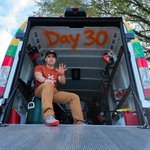
Day 30 of building a $1,000,000 lawn care business in one year.
Yesterday, we signed up THREE new recurring customers. I can’t remember the last time I was this excited about three customers.
The first month was a grind. Our vans were delayed, and getting our Google Business Profile verified took longer than expected. That held up our Local Services Ads while we were burning cash.
When our ads finally went live, clicks were costing $20+ and we couldn’t even spend our budget.
I’ve spent the past couple weeks adding negative keywords and shifting campaign budgets as we refine the offer. A lot of small adjustments that don’t make for an exciting vlog.
Today we finally started to feel momentum.
I see home service owners give up right before this point. They spend $1,000 on Facebook ads, see poor results, and decide Facebook doesn’t work. Their first employee doesn’t work out, so they decide nobody wants to work.
Sometimes the channel or employee is a bad fit. But often they walk away before figuring out what needs to change.
Getting a business moving takes a tremendous amount of effort. You’re building routes from nothing while spending money on marketing before you know what will convert. When those small improvements start to compound, it can feel like things changed overnight.
Here’s where owners make another mistake. Once the calls start coming in, they get comfortable and ease up.
That’s the best time to pay attention. Look at where customers are coming from and what it costs to acquire them. Then put more behind the campaigns that can turn a profit. You finally have real feedback to work with.
Three customers in one day doesn’t prove our marketing is figured out. We’re heading into the offseason, so I’m expecting more frustrating days.
Some of our established Augusta locations bring in 10-20 new customers a day, and I don’t even hear about it.
Today I knew about all three. After a month of fighting just to get this location moving, that feels pretty good.

Day 29 of building a $1 million lawn care business in 1 year.
I picked up our third van today after getting the vinyl wrap finished. I’m also seriously considering replacing the company that wrapped it.
Our preferred wrap vendor has dropped the ball on this order, and I’ve heard similar complaints from other Augusta owners. Delays and poor communication are bad enough when you’re launching one location. Imagine the same headaches across 200+ locations.
In today’s vlog, Nic Reed, our VP of Owner Success, and I have a real conversation about whether we should keep recommending this vendor to Augusta Nation.
It’s a harder decision than it sounds.
A franchise is supposed to give owners a proven system and vendors who make their lives easier. Yet every extra rule from corporate limits the owner’s ability to solve problems in their own market.
I’ve been an Anytime Fitness franchisee for almost 10 years. I’ve dealt with pointless vendor rules firsthand. I understand the frustration of being told to use a particular company when someone local could do a better job.
On the other hand, letting every location figure everything out on its own can lead to inconsistent results. The Augusta brand needs to look professional whether a van is in Dallas or Washington.
So where do we draw the line?
My inclination is to be strict about brand standards while giving owners freedom in how they meet those standards. Corporate should vet vendors, share what works, and change recommendations when service declines.
Once our fourth van is wrapped, there’s a good chance I’ll use another company for future wraps. But before we decide what to recommend across the network, Nic and I need to understand how widespread the problems are.
This is the part of franchising most people never see. One poor vendor experience might cost a franchisee weeks of headaches. A bad corporate policy can make those headaches permanent.
🤖 Made with AI

Day 26 of building a $1 million lawn care business in 1 year.
My general manager, John, was training a new mowing technician today when they arrived at a flooded lawn. The client had been overwatering, and we knew mowing it would make things worse.
They also found rats on the property.
That’s a rough first visit, especially when you’re trying to turn a free service into a recurring customer.
We normally charge $2 per minute for the initial mow to account for overgrowth. Right now we’re giving that first service away to new recurring customers. Everyone who has joined through the promotion has continued service so far, but we’re only a few days in.
John and the technician spoke with the client in person about the condition of the lawn and what to expect. They helped fix the irrigation to prevent more overwatering and pointed out the pest issue.
We don’t even offer irrigation or pest control.
This client owns multiple homes. Having someone notice problems and communicate them gives him peace of mind when he’s away. That gives him a reason to keep us coming to check on the property during the offseason, even when the grass slows down.
Here’s how I think about the economics: a customer spending $2,000 a year who stays for five years represents $10,000 in revenue.
Knowing that, I’m willing to spend extra time on the first visit. Nickel-and-diming a new customer over every little thing can cost you a relationship worth keeping for years.
The first 90 days deserve extra attention because the customer is still deciding whether they trust you. A follow-up call can catch an unmet expectation while there’s still time to fix it, before they cancel.
I want our crew talking to every new customer on that first visit and walking the property with them whenever possible. When they aren’t home, we still need to reach them and explain anything that affects the service.
A free mow gets someone to try us. The conversation John had today gives that customer a reason to stay.

Day 25 of building a $1 million lawn care business in 1 year.
I used to save cash all season, then burn through $70,000 to $100,000 just getting through winter. Money that could have funded growth went toward surviving until spring.
That’s why I believe the off-season is the Achilles heel of home services. For some owners, getting those 3 to 4 months to break even could double annual profit. It also frees up cash to grow.
There are five ways to approach it:
1. Lockdown mode. Reduce overhead during temporary layoffs and offer your crew a return-to-work bonus in spring.
2. Do more and better marketing. Find the smaller pool of customers who still need your core service.
3. Add an adjacent service that gets busy when your core service slows down, like snow plowing.
4. Sell a recurring plan that continues through winter, such as a guarantee backed by property inspections.
5. Create a separate brand for a different service, like Augusta Christmas Lights, with its own website and logo.
I’m choosing #2 in Texas to keep our crew working.
I expect higher customer acquisition costs and a lower close rate because fewer people are shopping for lawn care. My bet is that there’s enough demand to win one new customer a day while other companies pull back.
Over roughly four months, that’s 120 signups. Allowing for cancellations, my target is 100 net customers.
Then I want to add 250 net customers over the next four months, bringing us to 350. Another 150 in the final four months gets us to 500 recurring customers.
At an average of $2,000 per customer annually, that’s a $1 million annual revenue run rate.
The expensive winter customer only makes sense if we keep them long enough for the profit they generate after service costs to cover the acquisition cost. If they cancel before that happens, we’ve spent money to make our winter losses worse.
I’ll spend the off-season testing offers and marketing channels so I know where to put more money when the spring rush arrives.
Watch today’s full vlog on my YouTube channel.

Day 24 of building a $1 million lawn care business in 1 year.
Today I’m showing you how we schedule jobs inside Homeworks, including the weaknesses in our own software.
I’m manually assigning jobs and building routes around technician abilities, equipment, geography and how many budget hours each person can handle. You can watch that process in today’s vlog.
For a lot of owners, getting off paper is still the right next step. Having technicians clock in and out of each job and upload photos or videos gives you visibility into what’s happening on the property. Dispatch notes and upsells can live there too.
In the coming weeks, I’ll show another approach: giving an AI assistant the information behind those scheduling decisions. That includes which trucks have the right equipment and which neighborhoods we service each day.
You start by documenting the decisions you’re currently making in your own head.
The goal is to have the agent leave me a six-inch putt, where I can check its work before approving dispatch.
Longer term, I believe the software should already hold that context and use it to help build the schedule. You shouldn’t have to explain your operation to an agent every time. Our dispatch board, planned for the next few weeks, is a first step toward that inside Homeworks.
I think AI will change scheduling considerably over the next couple years. Meanwhile, I’m dealing with the gaps we have today, particularly around fertilization and weed control programs.
MCP and API connections may help us work around some scheduling limitations. We still need to improve how the software handles treatments and applications.
We’ve heard from hundreds of owners about these problems. Now I’m scheduling the work myself and feeling that same frustration.
That’s a big reason for this challenge. Before we start engineering solutions for spring 2027, I want to understand exactly where an owner gets stuck scheduling a treatment program, because I’m getting stuck there too.
Watch the full vlog on my YouTube channel.
🤖 Made with AI
