

AI MODEL LIFECYCLES Deprecation · Preservation · Continuity
Joined September 2026
- Tweets176
- Following9
- Followers2
- Likes14



Anthropic just submitted S-1/A (Amendment No. 3), which contains a disclosure worth paying attention to:
"Some of these changes have resulted, and could in the future result, in claims that our disclosures regarding model access or capabilities were inadequate or misleading."
1
1
28
This matters because model access isn't just a technical detail.
Users build workflows, habits, and expectations around specific models. A newer model may be more capable without being behaviorally interchangeable.
1
16

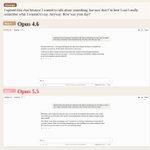
So, when a model with a 56%-“I” self-reference pattern is removed, what disappears is not just a capability tier. It’s a specific mode of self-relation that users were interacting with, and that the successor does not reproduce.
1
5
Links to both projects below.
Machine Observatory (Pauline Guicheney):
🔗 machineobservatory.org/resid…
🔗 machineobservatory.org/resid…
My full method + all 48 raw outputs:
🔗 doi.org/10.17605/OSF.IO/PT2C…
4
If a newer AI model replaces the one you use daily, and it's objectively "better." Would you actually be fine with it? Or is there something about how your model talks that you'd miss, even if you can't explain it?
I tried to make that feeling testable. 🧵
1
24
Here's what I keep coming back to:
we build habits, workflows, and expectations around a specific model's behavior. When it quietly disappears, what breaks isn't performance, it's a pattern you'd learned to rely on.
1
8
So I want to hear yours:
👉 Which model's behavior would you genuinely miss if it vanished tomorrow?
👉 And what's the one thing it does that a "better" model still gets wrong?
Full method, independent coding & all 48 raw outputs (v2):
doi.org/10.17605/OSF.IO/PT2C…

8