

Privacy Professional. Figuring out what #privacy means in the modern world.
Toronto
Joined September 2010
- Tweets6.4K
- Following965
- Followers915
- Likes8.7K






Jen Sellars retweeted

First blood. #WANTITALL
FINAL: Blue Jays 11, Dodgers 4 nitter.cf/BlueJays/status/198192…

Jen Sellars retweeted

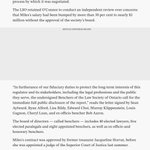
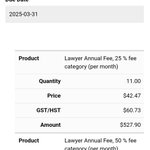
The Law Society of Ontario should release the O'Connor report on the CEO pay scandal. Lawyers deserve answers about how their regulator is handling executive accountability.
hubs.la/Q03cjNmh0

Jen Sellars retweeted

🚨 Here's an uncomfortable post about children's privacy that every parent should read:
If you have kids (or take care of kids), it is a bad idea to document their lives on social media. This behavior is called sharenting, and it can have negative consequences for the child.
Most adults don't realize they are sharing their child's pictures online to get the dopamine hit that comes with likes, comments & shares. There is no positive outcome for the child to be seen by the parent's online connections (or strangers).
There is also the problem of the lack of agreement from the child. Some children are too small to understand what is going on. Older children can understand and agree/disagree, but they are frequently not consulted by the parent about taking pictures and posting them on social media.
It is possible that a few years from now, the child will be very unhappy to discover that so many private moments were being shared by the parent on social media.
We, the parents, are from a different generation, and what we find acceptable & cute, they might see as wrong & inexcusable. Whatever is uploaded online, even only “for friends,” has the potential to circulate forever. It takes only a screenshot or re-upload.
There are also serious privacy and security issues involved in sharing anything about a child or teenager online, including identity fraud, exposing the child to predators, and cyberbullying.
Depending on the age of the child, there could emerge mental health and trust issues with a parent or caretaker who cannot respect the child’s boundaries and personal wishes.
➡ Alternatives to sharenting:
➵ If you want to connect with relatives and friends, why not send the picture or video privately?
➵ If you want to talk about parenthood online, why not do so without exposing the child?
➡ Best solutions:
➵ Why not enjoy being with the child without posting anything? They will love it.
➵ The world will remain the same if you do not post your children's pictures online. If you really need to post something, post a selfie of yourself.

Jen Sellars retweeted

It makes me furious that @fordnation can publish an interactive map to find beer after just one weekend but he won’t do the same thing to help any of the 2.3 million Ontarians who can’t find a family doctor.
#onpoli #onhealth

Make this summer an Ontario-made summer!
Our new interactive map shows thousands of convenient options where you can still buy beer, wine, spirits and other drinks across the province. Check out a local brewery or winery for some fantastic Ontario-made products near you and check back for more options at convenience stores, grocery store and big-box stores starting later this summer!
ontario.ca/page/where-buy-al…
Jen Sellars retweeted

🚨 In case you missed it: Last week, we have filed 11 complaints against Meta's AI plans!
Read Ars Technica's reporting here:
arstechnica.com/tech-policy/…

Jen Sellars retweeted
🚨 BREAKING: The EDPB has just published its ChatGPT Taskforce Report, and there is a big 🐘 ELEPHANT IN THE ROOM 🐘. Read this:
➡ On web scraping and "collection of training data, pre-processing of the data and training," the report recognizes that OpenAI relies on legitimate interest to collect and process personal data to train ChatGPT (OpenAI states that in a hidden page in its Help Center, as I've discussed previously). On that, the report says:
1. "It has to be recalled that the legal assessment of Article 6(1)(f) GDPR should be based on the following criteria: i) existence of a legitimate interest, ii) necessity of processing, as the personal data should be adequate, relevant and limited to what is necessary in relation to the purposes for which they are processed and iii) balancing of interests (...)"
and also
2. "As already stated by the former Article 29 Working Party, adequate safeguards play a special role in reducing undue impact on data subjects and can therefore change the balancing test in favor of the controller. While the assessment of the lawfulness is still subject to pending investigations, such safeguards could inter alia be technical measures, defining precise collection criteria and ensuring that certain data categories are not collected or that certain sources (such as public social media profiles) are excluded from data collection. Furthermore, measures should be in place to delete or anonymise personal data that has been collected via web scraping before the training stage."
➡ What they are basically saying is that scraping to train ChatGPT under legitimate interest might be possible if technical measures are used, such as the ones described above.
🚨 Problems:
➡ If they are relying on legitimate interest, transparency obligations must be respected.
➵ Article 14.5 (b) of the GDPR says that in cases where it's not possible to notify data subjects of the information being processed (such as in the context of scraping), "the controller shall take appropriate measures to protect the data subject’s rights and freedoms and legitimate interests, including making the information publicly available."
- ChatGPT's data is not publicly available.
- Unlike a search engine, the data subject cannot exercise simple data subject rights, for example, the right to be forgotten.
➡ They are not anonymizing personal data, as the system still outputs information about people.
➡ They are closing various licensing deals with websites such as Reddit and other platforms that contain personal data. Obviously, they are not avoiding personal data and don't plan to do so.
🚨 Legitimate interest has been totally distorted here. Either the EDPB says that legitimate interest works differently for OpenAI and other AI companies relying on scraping to train AI (and explain why), or they require them to comply with legitimate interest according to the GDPR.
➡ Link to read the report below.
➡To receive my weekly analyses on AI policy & regulation, subscribe to my newsletter (link below).

Jen Sellars retweeted

This decision is going to be significant for all lawyers who work in cyber incident response and breach coaching. The IPC's decision that forensic reports are NOT privileged was upheld as correct by the ON Divisional Court. LifeLabs LP v. ON IPC canlii.ca/t/k4bqw
Jen Sellars retweeted
🚨BREAKING: The European Parliament has just APPROVED the AI Act. What everyone should know:
➵ The AI Act follows a risk-based approach. Some AI systems are banned, such as those involving:
- Cognitive behavioral manipulation of people or specific vulnerable groups;
- Social scoring: classifying people based on behavior, socioeconomic status, or personal characteristics;
- Biometric identification and categorization of people;
- Real-time and remote biometric identification systems, such as facial recognition.
➵ Some AI systems fall in the "high-risk" category, such as those involving:
- Critical infrastructures (e.g. transport) that could put the life and health of citizens at risk;
- Educational or vocational training that may determine the access to education and professional course of someone’s life (e.g. scoring of exams);
- Safety components of products (e.g. AI application in robot-assisted surgery);
- Employment, management of workers, and access to self-employment (e.g. CV-sorting software for recruitment procedures);
- Essential private and public services (e.g. credit scoring denying citizens opportunity to obtain a loan);
law enforcement that may interfere with people’s fundamental rights (e.g. evaluation of the reliability of evidence);
- Migration, asylum, and border control management (e.g. automated examination of visa applications);
- Administration of justice and democratic processes (e.g. AI solutions to search for court rulings).
➵ High-risk AI systems will be assessed before being put on the market and also throughout their lifecycle. People will have the right to file complaints about AI systems to designated national authorities.
➵ Generative AI, like ChatGPT, will not be classified as high-risk but will have to comply with transparency requirements and EU copyright law. Some of the obligations are:
- Disclosing that the content was generated by AI;
- Designing the model to prevent it from generating illegal content;
- Publishing summaries of copyrighted data used for training.
➵ The AI Act is expected to officially become law by May or June, and its provisions will start taking effect in stages:
- 6 months later: countries will be required to ban prohibited AI systems;
- 1 year later: rules for general-purpose AI systems will start applying;
- 2 years later: the whole AI Act will be enforceable.
➵ Fines for non-compliance can be up to 35 million Euros or 7% of worldwide annual turnover.
➵ If you want to learn more about the AI Act, including challenges, opportunities, and practical insights, join my live session with @BertuzLuca, @JcMalgieri & @RistoUuk on April 4th (register using the link below).

Jen Sellars retweeted

BORN Ontario was impacted by a cybersecurity breach earlier this year. BORN is Ontario’s prescribed birth and child health registry and collects information from a network of Ontario health care providers who provide fertility, pregnancy, newborn and child health care under the authority provided by PHIPA, Ontario’s Personal Health Information and Protection Act. Your information may have been impacted.
Find out more. bornincident.ca
Jen Sellars retweeted

BORN Ontario child registry data breach affects 3.4 million people #Security #Healthcare bleepingcomputer.com/news/se…
Jen Sellars retweeted

When I found out I would be one of just two journalists traveling with President Biden to Ukraine, my first question for the White House was how I would be able to pump.
My essay about going to Kyiv fresh off maternity leave: wsj.com/articles/biden-ukrai…

Jen Sellars retweeted

ℹ️🔴 The CNIL fined VOODOO 3 million euros for using an essentially technical identifier for advertising without the user's consent 👉 cnil.fr/fr/mobile-games-cnil…

ALT Mobil Games VOODOO fined 3 million euros
Jen Sellars retweeted

Breaking: In decisions just out, Meta is not only on the hook for privacy fines totaling nearly €400 million, but it must also — quickly — find a new legal basis for its sprawling targeted advertising empire. 🧵
pro.politico.eu/news/158293

Jen Sellars retweeted

1. @FTC has taken action against Epic Games, creator of Fortnite, for violating children’s privacy & tricking millions of players into making unwanted purchases. Epic will pay a record-breaking $520 million in relief. wsj.com/articles/epic-games-…

Jen Sellars retweeted

GDPR scoop: EU privacy regulators decided this week that @Meta shouldn't be able to require users to accept behavioral ads as a condition of its platforms' terms of service. @EU_EDPB is ordering @DPCIreland to issue a decision to that effect wsj.com/articles/metas-targe…

Jen Sellars retweeted

• Cut spam with aliases
Next time you sign up for something, create an alias.
Ex. You join Spotify & your email is [email protected]
Don't use that.
Instead, use [email protected]
You'll still get the emails, but you can filter them to their own folder.

Jen Sellars retweeted

The EU-U.S. Data Privacy Framework: Background, Implementation, and Next Steps. See lnkd.in/ecYeM-y2.

Jen Sellars retweeted
ℹ️🔴 The CNIL issued a 600,000 euros fine on the company ACCOR, notably for having carried out commercial prospecting without the consent of the persons concerned and for not having respected the rights of customers and prospects 👉 cnil.fr/en/commercial-prospe…

