

NOAA Research provides the research foundation for understanding our planet through tech innovation & scientific advances. This is an official @NOAA account.
- Tweets19.8K
- Following242
- Followers108K
- Likes8.6K





ALT An anemone on a coral stalk

ALT Map showing recently collected seafloor mapping (bathymetry) data filling in data gaps in waters of the U.S. Exclusive Economic Zone (EEZ) surrounding the Commonwealth of the Northern Mariana Islands (CNMI) and around Guam.

ALT A yellow underwater robot, shaped like a stout cylinder, is held aloft by a black crane, high over the heads of observers and an American flag.

ALT Map of the Northern Hemisphere showing warmer than average areas in red shades and colder than average in blue shades

ALT This data visualization shows the area and shape of the ozone hole on September 18, 2026, the day of its annual maximum extent. Scientists define the ozone hole as the area in which ozone concentrations drop below the historical threshold of 220 Dobson units. Credit NASA Earth Observatory

ALT virtual birthday card for NOAA SeaGrant celebrating 60 years. Card features images of oysters, a fish, the seagrant logo, and a cohort of Knauss Fellows


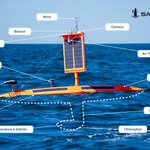
ALT diagram showing different instruments attached to bright orange saildrone. Credit: Saildrone

ALT map showing route of saildrone fleet circumnavigating antarctica. Credit: Saildrone

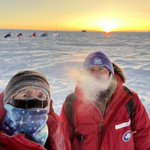
ALT two researchers snap a selfie in front of the sunrise at the south pole after months of darkness

ALT researcher walks along snow banks as a colorful sunrise fills the sky in the background

ALT the south pole observatory station dusted with snow with a pastel sunrise in the back


ALT The text says, “NOAA Climate Program Office. Extreme Heat Research Webinar Series. Place-Based Heat Research: Informing Solutions Across Rural, Coastal, and Marine Environments. Extreme heat affects all types of geographic settings – from urban to rural, inland to coastal, and land to sea. Place-based research can help decision-makers implement tailored solutions. This webinar will highlight NOAA-supported research on heat in rural, coastal, and marine environments with case studies showing how to strategize resilience solutions according to a location’s unique characteristics. October 20, 2026. 2:00-3:00 p.m. ET." A laptop also shows a series of three vertical images showing different landscapes. The left image shows a field with blue skies in rural Vermont. The middle image shows coastal Charleston with buildings along the water. The right image shows a coral garden with fish and other marine wildlife. A QR code links to a registration page for the event.


ALT An illustration showing ways to recognize and treat heat exhaustion and heat stroke. Symptoms of heat exhaustion include dizziness, thirst, heavy sweating, nausea, and weakness. If someone is experiencing heat exhaustion, move them to a cooler area, loosen clothing, sip cool water, and seek medical help if symptoms don't improve. Heat exhaustion can lead to heat stroke. Symptoms of heat stroke include confusion, dizziness, and becoming unconscious. If someone is experiencing heat stroke, call 911, move them to a cooler area, loosen their clothing and remove extra layers, and cool them with water or ice. Heat stroke can cause death or permanent disability if emergency treatment is not given. Stay cool, stay hydrated, and stay informed!"


ALT A pelican stands outside a glass office door, waiting to be let in.

ALT Close up of pelican with monofilament line wrapped around its foot.


ALT One of the 268 Wisconsin-built Nash automobiles that remain in Senator’s hull. Image courtesy of Hibbard Inshore.

ALT The Saab Sabertooth hybrid autonomous underwater vehicle/remotely operated vehicle on the back deck of Research Vessel Laurentian and ready for deployment to explore Senator. Image courtesy of Exploring Wisconsin Shipwreck Coast National Marine Sanctuary at Scale.


ALT Map of the global temperature percentiles for August 2026 with warmer areas in gradients of red and orange, cooler areas in gradients of blue and gray indicates that it tied with more than 10% of the record.