

Nature Portfolio is dedicated to serving the scientific community and the wider scientifically interested general public.
- Tweets8.8K
- Following374
- Followers3.3K
- Likes1.9K




ALT Fig. 1: Total WD for Africa in 2020.


ALT This is figure 1, which shows total water demand for Africa in 2020.

ALT Fig. 5: Main environmental and biotic characteristics of saline lakes and the management challenges (blue boxes) they pose.


ALT Fig. 1: Coproduction process involving young people and researchers.


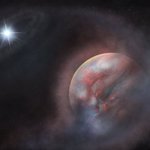
ALT Caption: The accretion of material from an evaporating second-generation giant planet accreting on a white dwarf star. Credit: Snehalata Sahu


ALT Fig. 1 Stellar-pattern tests for the two night paintings in R1. (a) The Big Dipper and the summer Milky Way, and (b) the winter Milky Way, for the two possible readings of Elsheimer’s The Flight into Egypt; in both the handle (η/ε UMa) runs nearly parallel to the Milky Way, unlike in the painting — a relation fixed by their celestial separation and independent of site or time. (c) The painting itself, with the Big Dipper region enlarged (inset). (d) Procrustes alignment of eight stars across Orion and Canis Major in Millet’s Starry Night (k = 8), between canvas (orange) and celestial (sky-blue) coordinates. See Table 1.


ALT Caption: An artistic reconstruction of the marine amphibian, Gerrothorax maritimus. It is suction-feeding on a coelacanth at the bottom of the ocean. Credit: CHEN Geng, Guizhou University


ALT Figure 4 Modified from References 18 and 19. (b) Bicarbonate ions (HCO3−) and carbonic acid (H2CO3) are absorbed percutaneously, and carbonic acid is changed into bicarbonate ions in vivo. Bicarbonate ions that enter endothelial cells phosphorylate endothelial nitric oxide synthase (eNOS). Phosphorylated eNOS produces nitric oxide (NO), which relaxes the smooth muscle in the outside of endothelial cells, resulting in dilation of the vessel. CO32− carbonic ion, eNOS endothelial nitric oxide synthase, H+ hydrogen ion, H2CO3 carbonic acid, HCO3− bicarbonate ion, NO nitric oxide, p-eNOS phosphorylated eNOS. Schematic diagram of the underlying mechanism by which bicarbonate ions enhance blood flow. (a) Changes in the relative amounts of dissolved inorganic carbon (%) by pH. The pH of the neutral bicarbonate ion water (NBIW) was equivalent to that of blood, i.e., 7.4 (vertical dotted line). Among the dissolved inorganic carbon ions, bicarbonate ions (HCO3−) were most abundant.


ALT Fig. 1: Estimated change in global mean temperature and local extreme heat by carbon majors.


ALT Fig. 1: Environmental context and overview of the transcriptomic profiles from Chrysiptera cyanea juvenile whole-body and adult liver samples across 18 coastal sites in Okinawa, Japan.

ALT Fig. 1: The estimated relationship between climate and conflict risk to date.


ALT Diagram showing a summary of the different injury types received for e-scooter, motorcycle, and pedal cycle riders, split out into adults and children. This is Fig 1C in the published manuscript. Credit: David Bodansky et al./Scientific Reports


ALT Fig. 1: Thwaites Glacier underwent rapid changes in the past few decades.


ALT Star patterns in Van Gogh’s paintings compared with the real sky. (a) The central cluster of stars in The Starry Night (1889), left, and the Hyades cluster in Taurus, center. At right, the five stars in the painting (orange) are overlaid on the real stars (blue) after matching for size, orientation and position; red dashed lines show the residual differences. (b) The stars in Café Terrace at Night (1888), left, and the stars around the Summer Triangle, center. The panel at right follows the same layout as in (a). Credit: Kim et al., Scientific Reports (2026), Figs. 2, 4 and S1 (CC BY-NC-ND 4.0)

ALT This is figure 4, which shows morphological correspondence between the central asterism of The Starry Night and the Hyades cluster.


ALT Tequinho geoglyph (Acre, Brazil) with roads Credit: Martti Pärssinen


ALT Caption: Deltares Delta flume Credit: Guus Schoonewille for Deltares

ALT This is figure 1, which shows the development of a large-scale salt marsh experiment.

ALT A tower of Portland cement cubes produced from silicate rocks. Credit: Brimstone Energy.
