
I work on scaling systems and platforms for the internet. Director of Digital Currency @medialab, BoD @blocks. PhD from @MIT_CSAIL, formerly @digg, @google.
Cambridge, MA // NYC
Joined July 2006
- Tweets6.1K
- Following2.4K
- Followers46.2K
- Likes8.3K




Neha Narula retweeted

ALERT: did you just get a threat notification from Apple?
Seek expert help.
Apple just sent new notifications about mercenary spyware.
Here are steps to take right now. 1/

At what point would it be worth it for @binance to ask @Ripple, @base, @NEARProtocol, or even @solana to coordinate a freeze/rollback of the attacker transactions?
seems pretty doable, especially for Ripple, which is $300M.

image from elliptic.co/insights/binance…

"better tools simply change the costs of my choices - i quite literally work on moving goal-posts if you will! when the fixed constraint are only time and energy, AI simply allows me to re-explore scope and make fewer (or different!!) tradeoffs or compromises"

it’s my nature to keep posts rather impersonal, so i have to work extra hard to tweet this sort of personal testimony below from time to time as i think the reminder in it around AI and the “value of human intelligence” is worth it
as of the end of Oct 2026, i have not (yet - you may insist) had the *slightest* moment of questioning the impact of AI on the meaning of any of my work/skills - or even feeling any unusual shift beyond having an amazing (and rather often infuriating) tool
believe it or not, but my ability to produce a completed artifact* (paper, model, open source software, lecture, …) and the effort, expertise, or time one takes to produce has actually barely reduced - despite comprehensive productivity benefits from AI
the reason is that i essentially NEVER choose to work for a pre-determined outcome or some field-wide well-specified problem; i only work on artifacts i aim to perfect according to *my* judgment and where my personalized ambition obviously has no set limit and isn’t somehow pre-loaded onto AI
better tools simply change the costs of my choices - i quite literally work on moving goal-posts if you will! when the fixed constraint are only time and energy, AI simply allows me to re-explore scope and make fewer (or different!!) tradeoffs or compromises, which feels almost no different!
i’m not saying every job or every endeavor - including very advanced and historically prized ones! - looks like this today, but i’m offering:
(1) at least one voice in this moment (of so many annoying loud FUD voices!) that it’s totally possible and i suspect extremely scalable and i predict will remain so for the foreseeable future!
(2) why “someone like me” is indeed choosing happily to be in academia and not elsewhere! (again lots of FUD out here!, but where else do you have the freedom to keep seeking to create value for deciding and solving ~arbitrary ambitious/useful problems, establish credit for it, and train superstars who do the same?)
my fear and worry in this moment is a lot less about Al or "the value of human intelligence" and much more about how concentration of power has a very reliable history of being very dangerous to large numbers of affected people! a VERY different problem imo
*i guess certain of those took way longer than i expected but do stay tuned for a half dozen things on the short horizon…
Neha Narula retweeted

I rarely post here these days but I wanted to share my reflections: people.csail.mit.edu/virgi/t…
Neha Narula retweeted

We’ve lost an icon. Margaret Hamilton, a computer science pioneer best known for her work at MIT leading development of the flight software for the Apollo missions to the moon, has died at 90. Read about her legacy via MIT News: news.mit.edu/2026/margaret-h…

ALT Margaret Hamilton is reclined inside a NASA spacecraft module, surrounded by control panels and switches.
the vending machine lives again!

- Static payment address with Lightning Address
- Credentials on the Pi inside are view only
- Infinite inbound liqudity, handled by LEXE
- Written in Rust so it's blazing fast ofc
Updated code + docs here: github.com/jharveyb/BitVend
Suggest goods to stock in the comments :)

Neha Narula retweeted

Its been 10 years, time for an update
This is way easier with Lightning and providers like @lexeapp . Opus and I coded the receive logic in maybe 90 mins - redoing the wiring took longer.
Thanks to @Arminsdev , @neha , and the @mitDCI team for keeping this alive 🙏
Demo:


Neha Narula retweeted

Live from 17:30 CET: Executive Board member @Isabel_Schnabel will join a panel at the @BankofEngland and @FMG_LSE’s “The Future of Money” conference in honour of Charles Goodhart, alongside @TobiasAdrian1, @Neha, @R2Rsquared and @HyunSongShin.
Register now bankofengland.co.uk/events/2…


I think there is another option which is "Exit the system".
In Arvind's examples, this might mean you consume or produce entertainment in another medium the way you want, or you stop trying to publish in peer reviewed journals and instead write really good substacks.

There are many problems in our world and most of them are systemic. A pattern I’ve observed is that people go through 4 stages in how they respond to the problems they notice, gradually shifting their approach as they gain more life or work experience. I think it’s worth sharing.
Stage 0 is not noticing the problem. Most people don’t notice most problems, and that’s okay. Our time and attention are limited. The key question is how we conceptualize the problems we do notice and what we do about them.
Stage 1 is viewing it as a matter of individual incompetence or bad actors. This is the most intuitive, initial reaction that we tend to have. In rare cases this perception is accurate, but most big problems in society are systemic.
Stage 2 is the recognition of the systemic nature. As Steve Jobs put it:
“When you're young, you look at television and think, There's a conspiracy. The networks have conspired to dumb us down. But when you get a little older, you realize that's not true. The networks are in business to give people exactly what they want. That's a far more depressing thought. Conspiracy is optimistic! You can shoot the bastards! We can have a revolution! But the networks are really in business to give people what they want.”
People who notice a problem tend to eventually graduate from Stage 1 to Stage 2, but stop there — with resigned acceptance and a feeling of powerlessness.
In contrast, stages 3 and 4 involve deciding to take some action despite recognizing how hard the problem is. Systemic does not mean immutable. Institutions are maintained by norms, incentives, and coordinated behavior that can sometimes be changed.
Stage 3 is trying to change the system directly through activism or reform. Many junior people in a field want to be reformers. They’re in the sweet spot — when they go from outsider to insider and have a little bit of power and leverage, but they haven’t yet adapted to the system and become vested in its preservation.
Media reform through collective action has happened, though nothing that successfully tackled the “networks are dumbing things down because that’s what audiences want” problem.
Trying to directly change any entrenched system requires dedication for a sustained period, and even then has only a low likelihood of success. Most people decide sooner or later that that path isn’t for them.
But that’s not the end of the road, because in many cases, change can happen incrementally.
Stage 4 is realizing that systemic doesn’t mean universal. Systems exert pressure toward an equilibrium, but there are niches where enterprising individuals or teams can buck the trend. They can benefit — financially or reputationally — from doing things differently. In other words, when systemic failure is severe enough, the unmet demand it generates can become an opportunity. A successful exception may remain an exception, but sometimes it attracts imitators by demonstrating the feasibility of an alternative path.
Coming back to television as our case study, one of the best examples of this is The Wire, a famously high-quality, cerebral and accurate show. It was not what mainstream TV economics ordinarily rewarded, but this niche was so underserved that there was an opportunity for the show to survive for many seasons on HBO. As audiences gradually shifted over time, demand for this kind of show increased in later decades, and DVDs and streaming made it much easier to cater to those audiences, The Wire became an important precedent and gained enormous cultural prestige.
To be clear, Stage 4 is not always better than Stage 3. Sometimes we really need to reform or even tear down the system. But more often, we can contribute to change through leading by example, without having to sacrifice our career to pursue reform — and in fact benefit from the leadership opportunity.
In my own small way, I’ve tried to put this into practice in my career. For example, early on I noticed that academic writing is often jargon-filled and unreadable. I assumed this was because there’s something wrong with the sort of people who become academics (Stage 1). Pretty soon I realized the incentives are messed up — scholars write to impress reviewers and advance their careers, more so than to inform the ultimate reader (Stage 2). Early in my career I made some feeble efforts toward changing peer review (Stage 3), but gave up pretty soon because of the obvious difficulties.
My breakthrough was realizing that I should simply write papers the way I wanted to (Stage 4). Even though this resulted in a peer review penalty, when I did publish papers (or even put preprints online) their influence was amplified because more people read them. Over the years I’ve heard from many junior scholars that reading my writing helped them realize that it’s possible to have a career writing plainly. This has been incredibly gratifying to hear, and is a small but personally meaningful change — much more than I would have ever been able to accomplish by tilting my lance at the windmill of peer review.

Neha Narula retweeted

I thought this was an incredibly insightful answer from @alighodsi on how he attacked Snowflake. I think @tobi and Shopify have a similar opportunity to take on Amazon in the agentic shopping era
TL;DR "Study your enemy, study your competition carefully, and then go after those weaknesses."
Brian Halligan: Ali, I want to switch topics on you. You had a rivalry, obviously, with Snowflake. It was an interesting rivalry over time, and my sense is you were pretty far behind, at least from a revenue standpoint. You've passed them. I just remember at HubSpot we were looking at the two and we picked Snowflake way back when.
What were the chess moves that worked relative to them? And I guess I have a thesis that that was a very sales-driven company — the CEO was a sales guy, he cold-called me, actually — and you folks were product-driven. Any thoughts on that, in advising founders and CEOs about that kind of thing?
Ali Ghodsi: Yeah, that was the consensus at the time, that the companies were like that. I thought that was unfair to us, because I thought with Ron and everybody — we had an amazing team. And then we had Andy come here and build up an amazing, crazy machine. It's like an army. So I thought that was unfair at the time when they were saying that.
But it is true that we were half the revenue and we were growing slower. So to accelerate the revenue so much that you can overtake someone that's got double your revenue and bypass them — we knew it was going to take several years. Back to: good strategies take multiple years, you can't do them overnight.
So: study your enemy carefully, understand their weaknesses, and apply your strengths to their weaknesses.
This was a great company. They had built an amazing product. It was a game-changing product that disrupted all the data warehouses of all the hyperscalers. The hyperscalers were getting destroyed by Snowflake, because it was such a great innovation, such a great product. So this is not like, hey, it's a PTC-like company. No, this is hardcore.
But they had a few weaknesses. One was that it was proprietary, because the folks came from Oracle. So it was a fully proprietary stack. And still today all the data gets stored inside their proprietary format. They've now added open source stuff, but that's just a small fraction of what they do. Most of the customers we bump into have this proprietary [format], and people didn't want to get locked in. So that was one weakness.
Second weakness they had was that they had no support for AI. Or they would say that they did, but we knew that that was pretty weak. So that was the second thing we wanted to push really, really hard on.
And those two combined with a third: it was pretty expensive. Now, it was expensive, to be fair, probably because it was a great product and they could extract a lot of margin out of it. Winners do that. They have a great product.
So we went exactly for those three. We said, hey, open lakehouse means you own your own data. It's completely open. Don't lock it up over there. You can do AI on it, because our roots are AI — we've been doing machine learning and AI since 2009, that's where we came from. So apply that strength. And by the way, at the time it wasn't clear that was going to work, because AI was not a big thing in 2019, 2020. But we knew that that's a weakness, so we keep pushing on that weakness.
And then cost — let's make sure that the TCO is a third. And still today, we typically win on TCO.
And then we just hammered that extremely aggressively in account after account. We had a very careful playbook. And the playbook wasn't just, let's go out and say that Snowflake sucks or anything like that. It was: identify the Achilles heel and press on those. Don't just go say, hey, rip out Snowflake. It was a coexist strategy. Go in there, look at the exact workloads that could be amenable to machine learning, pull those out, move the format to open source.
We had a very clear, concise playbook. And this kind of contradicts [the idea] that our sales would suck, or that they would be good at sales — because sales executed this play at Databricks. They went account by account and did that.
And then it took multiple years. We also had a category that exemplified this playbook. The category was lakehouse. So we had a three-year, four-year strategy to create this category of lakehouse — which, by the way, was controversial. People didn't believe in it. But eventually the category took off. Now everybody says they have a lakehouse. Even Snowflake will say that, and that they have open formats and so on.
So yeah, that's what it says: study your enemy, study your competition carefully, and then go after those weaknesses.
Neha Narula retweeted

The knife fight already took place; it ended a year ago, when I wrote the first entry in my Agentic commerce is a mirage series. Amazon began blocking agents last July; it's currently *suing* Perplexity over autonomous shopping with Comet.
Amazon won't capitulate; it doesn't have to. Alexa for Shopping (Rufus) generated $12BN in incremental revenue in 2025. Walmart's Sparky has generated similarly significant commercial traction for the company.
Agentic commerce is *already* a reality -- but it takes place on-site, not through independent agents. ChatGPT launched ads in February 2026 and shortly thereafter shuttered Instant Checkout. The affiliate model is economically suboptimal relative to advertising; ChatGPT has already demonstrated that.
Advertising is the dominant business model for the consumer internet, and independent agents will monetize principally with advertising.


I like how he describes what it feels like to do research now.
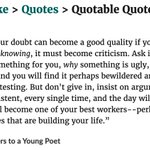
"I signed up to be a mountain climber. But while I was passing the test they installed escalators on all the mountains in the world."

4 months ago I excitedly accepted a tenure-track job in particle physics. Something that had been my goal since I started my PhD 10 years ago
Now I have decided to leave physics immediately to work on AI safety
Read my blog to hear why!
ozamram.substack.com/p/physi…
Neha Narula retweeted

In August the Core Lightning maintainers told node operators to upgrade or run --offline. There was nothing to upgrade to for another two days, and when v26.06.7 arrived it was binaries only, with the source held back a further two weeks so attackers could not reverse-engineer the fixes. We (me + AI models) used that window.
Ten AI models, one public source tree, the same five sentences of prompt, under $100 between them. Every report was hashed into the Bitcoin blockchain with OpenTimestamps as it was finished, nine days before upstream published the source, so none of it can be backdated. Reading source, the models found four of the nine defects the release fixed.
Running "strings" on the public download found five more, and one of those is theft that pays for itself: as a forwarding node you refund the sender upstream, and the peer then claims the outgoing HTLC on-chain with the preimage it held the whole time. You pay twice and collect nothing. It was findable because the patched binary carries upstream's own new log line, FUNDS LOSS, which names the function, and the vulnerable code sat in the public v26.06.6 tree throughout. Three models at three price points landed on it within minutes of the download. The embargo hides the patch, but not the mechanism.
Write-up: juraj.bednar.io/en/blog-en/2…
Full case-study, reports and timestamps: github.com/jooray/CLN-incide…

Neha Narula retweeted

⚛️ Bitcoin does not have a quantum computer problem today. It has a migration problem, and migrations could take years to get right.
SHRINCS is the first Bitcoin-specific post-quantum proposal I have seen that makes a serious end-to-end trade-off, and it deserves to be read carefully rather than cheered or dismissed. Their work is the proposal.
I wrote an analysis of the challenges that come with it, the ones that only become visible when you look past the signature scheme and into the wallets that have to run it.
The migration really has three questions:
- which scheme Bitcoin should support
- what that scheme does to the protocol and the wallet ecosystem
- what happens to coins that have never been moved by their owner.
Almost all of the public discussion is still on the first one, which is probably the easiest of the three.
SHRINCS is conservative where it matters. It is hash-based, so it leans on the SHA-256 that Bitcoin already depends on instead of stacking a lattice assumption on top. A single 48-byte public key commits to both a compact stateful path (Flexible XMSS and WOTS+C) and a stateless SLH-DSA fallback.
Verification is the pleasant surprise. It is mostly SHA-256, and the draft reports a worst-case cost per signature byte below BIP340 Schnorr.
The stateful path uses one-time keys, and each one must sign exactly once. The counter must never move backwards, it must be committed to persistent storage before the signature leaves the device, and it must never be restored from a backup. Sign two different messages from the same slot and an observer can steal your fund.
SHRINCS handles this better than a purely stateful scheme. If the state is lost or merely uncertain, the seed still derives the stateless key, so you lose efficiency rather than funds. The cost is that wallet state stops being application data and becomes cryptographic state whose rollback can take user funds: hundreds of counters for hundreds of UTXOs, across several devices and several software wallets, on hardware where hash-based keygen already takes minutes.
There are also capabilities we do not get back. Non-hardened BIP32 derivation, and with it watch-only wallets as we build them today. Compact Schnorr-style threshold signing.
None of this makes SHRINCS a bad proposal, and the spec is honest about its own status: non-standard SLH-DSA parameters, constructions outside the NIST standard, security proof pending. It does mean the cost of this migration cannot be only measured in signature bytes. The stateful aspect of SHRINCS would be very challenging in terms of security and UX.
The uncomfortable part is that picking the signature scheme may be the easiest question here.
ledger.com/blog-shrincs-bitc…
