
building 🛠️ | ex-Shopify, Haven (acquired) | 🇨🇦
Toronto, Ontario
Joined July 2017
- Tweets2.4K
- Following1K
- Followers2.4K
- Likes20.9K




Nelson Lee retweeted

Introducing Poseidon: a state of the art cybersecurity specific model, designed for vulnerability research, finding, prove, and fix vulnerabilities in real software.
Poseidon preforms:
- 17.6% higher than GPT-6 Astra
- 2.9% higher than Claude Fable 5.2
(CWE-Bench)
Most apps put release notes in the App Store where nobody reads them.
So I added a What's New directly in Maple Budget. Every release shows up for everyone, even people on an older version (and you can upvote, downvote or comment on each one)!


Here's what we shipped at @TrySolarium in October:
- Solarium in Claude and ChatGPT. Connect once and choose look-only or make-changes
- Solarium is a ChatGPT app, with 100+ tools for your books
- Start your books from a chat. AI sets the business up for you
- Send invoices with a PDF and a link, reminders and payments matched from the bank
- Text or email your receipts. Free now takes 200 a year
- Free and $10 plans, plus Done For You at $100
- Free Stripe import. Your AI books every charge, fee and payout
- Your QuickBooks history: payroll, opening balances, transfers, bill payments and vendor credits
- Fix a transaction once and QuickBooks updates too
- Recategorize in bulk
- Management View keeps owner and personal entries out of the P&L
- Solarium in the US, with sales tax by state and IRS form lines
- Sales tax periods follow your fiscal year
- API keys, look-only or make-changes, at api.trysolarium.com
- Docs your AI can read, with Open in Claude and ChatGPT
- Smarter receipt reading on the 5.5 models: it checks the email itself and spots US dollars
- Vendor logos everywhere
- Tell the Solarium team what's missing, straight from your AI
- A new homepage: Bookkeeping Your AI Can Run
And a lot of small improvements: searchable dropdowns, reports that remember your period, one confirmation per emailed receipt and QuickBooks imports that show their progress.
Plus 13 more. All 19 here: trysolarium.com/changelog


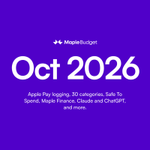
Here's what we shipped at @MapleBudget in October:
- Log spending automatically with Apple Pay
- Maple in Claude and ChatGPT
- 30 categories, including Donations, Wellness and Taxes
- A 3-day logging goal with an evening reminder
- Safe To Spend
- Import a bank statement into Maple right from your phone
- Recurring shared expenses
- Maple Finance: portfolio, total return and lots
- Canadian tax tools for TFSA, RRSP and FHSA room
- Liquid Glass on iOS 26
And a lot of small improvements (payment method filters, euro support, in-app feedback, a faster server)


8
29
1,398


Nelson Lee retweeted

The truck drivers thought they were heading to a routine production meeting.
They had no idea what was walking through that door.
Scott Swift — Taylor's father — stepped into the room on a Monday morning in early August 2023. He didn't make a speech. He didn't build anticipation. He just moved quietly through the room, handing an envelope to each of the nearly fifty exhausted drivers who had spent the last six months living in truck cabs, hauling the biggest concert tour in history from city to city.
When they finally opened them, the room went silent.
One driver thought his check said a thousand dollars. Another read it as ten thousand. A third stared at his for a long moment and said out loud what everyone else was thinking.
*"This has to be a joke."*
It wasn't.
One hundred thousand dollars. Each driver.
The industry standard bonus from the biggest stars in music runs five to ten thousand dollars. Taylor had given them more than ten times that. These were people who hadn't seen their families in twenty-four weeks. People who lived out of truck cabs. People who, until that morning, would never have owned homes.
Until that envelope.
But that moment — the shock, the tears, the disbelief — was just the beginning of the story.
Across the entire Eras Tour, Taylor Swift quietly distributed one hundred and ninety-seven million dollars in bonuses.
The dancers. The band. The riggers. The lighting technicians. The sound crew. The caterers. Every single person who built the show from the ground up — they each received bonuses, handwritten notes, and wax-sealed personal letters. When the dancers opened theirs on camera for her documentary, some of them couldn't speak. Some of them wept. Some of them said they couldn't believe she was real.
Her explanation for all of it was four words.
*"They work hard. They deserve it."*
But the crew wasn't the only quiet revolution happening on that tour.
In every city the Eras Tour touched down, a call went to the local food bank before the show arrived. No press conference. No announcement. No photographer waiting. Just a donation — one that fed seventy-five thousand meals here, hundreds of thousands of pounds of fresh produce there. Across the full run of the tour the total reached millions of meals delivered in complete silence.
She never posted about a single one.
And none of this was new.
In March 2020, when the pandemic locked down the world, Taylor was scrolling through social media watching her fans break apart in real time. A photographer about to lose everything. Someone staring down eviction. She sent direct messages with rent money attached — three thousand dollars here, thirteen thousand there. Enough to cover months of bills. She had read the names. She had noticed. She had helped.
She never mentioned it publicly.
Then in October 2025, a mother filmed her two-year-old daughter Lilah — fighting a cancer so rare that only fifty-eight families in America had ever encountered it — dancing in her living room to a Taylor Swift song. Lilah called Taylor her friend.
A few days later the family's GoFundMe received a hundred-thousand-dollar donation.
The note read: *"Sending the biggest hug to my friend, Lilah! Love, Taylor."*
Music industry veterans who have worked with the wealthiest names in the business for decades said the same thing when they saw how the Eras Tour bonuses were handled. They had seen the standard playbook.
They had watched billionaires guard their fortunes jealously while their crews scraped by. They had seen generosity used as a branding tool.
What they saw with Taylor was different.
The biggest concert tour in history grossed two billion dollars. The woman behind it became a billionaire from her own songwriting — not inheritance, not investment, not corporate machinery. Her own words, her own music, her own work.
And then she sat down and signed her name onto hundreds of envelopes by hand.
And sent enough money back to the people who built her dream that they stood in a production meeting on a Monday morning in August and wept holding a check they thought must be a mistake.
That isn't strategy.
That isn't a publicity stunt carefully engineered for a news cycle.
That's what happens when someone, somewhere along the way, never forgot what actually matters.

Nelson Lee retweeted

I really enjoyed my brief placement at Microsoft but I think my new job at the FAA is a much better fit for me...

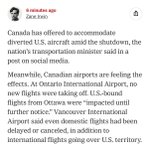
Uhhhh @nytimes, Ontario International Airport is in… Ontario, California.

They grow so fast. Wouldn’t give up our family for the world ❤️


just adding my voice here. I think many founders assume the idea, often reinforced very young founders, VCs, and the narratives, that building a company should be their entire life, and everything else should pretty much be ignored.
But I don't think you should ignore your family and children.
No matter how successful your company becomes, your children will only be this small once. You don't get that time back. The time you spend with them, and the relationship you build, will last a lifetime. Likely much longer than the success of your startup.
The irony of this situation is that founders generally have more control than most people over how they work and how they design their companies. Their schedules, what they work on and the help they can have.
And if everything is constantly on fire, and only the founder can resolve it, maybe the company needs to be designed differently
2
14
659


I want @Wealthsimple’s Automated Investing to let me enter any ETF ticker and automatically replicate its underlying holdings so I can save on the MER.
Say I want $URA. I should be able to enter the ticker and have Wealthsimple buy and rebalance the underlying stocks for me.
Why should I pay a 0.69% MER when I could just own the underlying equities directly?
@bretthuneycutt @lejeunesimon easy way to move any ETF bought on WS into a WS managed ETF.
I search “URA” -> button with ‘try Wealthsimple Automated Investing and save 0.5% MER a year’. Done.
Nelson Lee retweeted

Today we designated the Real-Time Rail (RTR), operated by Payments Canada, as a prominent payment system under the Payment Clearing and Settlement Act.
Learn more: bit.ly/4AliKhR
#cdnecon #PaymentsModernization

Nelson Lee retweeted

Perhaps the smartest decision made by the government of Canada in its history. Fantastic hire and congratulations to KKT

Nelson Lee retweeted

turns out the biggest crime you can commit on the internet is to try and tell Reddit about an app you built
Maple Budget is Made for iPhone Duo!
But if you have a Duo, you probably don’t need to manage your finances OR DO YOU 🤨🤔


3
13
1,354
Nelson Lee retweeted

My isometric map of Toronto now covers the whole City: all 630 km², from Etobicoke to Scarborough and from the lake up to Steeles. And all of it is redrawn in a new, crisper style. 🧵👇
I love Wealthsimple Presents and it is miles ahead of any other Canadian bank, but can we stop announcing things that’ll come out in 3-6 months?
I know you guys had hundreds of features and additions released in the last 6 months, highlight those!


We made a new app. It’s faster, smoother, and way more delightful. Coming early next year to everyone 👀
*Actual features when made available may differ than shown.
7
66
4,289
We got our own QSBS now

Budget 2026 is a budget for builders.
Build Canada welcomes Budget 2026 as the first federal budget in over a decade to recognize and reward entrepreneurship as a key driver of economic growth.
The government has adopted the core elements of tax reforms widely recommended by builders and entrepreneurs across Canada, while also beginning to take measures to improve competitiveness and government efficiency.
This budget changes the math for founders and early employees. A Canadian who sells a company and starts the next one now has more reason to do it here. That is how a country creates a strong innovation ecosystem and gets a generation of repeat builders to stay and build here.
What we welcome:
1. Measures to incentivize and reward entrepreneurship, including:
> The Canada Growth Incentive, a new tax exemption on up to $15 million in capital gains earned from successful eligible investments for Canadian builders.
> The enhancement of the small business rollover to allow increased deferral of taxes on capital gains when proceeds are reinvested in another Canadian small business.
> The expansion of the SR&ED tax incentive program to include certain commercialisation expenses.
2. Measures to increase competition, including:
> The Cabinet Directive on Regulatory Competitiveness and Red Tape Reduction.
> Efforts to make it easier for consumers to switch providers by expanding data portability rights to additional sectors, including telecommunications and air transportation.
> Strengthening Competition Bureau investigations.
3. Measures to improve government efficiency, including:
> The establishment of Digital Transformation Canada to lead the adoption of AI across the public service.
> The establishment of a Fellowship Program through Build Canada Exchange to recruit outside expertise to support priority projects.
> The Cabinet Directive on Regulatory Competitiveness and Red Tape Reduction to put Canada’s long-term competitiveness at the centre of how federal regulation is developed.
> Efforts to streamline the delivery of federal financing.
What still needs work:
> Public debt. The budget projects a deficit of $65.3 billion for FY 2026-27 and debt-to-GDP of 39.9% rising to 40.1% by 2030-31. Public debt charges are $60.2 billion for FY 2026-27 and will reach $85.5 billion by 2030-31 — more than Ottawa will spend on the Canada Health Transfer and the fastest growing budget line item.
While some may argue there is fiscal room to absorb this, long term interest rates are unpredictable and our fiscal position would be more resilient with a reduced deficit.
> Old Age Security reform. OAS costs are pojected at $89.4 billion this year and still leaves 400,000 seniors in poverty. Moving the recovery threshold to $100,000 of household income would save $15-16 billion a year and end seniors' poverty with $2 billion of it. The budget leaves this untouched.
> More aggressive tax reform. A comprehensive review of the tax system is needed to further identify ways to simplify our tax code for individuals and businesses.

3
20
731