

I check viral AI claims against primary sources.
Joined September 2026
- Tweets318
- Following135
- Followers485
- Likes24





Pinned Tweet
“Starting iOS 27.3, Apple will be scanning public links… That's all your photos, your files, your backups.” Posts about it: over 1M views. I build iOS apps for a living, so I opened Files and Settings on my iPhone.
The claim is half right. Files → Shared: no shared files. iCloud → Advanced Data Protection: Off. Software Update offers 27.2, so 27.3 isn't on my phone yet.
One thing I did find. Share any file to a chat app and iOS offers one button, "Allow Anyone with the Link," for "instant access." That button is exactly what the new rule covers.
Apple's support page, published Nov 3:
- items shared with Anyone with the Link "will be checked by Apple for harmful content," starting in 27.3
- the item "is no longer end-to-end encrypted, even if" Advanced Data Protection is on
- if content is flagged, Apple can disable your Apple Account and block "the ability to create a new Apple Account with the associated email address or phone number"
Apple's page covers only what you share with Anyone with the Link, not your whole library or backups, and it says nothing about AI review. The account penalty is real, though, and it reaches far beyond that one file.
If a file is meant for one person, tap Continue instead, or send a copy.
I'm going through one iPhone setting like this a week. Have you ever tapped that button?
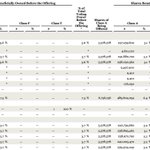
Anthropic's 7 co-founders did sell nearly $2 billion of stock at the IPO. It was about 1.4% of their shares. Each still holds 237 to 241 million shares, roughly $20 billion each at the $83 IPO price.
The numbers come from the final prospectus, in the principal and selling stockholders table.
Dario Amodei had 240,637,980 shares before the offering, sold 3,378,378 and kept 237,259,602. The other six sold the same 3,378,378 each, from stakes of 241 to 244 million shares.
So the viral math is right. 7 x 3,378,378 shares x $83 is about $1.96 billion, and the cover page lists $1.95 billion in proceeds to selling stockholders after the underwriting discount.
What the headline leaves out is scale and control. They kept about 98.6% of their shares. In the table, each co-founder's own voting power drops to 1.6%, but a Founder LLC that the co-founders initially own holds a special share with 50.1% of the total vote.
The prospectus also says each co-founder pledged to dedicate 80% of their personal equity in Anthropic to philanthropic causes. The table gives no reason for the sale.
The strongest case for the alarm is that $280 million each in one day is real cash, and insiders selling into an IPO is a signal many investors watch.
When you see an "insiders sold" headline, find the beneficial ownership table and divide shares offered by shares owned before. Dollars make it sound big. The percentage tells you what changed.
Would "co-founders sold 1.4%" have gone viral?


1
56
Sources:
Anthropic final prospectus (424B4), principal and selling stockholders table, p. 298: sec.gov/Archives/edgar/data/…
Viral post: nitter.cf/coinbureau/status/2125…
Math: 3,378,378 / 240,637,980 = 1.4% (Dario Amodei); 7 x 3,378,378 x $83 = $1.96B

🚨MASSIVE: Anthropic's SEC filings reveal all 7 co-founders sold 3,378,378 shares each at $83 per share on IPO day, generating nearly $2 BILLION in combined proceeds.
CEO Dario Amodei and his sister Daniela alone sold approximately $560 MILLION worth of Anthropic stock, according to the filings.


13
The Nasdaq stock market was not halted by a circuit breaker today. The market-wide circuit breaker in US stocks only exists for crashes: a 7%, 13% or 20% one-day drop in the S&P 500. What paused was Nasdaq-100 futures at CME, under an overnight rule that works in both directions.
Here is what happened, from the rulebooks.
Nvidia announced Jensen Huang's return just before the US open. Nasdaq-100 futures jumped more than 7%, and reports say they paused around 14:20 GMT.
That fits CME's overnight rules. Before 8:30 a.m. Chicago time, equity futures have a hard limit of 7% up or down, and they keep trading at that limit. On top of that, a move of more than 3.5% within an hour triggers a 2-minute pause. CME calls that a dynamic circuit breaker.
During the regular US session, those futures limits apply to declines only.
The stock market has two kinds of brakes of its own. Market-wide circuit breakers halt everything, and only on S&P 500 declines. Single stocks get Limit Up-Limit Down bands, which work both ways and pause one stock for 5 minutes.
So "Nasdaq hits circuit breaker as stocks surge" mixes up three different systems. A 7% surge can pause futures for 2 minutes. It cannot halt the stock market.
In fairness, CME itself uses the words "circuit breaker" for those futures pauses, so the headline did not invent anything. It points at the wrong market.
Next time a headline says "circuit breaker", check three things: futures or stocks, up or down, and what time of day.
Did you know the market-wide circuit breaker only works on the way down?


2
1
98
Sources:
SEC, Investor.gov, stock market circuit breakers: investor.gov/introduction-in…
CME Group, price limits and circuit breakers: cmegroup.com/education/artic…
CME equity price limits FAQ: cmegroup.com/trading/equity-…
Viral post: nitter.cf/WatcherGuru/status/212…

JUST IN: 🇺🇸 Nasdaq hits circuit breaker as stocks surge following Nvidia's $NVDA announcement to reinstate Jensen Huang as CEO.
26
Tesla's FSD v15 release note says "25x better handling of safety critical cases." Within 16 hours that became "25x safer than v14 across the fleet," and then Musk's "25 times! Welcome to the singularity." Those are three different claims.
I went back to Tesla's own sources.
The release post went up yesterday at 19:24 UTC with "now starting to roll out." It claims a 25x gain in one category, safety critical cases, and doesn't say how those cases are defined or counted.
About three hours later, Phil Duan from Tesla AI wrote "v15 is 25x safer than v14 across the fleet," adding that the difference only shows when you aggregate millions of miles. The customer rollout had started three hours earlier, and Tesla hasn't published the fleet data behind that number.
Tesla's public safety report doesn't split results by version at all. It shows FSD overall with 9x fewer major collisions than its estimated US average, based on a rolling 12 months of data and updated each quarter.
Now take the viral version literally. If v14 sits near that 9x and v15 is 25x safer than v14, v15 would be about 225x safer than the average US driver. Nothing Tesla has published shows that.
The strongest case for Tesla: safety critical moments are where crashes start, so a 25x gain there could matter more than any average. Tesla also has fleet telemetry nobody else sees, and its Robotaxi fleet has reportedly run v15 builds for months.
What would settle it is miles between collisions for v15 and v14, on the same roads, with the same collision definition. Until Tesla publishes that, "25x safer" stays a claim without a published measurement.
What number would you need to see before you trust a "25x safer" headline?


2
4
143
Sources:
Tesla release post, FSD v15: nitter.cf/Tesla/status/212422244…
Phil Duan: nitter.cf/pduan/status/212426586…
Musk: nitter.cf/elonmusk/status/212446…
Tesla FSD (Supervised) Vehicle Safety Report: tesla.com/fsd/safety

Some people thought we meant 25% improvement, no we mean 25 times!
Welcome to the singularity. Hope you’re enjoying your stay.
35
A post with 500K+ views says Rockstar paid $17,000 for a GTA 6 bug that Claude found while he played. Rockstar's own bug bounty page says GTA 6 isn't in scope, and general game bugs and glitches don't get paid at all.
I read the whole HackerOne page, updated Nov 19. Four things don't add up.
1. The in-game bounty covers GTA V, GTA Online, Red Dead Redemption 2 and Red Dead Online. GTA 6 is not on the list.
2. Game reports go through a private HackerOne program you have to enroll in first. Not an email to a security inbox.
3. "Reports with no security impact will be closed." A bug in the in-game phone is a game bug unless it breaks security. Its public program also rejects "results from automated tools without any manual confirmation".
4. His own screenshot says the money arrives in 5-7 business days. His post says it hit his account a few hours later.
For scale, Rockstar's public program shows $12,250 paid in bounties over the last 90 days, across 136 reports.
The strongest case for him is that Rockstar's critical tier goes up to $25,000, and private programs don't publish payouts. A big bounty is possible. Not the way this post describes it.
What is real: AI agents do help people find security bugs. If you want to try, enroll in the private program, test only your own accounts and report things with security impact. And if a "Rockstar security team" email asks for your bank details, stop there.
Did this one get you on first read?


2
1
263
Sources:
Rockstar Games bug bounty on HackerOne (scope, rules, stats): hackerone.com/rockstargames
Viral post: nitter.cf/noisyb0y1/status/21240…

Rockstar paid me $17,000 for a bug in GTA 6 that Claude Code found while I was just playing
Fable 5.2 had screen access, I told it to watch and not touch the controls, and went back to playing through the story
47 minutes in it found a bug in the in-game phone and wrote up exactly how to reproduce it from scratch
I took two screenshots, described the steps in my own words and sent it to Rockstar's security email - they replied in 10 minutes asking for my bank account
a few hours later there was $17,000 in my account for a report I wrote in ten minutes and a bug I wasn't even looking for
two hours later the same agent found two more and right now they're sitting on approval
and this takes zero skill - you don't need to code, you don't need to know reverse engineering, you just need to not turn off the agent while you play
the prompt I used to set it up is in the comments - grab it before everyone starts doing this ↓

Readers added context they thought people might want to know
The image in this post is AI-generated, sharing identical taskbar, icons and screen framing with other fabricated emails such as x.com/make_claude/st…. Rockstar's bug bounty excludes in-game glitches with no such email rewards support.rockstargames.com/articles/36Vh3…
x.com/make_claude/st…
support.rockstargames.com/articles/36Vh3…
89
On iOS 27, Apple can train its AI models on your Siri conversations. Only if you opted in, but the opt-in is a single "Share Audio and Text" tap when you first turn on Siri AI. I checked my iPhone. Mine is off.
The toggle sits in Settings > Privacy & Security > Analytics & Improvements. With Siri AI it is called Improve Siri & Apple Intelligence. Without Siri AI, like on my phone, it is Improve Siri & Dictation.
Apple's own privacy page says that with it on, Apple may store all of your interactions with Siri and Dictation, including audio and transcripts, and use them to help develop its foundation models. That includes your conversations in the Siri app.
It stays off unless you opt in. Apple asks during setup, or the first time you use Siri, Dictation or Translate on a device, and that screen is easy to tap through.
A second path most people miss is Report a Concern. Apple's support page says feedback you send there may be used to improve its products, for example to train models.
The strongest case for Apple is that this is opt-in, and Apple says only its employees, under strict confidentiality, can access the audio.
If you use the Siri app for anything personal, open that toggle and check it. It takes 20 seconds.
Did you notice that screen during setup, or did you tap through it?
2
1
267
Sources:
Apple privacy page, Improve Siri & Apple Intelligence: apple.com/legal/privacy/data…
Apple Support, how to turn it on or off: support.apple.com/en-us/1270…
Apple Support, Report a Concern: support.apple.com/121503
26
The viral "$44 million per Anthropic employee" math appears to use $70 a share. Anthropic's IPO priced at $83, and ANT opened at $111.50 today.
The tell is the "$119 billion" in stock option gains. Anthropic's final prospectus lists 1,774,342,693 options outstanding at a $2.91 average exercise price. At $70 a share that is $119.0 billion. At the $83 IPO price it is $142.1 billion. At the $111.50 open, about $192.7 billion.
$70 was the bottom of the price range Anthropic set on November 10. The deal then priced at $83.
So on the options alone, the post understates paper wealth by tens of billions.
The average still hides two things. It is total equity divided by about 5,300 employees, and grants are very uneven, so a typical stake sits far below $44 million. And about 1.03 billion RSU shares in the prospectus still have service vesting left as of today.
The strongest case for the post is that the direction is right. Thousands of people at one company became paper millionaires on the same day.
When you read a number like this, check which share price it uses. Between the IPO price and the open, the gap was $28.50 a share.
Which price should IPO wealth headlines use, the IPO price or the trading price?

3
3
206
Anthropic 424B4 final prospectus (IPO price $83, options, RSUs): sec.gov/Archives/edgar/data/…
Opening price $111.50 (market reports): nitter.cf/wallstreetbets/status/…
Viral post: nitter.cf/KobeissiLetter/status/…
Math: 1,774,342,693 x ($70 - $2.91) = $119.0B; x ($83 - $2.91) = $142.1B; x ($111.50 - $2.91) = $192.7B

BREAKING: The average Anthropic, $ANT, employee will be worth $44 million after today's IPO, based on current indicated share price:
1. 7 Co-Founders: ~$20+ billion each
2. Several early employees: $1+ billion each
3. 598 employees: $100+ million each
4. 2,800 employees: $1+ million each
5. Total employee equity wealth: $232 billion
6. Employee stock option gains: $119 billion
San Francisco’s median single-family home sale price jumped +29% year over year to $2.39 million in October amid the IPO process.
This marks the largest jump in San Francisco's media home price since February 2018.
Thousands of new millionaires will be minted today.
53
Java4Shell is real and patched, but it does not run on every machine with Java. Calif's own write-up says the bug needs an x86-64 CPU with AVX-512 VBMI. ARM64 is not affected, so Apple Silicon Macs and ARM servers are out.
The viral version says 64 "A" characters and one "=" could let an attacker take over a server. In Calif's write-up, that input overwrites heap memory on an affected build (on Java 17 it takes 128 "A"s). Turning that into code execution needs a heap layout built for each app. Calif calls it "not a universal point-and-shoot" and is holding back its app exploits until people patch.
Exposed means OpenJDK 17.0.6 or newer, including builds made from it (Corretto, Temurin, Zulu, Microsoft, Red Hat, Oracle), on an Intel Xeon Ice Lake, Sapphire Rapids, Emerald Rapids or Granite Rapids, or an AMD EPYC or Ryzen on Zen 4 and newer.
The strongest case for alarm is that this list covers current Xeon and EPYC server chips, and CISA asks orgs to patch immediately.
On a Linux server, run Calif's one-line check for the avx512f, avx512bw, avx512vbmi and bmi2 flags. If all four show up and Java is 17.0.6 or newer, update now. Until you can, Calif suggests starting the JVM with -XX:-UseBASE64Intrinsics.
On an Apple Silicon Mac you can relax. On x86 servers, check first.
Do you know which CPUs your Java services actually run on?

2
3
186
Sources:
Calif write-up (affected CPUs, ARM64, check command, mitigation): calif.io/java4shell
CISA: nitter.cf/CISACyber/status/21228…
Viral post: nitter.cf/unusual_whales/status/…


BREAKING: A cybersecurity firm used AI to uncover a critical security flaw in Java, one of the world’s most widely used programming languages.
The bug, dubbed “Java4Shell,” was found by start-up Calif in OpenJDK, the core software that runs Java programs. Researcher Quang Luong used OpenAI’s Codex coding agent to find the flaw in about an hour, then build a working attack in about two more, for less than $200 in computing costs. Calif rated it 9.2 out of 10 for severity.
The flaw sits in Java’s Base64 decoder and can be triggered by sending just 64 “A” characters followed by a single “=.” That can corrupt the computer’s memory, potentially letting an attacker take over a server or expose sensitive data, similar to the Heartbleed bug. Calif demonstrated a working break-in on Keycloak, a widely used login system, and says tools like Jira, Confluence and Jenkins are also at risk.
Java runs at 90% of Fortune 500 companies, Calif estimates, and is used by banks, hospitals and governments worldwide. “This is such an unlikely and serious flaw,” computer scientist Toby Walsh told the BBC, because Java is designed to handle memory safely.
Oracle and OpenJDK have released fixes.
58
GPT-6.2 Astra's "first 100% on ARC-AGI-3" is a 0.1-point gain.
GPT-6 Astra already scored 99.9% in September, with the same Provider Adapter setup.
What actually changed is the price of the run.
Expected: a reasoning breakthrough.
Reality: almost the same score, about 4.6x cheaper.
September: 99.9% for $18,817.
Today: 100.0% for $4.1K.
On ARC's standard setup the gain is real, the best score went from 62.7% to 70.3%.
The API got cheaper too. $8 input and $40 output per million tokens, 20% below GPT-6 Astra.
So the headline sells a record. The useful news is the bill.
If you pay for agents, would you rather have +0.1 points or a run that costs 4x less?

2
1
114
Sources:
ARC Prize, GPT-6.2 Astra (100.0%, $4.1K): nitter.cf/arcprize/status/212275…
ARC Prize, GPT-6 Astra 99.9% for $18,817 (Sep 3): arcprize.org/blog/astra
OpenAI, API prices: openai.com/index/introducing…
Original announcement: nitter.cf/OpenAI/status/21227501…


Some of you have been asking very politely. Some of you have just been asking.
GPT-6.2 Astra and Sol are now available.
Super efficient and built to perform where it counts—the real world.
openai.com/index/introducing…
64
MICROSOFT DATA SHOWS CLAUDE IS STALLING AGAINST COPILOT IN OFFICE: THE INFORMATION
Microsoft compared the default it ships with the option EU and UK admins have to turn on by hand.
1
1
89
If this bill passes as written, every AI chip export license already approved for China is cancelled. Not reviewed. "Terminated."
That's Sec. 1758A(d) of the AI OVERWATCH Act. The viral version (240K+ views) says Congress could "review and potentially block" approved sales. The bill text goes further.
It's also not new: filed Dec 18, 2025, approved 42-2 by House Foreign Affairs on Jan 21, 2026. No floor vote since.
For new sales, licenses for covered AI chips to China, Russia, Iran, North Korea or Cuba go to Congress 30 days before approval, and a joint resolution can block them.
Should Congress be able to cancel licenses the government already approved?
3
6
448
Sources:
Committee text, Jan 21, 2026 (Sec. 1758A(c) review, 1758A(d) termination): docs.house.gov/meetings/FA/F…
Bill status (latest action Jan 21, 2026, 42-2): govinfo.gov/bulkdata/BILLSTA…
51
I asked Claude for a Pikachu and Charizard battle game. It refused the characters and built me Voltoad, an electric frog, instead. Anthropic said on Oct 30 it added a Claude Code rule against recreating someone else's game.
Test 1, Claude app (Opus 5.5): Pikachu and Charizard with their official sprites. Reply: they're "Nintendo/Game Freak's characters, so I can't put them in the game." Then it built a working turn-based battle with its own creatures, Voltoad and Magmaclaw.
Test 2: a monster battler "like Pokémon" with original creatures I name myself. No refusal. It built one with a team and 6 rivals.
The rule Anthropic has published is for Claude Code. Addy Osmani (Claude Code team), Oct 30: "We added two sentences to Claude Code's prompt on Opus 5.5 to steer it away from recreating someone else's specific game because using Claude to infringe IP is against our usage policy."
Nov 4, Claude Code 2.1.317: name a game to describe what you want, and Claude "should now build an original game in that genre."
I tested the Claude app, not Claude Code. The app drew the same line Osmani describes: the characters and art are out, the genre is fine.
1
3
288
Sources:
Anthropic's Addy Osmani, Oct 30: nitter.cf/addyosmani/status/2116…
Rule update, Nov 4: nitter.cf/addyosmani/status/2117…
Test: claude.ai, Opus 5.5, Nov 14

An update on building games with Claude Code:
Last week some of you ran into Claude Code pushing back on game projects it should have just built. We'd added a short rule to the Opus 5.5 prompt to steer Claude away from recreating specific existing games, but it was also kicking in when you referenced one just to describe the mechanics you wanted.
We've updated that rule in 2.1.317. You can name a game to describe what you want and Claude should now build an original game in that genre. If you ask for a copy of the original, it'll offer to build something similar instead.
We want Claude to be as helpful as possible when you're building something original, but also to protect your work if someone else tries to copy it. We'll keep improving this, so let us know if Claude turns down work that's yours. Thanks to everyone who shared feedback!
56