

Creating an interactive network for those interested in neural engineering
Gainesville, Florida
Joined May 2023
- Tweets116
- Following75
- Followers52
- Likes47
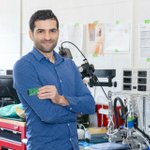



🌟 New Rising Star Adam Khalifa seeks a better way to detect seizures
Read More: ece.ufl.edu/2026/11/16/new-r…

9
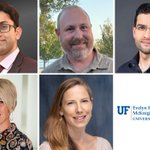
🧠 Five MBI researchers were named Rising Stars by the Academy of Science, Engineering and Medicine of Florida,
who demonstrate exceptional promise in addressing critical challenges in science, engineering and medicine.
Read more: bit.ly/4z5xikN

1
11

UF Neurotech retweeted
Dr. Khalifa and Dr. Negoita presenting research from the University of Florida at the IEEE BRAIN Discovery and Neurotechnology Workshop!

Dr. Khalifa and Dr. Negoita presenting research from the University of Florida at the IEEE BRAIN Discovery and Neurotechnology Workshop!
Check this out!

What resonates most with me about this important study by McGinley and colleagues in the Journal of Parkinson’s Disease is that surviving a hip fracture and recovering from a hip fracture are two very different things. In this Australian study of 5,553 individuals with hip fractures, including 208 with Parkinson’s disease, researchers found no statistically significant differences in hospital length of stay, ICU admissions, or mortality at 30 days and one year after adjustment for clinical differences. That is encouraging, although the relatively small Parkinson’s cohort warrants caution. However, people with Parkinson’s were approximately twice as likely to be discharged to rehabilitation rather than directly home. Only 10% of those with Parkinson’s returned directly home, compared with 22% without the disease. These findings remind us that the consequences of a fall extend far beyond the broken bone. A hip fracture can threaten independence, mobility, confidence, and quality of life. We need to be much more proactive about bone health, osteoporosis screening, balance training, fall prevention, and Parkinson’s-specific rehabilitation. We also need to ensure that Parkinson’s medications are delivered on time during hospitalization and that patients are mobilized safely and early. My biggest takeaway is that we should not measure success simply by whether someone survives hospitalization. We should measure success by whether we can help them return to the life they were living before the fracture. Prevention matters, but so does the journey home.
cutt.ly/uyUWuLjo

12
UF Neurotech retweeted

What resonates most with me about this important study by McGinley and colleagues in the Journal of Parkinson’s Disease is that surviving a hip fracture and recovering from a hip fracture are two very different things. In this Australian study of 5,553 individuals with hip fractures, including 208 with Parkinson’s disease, researchers found no statistically significant differences in hospital length of stay, ICU admissions, or mortality at 30 days and one year after adjustment for clinical differences. That is encouraging, although the relatively small Parkinson’s cohort warrants caution. However, people with Parkinson’s were approximately twice as likely to be discharged to rehabilitation rather than directly home. Only 10% of those with Parkinson’s returned directly home, compared with 22% without the disease. These findings remind us that the consequences of a fall extend far beyond the broken bone. A hip fracture can threaten independence, mobility, confidence, and quality of life. We need to be much more proactive about bone health, osteoporosis screening, balance training, fall prevention, and Parkinson’s-specific rehabilitation. We also need to ensure that Parkinson’s medications are delivered on time during hospitalization and that patients are mobilized safely and early. My biggest takeaway is that we should not measure success simply by whether someone survives hospitalization. We should measure success by whether we can help them return to the life they were living before the fracture. Prevention matters, but so does the journey home.
cutt.ly/uyUWuLjo
Register Now!

Heading to #SfN2026? Don't miss the @NIH #BRAINInitiativeAlliance's Toolmakers Showcase on 15 Nov in Washington, D.C.! Explore emerging #neurotech tools, meet the people developing them, and connect with the #neuroscience community. Register today: bit.ly/BIA-SfN26ToolmakersSh… #brain

15
UF Neurotech retweeted

Heading to #SfN2026? Don't miss the @NIH #BRAINInitiativeAlliance's Toolmakers Showcase on 15 Nov in Washington, D.C.! Explore emerging #neurotech tools, meet the people developing them, and connect with the #neuroscience community. Register today: bit.ly/BIA-SfN26ToolmakersSh… #brain
Check this out!
Is the Parkinson's pandemic growing, or are we confusing more cases w/ more risk? Incidence refers to the number of new cases of a disease developing over a specific period. Prevalence refers to the total number of folks living w/ that disease. These are two very different measures, and understanding the difference matters. Daniele Urso and colleagues describe in a new viewpoint paper in Movement Disorders why the worldwide burden of Parkinson's disease continues to grow, even though the risk of developing Parkinson's may not be increasing in many countries.
Key points:
- Population-based studies from several countries suggest that age-adjusted Parkinson's incidence has remained stable or declined, despite a growing number of folks living w/ the disease.
- Population aging, longer survival and improved recognition of Parkinson's can increase prevalence even when the underlying risk of developing the disease remains unchanged.
- Most available incidence studies come from high-income countries, leaving major gaps in our understanding of trends in low- and middle-income countries, where approximately 85% of the world's population lives.
My take: This is an important and provocative paper, particularly because I was one of the authors who helped introduce the concept of the Parkinson pandemic. What resonates w/ me is that we must distinguish the growing number of folks living w/ Parkinson's from the changing risk of developing it. Both matter, however they answer different questions. The authors are correct to challenge us to improve our measurements. I would caution against interpreting these findings as evidence that environmental risks are disappearing or that prevention is becoming less urgent. Pesticides, solvents, air pollution and other potentially modifiable exposures remain important areas of investigation. The absence of a consistent increase in age-adjusted incidence in selected countries does not mean we have solved the Parkinson's problem. It means we need better data, particularly from countries that have historically been underrepresented. The decline or leveling in some European countries is important given they have been aggressive in banning pesticides and chemicals over the last two decades.
Here are 5 points that resonated w/ me:
1- More folks living w/ Parkinson's does not automatically mean the individual risk of developing Parkinson's is increasing.
2- Aging populations and longer survival can increase the worldwide burden of Parkinson's even when new case rates remain stable or decline.
3- The available evidence is encouraging in some countries, however we should be cautious about generalizing these findings to the entire world.
4- Prevention remains essential. We need to identify and reduce potentially modifiable environmental exposures while also understanding why incidence may be declining in some populations.
5- Our Parkinson's PLAN calls for a 0% increase in global incidence by 2035. This paper suggests that goal may already be within reach in some settings, however we need rigorous worldwide surveillance to know whether we are making real progress.
The bottom line: The Parkinson's pandemic is not disappearing. The number of affected folks and the demands on families and health systems continue to grow. We should welcome evidence that disease risk may be stabilizing or declining in some populations, while doubling down on prevention, better epidemiology and access to care. The goal is not simply to count Parkinson's cases more accurately. It is to prevent the next case.
movementdisorders.onlinelibr…

13
Very Interesting paper!
What if the brain's electrical connections are much smarter than we thought? Electrical synapses are specialized connections that allow brain cells to communicate directly through tiny channels called gap junctions. Unlike chemical synapses, which rely on neurotransmitters to carry messages between neurons, electrical synapses permit rapid communication through the direct flow of electrical current. Alberto Pereda and Adam Miller describe in a new review in Nature Reviews Neuroscience why we may need to rethink what an electrical synapse actually is, and how it works.
Key points:
- Electrical synapses are not simply passive channels connecting neurons. They are dynamic structures capable of changing the strength of communication between brain cells.
- Gap junctions are supported by a complex network of proteins, including connexins, scaffolding proteins and regulatory molecules that control how electrical signals are transmitted.
- Neurotransmitters such as dopamine, synaptic activity and molecular processes can modify electrical coupling, suggesting that electrical synapses may play a much more sophisticated role in brain plasticity and network function than previously appreciated.
My take: This review resonates w/ me because it challenges a fundamental assumption about how the brain communicates. For decades, we have frequently thought about electrical synapses as relatively simple connections and chemical synapses as the more adaptable and sophisticated partners. That distinction may be misleading. Electrical synapses can change, adapt and interact w/ chemical signaling systems. As someone who spends much of my time thinking about Parkinson's disease, dopamine and deep brain stimulation (DBS), I find this particularly fascinating. We frequently focus on which brain circuits are firing abnormally and how stimulation can alter their activity. However, could we also be missing an important part of the story by not paying enough attention to how neurons are electrically connected and how those connections change? This is a basic neuroscience review, not evidence that manipulating electrical synapses will improve DBS outcomes, however it opens important questions for future research.
Here are 5 points that resonated w/ me:
1- Electrical synapses are not fixed electrical wires. Their strength can change depending on brain activity and the molecular environment.
2- Dopamine may influence more than chemical signaling. It can also regulate electrical communication between neurons, a fascinating concept when thinking about Parkinson's disease.
3- The proteins surrounding gap junctions may be just as important as the channels themselves. The machinery supporting a connection can influence how that connection functions.
4- Electrical and chemical synapses do not operate in isolation. Their interactions may help explain how brain circuits adapt, synchronize and process information.
5- Could understanding electrical synapse plasticity eventually help us develop smarter neuromodulation approaches, including more personalized DBS? We do not yet know, however this is an exciting direction worth exploring.
nature.com/articles/s41583-0…

15
UF Neurotech retweeted
Who gets a voice in shaping the ethics of #neurotechnology? Regional perspectives matter. A new @IEEEBrain #WhitePaper explores how #LatinAmerica's social, cultural, and economic realities can inform more responsible #neurotech development: bit.ly/IEEEBrain-Neuroethics… #brain #ethics

UF Neurotech retweeted
It's spooky season again and we've conjured up a little #Halloween magic. Early bird #registration for the 2026 @IEEEBrain Discovery & #Neurotechnology Workshop is extended through 31 Oct! Don't let those savings vanish, register now: bit.ly/IEEEBrain2026Workshop… #brain #neurotech

Check out this article, fascinating read!
Can we restore sight by turning nerve cells into light sensors? What resonates with me about this remarkable study by José-Alain Sahel and colleagues in the New England Journal of Medicine, and the accompanying editorial by Nobel laureate Karl Deisseroth, is the possibility of restoring function even after the cells responsible for vision have been lost. In 10 individuals with advanced retinitis pigmentosa, an inherited disease that destroys the retina's light-sensing cells, researchers used optogenetics, a technique that introduces light-sensitive proteins into surviving nerve cells, combined w/ special goggles that translate visual information into light signals. Six of the 10 participants experienced clinically meaningful improvements in light sensitivity, and several demonstrated improvements in detecting or locating objects. This was a small, early-phase safety study, not a cure for blindness, and adverse events remind us that considerable work remains. What excites me most is the larger implication Deisseroth highlights: optogenetics is moving from a revolutionary laboratory tool toward a potential human therapy. We may not always need to replace every neuron lost to disease. Sometimes we may be able to reprogram surviving circuits to recover meaningful function. For those of us working in Parkinson's disease and deep brain stimulation, this is an especially powerful concept. The future of neurology may depend not only on protecting neurons, but also on learning how to restore the functions of circuits that survive.
nejm.org/doi/full/10.1056/NE…

14
UF Neurotech retweeted
Can we restore sight by turning nerve cells into light sensors? What resonates with me about this remarkable study by José-Alain Sahel and colleagues in the New England Journal of Medicine, and the accompanying editorial by Nobel laureate Karl Deisseroth, is the possibility of restoring function even after the cells responsible for vision have been lost. In 10 individuals with advanced retinitis pigmentosa, an inherited disease that destroys the retina's light-sensing cells, researchers used optogenetics, a technique that introduces light-sensitive proteins into surviving nerve cells, combined w/ special goggles that translate visual information into light signals. Six of the 10 participants experienced clinically meaningful improvements in light sensitivity, and several demonstrated improvements in detecting or locating objects. This was a small, early-phase safety study, not a cure for blindness, and adverse events remind us that considerable work remains. What excites me most is the larger implication Deisseroth highlights: optogenetics is moving from a revolutionary laboratory tool toward a potential human therapy. We may not always need to replace every neuron lost to disease. Sometimes we may be able to reprogram surviving circuits to recover meaningful function. For those of us working in Parkinson's disease and deep brain stimulation, this is an especially powerful concept. The future of neurology may depend not only on protecting neurons, but also on learning how to restore the functions of circuits that survive.
nejm.org/doi/full/10.1056/NE…
🧠 The Braak Paradox:
When Parkinson’s pathology and clinical progression disconnect. For more than two decades, the Braak hypothesis has shaped how we think about Parkinson’s Disease.
neurology.org/doi/10.1212/WN…
The Braak Paradox: When Parkinson’s pathology and clinical progression disconnect. For more than two decades, the Braak hypothesis has shaped how we think about Parkinson’s disease, suggesting that abnormal alpha-synuclein pathology spreads through the brain in a predictable sequence as the disease advances. What resonates with me about this new study by di Biase and colleagues, and the accompanying thoughtful editorial by Rodríguez-Violante in Neurology, is that the biology may be far more complicated than the model. In 61 people with autopsy-confirmed Parkinson’s disease, Braak stage did not correlate with motor disability, disease duration, age at death, or brain weight. In other words, having more widespread alpha-synuclein pathology did not necessarily mean having more advanced clinical disease. The editorial importantly reminds us that this finding does not invalidate Braak staging or the importance of alpha-synuclein, but rather exposes the limitations of using pathology as a clock for clinical progression. Parkinson’s is not one disease following one predictable path, and the frequent presence of other pathologies, including tau, amyloid, and vascular disease, further complicates the picture. For me, the lesson is that we must be careful not to confuse what we see under the microscope with what patients actually experience. As we develop biological staging systems, biomarkers, and disease-modifying therapies, we need to measure not only abnormal proteins but also neuronal loss, clinical disability, and the individual trajectories of people living with Parkinson’s. The patient, not the pathology, must remain at the center of our science.
neurology.org/doi/10.1212/WN…

12
UF Neurotech retweeted
The Braak Paradox: When Parkinson’s pathology and clinical progression disconnect. For more than two decades, the Braak hypothesis has shaped how we think about Parkinson’s disease, suggesting that abnormal alpha-synuclein pathology spreads through the brain in a predictable sequence as the disease advances. What resonates with me about this new study by di Biase and colleagues, and the accompanying thoughtful editorial by Rodríguez-Violante in Neurology, is that the biology may be far more complicated than the model. In 61 people with autopsy-confirmed Parkinson’s disease, Braak stage did not correlate with motor disability, disease duration, age at death, or brain weight. In other words, having more widespread alpha-synuclein pathology did not necessarily mean having more advanced clinical disease. The editorial importantly reminds us that this finding does not invalidate Braak staging or the importance of alpha-synuclein, but rather exposes the limitations of using pathology as a clock for clinical progression. Parkinson’s is not one disease following one predictable path, and the frequent presence of other pathologies, including tau, amyloid, and vascular disease, further complicates the picture. For me, the lesson is that we must be careful not to confuse what we see under the microscope with what patients actually experience. As we develop biological staging systems, biomarkers, and disease-modifying therapies, we need to measure not only abnormal proteins but also neuronal loss, clinical disability, and the individual trajectories of people living with Parkinson’s. The patient, not the pathology, must remain at the center of our science.
neurology.org/doi/10.1212/WN…
UF Neurotech retweeted
The Parkinson’s Plan is now a New York Times Bestseller. As exciting as this news is, we are calling on you to join the movement. Every copy sold benefits Parkinson's. It is time. Just as the world rallied around polio, HIV and breast cancer, the moment has arrived for Parkinson’s disease. We cannot stand by as the fastest growing neurodegenerative disorder continues its rapid rise. Cases are rising faster than Alzheimer's. We have proposed a bold strategy: level the increase of the disease to 0. Preventable exposures to toxins and pollutants must be employed. We call for a 10 fold increase in research funding. We must move the needle. We call for 100 percent access to levodopa for everyone, everywhere. The 0-10-100 goals give us a clear target. However movements are not built on goals alone, they are built on action. That is why we created the Parkinson’s 25: A comprehensive list of things each of us can do right now, whether or not you have Parkinson’s. This is not just about medicine, it is about people, families and communities uniting. The time has come for Parkinson’s. Let’s create a movement.
nytimes.com/books/best-selle… @nytimes @Oprah @OprahDaily @ParkinsonDotOrg @FixelInstitute @movedisorder @AANmember @SfNtweets @Bilirakis @RepPaulTonko @RepWexton #parkinson #TheParkinsonsPlan #Parkinsons #NYTimesBestseller #Parkinsons25

MBI researchers: There's just over one week left to submit your MBI Accelerator Program applications. Up to eight awards of up to $50K each are available for one-year projects.
Applications are due Oct. 16: go.ufl.edu/mbi-accelerator26
Post Credit: @UFMBI

2
33
UF Neurotech retweeted

MBI researchers: There's just over one week left to submit your MBI Accelerator Program applications.
Up to eight awards of up to $50K each are available for one-year projects.
Applications are due Oct. 16: go.ufl.edu/mbi-accelerator26

ALT MBI Accelerator Program FUNDING: Up to eight awards of up to $50,000 each for a one-year period. KEY DATES: Application Deadline: Oct. 16, 2026 Notice of Awards: Jan. 8, 2027 Funding Period: Jan. 29, 2027 – Jan. 28, 2028 ELIGIBILITY: UF faculty eligible to submit R01-equivalent applications Be an MBI member Proposal aligns with the MBI’s mission Not received an MBI Accelerator Award in past 12 months Learn more and apply: go.ufl.edu/mbi-accelerator26