
I make trees and other tidbits
in a tree
Joined March 2021
- Tweets9.3K
- Following2K
- Followers923
- Likes181K





kaitrees retweeted

I Tried 1 New AI Tool Every Day for 365 Days. Day 3 Part 5 - I Made an AI Talk to Herself
kaitrees retweeted

Genie, a 14-year-old girl at a California state hospital, was being considered for a lobotomy when a small research unit took her in instead.
She had been tied down 24 hours a day for her own safety. Tranquilizers had failed again and again. She was completely and permanently blind, from injuring her own eyes over and over, and several consultants had agreed her behavior looked hopeless. Nothing calmed her for long, especially when someone came close.
The new unit had 6 beds and a private room for each child. Staff talked to Genie constantly and tried never to leave her until she had calmed down. At first that meant 20 to 30 minutes of her fighting the restraints until everyone was exhausted. After a week and a half, she could lie quietly for longer. She began holding her pillow between herself and the world.
About 4 weeks in, she put her head in a staff member’s lap and sobbed. Nobody had ever seen her cry before. By week 5, she could be untied as long as someone stayed, and she would put her own hand behind her back to stop herself. A few weeks later, with music playing, she bounced on her bed and told the woman next to her, “Come on, bounce.”
The film admits she was never cured. It ends by asking how many children like Genie go unheard until it is too late.
Was Genie a hopeless case, or a child nobody had taken the time to sit with?
Readers added context they thought people might want to know
This is not Genie Wiley (the famous feral child). Footage is from the 1965 film The Headbangers by Larry H. Dizmang, filmed at Sonoma State Hospital. It shows a 14-year-old autistic girl (called Genie/Jeanne) who blinded herself via self-injury.
educational-film.fandom.com/wiki/The_Headb…
youtube.com/watch?v=z8oeov…
kaitrees retweeted

Has everyone seen this video of a woman finding her stolen chickens and ordering the birds to haul ass and get into her car?
And telling the turkeys they can come along as well because no one there loves them?
And then driving off with a car full of happy birds?
No? What are you waiting for?
kaitrees retweeted

Fieldwatch 1.2.0 is now available.
Fieldwatch is a free Android app that shows you what's watching you. It can flag nearby Ray-Ban Meta glasses, Flock cameras, body cams, public safety vehicles, drones, and a lot more. It spots Bluetooth trackers like AirTags that are moving with you, and its Hunt tool helps you find one if it's hidden. It can also warn you about odd cell tower changes or GPS interference.
New this release:
Drone perimeter detection. Because drones fly high, your phone can hear their Remote ID from up to several miles away. You don't need a ping for every drone on the horizon. Pick your distance, like 250 m, and Fieldwatch draws an invisible dome around you. When a drone's broadcast position comes inside it, your phone alerts you.
Drone swarm detection. If several new drones pop up at once, Fieldwatch alerts you. Five or more in half a minute is unusual, so when it happens, you'll know.
Quickly see where it's headed. Tap a drone's Remote ID marker on the map to see its altitude, speed and course without having to pull up all details.
A bigger view of your sit. The Sit Paths map is now larger, so you can now better see the whole route and every detection along it.
Low battery protection. When your battery gets low, Fieldwatch slows its scanning. If it gets lower still, it stops, so you keep enough charge for maps, calls and TAK.
329 signatures and counting. Fieldwatch now names more of the devices that used to be unmatched. More two-way radios, smart glasses, thermal optics, FPV drone radio links, dashcams, cars, and a long list of everyday gear.
Share signatures with any app. Exports and imports now speak Radio Signature Interchange (RSI), an open standard for describing radio devices. It covers frequencies beyond Wi-Fi and Bluetooth, so it works for ESP32 projects, SDR setups and external radios attached to a phone.
Please encourage the developers of the other radio apps you use to consider adopting RSI. Any app that does gets all 329 Fieldwatch signatures right away. More at github.com/OffGridPete/radio…
Get Fieldwatch on Github at:
github.com/OffGridPete/Field…


kaitrees retweeted

probably the last one of these for a little while, but hope you enjoy
The Future Arrives Sideways
Suno // Grok Imagine // Opus 5.5 // claudia grok bot // character by Anabology
kaitrees retweeted

The farmer found Doris on her back on Thursday morning because he was looking at the crows, not the sheep.
That is how you find a cast ewe on a hill, and every hill farmer learns it young and nobody puts it in a book. A sheep on her back in a dip is the same colour as the dip and does not move, and you can walk a fell for an hour and not see her. The crows see her. They sit on the nearest wall and wait, because a ewe who cannot get up is a meal that has not started yet, and they go for the eyes first, and they do not wait for her to be dead.
So you do not scan the ground for sheep. You scan the walls for crows, and when there are three on a wall where there are usually none, you go to the wall.
There were four on the east wall at half seven.
She had rolled in the night. A Texel ewe carries a lot of fleece and a wide back and very little in the way of a waist, and if she lies down on a slope with her feet uphill and shifts her weight wrong, she is over, and once she is over there is nothing in her design that gets her back. Her gut fills with gas. The weight of it presses on her lungs. In cold weather a cast ewe has a day. In warm weather, with the gas building, a few hours.
She had been there since some time after midnight by the frost on her.
The farmer got his hands under her and rolled her, and she lay on her side for a moment, which they do, and then got her feet under her and stood, and swayed, and shook the frost out of her fleece, and the crows lifted off the wall in a body and went to be disappointed somewhere else.
Then she walked to the wall base and started on the grass.
Not a glance. Not at the farmer, not at the dip, not at the four birds that had been sitting ten feet away for six hours waiting to take her face. She ate. Complete dignity. The last six hours had happened to another sheep.
Brian was at his kitchen window on the other side of the wall with his tea and saw the farmer come down off the fell, and rang him.
Brian: "Was that her?"
Farmer: "Aye."
Brian: "Cast?"
Farmer: "Since the small hours."
Brian: "Crows?"
Farmer: "Four."
There was a pause on the line.
Brian: "She's through the gap."
She was. Two minutes off her back and six hours from a very bad death and she had gone through Brian's wall to the rank corner as if it were a Tuesday, and Brian logged it, and under the time he wrote "cast, crows, fine", and underlined fine.
A ewe does not thank you. She does not know she has been saved and would not care if she did. She knows that she is upright, that there is grass, and that the grass on the other side of the wall is Brian's, and nothing that happened in the dark has any bearing on any of that. The farmer has been righting cast ewes for thirty years and has never once been acknowledged for it, and says that if one ever did look round at him he would ring the vet.

kaitrees retweeted
Fieldwatch user,
I built Fieldwatch for my own use and eventually decided it was good enough to share with the community. I enjoy the work. I make no money from it, and it's completely free, whether you use it as is or build your own work on it. That's why it's MIT licensed.
There's now an app on the Play Store called "Fieldwatch: Hidden Camera Scan." It isn't mine. It's built from my code and sells weekly and monthly subscriptions. I don't know whether its paid features add anything beyond what free Fieldwatch already does. They may.
I'm not against people charging for derivative work. I'd just hope it adds real value beyond what I already offer for free.
The bigger issue is the name. Fieldwatch™ is trademark pending, and in my opinion, putting that name on a derivative app confuses users into thinking it's mine. I've already seen at least one person assume Fieldwatch is a paid app. In my opinion, it's benefiting from the reputation of my work.
I'll be straight with you: seeing that takes a lot of the energy out of wanting to keep going.
If you've used and enjoyed Fieldwatch, please help spread the word. The only official source is GitHub: [github.com/OffGridPete/Field…]
Other apps using the Fieldwatch name for the same kind of app are not mine.

kaitrees retweeted
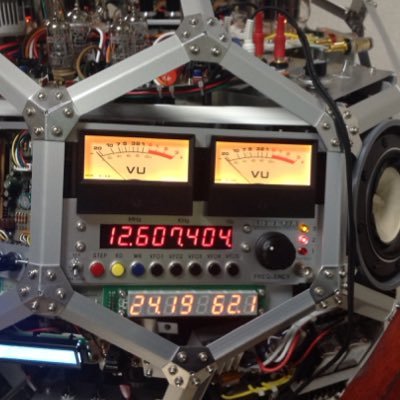
昨年10月から製作していたWalnut Radioが大安吉日の昨日完成しました。一年間の様々な出来事が頭の中を走馬灯のように駆け巡ります。これまで僕と遊んでくれたクルミの木と数々のパーツたち、そして何より応援していただいたフォロワーの皆さんに、心より感謝の気持ちを込めてこの写真を贈ります。


kaitrees retweeted
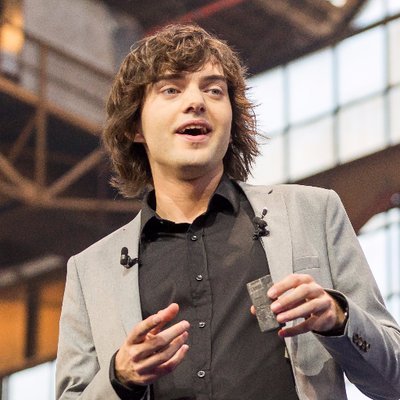
The Ocean Cleanup is now $40M/year short of what’s needed to stop up to 1/3rd of all plastic flowing into the oceans by 2030.
That’s less than 1% of what America spends on Halloween decorations each year.

kaitrees retweeted

Safety was established for "naked" DNA. This DNA is encapsulated, delivered straight into cells. Not the same thing.
Full video: patreon.com/merogenomics/pos…
YouTube: youtu.be/Ou47nWET6Mw
kaitrees retweeted

Hi! If you buy any type of Geiger counter, scintillator, dosimeter (or really any other type of radiation detector) and want to learn how to use it or understand your readings, I’ll try my best to help you for free.
I think owning a meter is important and not as a fear mongering thing, but because curiosity can spark a lifelong interest in nuclear physics. ☢️
kaitrees retweeted

3D-printed, alcohol-powered, Einstein-Szilard absorption refrigerator youtube.com/watch?v=doZ5e4YV…

kaitrees retweeted
Fieldwatch 1.1.31 is out with two big additions.
Fieldwatch is a free, open-source Android app that identifies the devices around you, including what might be watching or following you: trackers, cameras, drones (it even decodes their Remote ID), body cams, and more. Over 250 devices, and you can add your own. It listens to nearby Wi-Fi and Bluetooth signals and matches them against a built-in signature database. It only receives, never transmits. No account, no ads, no back end, and it works fully offline.
What’s new:
Hunt, rebuilt and more useful. Hunt now draws a heat map as you move. Hold the phone out in front of you and walk slowly around the area in a pattern, and the heat map fills in, running from blue where the signal is weak to red where it's strongest. The brightest patch is where the radio was loudest. GPS alone isn't precise enough for this, so Hunt also uses the phone's motion sensors to track your steps between GPS fixes.
Live map on the Live screen. Tap the tune icon in the upper right to open Display Options, then turn on Show live path. The screen splits, with a map of your current path on top and your list view underneath, and you can slide the split to show as much map as you want. Alerted radios are plotted on the map. Double-tap to jump between a close-in view and the whole path, tap the compass to switch between north up and heading up, or pinch and drag to move around.
More maps. OpenStreetMap and USGS Imagery and Topo work out of the box. You can also add Esri, MapTiler, Stadia and Thunderforest with your own key, which most of them offer free for personal use. Your key stays on your phone and is left out of exported settings.
Also new: grid locations on the radio page, a cleaner live path that follows the road through turns, steadier top-bar counts, a crash report screen, and quieter scanning while Location is off.
Free and open source on Android.
github.com/OffGridPete/Field…


kaitrees retweeted

The King Oak - Sevenoaks, the Kingdom of Kent
The only one of the original ‘seven oaks’ to survive the hurricane of 1987
The other six have since been replaced, so no longer the town of ‘Oneoak’

kaitrees retweeted
Alpha, Delta, then Omicron — how did SARS-CoV-2 keep reinventing itself? 🦠
From IgG4 Hybrid Immunity. Full video on Patreon:
patreon.com/merogenomics/pos…
Also on YouTube:
youtu.be/-zkb0YduwNE
#Merogenomics #IgG4 #360Video

kaitrees retweeted
//The Wire//1300Z October 21, 2026//
//SPECIAL REPORT//
//BLUF: MAJOR CYBERSECURITY VULNERABILITIES EXPOSED GLOBALLY, AS TWO SEPARATE MAJOR CODING FLAWS AFFECT MAJORITY OF INTERNET-CONNECTED DEVICES.//
-----BEGIN TEARLINE-----
Global: Around the world, two major cybersecurity incidents are underway. The first incident involves an Indian cybersecurity firm using poor cybersecurity practices in generating Certificate Authorities, which might allow malign actors to exploit web-connected devices. The second issue revolves around an exploit discovered in the PHP programing language, which could allow malign actors to intercept traffic to and from affected web servers, and theoretically take control of them.
Analyst Comment: Today will be a very interesting day for the internet. Neither issue is worth undue panic, but these incidents are causing questions for the bedrock of internet security. In terms of what the average user should do, today will be "update day" for the majority of the planet. Anyone who runs internet-connected home servers, hobby PC's, or muddles in the tech world at all, will probably want to update their systems sometime today.
For more causal internet users, the immediate actions that would be helpful are simply to adhere to good internet security practices: Enabling two-factor authentication for web-connected devices, not re-using passwords, and being aware that phishing attempts will be extremely likely over the next few days, which will seek to capitalize on these major vulnerabilities.
-----END TEARLINE-----
Analyst Comments: The timing of two major cybersecurity incidents taking place at the same time is exceptionally rare and very remarkable. To be clear, these issues are totally separate from each other, with neither one causing the other. However, due to the sheer scale of both incidents, it's possible that some sort of compounding effect could be achieved. One major global tech vulnerability is bad enough, but two on the same day is very serious. Knowing the rough details of how both incidents came to be, is helpful for understanding the seriousness of these events.
The first incident revolves around a vulnerability being discovered within the ecosystem for issuing certificates for various websites. Under normal conditions, when a person visits a website (such as (https:)//www.google.com), a certificate is used to ensure that the website is genuine. Essentially, the web browser itself cross-checks that website with a trusted authority (called a Certificate Authority), which vouches for that website being genuine. This happens after the website gives the webs browser it's certificate, which the browser or app can automatically check against a big list of genuine certificates, to make sure the certificate provided by the website matches what it should be. 18 months ago, the Indian cybersecurity firm eMudhra issued a series bad certificates that had extremely low security; instead of being a long string of numbers which would be hard to crack, some certificates ended up being only the number 4. Since these certificates were genuine, and came from a genuine trusted authority, websites and platforms which trusted these bad keys are now at major risk of exploitation, and malign actors could forge fake keys for any website on Earth, and the fakes would be accepted by most devices (because the keys are genuine, they're just bad).
To frame the magnitude of this incident with an analogy, imagine that a large safe company builds a safe that uses a master code to get into their safes. And after selling and installing a bunch of those safes in homes around the world for 18 months, it becomes clear that the master code to get into most of those safes, was the number 4. Under the right conditions, someone who finds the safe could theoretically guess the code without the owner ever doing anything wrong on their part. More importantly, a thief could access the safe for as long as they want (using the master "code"), and the owner would be none the wiser. Now imagine that a thief actually had access to the safe company, and could generate a master key of their own, that would work with any safe sold by that company. That's essentially what has been happening for 18 months. As far as how many websites have actually been compromised, the true number is not known. Theoretically, this incident has the potential to affect every single website and internet-connected device on the planet. eMudhra themselves state that zero fake certificates have been issued using this vulnerability. So in terms of magnitude, the potential scale of this is somewhere between zero, and every device on Earth. Considering that eMudhra themselves allowed this shockingly bad incident to take place (and not being noticed by two separate security audits), trust in this company is quite low. Moreover, this vulnerability will probably be made worse by an exponentially more serious separate incident that was disclosed overnight.
The second major cybersecurity incident which was revealed overnight, revolves around a problem being discovered within the PHP programming language. As noted with the eMudhra vulnerability, when a user visits a website, a lot of stuff happens in the background. Certificates get exchanged, databases are consulted, and if all goes well, data is sent to a user's device to load the webpage. PHP is one of the programming languages used to make all of this happen. As of early this morning, a vulnerability was discovered within this programming language itself, which can allow malign actors to breach web servers, by leveraging a vulnerability in the way that PHP handles data from the server. In this way, the PHP vulnerability is much like the eMudhra vulnerability, in that both can allow malign actors to gain unauthorized access to systems. The differences are that both vulnerabilities are completely separate and unrelated...but in theory one could compound on the other, especially since IT departments are scrambling to fix both issues right now. The PHP incident is more serious, because the details were leaked before patches were written, and malign actors were indeed observed trying to take advantage of the vulnerability ahead of it's discovery.
Normally, major cybersecurity incidents are not disclosed on a more widespread basis, until patches have been rolled out to fix the problem. This is to prevent malign actors which might not have noticed the vulnerability from knowing about it and capitalizing on it. In this case however, the vulnerability was so severe, that the PHP Foundation released the notice before patches went live. The British National Cyber Security Centre even went as far as to suggest organizations bring their systems offline until a patch is released...in some cases this vulnerability is significant enough to warrant pulling server racks, and websites/servers going offline completely, until the fix is pushed out. As of this morning, many government websites were taken offline globally, and throughout the day millions of websites will also probably be taken offline by IT departments as a precautionary measure, until fixes can be rolled out.
In terms of mitigating both events, the most substantial risk will be for internet connected devices which do not receive regular updates. Using a smartphone or a regular web browser will be fine as mass updates were already pushed out days ago, before the disclosure of the certificate vulnerability was made public. The real risk will be for 'Internet of Things' or IoT devices: Smart thermostats, portable power stations, lawn irrigation systems, doorbells, smart TV's and appliances, utility meters, streetlights, dash cams, remote data servers, and many other older devices that have internet connectivity, and still use the bad set of keys. These are the kind of IT disasters that get technicians woken up during the night, and in both cases IT departments around the world are rapidly patching their own devices to fix the vulnerability now that two major cybersecurity incidents are public, and have the potential to become much more serious problems within the cyber realm.
Analyst: S2A1
Research: publish.obsidian.md/s2underg…
NomadNet: 5fa68c88be727a0e1a250a75e5e79269
Disclaimer: No LLMs were used in the writing of this report.
//END REPORT//
kaitrees retweeted
In the 1990s Canadian scientists put the traditional Inuit caribou-skin suit into a cold laboratory alongside the best modern expedition clothing and army Arctic gear. The caribou won.
The design is thousands of years old. Two layers. The inner one is worn with the fur against the skin. The outer one has the fur facing out. Between them is a pocket of still air. The whole outfit weighs about the same as a modern down suit.
The secret is in the hair. Each caribou hair is hollow, a tiny sealed tube of air, and there are thousands to the square inch. It is the best natural insulation known. Frost does not stick to it. A hunter can sit motionless over a seal hole for hours at 40 below.
The polar explorers who lived learned this from the people who already knew. The ones who trusted what was sold in London shops had a harder time.
And the suit was only half of it. The people inside it ate seal, caribou, fish and whale, and very little else. They burned fat for warmth from the inside and wore fur for warmth on the outside. For 4,000 years they lived, raised children and grew old in a place where nothing green grows for nine months.
No plant fed them and no plant clothed them. Every single thing that kept a human being alive in the Arctic came off an animal.
We now make jackets out of spun oil, fill them with plastic wadding, and sell them with a picture of the Arctic on the label.
The test was run in a freezer by people with instruments. The reindeer came first, as it had every winter for forty centuries.
