

🧑💻Cybersecurity Expert + Entrepreneur | ✍️ Breaking down complex security knowledge into easy-to-understand hacks, making cybersecurity accessible to all 🚀
Worldwide 🌍
Joined October 2020
- Tweets334
- Following4.7K
- Followers2.7K
- Likes233







Noah🧑💻 retweeted

I compiled 50+ n8n automation templates you can copy & paste into your business or sell to other companies.
Just straight plug-and-play systems for:
– Lead gen
-Content creation
– Email outreach
– CRM updates
– AI workflows
– Slack/Discord bots
… and more.
Follow + Retweet + Reply “n8n” and I’ll send it over.
This is completely FREE. Don't even want your email.

I just completed path Bug Bounty Hunter in HTB Academy! academy.hackthebox.com/achie… #hackthebox #htbacademy #cybersecurity

1
377
Noah🧑💻 retweeted
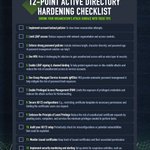
🗒️Active directory hardening checklist🗒️
Do you want to know how to harden your Active Directory and be less vulnerable to attacks? Here is a starting point for potential hardening measures to take👇
1. Account lockout policies
Implement account lockout policies to lock accounts after a certain number of failed login attempts, thus slowing down or stopping enumeration attempts.
2. Limiting LDAP access
Restrict access to Lightweight Directory Access Protocol (LDAP) by implementing network segmentation and access controls to reduce exposure.
3. Strong password policies
Enforce complex password policies, including minimum length, character diversity, and password age. Using a password management solution is a good idea, as users can save their complex passwords without the risk of losing or forgetting them.
4. Multi-factor authentication (MFA)
Implement MFA to provide an extra layer of security, making it significantly more challenging for attackers to gain unauthorized access.
5. Regular user training
Educate users on the importance of strong passwords and identifying suspicious activity, such as phishing attempts. You can also regularly audit password policies and settings to ensure rules are being followed.
6. Enable LDAP Signing and LDAP Channel Binding
These processes can help protect against man-in-the-middle attacks that could lead to unauthorized access to service accounts.
7. Use Group Managed Service Accounts (gMSAs)
These accounts provide automatic password management and help mitigate the risk of password hash exposure. You should also audit service account permissions regularly to ensure they are appropriate for each account’s role.
8. Implement Privileged Access Management (PAM)
This helps limit the exposure of privileged credentials and reduce the attack surface for Kerberoasting. It’ll also enable you to monitor all changes to security group permissions.
9. Secure AD CS configurations
Ensure that your AD Certificate Services (CS) setup follows best practices, such as restricting certificate templates to the necessary permissions and limiting the types of certificates users can request.
10. Implement the Principle of Least Privilege
If you have many overprivileged accounts, attackers can use these accounts to gain a greater foothold in your environment. Grant users, computers, and services only the minimum necessary privileges to perform their tasks, reducing the risk of unauthorized certificate requests. This also reduces the risk of attackers exploiting overprivileged accounts to perform DCSync or Golden Ticket attacks.
11. Regularly audit AD CS
Periodically review your AD CS setup, checking for misconfigurations or potential vulnerabilities that could be exploited by attackers.
12. Monitor issued certificates
Keep track of issued certificates and their associated permissions. Revoke any suspicious or unnecessary certificates to limit attackers' abilities to exploit them.
13. Restrict sensitive permissions
Limit the number of accounts with permissions to perform replication activities. Ideally, only domain controllers and necessary administrative accounts should have these permissions. It’s important to also restrict the number of accounts with high privileges, such as Domain Admins, to minimize the risk of attackers gaining unauthorized access through Golden Tickets.
14. Regularly audit AD permissions
Periodically review permissions in your AD environment to identify and remediate any unnecessary or excessive privileges that could be exploited by attackers.
15. Implement security monitoring and alerting
Set up alerts for suspicious activities, such as:
- Unauthorized replication requests.
- The use of known DCSync-related tools.
- Unusual Kerberos ticket requests.
- The use of known Golden Ticket-related tools like Mimikatz.
16. Secure the krbtgt account
Regularly change the password for the krbtgt account to limit the attacker's ability to create valid Golden Tickets. Ensure that the account's password is complex and not reused across other accounts.
Thank you for great guidance! Kudos to @hackthebox_eu

Such a fun box to solve. I just completed module File Upload Attacks in HTB Academy! academy.hackthebox.com/achie… #hackthebox #htbacademy #cybersecurity

6
398
Unlocking the Secrets of SSRF: A Guide to Mastering Server-Side Request Forgery
In the ever-evolving landscape of web security, Server-Side Request Forgery (SSRF) stands out as a critical vulnerability that can no longer be overlooked. Positioned prominently in the OWASP Top 10, SSRF exposes the underlying server to unauthorized actions, ranging from internal reconnaissance to complete system compromise. This guide is designed to demystify SSRF, offering developers a comprehensive understanding and the tools necessary to fortify their applications against such threats.
The Anatomy of SSRF
At its core, SSRF exploits the trust a server has in itself, tricking the application into executing unauthorized requests to internal or external resources. This vulnerability manifests in applications that fetch data from URLs supplied in user requests without adequate validation or sanitization.
Potential Impacts:
- Unauthorized interaction with internal systems.
- Discovery and mapping of internal network services.
- Disclosure of sensitive or local data.
- Inclusion of malicious files into the web application’s context.
- Leakage of NetNTLM hashes on Windows environments.
- Remote code execution.
Identifying SSRF Vulnerabilities
Vigilance and a keen eye can uncover potential SSRF entry points within your application:
- Parts of HTTP requests that incorporate URLs.
- Features allowing file imports (HTML, PDFs, images).
- Remote server connections for data retrieval.
- Import functionalities for API specifications.
- Dashboards with network testing features (e.g., ping).
Exploitation and Mitigation: A Dual Approach
1. Craft Your Payload: Begin by identifying request parameters or API endpoints that your application uses to make external HTTP requests. Crafting a malicious URL that points to an unintended destination is your first step.
2. Encode and Execute: SSRF payloads may require encoding to bypass web application firewalls or input validation checks. Tools like jq are instrumental in this phase, allowing triple encoding with ease.
echo "command_to_run" | jq -sRr @uri
3. Automate Command Execution: Create a bash function to streamline the execution of encoded commands. This automation is pivotal for testing various payloads efficiently.
function exploitSSRF() {
read -p "Enter command: " cmd
encodedCmd=$(echo -n $cmd | jq -sRr @uri | jq -sRr @uri | jq -sRr @uri)
curl "target.com/vulnerable/endpoi…${encodedCmd}"
}
Mitigation Strategies
Mitigation requires a multi-faceted approach, emphasizing both preventive measures and active monitoring:
- Input Validation: Implement strict validation of URLs and other user inputs, ensuring that only whitelisted domains or IP addresses are accessible.
- Segregate Internal Services: Isolate critical internal services from those exposed to user inputs, reducing the potential attack surface.
- Content Security Policy (CSP): Utilize CSP headers to add an additional layer of protection against unwanted outbound requests initiated by SSRF.
- Monitoring and Logging: Continuously monitor outbound requests from your servers. Anomalies in request patterns can indicate SSRF attempts.
Concluding Thoughts
Understanding SSRF is only the beginning. As developers and security professionals, the onus is on us to anticipate these vulnerabilities and shield our applications with robust security measures. Remember, the strength of your application’s security posture lies not just in reacting to threats, but in proactively preventing them.
What can XSS actually do other than alert?
For instance...
1. Credential theft
2. Fake login page display and keyloggers
3. Auto-Fill-in Authentication Credentials Retrieval
Let's see how we can do them.👇
XSS is a vulnerability that is well known to security engineers and many development engineers. However, in my experience of performing web application vulnerability assessments, I have seen a lot of XSS, and I believe that it remains one of the most commonly discovered vulnerabilities. Despite XSS is well-known and the low barriers to general countermeasures, real risks are difficult to understand intuitively, and many disclosures only raise an alert.
XSS works where an attacker's JavaScript input is output without sanitising or escaping, allowing third party JavaScript to be executed on the domain where the service is hosted. Damage can range from "capturing authentication information", "redirecting to malicious sites", "spreading malware", "tampering", etc. as arbitrary JavaScript can be executed.
What can XSS do, other than alert you?
1. Attacker plants JavaScript that steals cookies:
When another user browses the task list, the cookie is sent to the attacker's server. The attacker then sends the cookie to the attacker's server when another user browses the to-do list. If the cookie is not set to the HttpOnly attribute, it is possible to hijack an account because a cookie is sent simply by visiting the page where XSS occurs in this way. If XSS is generated by a third party posting to obtain a login cookie on the administrator's page, the administrator's login cookie is stolen and the damage is severe.
2. Fake login page display and keylogger
An attacker plants a script that uses JavaScript to display a fake login page and a keylogger. When another user browses the site, a fake login page is displayed and when a keystroke is attempted to log in, the content is sent to the attacker's server. When this type of XSS occurs, the user completes a transaction, such as a payment, unaware that the information they have entered has been stolen by the attacker.
3. Authentication credential stealing through auto-fill functionality
The user logs in using a legitimate login form and is taken to the task list screen. XSS is triggered and a spoofed login form is displayed by the attacker's JavaScript. At this point, the user is not redirected to a spoofed page, but a spoofed login form is displayed on top of the legitimate to-do screen. The domain identifies the site as legitimate, and the email address and password are filled in automatically. Even if passwords and other information stored in the browser or password management tool are entered using the autofill feature, it is still possible to retrieve the input content as described above.
Note that depending on the behaviour of the browser/password management tool, it may be possible to prevent authentication information from being stolen via autofill in such cases if the domain of the service and the domain where the login is performed are separate. For example, the login form for a Google account is at accounts.google.com, while a Microsoft account is at login.live.com. (There are probably reasons other than security, given the range of services offered by both companies).
The risk of malicious external JavaScript being installed by the operator, e.g. for advertising or tracking purposes. The risk of creating XSS vulnerabilities and being exposed to third party JavaScript attacks. Therefore, by running the login page on a different domain than the one hosting the service, and by reducing the above risks, the possibility of malicious scripts stealing authentication information from the browser/password manager in clear text can be reduced.
Conclusion:
This paper has introduced the damage caused by XSS (cross-site scripting). Creating JavaScript for XSS, like the one presented here, takes very little time and can be easily created by anyone. We are also in a situation where there are many keyloggers for XSS, tools that make it easy to create fake login screens, and many malicious scripts for XSS on the web. Therefore, we hope that this article will help you to change your perception of XSS a little bit, instead of thinking that XSS is just a simple vulnerability that will alert you.
3⃣Terraform AWS Secure Baseline
IaC templates for creating secure AWS environments.
github.com/clouddrove/terraf…

1
67
5⃣Azure Security Center Playbooks
Automation playbooks for Azure Security Center.
github.com/Azure/Microsoft-D…
1
1
63
6⃣SANS Institute SEC488 - Cloud Security Essentials
A practical course aimed at securing cloud environments across AWS, Azure, and GCP. Perfect for hands-on learners.
sans.org/cyber-security-cour…
70
2⃣Cloud Security Cheat Sheet
Practical guidance on securing cloud services.
github.com/CyberSecurityUP/R…
1
17
Diving into cloud security? Whether you're a beginner or looking to deepen your knowledge, there's a wealth of resources out there. Here's a curated thread on where to start and how to navigate the learning path. 🧵#CloudSecurity #Cybersecurity
1⃣Awesome Cloud Security
Curated list of cloud security resources.
github.com/4ndersonLin/aweso…

1
56
Noah🧑💻 retweeted

“We are what we repeatedly do. Excellence, then, is not an act, but a habit.” – Aristotle
14/ "Ignore the naysayers." Don't let anyone's limited perspective dictate your path. Carve your own way and let your actions speak for themselves. The world will adjust. 🚀👣 #BeBold #Trailblazer
1
22
15/ Wrapping up, life's lessons come in various forms, and sometimes, they're shared by those who've walked the path before us. Take these pearls of wisdom, and craft a life filled with purpose, love, and laughter. Live fully, live truly. 🌼🛤️ #LifeJourney #EndThread
20
13/ "Self-love is your greatest ally." Don't seek validation from others. Be your own source of happiness and strength. Learn to be your own best friend. 🌺🔍 #SelfLove #InnerPeace
1
15
10/ "Be present." When overwhelmed, focus on the now. Find beauty and comfort in the moment. Breathe deeply, and let go of what you can't control. 🌸🧘♂️ #Mindfulness #BePresent
1
9
12/ "Never stop developing your career." It's more than just a paycheck; it's part of your identity. Invest in your growth, and it will pay dividends in more ways than one. 📈💡 #CareerGrowth #SelfImprovement
1
14
11/ "Value experiences over stuff." Our time on this earth is finite. Make memories, not collections. Let your life be rich with experiences, not cluttered with things. 🌅🎒 #LiveFully #ExperiencesOverThings
1
9