




The discussion surrounding Q has evolved considerably since 2017.
Q isn’t exactly a “Conspiracy theory” anymore
What was once confined to anonymous message boards has since entered mainstream political discourse. Trump himself has openly shared Q-related terminology, imagery, and even excerpts from the original drops on Truth Social.
His public association with this material is no longer a matter of speculation. The significance behind it, however, remains open to interpretation.
Drop 725 is one of the reasons I believe Q was a military intelligence operation.
Look at the strategy being described.
Remove individuals from positions of power, restrict their access to money, disrupt their communications, and neutralize potential threats before making arrests.
Each step serves a purpose. Resignations reduce institutional influence. Asset freezes restrict financial capabilities. Disrupting the chain of command prevents effective coordination.
This resembles military strategy. You weaken the opposition’s ability to respond before taking decisive action, while prioritizing the safety of the civilian population.
That is why I interpret these drops differently. I believe the intended objective was not simply to expose corruption, but to dismantle the infrastructure that allowed it to operate.
The strategic reasoning is a significant part of why I hold this position.


My take on Q is that I don’t read it as a random internet phenomenon or a civilian larp.
I believe it was a military intelligence operation — one that used public drops to surface information, force institutional responses, and map networks that were never supposed to be mapped in the open.
The end goal, as I see it, wasn’t just exposure for its own sake. It was to systematically identify, isolate, and remove entrenched corrupt actors and structures inside government, intelligence, and corporate power that had operated with impunity for decades. The drops were a tool to build public awareness and pressure while the actual work — investigations, seizures, and accountability — happened off-stage through military and law-enforcement channels.
The language, the timing, the clearance framing, and the way certain events later aligned all point that direction to me. Not a prediction engine. A controlled information release tied to an ongoing process with a clear objective: dismantle the network and restore institutional integrity under the Constitution.
The origin and the intended outcome that make the most sense to me are military.
1
22
When you examine Obama’s presidency, particularly his decisions involving the intelligence community, federal surveillance, and the media, you begin to notice a common theme.
Under Obama, the NSA continued collecting Americans’ phone records on a massive scale.
His administration prosecuted an unprecedented number of classified information leaks under the Espionage Act.
His Justice Department secretly obtained journalists’ telephone records.
He signed H.R. 4310, relaxing restrictions on the domestic distribution of government-funded information originally intended for foreign audiences.
He authorized a drone strike that killed an American citizen without a criminal trial.
In 2014, CIA personnel were even found to have improperly accessed computers used by Senate investigators who were investigating the agency itself.
Now consider what these decisions have in common.
The government had extensive capabilities to collect information about its citizens, restrict the disclosure of its own activities, and conduct operations with limited public oversight.
Most of these policies were justified in the interest of national security. Some were inherited from previous administrations.
But the bigger issue extends beyond Obama.
When a president leaves office, the intelligence agencies, federal departments, surveillance capabilities, and legal authorities don’t simply disappear.
The people occupying elected positions change. But many of the institutions exercising government power remain.
This is an important part of the conversation surrounding what people commonly refer to as the “deep state.”
You don’t necessarily need a “secret organization” to explain how unelected institutions can accumulate considerable power and influence over successive administrations.
What concerns me is how much these institutions can know about the American public compared to how little the American public is permitted to know about them.
2
66
One of the more interesting aspects of the USAID revelations is the sheer scope of its involvement in political affairs.
Under the Biden administration, the US government committed $500,000 to piloting election technology in Bosnia and Herzegovina.
Then you have the extensive network of government-funded NGOs, media organizations, and research institutions operating across the globe.
I think the release of USAID’s internal records could fundamentally change how Americans understand the foreign policy of previous administrations.
We were financing an apparatus that most Americans knew virtually nothing about.

1
38
The part of Trump’s death penalty announcement that caught my attention wasn’t the mention of child killers.
It was the inclusion of “heinous federal crimes.”..

Trump To Expand Death Penalty Push To Target Child Killers, ‘Heinous Federal Crimes’
dailywire.com/news/exclusive…

1
40
I think people are so caught up in domestic politics that they’re overlooking what’s happening on the world stage.
Look at Venezuela, Iran, the competition over global energy, and Trump’s approach to Russia and China.
These are the very countries that have complicated American foreign policy for decades.
I believe his ambitions extend far beyond Washington. He’s trying to fundamentally change the international balance of power.
To suggest nothing significant is happening is absurd.
1
39
Now the FBI’s National Crime Information Center is reportedly caught up in a suspected cyber breach.
For those unfamiliar, this is a system police departments across the country depend on for warrants, criminal records, and stolen property information.
That makes this considerably more concerning than another corporate outage.
Earlier, I questioned Trump’s silence surrounding these cyber incidents. I still don’t believe his lack of public attention should automatically be mistaken for a lack of awareness.
Trump has never been particularly shy about addressing threats to the country. So why the restraint now?
I suspect his administration knows more about the situation than it’s prepared to discuss publicly.

Something isn’t adding up with what’s happening across America’s digital infrastructure.
Banks, airlines, Microsoft, even the NSA have experienced major disruptions. Now we’re learning the USDA was hit by an actual cyberattack.
The interesting part? Trump’s response.
His administration insists the widespread outages aren’t connected to a coordinated attack. And I think there’s a reason he’s keeping the public response measured.
I think Trump knows that publicly sounding the alarm over disruptions to critical infrastructure could create exactly the kind of instability whoever is behind these attacks might be hoping for.
Meanwhile, he’s already replacing leadership at the national cyber level.
I don’t believe every outage is necessarily connected. But I do believe we’re watching America’s digital vulnerabilities become impossible to ignore.
And that’s what makes Trump’s response worth watching.
He’s keeping his public statements measured while making changes to the very leadership responsible for defending these systems.
That’s a deliberate personnel decision, regardless of what’s driving it. And the timing raises a question worth asking.
Why make changes to the people overseeing America’s cyber defenses while publicly downplaying the possibility of a coordinated attack?
Maybe it’s part of a broader restructuring..
2
64
Something isn’t adding up with what’s happening across America’s digital infrastructure.
Banks, airlines, Microsoft, even the NSA have experienced major disruptions. Now we’re learning the USDA was hit by an actual cyberattack.
The interesting part? Trump’s response.
His administration insists the widespread outages aren’t connected to a coordinated attack. And I think there’s a reason he’s keeping the public response measured.
I think Trump knows that publicly sounding the alarm over disruptions to critical infrastructure could create exactly the kind of instability whoever is behind these attacks might be hoping for.
Meanwhile, he’s already replacing leadership at the national cyber level.
I don’t believe every outage is necessarily connected. But I do believe we’re watching America’s digital vulnerabilities become impossible to ignore.
And that’s what makes Trump’s response worth watching.
He’s keeping his public statements measured while making changes to the very leadership responsible for defending these systems.
That’s a deliberate personnel decision, regardless of what’s driving it. And the timing raises a question worth asking.
Why make changes to the people overseeing America’s cyber defenses while publicly downplaying the possibility of a coordinated attack?
Maybe it’s part of a broader restructuring..

According to federal energy data, regular gas averaged $4.15 a gallon on November 2, right before the midterms.
By November 16? $3.81.
That’s a 35-cent drop in just two weeks.
And AAA now has the national average around $3.69.
The interesting part is that prices were already declining before Election Day. So the question isn’t whether they suddenly started falling afterward. It’s why they were falling so sharply, and what was driving those changes.

Gas prices crashing after the election might be the most overt smoking gun evidence of price manipulation in the history of commerce.
What a joke.
Making millions of Americans suffer with high prices just for the sole purpose of making President Trump look bad, to rig midterms.
2
53
Trump just sent a message that shouldn’t be overlooked.
By openly challenging international institutions like the ICC, he’s drawing a line between national sovereignty and centralized global authority.
For decades, these institutions have expanded their influence while remaining largely beyond the reach of ordinary voters.
Now that authority is being questioned on the world stage.
The real question is how much power these institutions can maintain without America’s cooperation.
The global order isn’t untouchable. And Trump is making that clear.

There it is… if you need any proof they are dismantling the NWO, here it is.
President Trump, on the biggest stage in the world, just said they are collectively protecting their sovereignty against Rogue Globalist Organizations such as the International Criminal Court
Look at Putin’s face as Trump says it.. lol HELL YEAH!
The ICC and the like, were the plan for a one world government after America was destroyed. Not anymore!
rumble.com/v7il2xu-trump-dec…
2
39
Look at the bigger picture. Trump has spent years challenging the political establishment, while Russia and China have been pushing back against the Western-led global order.
Three leaders with very different interests, yet all challenging parts of the same system. I have a hard time believing there isn’t some level of coordination happening.
And frankly, I don’t think they need to publicly acknowledge it for the possibility to deserve attention.
My suspicion is that we’re watching a much larger geopolitical realignment unfold, and the public is only seeing a fraction of what’s actually being discussed.

For centuries, the world has been ruled from the shadows, by powerful families like the Rothschilds and House of Saud.
Those days are over.
We are entering a new phase of global sovereignty, where nations are no longer enslaved and manipulated on behalf of corrupt globalist oligarchs. Each nation will be overseen by actual sovereign leaders, not by puppets acting on behalf of the Deep State families.
That’s the end goal. That’s the shadow war that we are fighting.
I’m not saying Putin and Xi are saints, but they actually care about their civilizations and the survival of their People and their culture. They don’t want to be conquered by globalism either.
Putin and Xi agreed to stand down while Trump and the US MIL conduct their operations destroying Deep State proxies and their global assets. One might argue Putin is directly assisting by keeping the Deep State proxy of Ukraine occupied.
If the leaders of the three Military superpowers are all on the same page, the Deep State and their global assets don’t stand a chance. The Deep State’s plan was to make us fight each other, so the sovereign nations decided to fight the Deep State instead.

2
74
The NSA network going dark, the bank systems locking up, the earlier outages — none of it is foreign. It’s internal.
These people are deliberately taking systems offline so certain things can’t be accessed or audited.
The midterms produced results that don’t hold up under real scrutiny.
This isn’t chaos from outside. It’s containment from inside.
They’re protecting the fraud by cutting off what could expose it.
The people doing it, are framing it as a “Cyber Attack”
Who knows, maybe the midterms isn’t related to any of this at all.

Rule #2
If "hackers" don't hack something that benefits the American people than it wasn't "hackers"
It was the government.
1
128
NSA Net just went down. That’s the fifth major US system failure in six days.
JPMorgan, United, the FAA, Microsoft, and now the NSA’s own classified network. At the same time, a single cyber operation quietly poisoned the code on 178 major sites, including CNN, Zoom, HSBC, and Equifax.
None of this is random. A quiet network of state-linked operators has been probing for soft spots for months. They’re not after money. They’re mapping exactly how long it takes America’s banks, airlines, and intelligence agencies to start choking when the systems they trust stop answering.
The goal is simple: create just enough chaos that the next real strike looks like just another glitch.
The timing with FORTRESS America is almost too perfect. While the Pentagon scrambles to make bases self-sufficient for 90 days, someone else is stress-testing everything civilians and the government still rely on outside the fence.
This is a coordinated dry run, and they’re getting better at it.

The NSA’s highly classified internal network, NSA Net, is down, marking the fifth major U.S. system disruption in just six days, following outages at JPMorgan Chase, United Airlines, the FAA and Microsoft.
A cyberattack has also exposed 178 organizations to malicious code, including major websites such as CNN, Zoom, HSBC and Equifax, potentially putting financial and personal information at risk.
A growing number of critical U.S. systems have faced disruptions in a matter of days, just weeks after the Pentagon launched its FORTRESS America initiative, preparing military bases to operate independently for at least 90 days in the event of major disruptions, including power-grid failures, cyberattacks and supply-chain breakdowns.
2
129
My take on Q is that I don’t read it as a random internet phenomenon or a civilian larp.
I believe it was a military intelligence operation — one that used public drops to surface information, force institutional responses, and map networks that were never supposed to be mapped in the open.
The end goal, as I see it, wasn’t just exposure for its own sake. It was to systematically identify, isolate, and remove entrenched corrupt actors and structures inside government, intelligence, and corporate power that had operated with impunity for decades. The drops were a tool to build public awareness and pressure while the actual work — investigations, seizures, and accountability — happened off-stage through military and law-enforcement channels.
The language, the timing, the clearance framing, and the way certain events later aligned all point that direction to me. Not a prediction engine. A controlled information release tied to an ongoing process with a clear objective: dismantle the network and restore institutional integrity under the Constitution.
The origin and the intended outcome that make the most sense to me are military.
@FBICyberBranch says they’re providing technical assistance after Friday’s air traffic outage… and they have not taken possession of any equipment.
That’s specific language. The public account so far is a router cascade during the copper-to-fiber upgrade that hit 17 centers. Still watching how the testing and isolation play out.

FBI Cyber teams are working with the Department of Transportation, the FAA, and L3Harris, providing technical assistance following Friday’s air traffic communications outage. The FBI has not taken possession of any equipment. Please follow DOT and FAA for the latest updates.
3
93
Something I find interesting about Trump is how little his confidence seems to have changed since the midterms.
He’s still publicly sharing allegations of election misconduct, including criminal prosecutions.
I don’t think he’s treating the midterms as the end of the conversation. If anything, his posts suggest he’s determined to keep the issue front and center.
There’s a difference between making accusations and proving them in court, but Trump clearly isn’t backing away from the subject.
He’s making it clear that this isn’t over.

2
40
A lot of these systems rely on the same underlying infrastructure. Cloud providers, third-party software, authentication services, and shared networks.
You don’t necessarily have to target every organization individually to cause widespread disruption. A problem with one major provider can affect thousands of businesses at once.
But there’s another angle I think deserves attention.
The people making decisions about our digital infrastructure know exactly how dependent the country has become on it. They also know where the biggest vulnerabilities are.
Personally, I’m more interested in what was known beforehand, who was responsible for addressing those weaknesses, and whether certain risks were allowed to go unchecked.
There’s a big difference between an unexpected failure and a preventable one that people in positions of power knew was coming.
1
35
This is what happens when someone gets a few obvious geopolitical predictions right and decides they’re Nostradamus.
Israel and Iran have been at odds for decades. Predicting a conflict between them isn’t exactly a superpower.
But somehow we went from oil prices rising to 5 billion people dying and aliens invading Earth by 2027.
And the source? An anonymous 4chan post.
I think we can safely put this one back in the science fiction section lol.

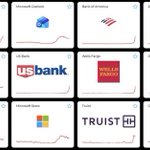
Chase, Bank of America, Wells Fargo, US Bank, and several other major banks are seeing a spike in outage reports.
Now we’re seeing similar reports involving Microsoft, Gmail, Zelle, and other services.
What catches my attention is how many different platforms are having issues around the same time.
Could all be a coincidence, but I’m curious whether there’s something connecting these outages that we haven’t heard about yet.

6
2,958
Trump’s renewed attention toward the Muslim Brotherhood
A lot of Americans probably don’t realize this organization has been around since 1928. It started in Egypt, but its influence eventually spread across the Middle East, reaching into politics, education, religious institutions, and social organizations.
Here’s something else worth knowing.
Hamas originally emerged from the Brotherhood’s Palestinian branch. And earlier this year, the Trump administration designated Brotherhood branches in Egypt, Jordan, and Lebanon under U.S. terrorism sanctions.
What interests me most, though, is the political side of this movement.
The Brotherhood has a long history of pursuing political influence, not just through protests or confrontation, but through elections, institutions, and organized political activity.
And with Muslim Americans becoming increasingly visible in American politics, I think it’s important that we understand the difference between ordinary religious representation and organized Islamist political movements.
Those aren’t automatically the same thing, and treating them as such would miss the actual issue.
I support Trump taking a closer look at organizations with credible connections to extremism. But I also want to know where the money comes from, which organizations are connected, and whether any foreign political networks are attempting to influence American institutions.
Because to me, the bigger question isn’t simply who holds political office.
It’s whether foreign ideological organizations have influence that the American public doesn’t know about.
2
59