
Crypto | Robinhood Chain enthusiast | Building small tools & games | Don't expect smart moves
USA
Joined March 2021
- Tweets1.1K
- Following709
- Followers122
- Likes25.6K
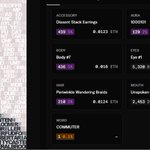


with $sushicat and $flamingo it could be the same story as pools(.)trade by Uniswap
memes on pools(.)trade pumped hard on the “launchpad is coming” news
after the actual launch we saw corrections on $frong, $pools etc.
smarter play is probably:
buy now → hold until pools(.)fun (by sushiswap) launches → sell before it
dyor
now the token. 10B supply, 82.5% unlocked at TGE:
> 36% Genesis holders
> 34% liquidity
> 7% Zama OGs
> 3% X campaign
> 2.5% community (10% total, rest over 24 months)
> team 10%: 12-month lock, then 36-month vesting
so how much could $FUNGO be worth?
Zama OG NFTs can give us a hint: each one gets ~140k $FUNGO, and they trade around $40
that could mean the market already values $FUNGO at ~$0.00029, an FDV of ~$2.8M
doesn't feel that high, maybe even underpriced
let's make some predictions on @FungoLabs Genesis NFTs and $FUNGO 🧵
the sealed-bid sale starts tomorrow at 15:30 UTC: 2,500 NFTs, paid in cZAMA, open for 24 hours, and nobody sees anyone else's bid
this could be a good thing or a bad thing
people might bid higher so they don't miss out, or lower to get a deal, who knows
my conservative guess: at least ~$100 per NFT
but it could be a lot higher
why?
> privacy is one of the biggest narratives this cycle
> it's set to be the first strong sealed collection on @zama FHE
(yeah, somehow there are no strong ones yet)
> holders get hidden traits, 20% of launchpad revenue and a share of tokens from every collection launched there
and I think after a successful Genesis mint, a lot of new sealed collections will want to launch on Fungo 👀
that’s what @theunipcs does to a man 😂


@FungoLabs revealed how the Genesis sealed-bid auction works, and there's a twist 👀
there's no fixed price
the price depends on demand
it could be $50 or $500
how it works:
• everyone places a hidden bid (encrypted with Zama FHE, nobody sees other bids)
• the 2,500 NFTs go to the highest bids
• all winners pay the same price, the lowest winning bid
• e.g. if the lowest winning bid is $150, every winner pays $150 per NFT
• if you bid more, you get the difference back
• if your bid is too low, you get no NFT, but you get your money back
the interesting part: nobody knows what others bid
so people might bid higher than they planned, but who knows
bid what it's worth to you, you'll only pay the final price
are you going to bid? 🍄

How the Genesis sealed-bid auction works, explained with an example 👇
Imagine only 3 NFTs for sale. Minimum price: 500 cZAMA (example only).
4 people bid 1 NFT each:
→ A: 3,000
→ B: 1,500
→ C: 1,000
→ D: 500 (the minimum)
The top 3 bids win: A, B and C.
All winners pay the same final price, the lowest winning bid: 1,000.
→ A pays 1,000, gets 2,000 back.
→ B pays 1,000, gets 500 back.
→ C pays 1,000.
→ D bid the minimum, gets no NFT, gets 500 back.
Lesson: bidding the minimum doesn't mean you buy at the minimum. Bid what it's worth to you, you'll only pay the final price.